Celebrating the Global Heritage of Shiraz and the Comprehensive Results of the 2026 International Award Winners


International Shiraz Day, observed annually on the fourth Thursday of July, serves as a global focal point for one of the world’s most resilient and stylistically diverse grape varieties. Established in 2020 by the Sydney-based marketing firm Mastermind Consulting, the date was strategically selected to align with the peak of winter in the Southern Hemisphere, where the grape’s bold, warming characteristics are traditionally celebrated. Simultaneously, the event caters to the Northern Hemisphere’s summer, positioning Shiraz as a premier accompaniment to barbecue-centric culinary traditions. While often confused with #shirazday—a May celebration dedicated to the Iranian city of the same name—the official designation for the viticultural event remains #shirazwineday.
The variety’s journey from a localized French grape to a global powerhouse is a narrative of both biological science and historical myth-making. For centuries, folklore suggested that the grape originated in the ancient Persian city of Shiraz, purportedly brought to Europe by returning Crusaders or pilgrims. This romanticized origin story persisted until 1998, when DNA testing conducted by researchers at UC Davis and INRA Montpellier definitively proved that the grape is an indigenous French variety. It is the natural offspring of Dureza and Mondeuse Blanche, two obscure varieties from the southeastern Rhône-Alps region. Despite the debunking of its Persian roots, the grape has maintained a dual identity, operating under the names Syrah and Shiraz to denote distinct stylistic approaches.
The Dual Identity: Syrah Versus Shiraz
In the contemporary wine market, the nomenclature of the grape serves as a shorthand for its sensory profile. Labels bearing the name "Syrah" typically reference the "Old World" style pioneered in the Northern Rhône Valley of France. These wines are characterized by restraint, high acidity, and a savory bouquet featuring notes of black pepper, smoked meats, olives, and violets. Conversely, the term "Shiraz" reflects the "New World" style popularized by Australian producers. This approach emphasizes ripeness, high alcohol content, and a fruit-forward palate dominated by plum, chocolate, and dark berries.
This distinction is not merely geographical but stylistic. Producers in cooler climates like the Adelaide Hills in Australia or the Walla Walla Valley in the United States may label their wines as Syrah to signal an elegant, peppery profile. Meanwhile, producers in traditionally cooler regions may adopt the Shiraz label if they employ techniques that produce a bolder, more opulent wine. This versatility has allowed the variety to become one of the most widely planted red grapes globally, flourishing across diverse terroirs in South Africa, California, Chile, and New Zealand.
Chronology of a Global Expansion
The global proliferation of Shiraz can be traced through several key historical milestones. Following its stabilization in the Rhône Valley, the grape was introduced to Australia in 1831 by James Busby, often regarded as the father of Australian viticulture. Busby’s collection of cuttings included the variety that would eventually define the Australian wine industry. By the mid-20th century, Australia had established itself as the primary alternative to France for high-quality production, particularly in the Barossa Valley, where some of the world’s oldest productive Shiraz vines still exist.
The 1990s marked a period of explosive growth for the variety, as consumer demand for bold, approachable red wines surged. This era saw the rise of "Syrah-mania" in California and the emergence of South Africa’s Swartland as a hub for innovative, spice-laden expressions. The establishment of International Shiraz Day in 2020 was a response to this globalized footprint, providing a unified platform for producers across six continents to engage with a modern, digital-first consumer base.
Analytical Overview of the 2026 Decanter World Wine Awards
The 2026 Decanter World Wine Awards (DWWA) highlighted the continued evolution of the variety, with 15 wines achieving top-tier recognition. The results underscored a significant trend: the narrowing gap between the prestige of traditional regions like Côte-Rôtie and the rising technical excellence of New World territories. The competition, known for its rigorous blind-tasting process, awarded "Best in Show" honors to wines from both Western Australia and the Northern Rhône, illustrating a global parity in quality.
Industry analysts note that the 2026 results reflect a shift toward "poise and refreshment," even in warmer climates. Judges increasingly rewarded wines that demonstrated "classy, effortless" structures and "well-judged acidity," suggesting that the industry is moving away from over-extracted, high-alcohol styles in favor of regional typicity and balance.
Leading Winners from the Australian Contingent
Australia dominated the 2026 rankings, securing several Platinum and Best in Show medals. The Ferngrove Orchid Collection Dragon Shiraz 2023 from Frankland River, Western Australia, was a standout, earning 97 points and a Best in Show title. This victory is historically significant, marking the first time a region in Western Australia other than Margaret River has claimed such an honor. The wine was praised for its floral perfumes and red-fruit charm, representing a "midweight" style that emphasizes elegance over sheer power.
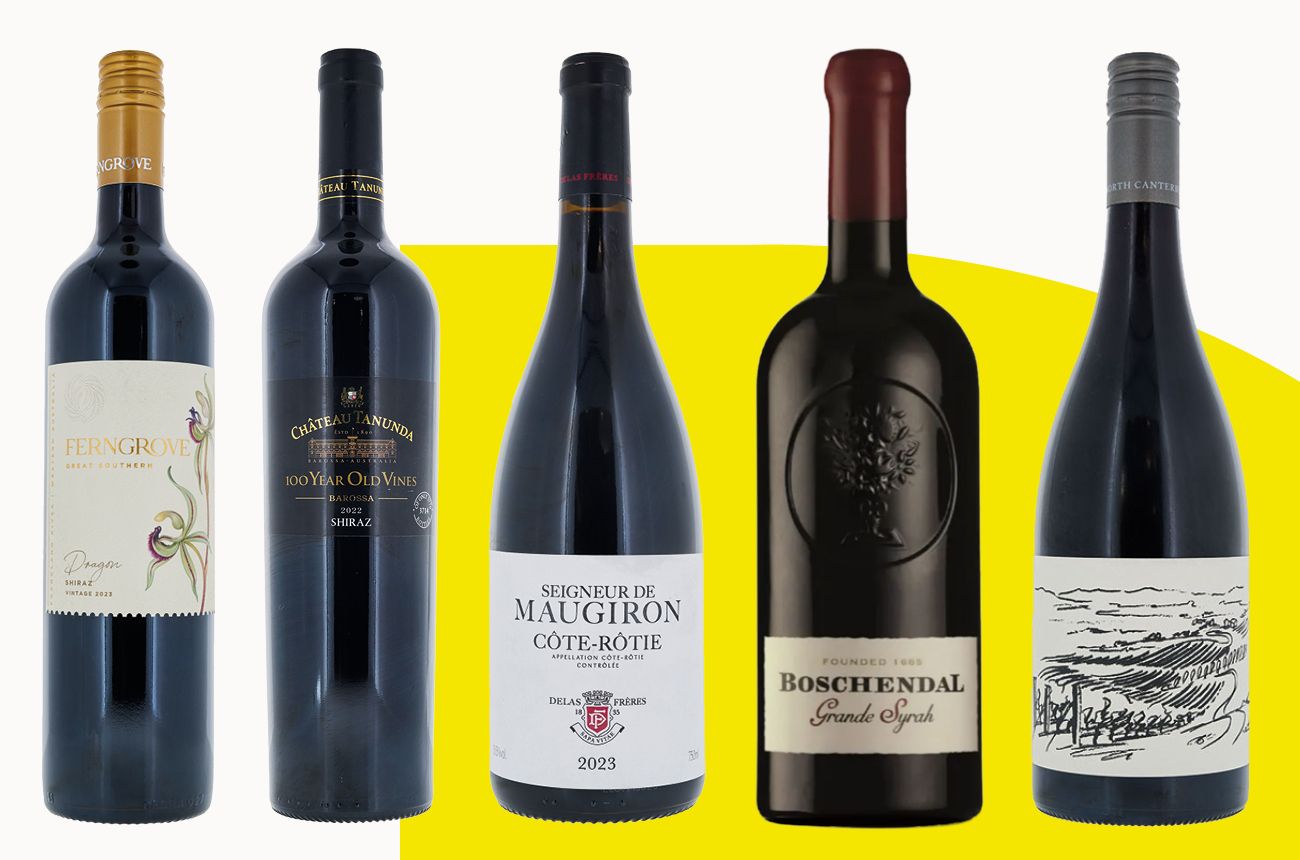
In South Australia, the Barossa and McLaren Vale regions continued their streak of excellence. Château Tanunda’s 100 Year Old Vines Shiraz 2022 (97 points) and Hare’s Chase Vigilance Marananga Shiraz 2022 (97 points) exemplified the classic Barossa profile: generous, velvety, and deeply rooted in terroir. Meanwhile, the E.J. McDougall Old Vine Shiraz 2024 from McLaren Vale was lauded as a "masterstroke of the Rhône-style," showcasing how Australian producers are successfully integrating European structural sensibilities with local fruit intensity.
Other notable Australian winners included:
- Katnook Estate, Prodigy Shiraz, Coonawarra 2024 (97 points): Recognized for its signature eucalyptus lift and silky tannins.
- Monteperle, Vineyard Selection Shiraz, Barossa Valley 2024 (97 points): A contemporary, high-alcohol (15.1%) style that managed to maintain "spine-tingling" peppery spice.
European Excellence and the Rhône Standard
France remains the spiritual and qualitative benchmark for the variety. The Maison Delas Frères, Seigneur De Maugiron, Côte-Rôtie 2023 secured a Best in Show title with 97 points. The 2023 vintage in the Northern Rhône was particularly successful for the northernmost appellations, which escaped the mid-September rains that affected other areas. This specific wine was noted for its "smoky, tapenade-like aromas" and a "salty finish," embodying the classic "Brune" style of the region.
Further south, the Languedoc-Roussillon region proved its ability to produce world-class Syrah at competitive price points. The Domaine De Castelnau, L’Etendoir des Fées 2023 (97 points) was celebrated for its "blackberry juice intensity" and herb-driven aromatics. Spain also made a strong showing with Bodegas Piqueras Nature Syrah 2025 from Almansa, which earned 95 points for its fresh, floral, and approachable profile, indicating that Syrah is becoming a vital component of Spain’s modern viticultural identity.
Emerging Powerhouses: South Africa, New Zealand, and the Americas
The 2026 awards further cemented the status of South Africa and New Zealand as premier Syrah producers. South Africa’s Boschendal Grande Syrah 2022 (95 points) from Stellenbosch and Kasteelberg Carbonic Syrah 2025 (95 points) from Swartland showcased the country’s dual ability to produce both "leathery, resplendent" traditional styles and "bright, evocative" high-altitude wines.
New Zealand’s results were particularly impressive, with Greystone Wines Vineyard Ferment Syrah 2023 from Canterbury earning 97 points. This wine was highlighted for its "effortless fluidity" and "mineral core," a testament to the country’s potential for cool-climate Syrah. From the Waiheke Island region, Mudbrick Vineyard’s Oscar 2024 (96 points) provided a svelte, luxurious counterpoint with herbal elegance.
In the Americas, the diversity of the grape was on full display:
- Argentina: Bodega Puna’s 2600 Syrah 2025 from the high-altitude region of Cachi, Salta, earned 95 points for its concentrated palate and "tense acidity."
- United States: Hoquetus Wine Co. Francisca’s Vineyard Syrah 2023 from Walla Walla Valley (95 points) represented the robust, "meaty" style characteristic of Washington State.
Broader Impact and Future Implications
The data from the 2026 International Shiraz Day celebrations and the subsequent award cycles suggest a variety in transition. While the grape’s traditional strongholds remain dominant, the expansion into "extreme" viticulture—high-altitude sites in Argentina and cool-climate maritime regions in New Zealand—indicates a proactive industry response to climate change. As traditional regions face rising temperatures, the hunt for cooler terroirs is redefining the flavor profile of the grape.
Furthermore, the economic significance of Shiraz cannot be overstated. For Australia, it remains the most exported variety, serving as a critical pillar of the nation’s multi-billion dollar wine economy. In France, the prestige of Rhône Syrah continues to drive land values in appellations like Hermitage to record highs. As International Shiraz Day continues to grow in digital reach, it provides a vital marketing tool for these regions to communicate their unique histories and technical advancements to a global audience. The 2026 awards confirm that whether labeled as Syrah or Shiraz, the grape remains a primary vehicle for expressing the nuances of the world’s most prestigious wine-growing soils.