The Nonalcoholic Amaro Guide: A Deep Dive Into the Category’s Rapid Evolution and Top Bartender Picks

The landscape of nonalcoholic spirits has undergone a seismic shift over the past half-decade. Historically, the zero-proof market struggled with the "mimicry trap," where products often failed to replicate the complex architecture of traditional spirits, falling short on viscosity, heat, and structural integrity. However, the category of zero-proof amaro has emerged as a distinct success story, leveraging the naturally complex, botanical-forward profiles of traditional Italian digestifs to create a compelling alternative that does not rely on the presence of ethanol to provide a sophisticated drinking experience.
The Chemistry of Bitterness: Why Amaro Leads the Zero-Proof Revolution
The technical challenge of creating nonalcoholic spirits lies primarily in mouthfeel and the "burn" typically associated with alcohol. Ethanol acts as a solvent that carries aroma and provides a tactile sensation on the palate. Without it, many nonalcoholic spirits feel thin or watery. Amaro—the Italian word for "bitter"—possesses an inherent advantage in this arena because its foundation is built upon macerated roots, barks, citrus peels, and aromatic herbs.

Robby Dow, owner of the Wilmington, North Carolina-based establishment Bespoke, observes that the inherent bitterness and complexity of traditional amaro ingredients allow producers to create products that feel "complete" without the need for alcohol. By focusing on the intensity of the maceration process, distillers are finding that they can achieve a depth of flavor that resonates with the human palate in much the same way as traditional bitters. This innovation is not merely for the sober consumer; it represents a broader trend of "integrative drinking," where consumers—regardless of their alcohol consumption status—seek to moderate their intake without sacrificing the ritual of a high-quality cocktail.
A Chronological Shift in the Nonalcoholic Market
The trajectory of nonalcoholic amari has moved from niche hobbyist projects to institutional staples within just a few years.
- 2014: St. Agrestis launches its modern American amaro, setting a high standard for craft bitterness in Brooklyn.
- 2017: Fast Penny Spirits begins its journey in Seattle, prioritizing sustainability and regional, foraged botanicals over strict adherence to traditional Italian recipes.
- 2019: The founding of Zero Proof, an online retailer, signals the formalization of the Nonalcoholic market as a legitimate, scalable consumer category.
- 2021: The Pathfinder Hemp & Root Non-Alcoholic Spirit debuts, quickly becoming a reference point for bartenders looking to bridge the gap between classic cocktail structure and modern zero-proof requirements.
- 2023-2024: Major industry acquisitions occur, including The Wine Group’s acquisition of St. Agrestis, shifting the focus of legacy brands toward the nonalcoholic sector.
- 2025: The market reaches a point of maturity where heritage brands, such as Amaro Lucano, release dedicated nonalcoholic iterations to compete with startups.
Key Expressions and Bartender Perspectives
Bartenders are increasingly utilizing these expressions as "well" spirits, integrating them into complex recipes that challenge the definition of a nonalcoholic drink.

The Pathfinder Hemp & Root
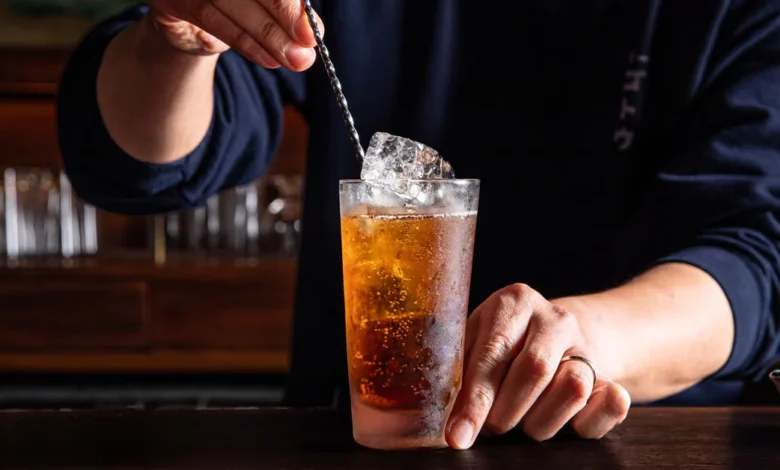
The Pathfinder is widely recognized for its "tannic profile and solid structure." Unlike traditional spirit alternatives that attempt to mimic gin or whiskey, The Pathfinder embraces its unique base of fermented hempseed and botanicals like wormwood, ginger, and saffron. Its ability to hold up in a highball or a zero-proof Daiquiri has made it a favorite among service industry professionals who are increasingly opting for these complex, herbal alternatives.
Amaro Lucano Non-Alcoholic
When a heritage brand like Amaro Lucano enters the zero-proof space, it validates the category for the broader public. By utilizing the same 30-botanical recipe as its full-strength counterpart, Lucano’s N/A expression provides a benchmark for "authentic" flavor. Damiano Coren, Director of Cocktail Programming at New York’s Sant Ambroeus and Casa Lever, notes that the product’s success lies in its balance of citrus and baking spices, which allows it to function as a foundational element in complex, layered drinks.
St. Agrestis Amaro Falso
The evolution of St. Agrestis from a craft distiller to an N/A innovator is emblematic of the industry’s pivot. Amaro Falso is notable for its delivery system: the 200-milliliter bottle is infused with carbon dioxide and nitrogen. This is a critical innovation because it solves the "texture" problem inherent in zero-proof spirits. By mimicking the viscosity and mouthfeel of alcohol, the product provides the user with the expected tactile satisfaction of a classic amaro-and-soda.

Lapo’s Non-Alcoholic Amaro
Lapo’s represents the "community-driven" side of the market. Founded by the team behind Zero Proof, the brand pays homage to the ritual of the classic Italian Negroni. By focusing on alpino-style notes—pine, licorice, and eucalyptus—Lapo’s targets the digestif market directly. It is currently being adopted by high-end Italian eateries, such as Pizzeria Portofino in Chicago, to serve as a legitimate, bitter conclusion to a meal.
Fast Penny Spirits Amaricano Zero
Fast Penny Spirits has taken a different approach by focusing on regionality. By incorporating ingredients like Rainier cherries, Yakima hops, and long pepper, founder Jamie Hunt has created an expression that feels distinctively Pacific Northwestern. The use of vegetable-based glycerin and pectin to enhance the "body" of the spirit is a sophisticated R&D approach that addresses the lack of alcohol-induced weight on the palate.
Economic and Cultural Implications
The rise of the nonalcoholic amaro category is not a fleeting trend but a structural change in the hospitality industry. According to industry data, the "sober-curious" movement is increasingly characterized by consumers who maintain a flexible relationship with alcohol. For restaurants and bars, this presents a significant revenue opportunity. High-margin, nonalcoholic cocktails are no longer an afterthought; they are a critical component of a modern bar program’s P&L (Profit and Loss) statement.

From an economic perspective, the acquisition of boutique brands by larger holding companies, such as the acquisition of St. Agrestis by The Wine Group, suggests that major players in the beverage alcohol industry view nonalcoholic spirits as a long-term growth engine. This influx of capital is expected to accelerate innovation in extraction technologies, allowing for more precise flavor profiles that were previously unattainable without distillation.
Future Outlook
As the industry moves toward 2026, the focus will likely shift toward "functional" ingredients. Many of the current top-tier nonalcoholic amari are already exploring the inclusion of adaptogens, nervines, and other botanicals that provide a physiological sensation, further compensating for the absence of ethanol.
The successful integration of these spirits into classic cocktails—the Paper Plane, the Spritz, and the Negroni—demonstrates that the category has reached a state of functional maturity. The challenge for producers in the coming years will be to maintain consistency while scaling production and to continue educating the consumer on the value proposition of a high-quality, complex beverage that happens to contain zero alcohol. As bartenders continue to embrace these tools, the line between "alcoholic" and "nonalcoholic" will likely continue to blur, leading to a more inclusive, versatile, and sophisticated drinking culture.