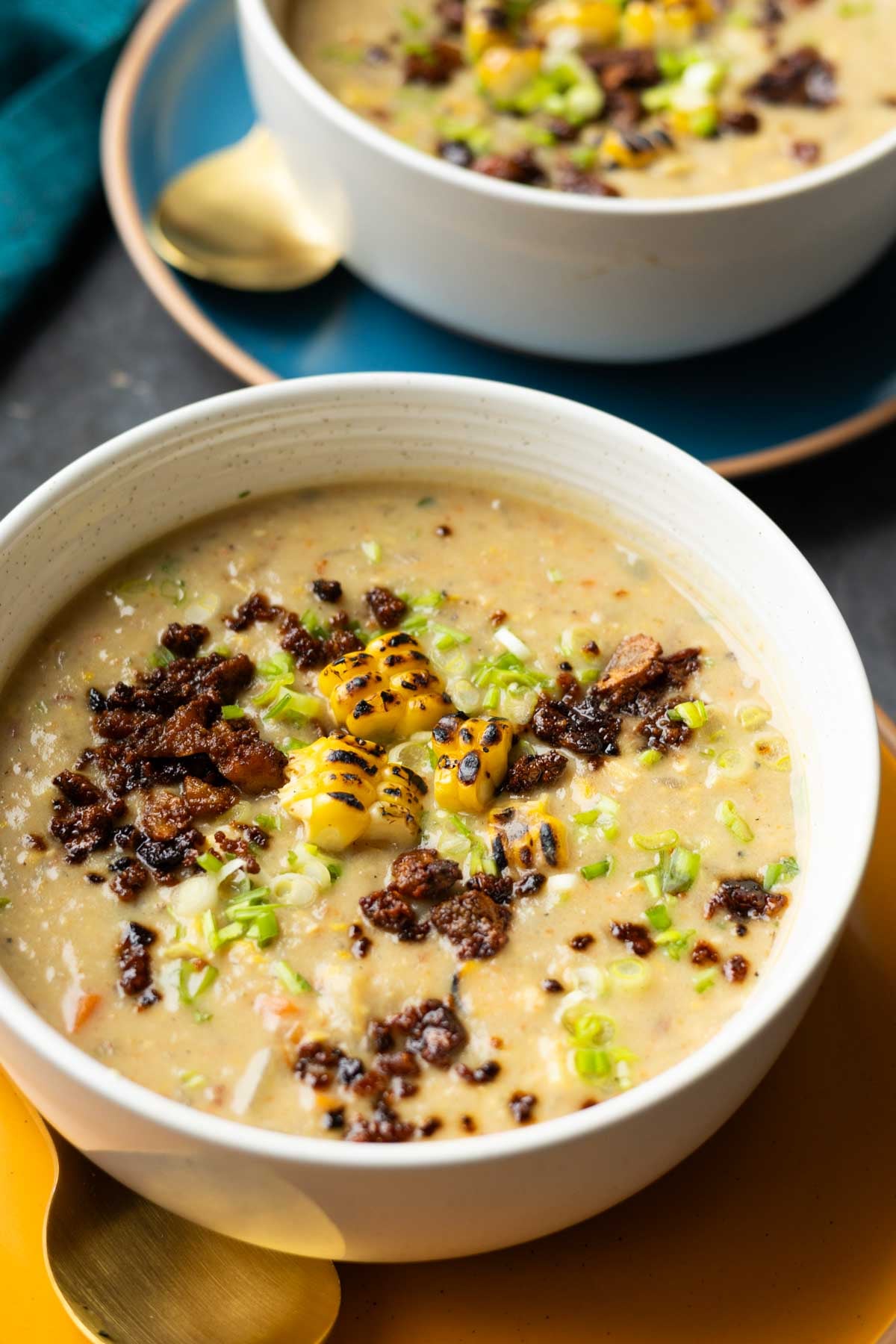
The culinary landscape is constantly evolving, with innovative chefs and home cooks alike pushing the boundaries of flavor and texture. In a recent development that has garnered significant attention within the plant-based food community, a recipe for "Creamy Corn Chowder with Smoky Tofu Bacony Bits" has emerged, promising a rich, satisfying, and flavor-packed one-bowl dinner. This dish, developed with a keen understanding of flavor layering and textural contrast, aims to elevate vegan comfort food to new heights. The recipe highlights four key techniques that are purported to make it the "best chowder you’ll ever taste," while also offering flexibility for various dietary needs, including gluten-free, nut-free, and soy-free options.
At its core, the chowder is a celebration of fresh corn, transformed into a creamy and dreamy concoction that is both hearty and budget-friendly. The inspiration for this particular rendition reportedly stems from an abundance of corn provided by a family member, leading to a deep dive into maximizing the ingredient’s potential. The creator of the recipe emphasizes a meticulous approach, moving beyond conventional methods to achieve a superior taste and mouthfeel.
The Art of Flavor Infusion: Key Techniques Revealed
The success of this corn chowder lies in its carefully orchestrated culinary techniques, designed to build layers of complex flavor and an irresistible texture. The recipe details a four-pronged approach that distinguishes it from more standard chowder preparations.
1. The Aromatic Foundation: Infusing the Oil
The process begins with a foundational step that significantly impacts the overall flavor profile. By cooking minced garlic and red pepper flakes together in oil before introducing any other ingredients, the dish achieves an immediate depth of flavor. The gentle heating process toasts the garlic, rendering it golden and releasing its aromatic compounds into the oil. Simultaneously, the red pepper flakes undergo a similar transformation, becoming toasty and smoky, further infusing the oil with a subtle warmth and complexity. This initial infusion sets a robust base, ensuring that every spoonful of chowder carries a nuanced garlic and chili essence. The recipe specifically advises using finely chopped garlic rather than grated, to prevent it from sticking and releasing excessive moisture, which could hinder the toasting process.
2. The Umami Boost: Sun-Dried Tomatoes and Charred Corn
Adding another dimension to the chowder’s flavor profile, sun-dried tomatoes play a crucial role. These intensely flavored ingredients are lightly toasted to amplify their aroma, introducing a delightful tang that beautifully balances the creamy richness of the chowder. This technique adds a sophisticated layer of flavor, preventing the chowder from becoming one-dimensionally sweet or savory.
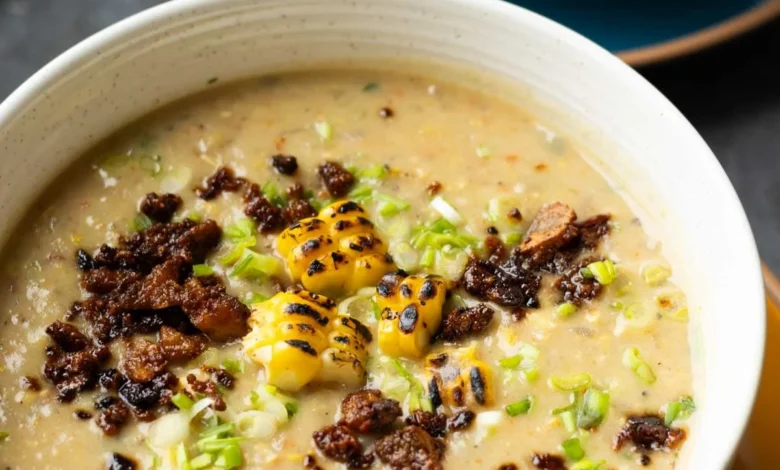
Perhaps the most impactful technique is the charring of the corn. The recipe advocates for grilling corn either on a stovetop or an outdoor grill until it develops distinct black spots. This deliberate charring process goes beyond mere caramelization; it imparts a deeper, sweeter, and smokier flavor to the corn kernels, which are then incorporated into the chowder. This step transforms the corn from a simple vegetable into a star ingredient, contributing a robust, almost barbecue-like undertone that elevates the entire dish. For those who prefer a less intense char or lack the equipment, the recipe notes that uncharred corn will still yield a delicious result, though with a slightly different flavor profile.

3. The Textural Marvel: Smoky Tofu "Bacony" Crumbles
A critical component that provides a satisfying textural contrast and a savory punch is the inclusion of "smoky tofu bacony bits." These are prepared by baking or pan-frying seasoned tofu crumbles until they achieve a crispy texture. The tofu is marinated in a blend of ingredients designed to mimic the smoky, salty, and savory notes of traditional bacon. This innovative topping not only adds a delightful crunch but also introduces a layer of umami that complements the creamy chowder. The preparation involves pressing the tofu to remove excess moisture, cubing or crumbling it, and then tossing it with a flavorful marinade. The baking process, often at 400°F (205°C), is monitored to ensure the tofu becomes crisp, with instructions to stir and rotate pieces for even toasting. Some recipes suggest a lower temperature or continued toasting in a turned-off oven to achieve optimal crispness.
4. The Creamy Finish and Garnishes
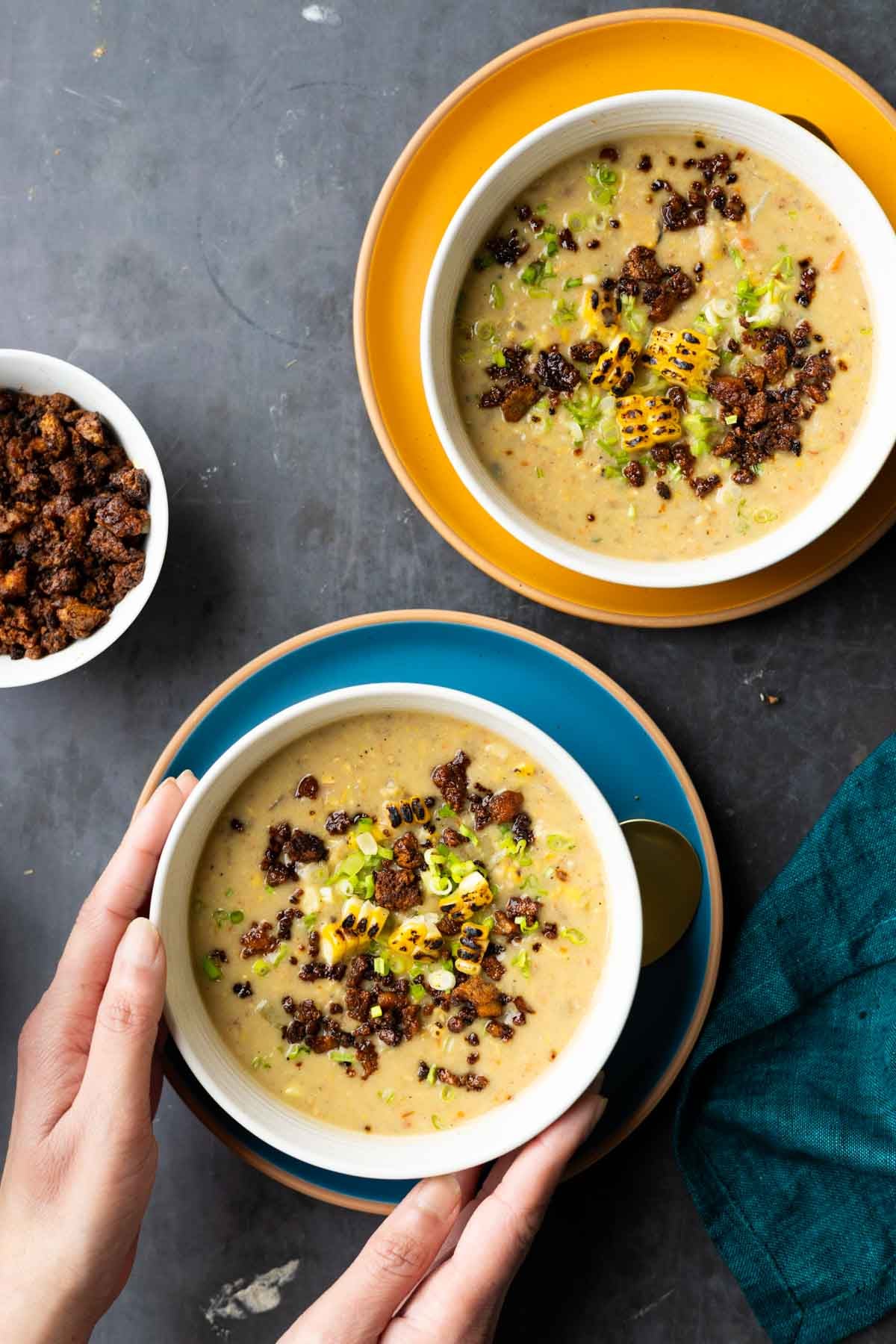
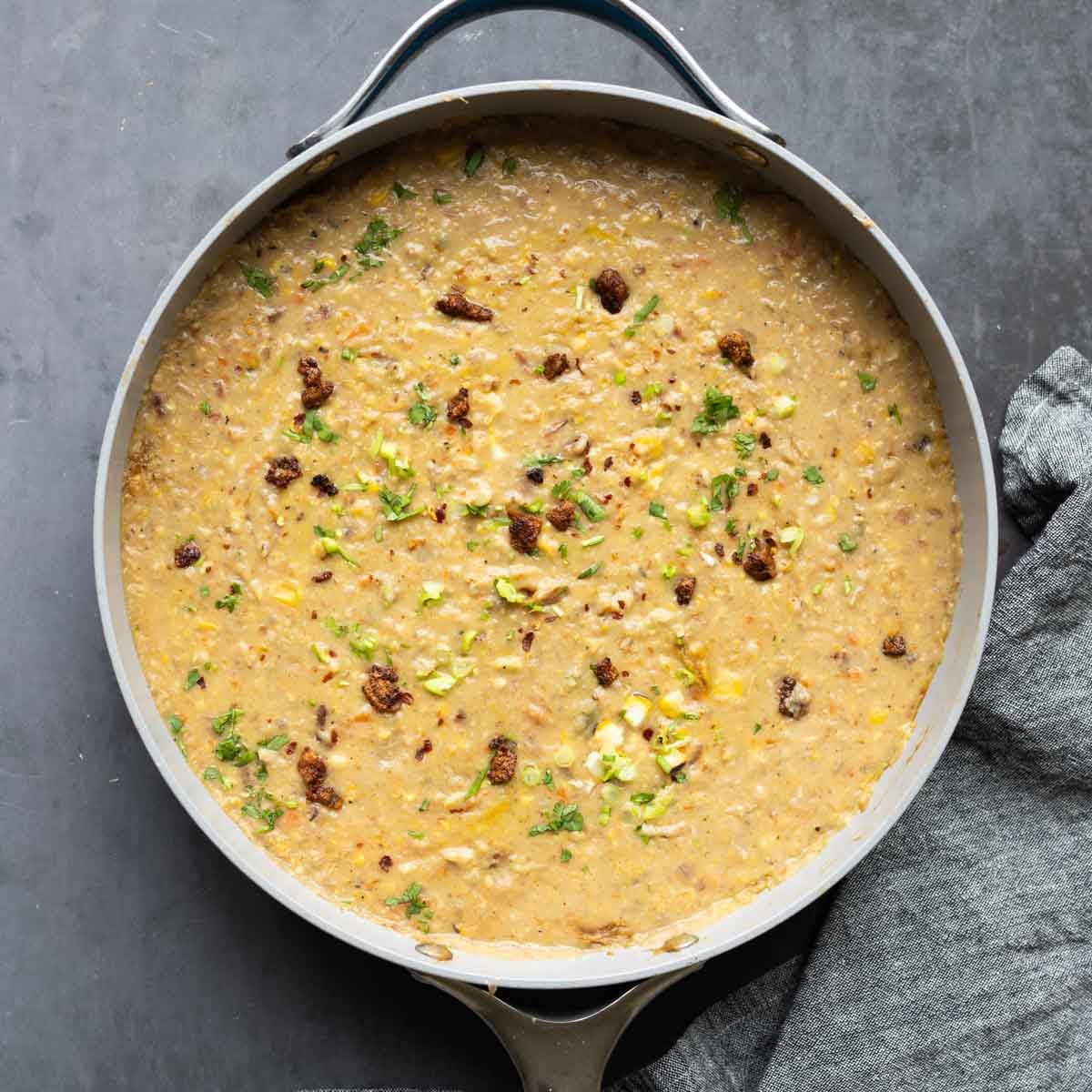
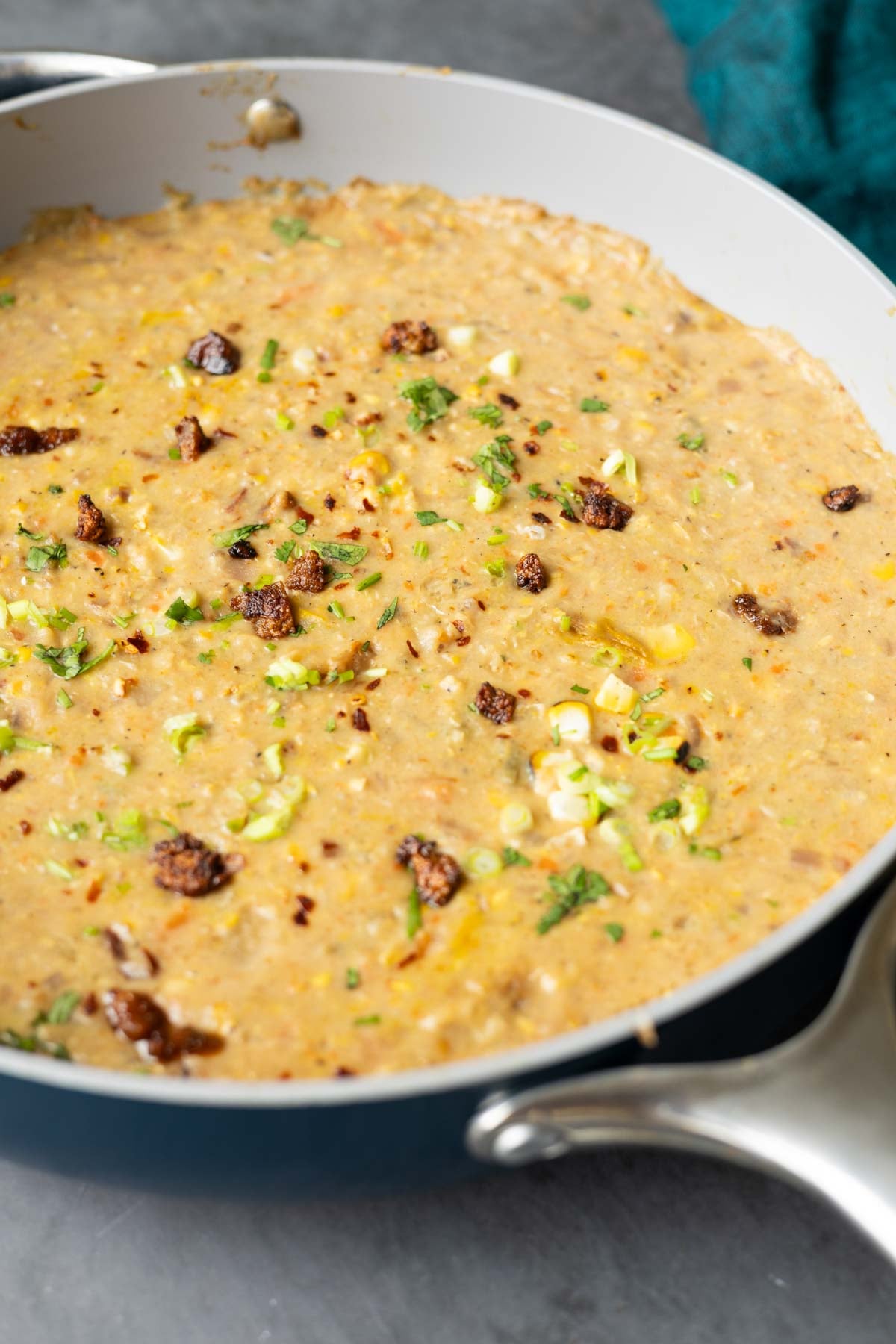
The final element that brings the chowder together is its creamy consistency, achieved through a combination of starchy vegetables and non-dairy cream. The recipe specifically mentions cooking potatoes until they are well-done, allowing them to break down and contribute to the chowder’s natural creaminess. An immersion blender or a conventional blender is then used to partially blend a portion of the soup, further enhancing its velvety texture without losing all the distinct vegetable components.
Garnishes play a vital role in the overall presentation and flavor experience. Fresh green onions, reserved charred corn kernels, and a sprinkle of chopped red pepper add visual appeal and fresh, bright notes. The combination of these elements – the rich, creamy chowder, the smoky, crunchy tofu bits, and the vibrant garnishes – creates a truly multi-sensory dining experience.
Dietary Inclusivity and Adaptability
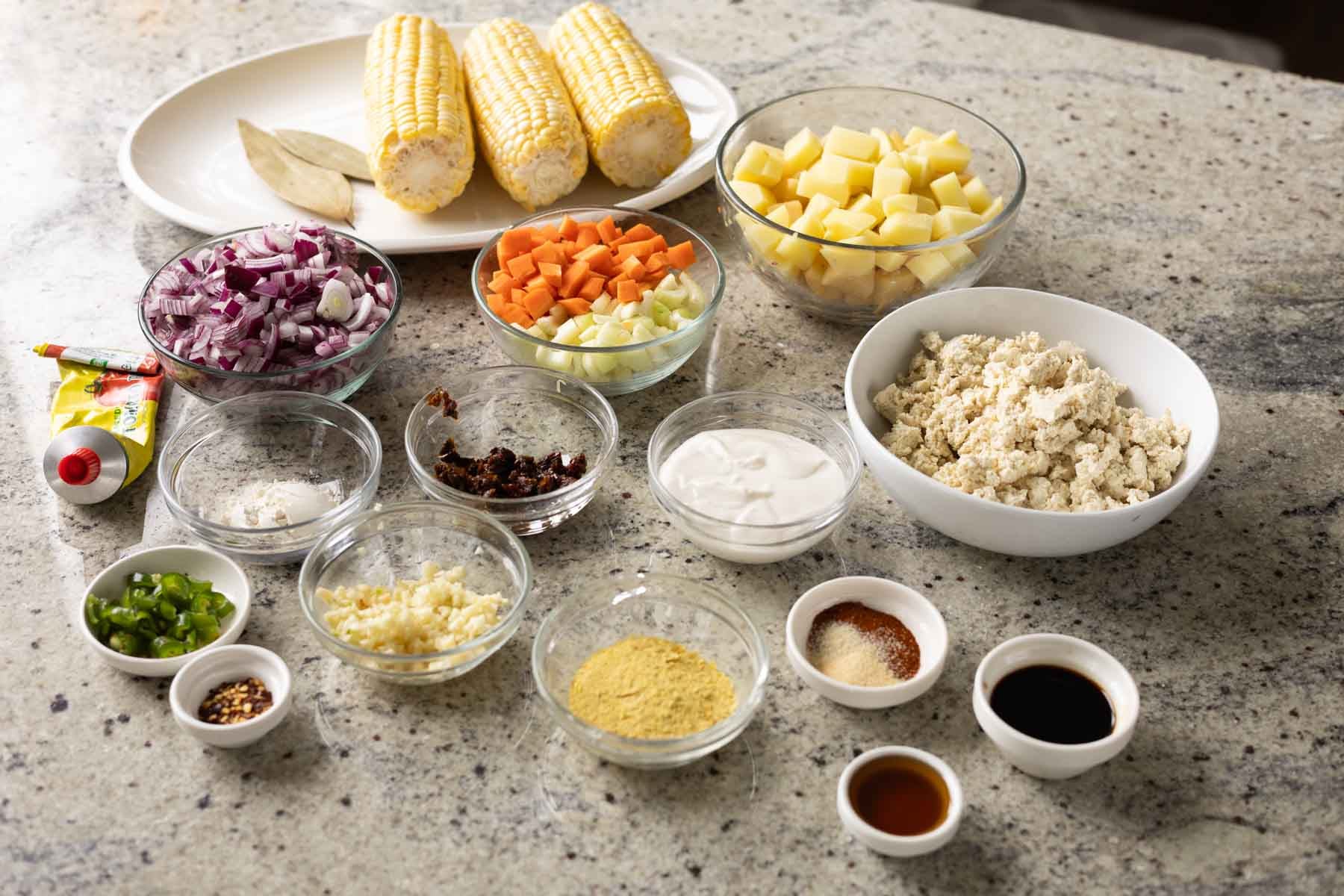
A significant aspect of this recipe’s appeal is its inherent flexibility, catering to a range of dietary restrictions. The base recipe is naturally nut-free, provided that the non-dairy cream used is also nut-free. For those requiring a gluten-free option, the recipe suggests using cornstarch or a gluten-free flour blend for thickening and substituting coconut aminos for soy sauce.
Addressing soy-free requirements involves using a soy-free non-dairy cream and, importantly, a soy-free tofu alternative. Options like pumpkin seed tofu or homemade chickpea flour tofu are suggested. Again, coconut aminos are recommended as a substitute for soy sauce to maintain the desired flavor profile without soy. The recipe also includes a helpful note on making homemade cashew cream for those who wish to control the ingredients or have nut allergies, though it’s important to note this would introduce a nut component to the dish.
Nutritional Considerations
While the recipe emphasizes flavor and texture, it also provides estimated nutritional information. A typical serving is reported to contain approximately 320 calories, with a breakdown including 48g of carbohydrates, 12g of protein, and 11g of fat. It is also a good source of fiber, with around 7g per serving, and contains a notable amount of Vitamin A and C, as well as calcium and iron. It is important to note that these figures are automatically calculated and should be considered approximations, as variations in ingredients and preparation methods can influence the final nutritional content.
Broader Implications in the Culinary World
The emergence of recipes like this "Creamy Corn Chowder with Smoky Tofu Bacony Bits" reflects a broader trend in the culinary world towards more sophisticated and flavorful plant-based cuisine. As consumer demand for vegan and vegetarian options continues to grow, chefs and recipe developers are increasingly focused on creating dishes that not only meet dietary preferences but also rival their traditional counterparts in taste and satisfaction. The techniques employed – such as aromatic oil infusions, charring ingredients for depth of flavor, and creating plant-based alternatives for traditionally meat-centric components like bacon – demonstrate a growing understanding of culinary science and a commitment to innovation within the plant-based sector.
This approach to vegan cooking moves beyond simple substitution and embraces creative flavor building and textural manipulation. It signals a maturation of plant-based gastronomy, where dishes are designed with intention and expertise, appealing to a wider audience beyond just strict vegans. The success of such recipes contributes to the ongoing normalization and popularization of plant-based eating, making it more accessible and appealing to a diverse range of diners. The focus on adaptability also ensures that these culinary advancements can be enjoyed by individuals with specific dietary needs, further broadening their impact.