Culinary Innovation on a Budget: How Padi Straw Mushrooms Are Transforming Modern Home Cooking and Student Meal Prep Across Jakarta

The culinary landscape of urban Indonesia is currently undergoing a subtle yet profound shift, driven largely by economic pragmatism, nutritional awareness, and the timeless ingenuity of home cooks and students alike. In bustling metropolitan hubs such as Jakarta, where the cost of living frequently challenges the financial limits of university students and young professionals, the search for accessible, nutrient-dense ingredients has never been more critical. Enter the padi straw mushroom—locally known as jamur merang—a versatile, earthy fungus that has recently captured the attention of culinary enthusiasts, budget-conscious consumers, and nutritional experts. Celebrated for its delicate texture, savory umami profile, and remarkable adaptability in the kitchen, the padi straw mushroom is rapidly transitioning from a traditional market staple to the star ingredient of modern, simplified home gastronomy.
Recent food economy trends indicate a rising demand for ingredients that offer a high return on investment in terms of both cost and nutritional value. For individuals residing in rented rooms, commonly referred to as anak kos, meal preparation often requires balancing limited kitchen facilities, tight budgets, and restrictive schedules. Traditional protein sources, such as beef and imported poultry cuts, can place a heavy burden on monthly finances. Consequently, alternative proteins and fiber-rich vegetables have emerged as viable solutions. Padi straw mushrooms, known scientifically as Volvariella volvacea, fit seamlessly into this dietary niche. They require minimal preparation, cook rapidly, and absorb flavors exceptionally well, making them ideal candidates for quick sautés, stir-fries, and daily meal-prep routines.
The culinary appeal of jamur merang lies primarily in its versatility. Unlike certain specialty mushrooms that demand complex preparation methods or long simmering times, padi straw mushrooms thrive in high-heat, fast-cooking environments like the wok. Culinary experts note that their spongy texture acts like a culinary sponge, soaking up the aromatic profiles of garlic, shallots, oyster sauce, and soy derivatives. Furthermore, they pair harmoniously with a wide spectrum of additional ingredients, ranging from affordable plant-based proteins like firm white tofu to nutrient-dense green vegetables such as broccoli, bok choy, and young corn. This adaptability has allowed home cooks to experiment limitlessly without straying from standard grocery budgets.
To better understand the practical application of this culinary trend, nutritionists and professional chefs have analyzed the integration of jamur merang into everyday Indonesian households. The resulting recipes demonstrate how simple pantry staples can be elevated into balanced, restaurant-quality dishes suitable for weekday lunches, office bento boxes, or comforting family dinners. Below is a comprehensive look at three distinct stir-fry creations that highlight the versatility of the padi straw mushroom, complete with detailed preparation metrics and flavor profiles.
1. Savory Chicken and Padi Straw Mushroom Stir-Fry with Mixed Vegetables
Nutritional balance is a primary concern for urban workers who rely on home-cooked meals to counteract the effects of sedentary lifestyles and processed foods. By combining lean poultry with fibrous vegetables and mushrooms, home cooks can create a dish that satisfies both dietary requirements and sensory expectations. This particular recipe focuses on maximizing micro-nutrient intake through the inclusion of seasonal vegetables like carrots and Chinese cabbage.
According to culinary documentation, this dish is traditionally categorized as a Nusantara-style main course, requiring approximately thirty minutes from inception to table. Designed to yield two hearty portions, it serves as an accessible entry point for novice cooks looking to master the art of the wok.
The preparation process relies on standard kitchen equipment and readily available aromatics. To begin, cooks prepare fresh chicken meat, slicing it into bite-sized pieces that will cook evenly under high heat. Padi straw mushrooms are carefully washed and halved to ensure they integrate smoothly with the other ingredients. The foundational aromatics—typically garlic, onions, and scallions—are gently sautéed in vegetable oil until translucent and fragrant, releasing essential oils that form the flavor base of the dish.
Once the aromatics have developed their characteristic sweetness, the chicken is introduced to the pan, stirred continuously until it achieves an opaque, firm texture indicating proper doneness. Subsequently, the sliced carrots, Chinese cabbage, and mushrooms are folded into the mixture. A measured splash of water, combined with savory condiments such as oyster sauce, a touch of soy sauce, and freshly cracked black pepper, creates a light, glossy reduction that coats every component. The dish is cooked over medium heat until the liquid slightly thickens, ensuring that the vegetables retain a crisp texture while absorbing the robust savory notes of the sauce.
2. Tofu and Padi Straw Mushroom Stir-Fry with Aromatic Chili Infusion
For those practicing plant-based diets or simply seeking to reduce their meat consumption without sacrificing flavor, the combination of tofu and mushrooms offers an exceptional textural contrast. Tofu provides a soft, protein-rich counterweight to the firm, yielding bite of the padi straw mushroom. This specific recipe elevates the flavor profile by incorporating both jamur merang and shiitake mushrooms, creating a complex, multi-layered umami experience that rivals dishes found in high-end establishments.
The ingredient list for this preparation reflects a careful balance of textures and heat:
- 1 medium block of white tofu, washed, drained, and cut into 1×3 cm pieces
- 3 tablespoons of vegetable oil
- 2 cloves of garlic, finely minced
- 30 grams of yellow onion, finely minced
- 1/4 of a carrot, thinly sliced into long strips
- 5 baby corn ears, thinly split lengthwise
- 6 yellow bird’s eye chilies, coarsely sliced
- 5 red bird’s eye chilies (whole or split)
- 1 green chili pepper, coarsely sliced
- 100 grams of padi straw mushrooms, halved
- 3 shiitake mushrooms, thinly sliced
To harmonize these diverse elements, a specialized seasoning blend is prepared:
- 2 tablespoons of oyster sauce
- 2 tablespoons of shoyu (Japanese-style soy sauce)
- 1 tablespoon of mushroom bouillon powder
- 1/2 teaspoon of ground white pepper
- 1/2 teaspoon of salt
The cooking methodology emphasizes precision and timing. The white tofu is first washed and drained thoroughly to remove any residual packaging liquids. It is then cut into uniform rectangular prisms measuring approximately 1 by 3 centimeters. To prevent the tofu from disintegrating during the stir-frying process, the pieces are fried in vegetable oil until they achieve a light, golden crust on the exterior while remaining tender within; they are subsequently removed and set aside.
In a clean wok, the remaining vegetable oil is heated before introducing the minced garlic and yellow onion. Stirring constantly, the cook waits for the aromatics to turn soft and release their characteristic perfume. The baby corn and carrot slices are added next, sautéed until they begin to soften. The introduction of the assorted chilies—ranging from yellow to red bird’s eye and green varieties—introduces a sharp, vibrant heat that cuts through the earthy richness of the mushrooms.
Padi straw mushrooms and sliced shiitake mushrooms are then tossed into the wok, followed immediately by the prepared seasoning mixture and a modest splash of water. The heat is reduced to a gentle simmer, allowing the liquid to reduce slowly over low heat. This prolonged contact time ensures that the fried tofu acts as a flavor vehicle, absorbing the savory notes of the shoyu, oyster sauce, and mushroom bouillon. The dish is served piping hot, offering a harmonious blend of spice, umami, and varied textures.
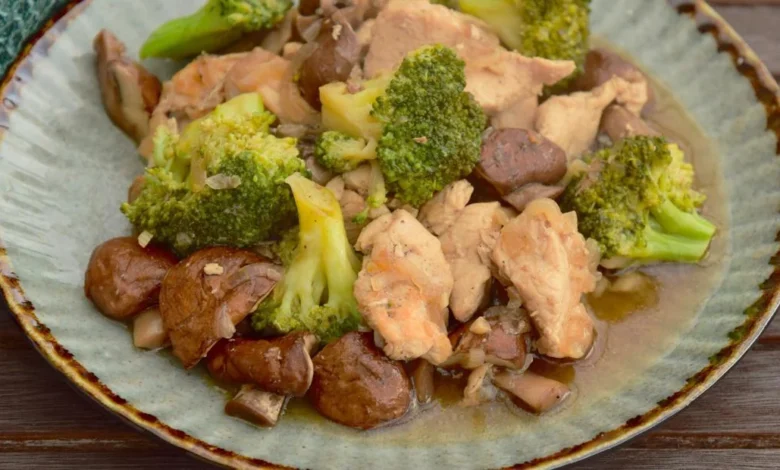
3. Broccoli and Padi Straw Mushroom Stir-Fry with Succulent Chicken Thighs
When nutritional optimization takes precedence, incorporating cruciferous vegetables such as broccoli into daily meals is widely recommended by dietitians due to its high concentration of vitamins C and K, dietary fiber, and antioxidants. This third recipe pairs vibrant green broccoli florets with juicy chicken thigh meat and padi straw mushrooms, creating a visually striking and nutritionally dense dish.
The ingredient composition for this green-forward stir-fry includes:
- 4 tablespoons of vegetable oil
- 1 teaspoon of sesame oil for finishing aroma
- 2 cloves of garlic, finely minced
- 1/4 of a yellow onion, coarsely chopped
- 1 stalk of scallion, coarsely chopped
- 150 grams of chicken thigh meat, coarsely chopped
- 100 grams of broccoli, cut into florets and blanched
- 5 padi straw mushrooms, coarsely chopped
- 100 milliliters of water
The accompanying seasoning profile consists of:
- 3 tablespoons of oyster sauce
- 1 tablespoon of sweet soy sauce (kecap manis)
- 1/2 teaspoon of ground white pepper
- 1 teaspoon of salt
The culinary execution begins with the careful handling of the broccoli. To maintain its vibrant emerald hue and crisp-tender texture, the broccoli florets are briefly blanched in boiling water before being plunged into an ice bath, a technique that halts the cooking process and preserves chlorophyll.
In a wok, the vegetable oil and sesame oil are heated together over medium-high heat. The minced garlic and yellow onion are added, stirred until they become fragrant and translucent. The coarsely chopped chicken thigh meat—valued for its higher fat content and superior moisture retention compared to chicken breast—is introduced next. The meat is stirred until it turns opaque and fully cooked through.
Following the meat, the chopped scallions and padi straw mushrooms are incorporated into the wok. As the mushrooms cook, they release their natural moisture and develop a rich, golden-brown exterior. The blanched broccoli florets are then folded into the mixture with care to prevent bruising. The seasoning components—oyster sauce, sweet soy sauce, white pepper, and salt—are drizzled over the ingredients, accompanied by one hundred milliliters of water to create a light, cohesive sauce.
The contents are simmered over medium heat until the flavors meld seamlessly and the cooking liquid reduces to a desirable consistency. The final dish delivers a sophisticated interplay between the earthy depth of the mushrooms, the savory richness of the chicken thigh, the subtle sweetness of the kecap manis, and the crisp freshness of the broccoli.
Broader Economic and Sociological Implications
The popularity of such accessible recipes highlights a broader trend within contemporary Indonesian society: the democratization of good food. As urban centers continue to expand, culinary knowledge is no longer confined to professional kitchens or formal training institutions. Through digital media platforms, cooking demonstrations, and community food networks, individuals from all walks of life are discovering that gourmet experiences can be replicated at home using economical, locally sourced ingredients like the padi straw mushroom.
Furthermore, the integration of traditional ingredients into modern meal-prep culture underscores a growing appreciation for food security and sustainability. Padi straw mushrooms are frequently cultivated on agricultural waste products, making their production environmentally friendly and economically viable. By supporting local mushroom farmers and incorporating these fungi into daily diets, urban consumers indirectly contribute to sustainable agricultural cycles.
Ultimately, the resurgence of jamur merang in Jakarta’s kitchens serves as a testament to human adaptability and the enduring pleasure of home cooking. Whether prepared by a university student on a strict weekly budget or a seasoned home cook looking to nourish their family, the humble padi straw mushroom proves that exceptional flavor requires neither excessive expenditure nor complicated culinary techniques—only creativity, quality ingredients, and a well-seasoned wok.
Related posts: