How to Open a Coconut: A Step-by-Step Culinary Guide for Home Cooks and Culinary Professionals


For home cooks and culinary professionals alike, incorporating fresh coconut into traditional and modern recipes remains a rewarding yet formidable task. Despite the ingredient’s widespread use in global cuisines—ranging from Caribbean stews and Latin American desserts to Southeast Asian curries—the hard, fibrous outer shell and tightly sealed interior often present a significant barrier to entry in the domestic kitchen. Culinary historians note that while processed coconut milk, flakes, and oils have dominated supermarket shelves in recent decades, the demand for fresh coconut meat and water has experienced a resurgence, driven by a consumer shift toward whole foods and authentic flavors. Mastering the mechanics of opening a mature coconut safely and efficiently is an essential culinary skill that bridges the gap between raw tropical produce and refined gastronomy.
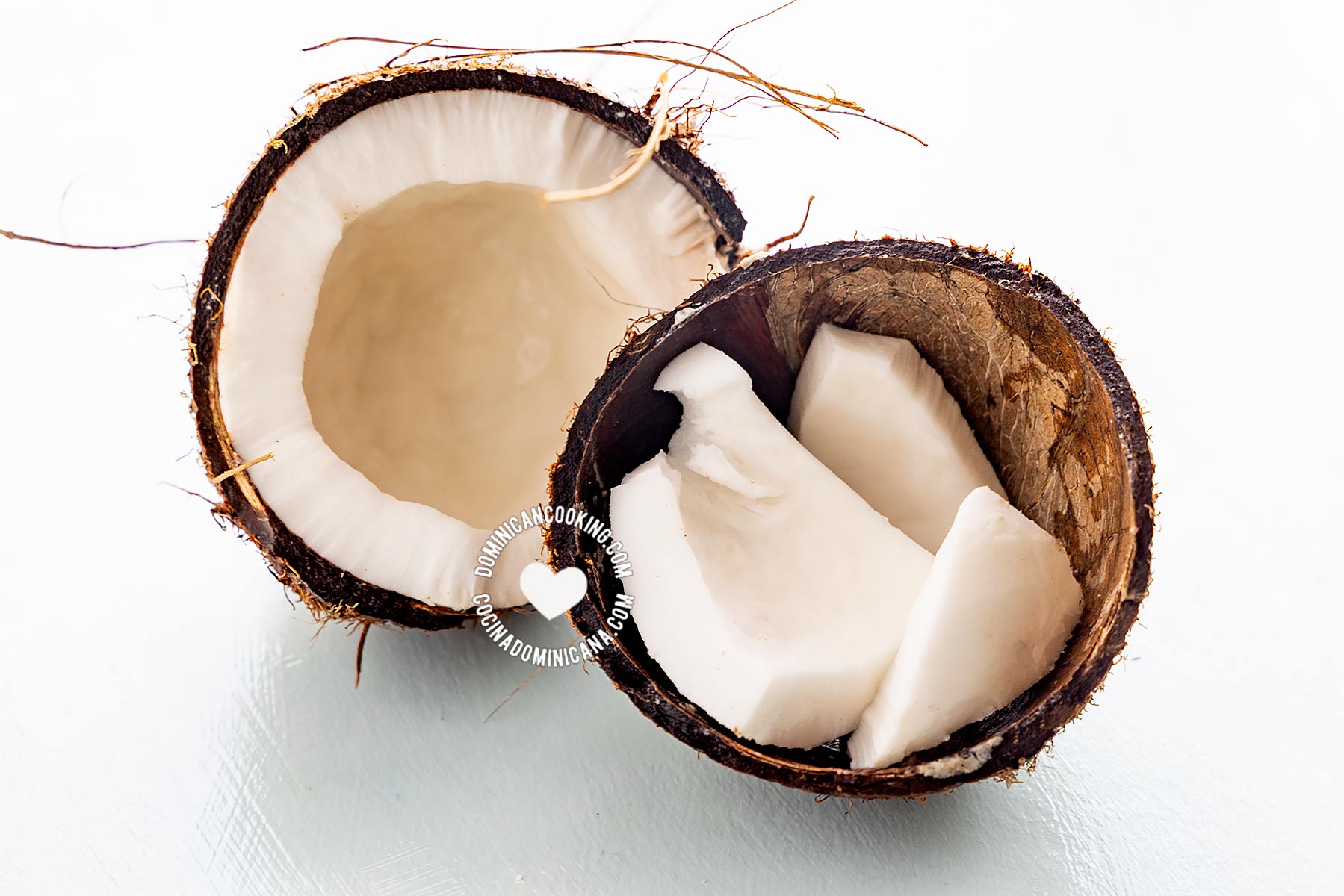
The anatomical structure of a mature coconut dictates the methodology required to breach its defenses. A standard mature drupe consists of three primary layers: the smooth exocarp, the fibrous mesocarp (which is largely removed prior to commercial export), and the exceptionally hard, woody endocarp—commonly referred to the shell—which encases the nutrient-dense endosperm (meat) and liquid endosperm (coconut water). The "face" of the coconut features three distinct germination pores, colloquially known as "eyes." Culinary experts emphasize that these structural features are not uniform in durability; one of the three eyes is consistently softer and thinner than the others, positioned directly over the interior meat, making it the primary focal point for initial extraction techniques.
The standard operating procedure for breaking down a whole mature coconut requires specific, non-specialized household tools to ensure both efficacy and personal safety. Essential equipment includes a clean, flat-head screwdriver or a sturdy metal skewer, a household hammer, several thick cloth tea towels or burlap rags to absorb impact and prevent slipping, a standard glass or vessel for liquid collection, a vegetable peeler, and access to a stable, impact-resistant surface, preferably a concrete floor or heavy-duty utility block. Kitchen safety authorities strongly advise against attempting to crack coconuts on delicate surfaces such as ceramic tile, laminate countertops, or finished hardwood floors, as the forceful kinetic impact required to fracture the woody endocarp can easily cause structural damage to residential interiors.
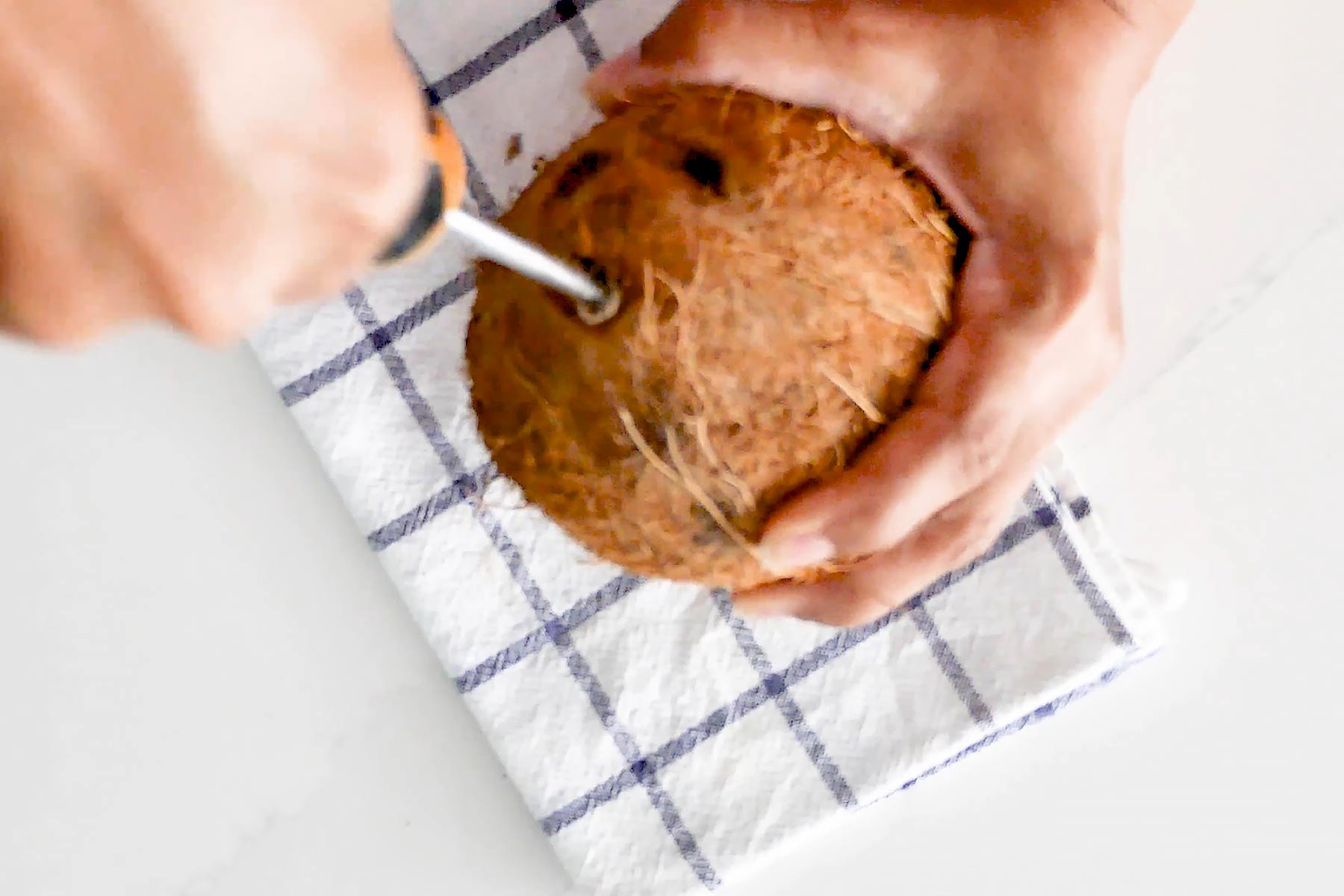
The systematic breakdown of the coconut proceeds through a chronological sequence optimized for waste reduction and fluid preservation. The process begins with the identification and perforation of the germination pores. By locating the three eyes on the exterior shell, the operator aligns a clean flat-head screwdriver with the softest pore. Applying firm, controlled downward pressure—sometimes aided by a gentle tap from a hammer—allows the tool to pierce the thin membrane. Rotating the screwdriver slightly within the aperture enlarges the opening, facilitating both the release of internal pressure and the subsequent drainage phase.
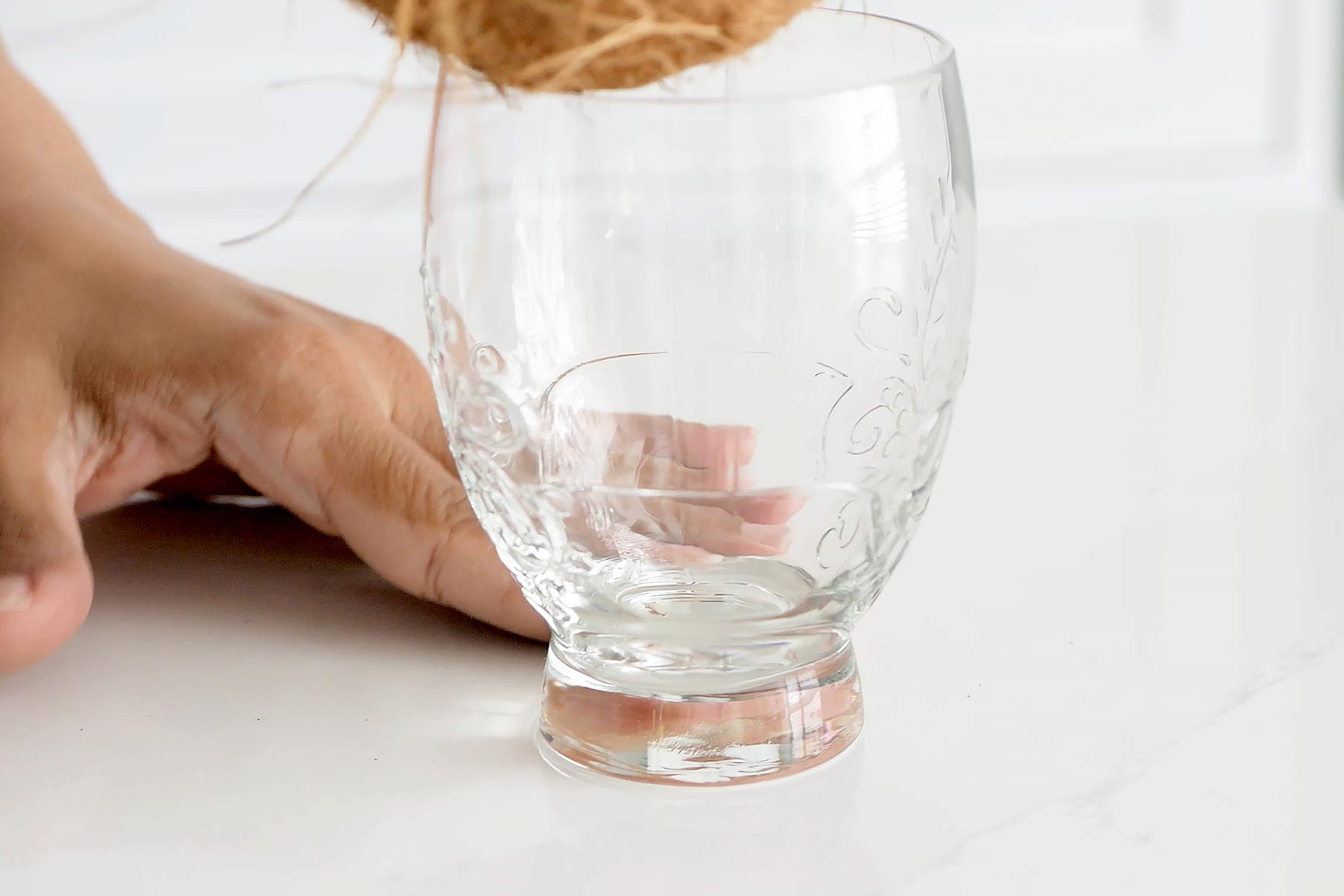
Once the shell has been perforated, the extraction of the coconut water transitions to the second phase. The coconut is inverted, positioning the newly created drainage holes directly over a clean glass or straining vessel. To accelerate the evacuation of the liquid endosperm, which typically ranges from 100 to 300 milliliters depending on the fruit’s size and maturity, the operator can apply gentle manual agitation or shaking. Culinary nutritionists advise tasting the extracted water immediately; a sour or fermented aroma indicates spoilage, whereas a clear, sweet, and slightly nutty profile confirms freshness.
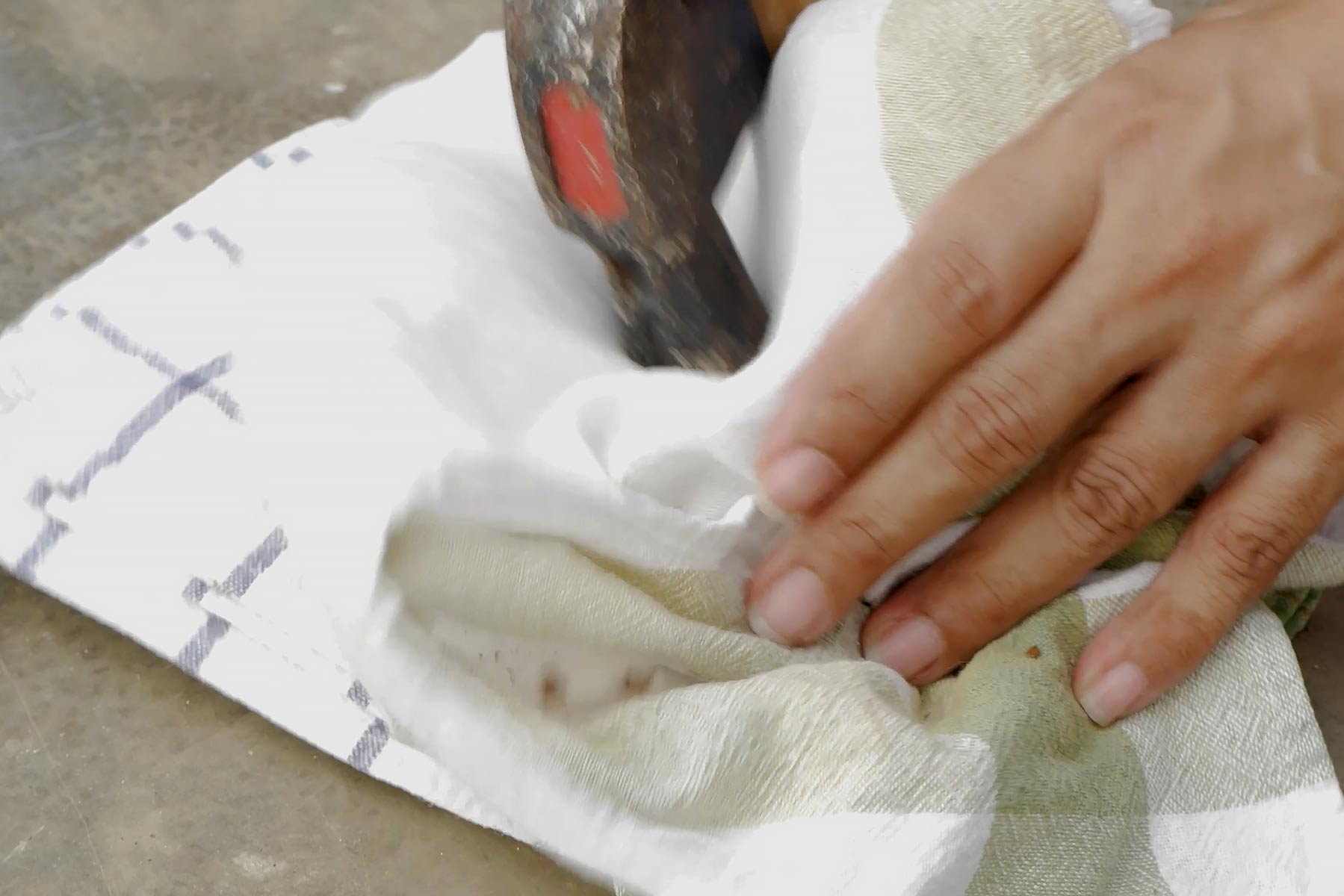
The third phase involves fracturing the woody endocarp, a step that demands strict adherence to safety protocols due to the high risk of tool slippage or flying shell fragments. To mitigate these hazards, the coconut is wrapped entirely in a thick, durable tea towel. The wrapped drupe is then placed upon multiple folded cloths resting on a concrete foundation. Using a hammer, the operator strikes the coconut firmly along its equator—the geometric circumference running perpendicular to the axis of the eyes. Controlled, moderate strikes distributed evenly along the equatorial line will eventually induce structural fatigue, causing the sphere to split cleanly into symmetrical hemispheres. Subsequent targeted strikes near the newly formed edges allow the operator to break the halves into more manageable wedges, facilitating the meat-separation process.
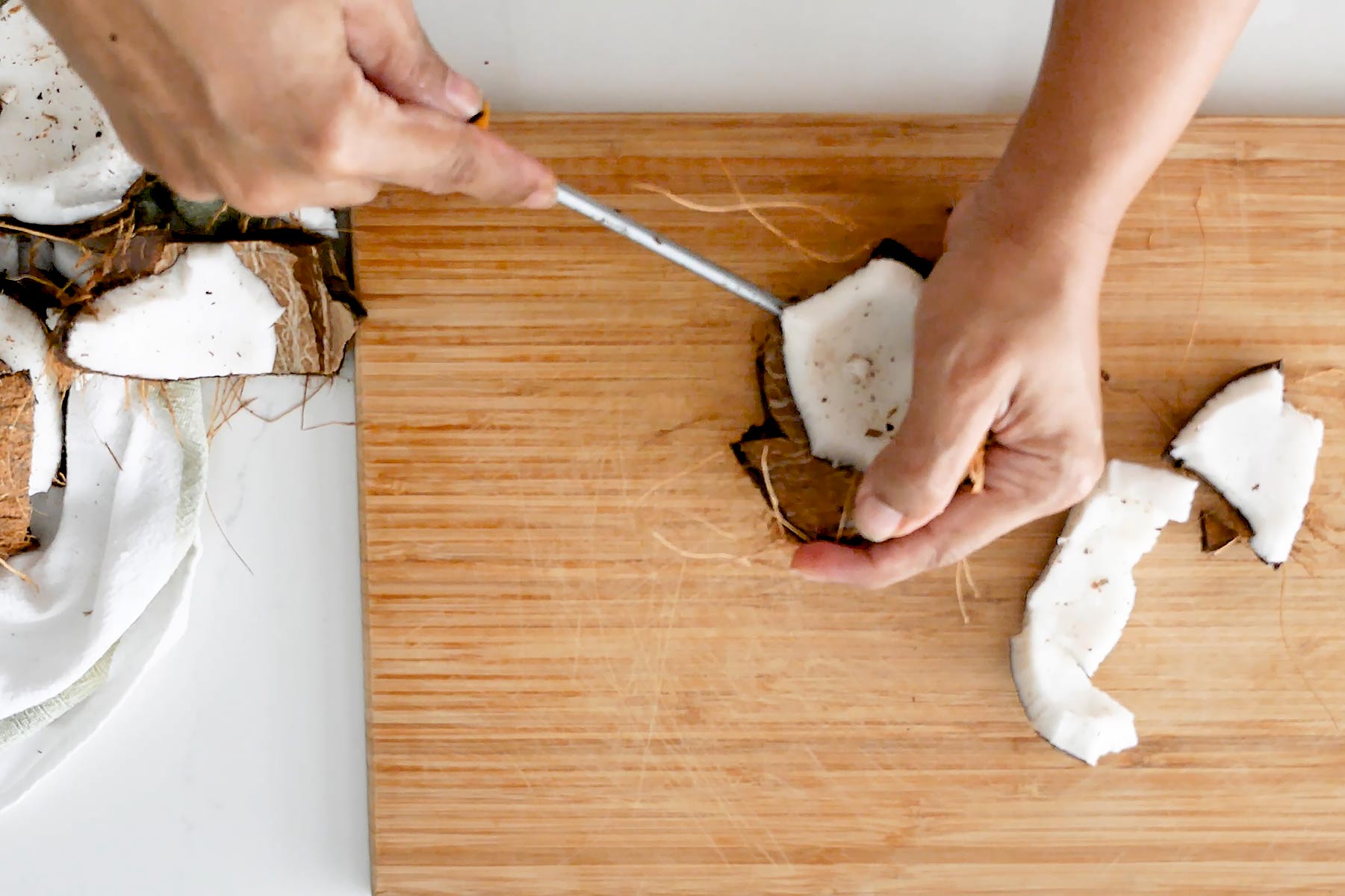
Separating the white endosperm from the rigid brown shell comprises the fourth and fifth stages of preparation. A flat-head screwdriver or a specialized blunt-tipped coconut knife is inserted carefully into the interface between the shell and the meat. By applying leverage, the operator pries the sections away from the woody wall in large, intact strips. Following extraction, the thin, fibrous brown testa adhering to the exterior of the white meat must be removed. Professional chefs utilize a standard potato peeler or a paring knife to shave away this bitter skin, ensuring a clean, uniform product suitable for culinary applications. The resulting meat is then thoroughly rinsed under cold running water to eliminate residual shell dust, wood fibers, or airborne particulates.
Post-processing storage methods are critical for maintaining the quality and safety of fresh coconut meat, which possesses a high oil and moisture content rendering it susceptible to rapid microbial degradation at ambient room temperatures. Following a brief air-drying period on a clean linen towel, the prepared meat can be refrigerated in an airtight container for short-term use, typically lasting two to four days. For long-term preservation, culinary technologists recommend vacuum-sealing the pieces or storing them in freezer-safe bags. Properly frozen fresh coconut meat retains its structural integrity and flavor profile for up to one month, though culinary purists maintain that immediate utilization yields the optimal sensory experience.
From a broader nutritional and economic perspective, the mechanical processing of whole coconuts supports a diverse array of global industries, including food service, confectionary manufacturing, and cosmetic production. Nutritional data published by agricultural research agencies highlights that fresh coconut meat is a rich source of dietary fiber, complex carbohydrates, and medium-chain triglycerides (MCTs), particularly lauric acid, which has been extensively studied for its antimicrobial properties. Furthermore, the commercial shift toward whole-produce utilization has prompted culinary educators to demystify traditional preparation techniques, empowering home cooks to bypass heavily processed alternatives and engage directly with raw, nutrient-dense ingredients.
By standardizing the approach to opening, draining, cracking, and cleaning raw coconuts, culinary practitioners can minimize food waste and maximize both the yield and quality of the final ingredient. While the physical demands of breaking through a mature drupe may initially deter novices, adherence to a structured, methodical workflow transforms a notoriously difficult kitchen chore into a routine and reliable culinary technique. As interest in authentic, scratch-made international cuisine continues to expand globally, mastery of foundational procedures such as coconut preparation remains an invaluable asset for modern culinary arts.
Related posts: