The Secret to the Perfect Egg-Free Chocolate Chip Cookie Is Already in Your Kitchen

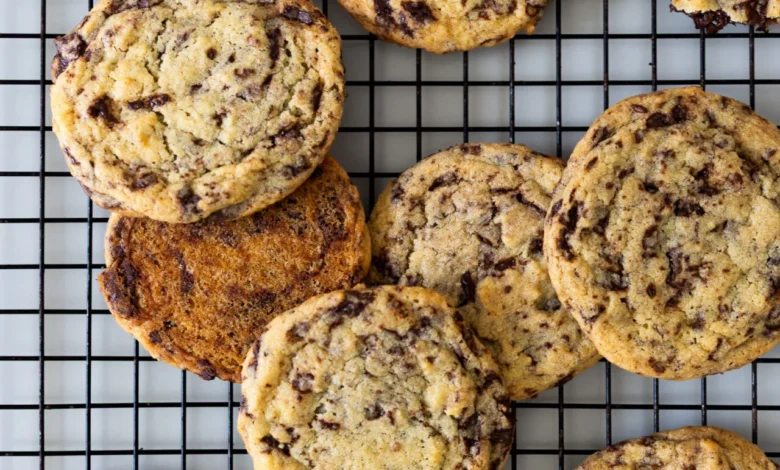
Baking enthusiasts and culinary researchers are increasingly exploring plant-based adaptations of classic comfort foods, driven by a combination of dietary preferences, sustainability concerns, and economic factors such as fluctuating egg prices. Among the most enduring challenges in home baking has been replicating the iconic texture of traditional chocolate chip cookies—crispy edges paired with a soft, chewy center—without relying on traditional binder ingredients like eggs. Traditional baking science relies heavily on eggs to provide structure, moisture, and aeration. However, recent developments in home-kitchen testing spearheaded by food creators and recipe developers have demonstrated that a surprisingly common and unassuming household staple, plain water, can effectively substitute for eggs to achieve desired textural profiles when balanced with the correct ratios of fat and sugar.

The culinary evolution of eggless baking gained significant momentum during the rise of the modern plant-based dietary movement. Home bakers began experimenting with various substitutes ranging from commercial egg replacers and flaxseed meal to aquafaba, the viscous liquid left over from cooked chickpeas. While these alternatives have proven successful in specific applications like meringues or dense cakes, they often introduce unwanted flavors, heavy densities, or dense gumminess in delicate cookies. Alejandra Graf, a recipe developer known for her work in plant-based and accessible home cooking, noted that years of iterative testing revealed that complex substitutes were frequently unnecessary. Through rigorous kitchen trials, Graf identified that hydration management through simple water application yielded the precise structural breakdown required for a thin, structurally sound cookie with crisp perimeter edges and a tender core.
To understand the mechanics of this technique, it is necessary to examine the functional role of eggs in conventional cookie chemistry. Eggs perform three primary functions in standard baking formulas: they introduce moisture, bind dry ingredients together via proteins, and act as a leavening agent by trapping air during mixing. When eliminated entirely without a compensatory mechanism, cookie dough tends to become dry, crumbly, or overly dense, while doughs with too much moisture can puff up like cake rather than spreading flat. By introducing precise amounts of water instead of complex substitutes, bakers can restore baseline hydration levels. This allows the fats—whether dairy butter or plant-based equivalents—and sugars to interact properly during the creaming and baking processes. As the water evaporates in the oven heat, it creates steam that aids minimal leavening while allowing the dough to spread thinly across the baking sheet, yielding the characteristic caramelized, crisp edges alongside a soft center.
The practical application of this method streamlines the preparation process significantly for home cooks. A standard batch yielding approximately twenty cookies requires standard baking ingredients: flour, sugar, dark chocolate chips or chunks, a source of fat, leavening agents, and the critical addition of water. Preparation times are notably short, averaging ten minutes of active assembly, followed by a brief ten-minute chilling period to solidify the fats and prevent excessive spreading, and roughly ten minutes of baking time. Nutritional profiles for recipes utilizing this technique typically remain comparable to standard chocolate chip cookies, averaging approximately 134 kilocalories per standard portion, with modest variations depending on whether traditional dairy or plant-based butter alternatives are selected.
The implications of simplifying foundational baking formulas extend beyond individual kitchens, reflecting broader shifts in consumer behavior and the food industry. As global supply chains face periodic disruptions and the cost of animal-derived products experiences volatility, accessible culinary innovations that rely on pantry staples gain wider public interest. Home cooks increasingly value recipes that reduce specialized grocery requirements, lowering economic barriers to baking while accommodating dietary restrictions such as egg allergies, intolerances, or ethical veganism. Furthermore, the emphasis on dark chocolate within these formulations aligns with growing consumer demand for antioxidant-rich, higher-cacao confectionery options.

Culinary analysts note that the democratization of baking techniques through digital platforms has accelerated the sharing and refinement of such methods. Recipes that strip away unnecessary complexity resonate strongly with contemporary audiences seeking efficiency without sacrificing sensory quality. As food creators continue to demystify plant-based cooking through accessible kitchen science, the traditional boundaries between specialized dietary baking and everyday comfort food continue to dissolve. The realization that an everyday liquid like water can successfully replace traditional binders underscores a broader minimalist philosophy taking root in modern gastronomy—one where understanding the fundamental chemical reactions of basic ingredients yields superior results to reliance on specialty products.
Related posts: