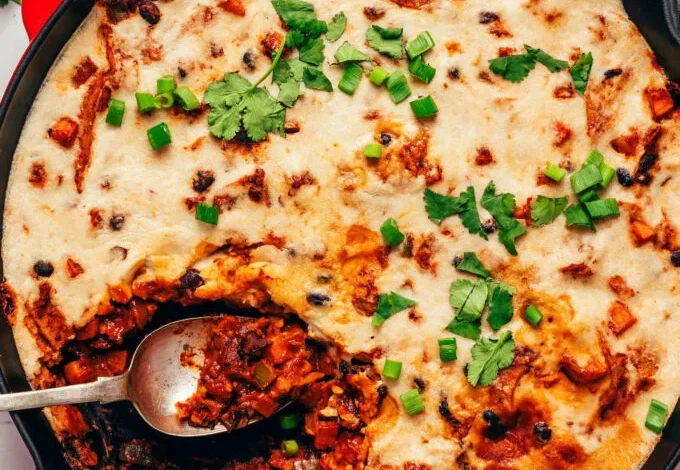
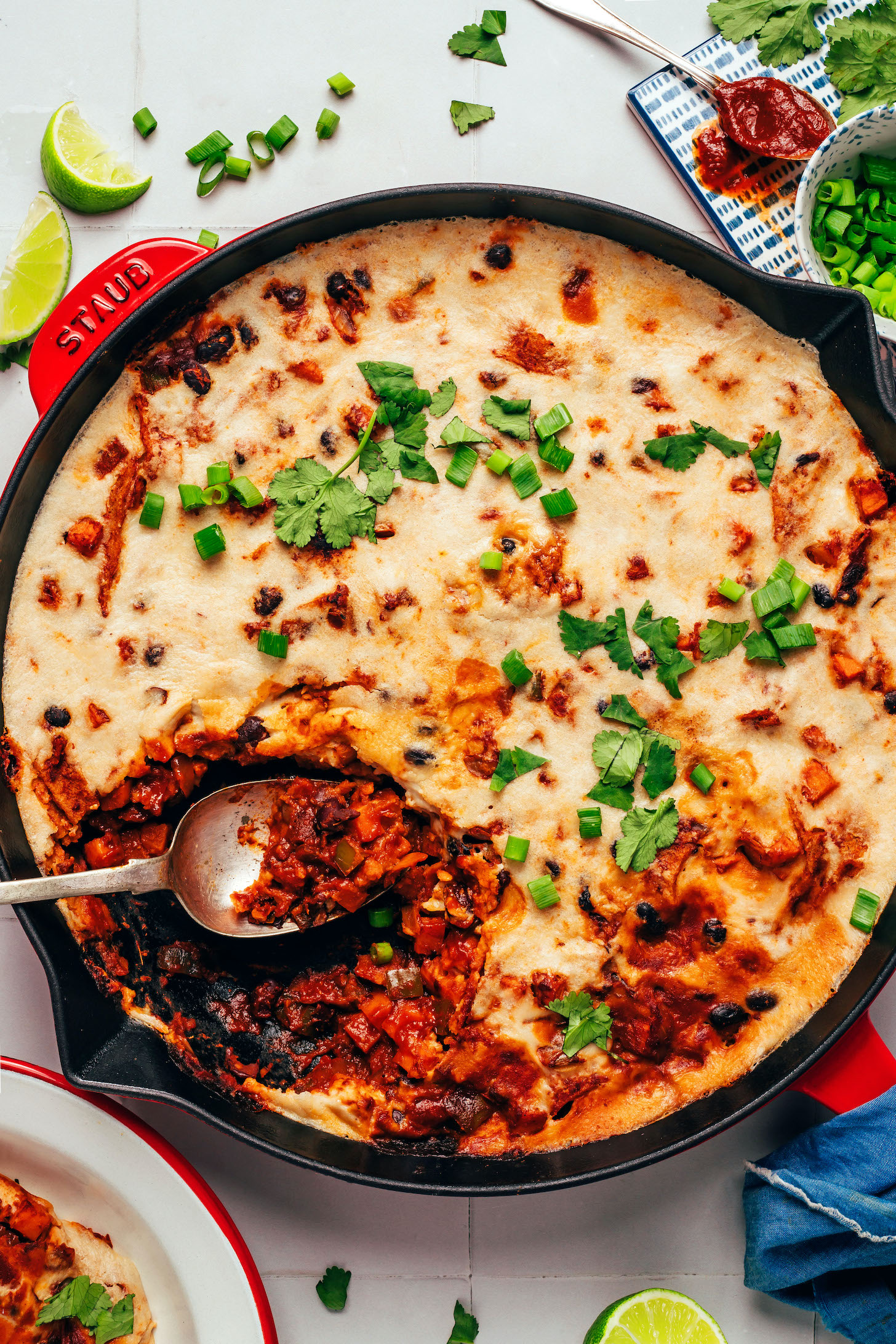
The culinary landscape continues to shift rapidly toward convenient, plant-based meal solutions that reduce kitchen complexity without sacrificing global flavors. In response to growing consumer demand for fast, wholesome, and accessible weeknight dinners, recipe developers and home cooking platforms have increasingly focused on one-pan methodologies. Among recent recipe introductions, the thirty-minute vegan enchilada skillet has emerged as a prominent trend, combining traditional Mexican-inspired flavor profiles with modern dietary preferences, gluten-free flexibility, and minimal cleanup requirements.
This dish represents a broader movement within the modern food industry toward "deconstructed" comfort foods. By eliminating time-consuming steps traditionally associated with Mexican cuisine—such as individually filling, rolling, and baking stuffed tortillas—culinary creators have streamlined classic dishes for contemporary schedules. Utilizing nutrient-dense, accessible ingredients like sweet potatoes, black beans, and a stovetop-friendly cashew-based cheese sauce, the recipe reflects ongoing shifts in home cooking habits toward efficiency, plant-forward nutrition, and allergen-conscious dining.
Historical Evolution and Cultural Roots of the Enchilada
To understand the modern adaptation of the enchilada skillet, culinary historians point to the deep historical roots of the traditional dish. While contemporary Americanized versions often feature baked, cheese-topped corn tortillas smothered in chili-based sauces, the lineage of the enchilada stretches back to pre-Columbian Mesoamerica. Anthropological research indicates that indigenous peoples in the Valley of Mexico consumed corn tortillas folded or rolled around small fish or vegetables, a practice documented by Spanish chroniclers during the sixteenth century.
The conceptual precursor to the modern enchilada is widely believed to be the Mayan dish known as papadzules, which consisted of corn tortillas dipped in a rich pumpkin seed sauce and filled with hard-boiled eggs. As culinary traditions evolved throughout Mexico, regional variations incorporated local meats, cheeses, potatoes, and distinct chile sauces. The earliest known printed recipe for the dish appeared in the 1831 Mexican cookbook El Cocinero mexicano, cementing its status as a staple of Mexican gastronomy.
Over the nineteenth and twentieth centuries, the dish migrated northward, adapting to available ingredients in the American Southwest and eventually gaining widespread popularity across the United States. The introduction of canned enchilada sauces and commercially produced tortillas in the mid-twentieth century further accelerated its adoption in American households. However, the traditional preparation method—requiring individual assembly, rolling, layering in a baking dish, and oven baking—remains a barrier for individuals seeking quick, weeknight-friendly meal options. The recent innovation of the skillet-based variation addresses this friction point by translating the core flavor profile into a single-vessel, stovetop-cooked format.
Culinary Mechanics and Ingredient Selection
The architecture of the thirty-minute vegan enchilada skillet relies heavily on precise ingredient selection and thermal efficiency. Designed to serve four individuals, the recipe integrates complex carbohydrates, plant-based proteins, and healthy fats while remaining entirely free of dairy, meat, and gluten.
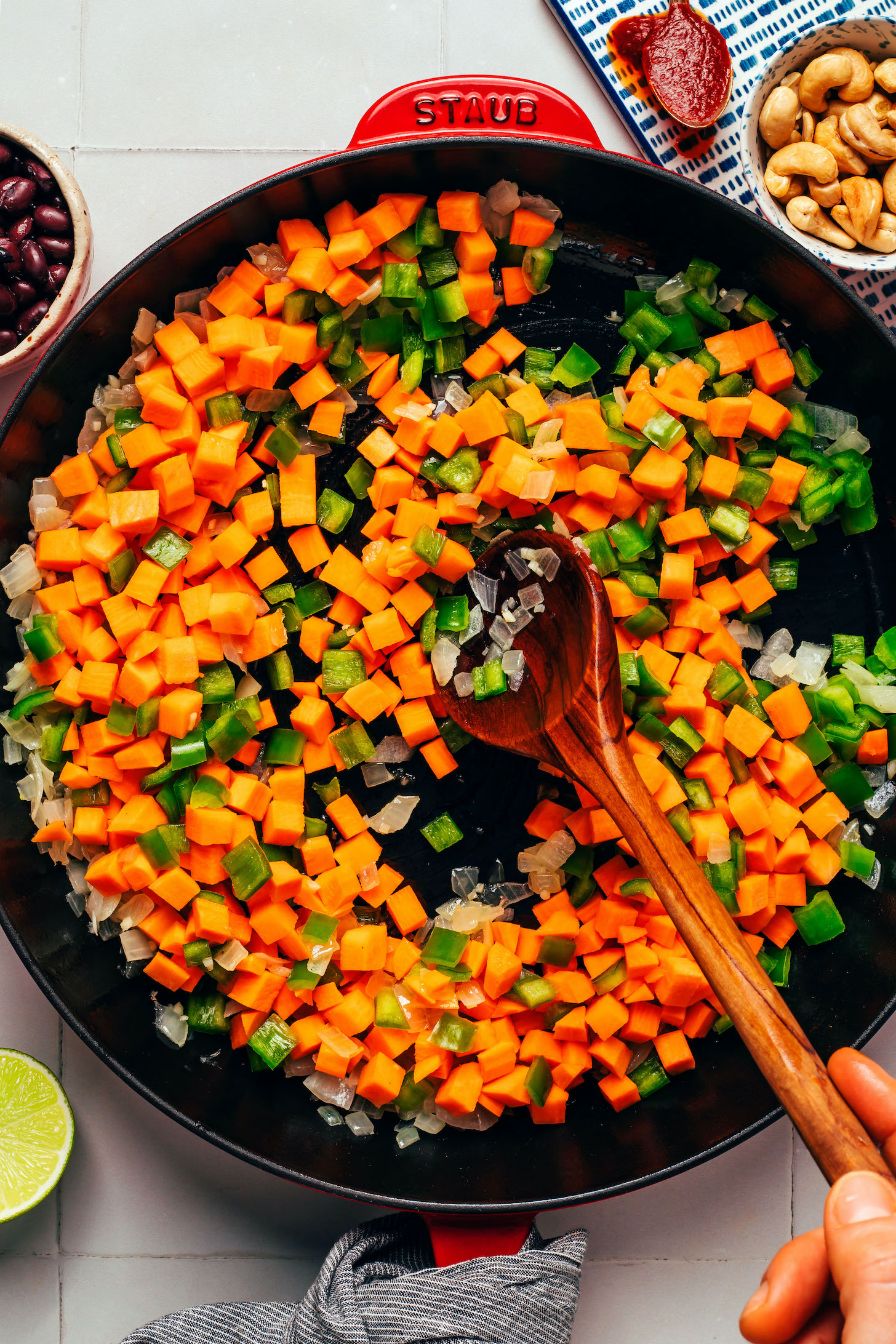
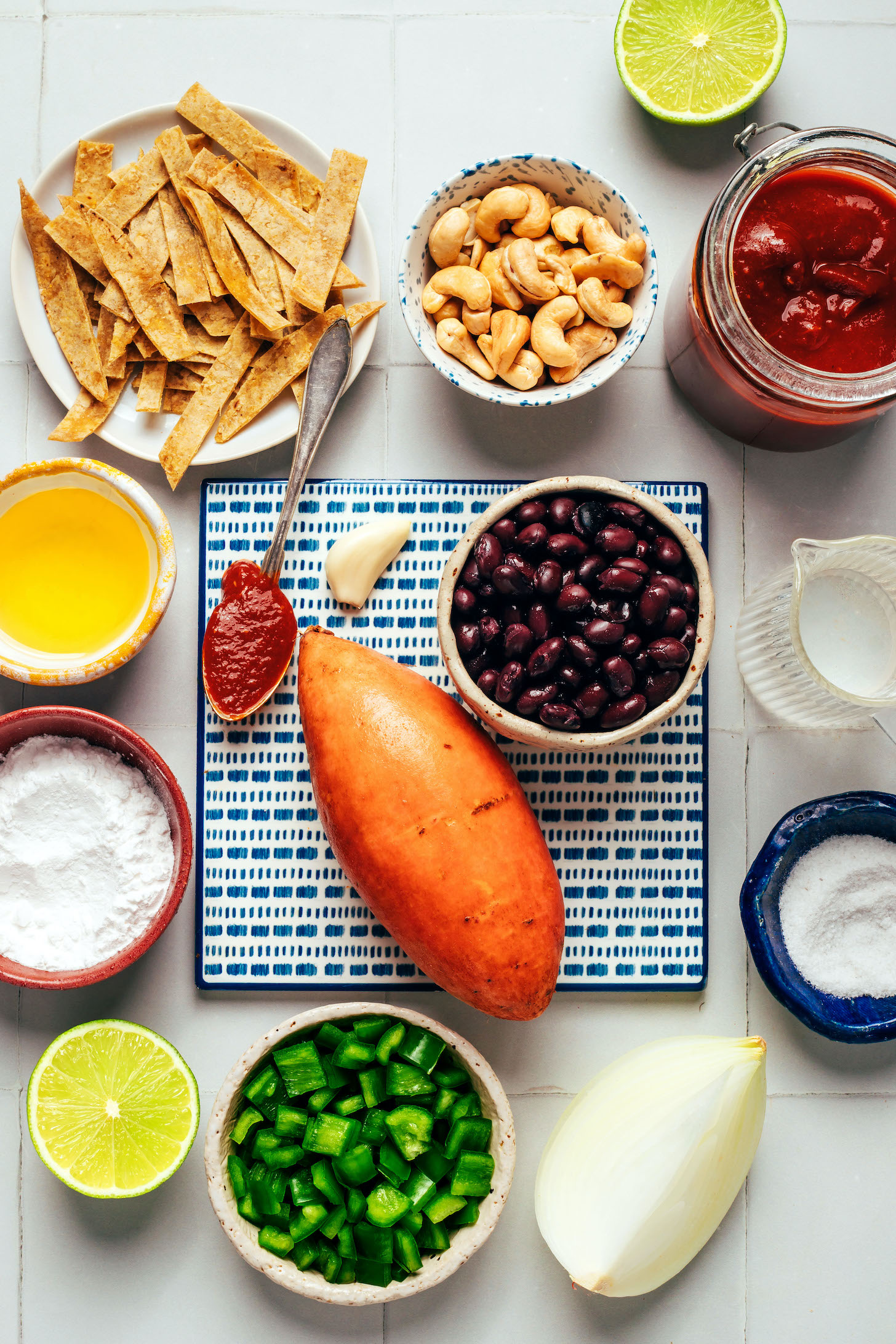
At the base of the dish are aromatic and root vegetables, primarily yellow onions, garlic, poblano peppers, and cubed sweet potatoes or winter squashes such as kabocha or butternut. Nutritional data highlights the density of these components: sweet potatoes provide substantial levels of dietary fiber, potassium, and vitamin A, while poblano peppers contribute mild capsaicin heat and vitamin C. Culinary experts emphasize that dicing the root vegetables into uniform, small cubes—typically one-quarter to one-half inch—is critical to ensuring they soften adequately within the strict twenty-minute cooking window on the stovetop.
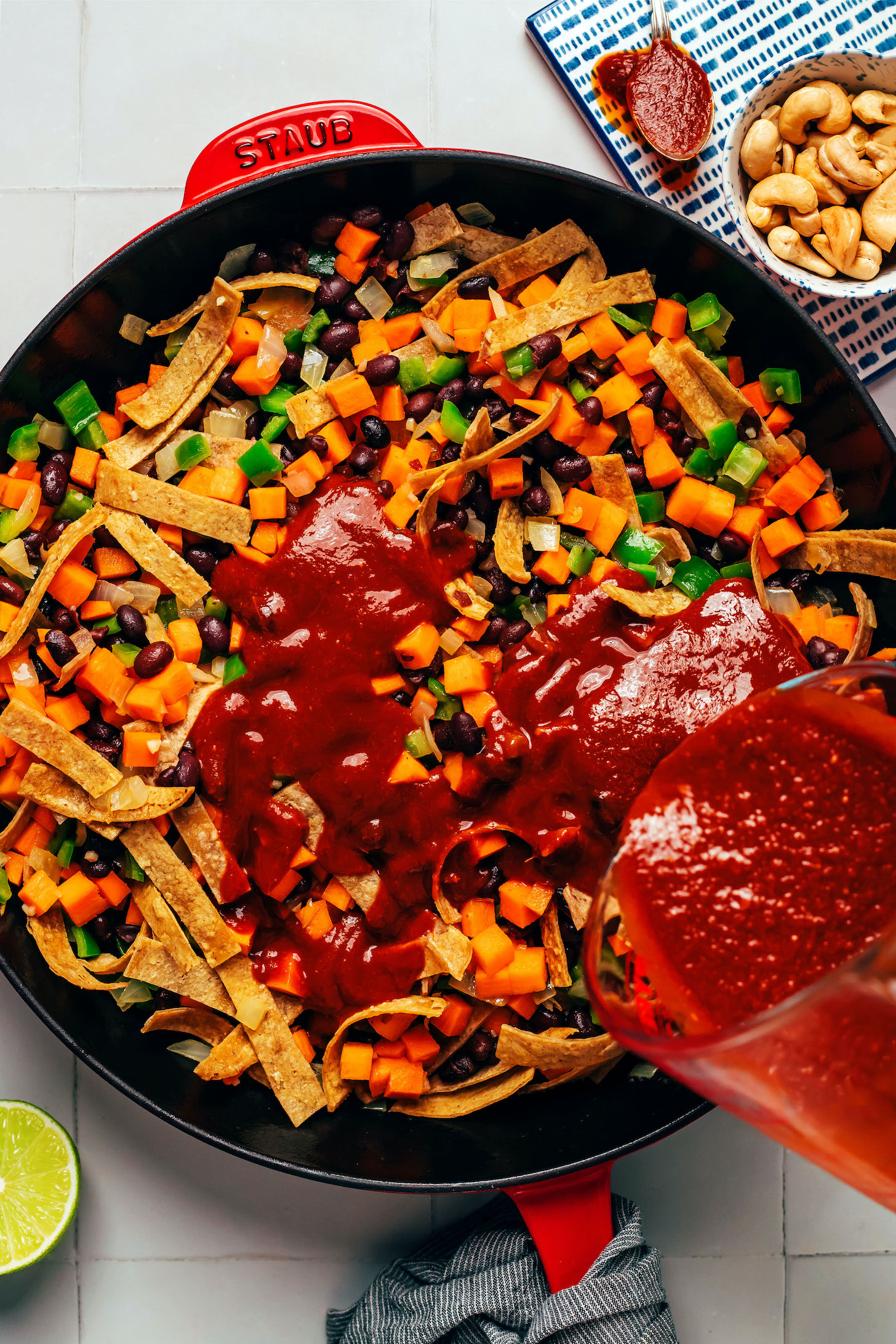
Following the initial sautéing phase, the recipe incorporates fiber-rich black beans alongside sliced corn tortillas. Unlike flour tortillas, which tend to disintegrate into an unpalatable paste under prolonged exposure to moisture and heat, corn tortillas maintain structural integrity when sliced into strips and simmered alongside red enchilada sauce. This technique allows the starches from the corn to naturally thicken the sauce while absorbing the savory, smoky notes of the chiles, effectively replicating the texture of baked enchilada layers without requiring an oven.
The Innovation of Plant-Based Cashew Queso
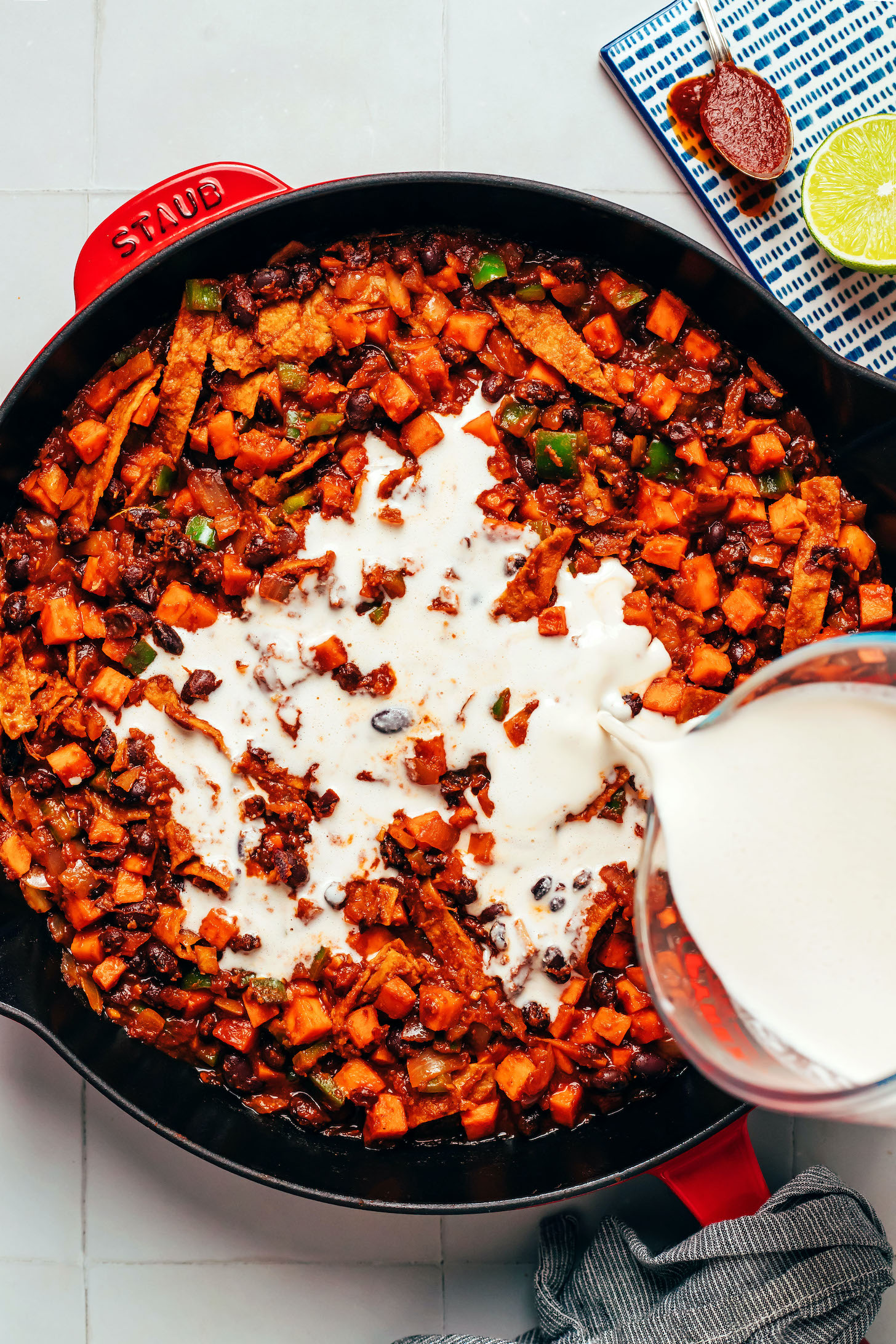
A defining characteristic of the recipe is its avoidance of commercial petroleum- or oil-heavy vegan cheese substitutes, opting instead for a whole-food approach utilizing raw cashews. The "cheese" sauce is formulated by blending raw cashews with water, fresh lime juice, garlic, sea salt, and tapioca starch.
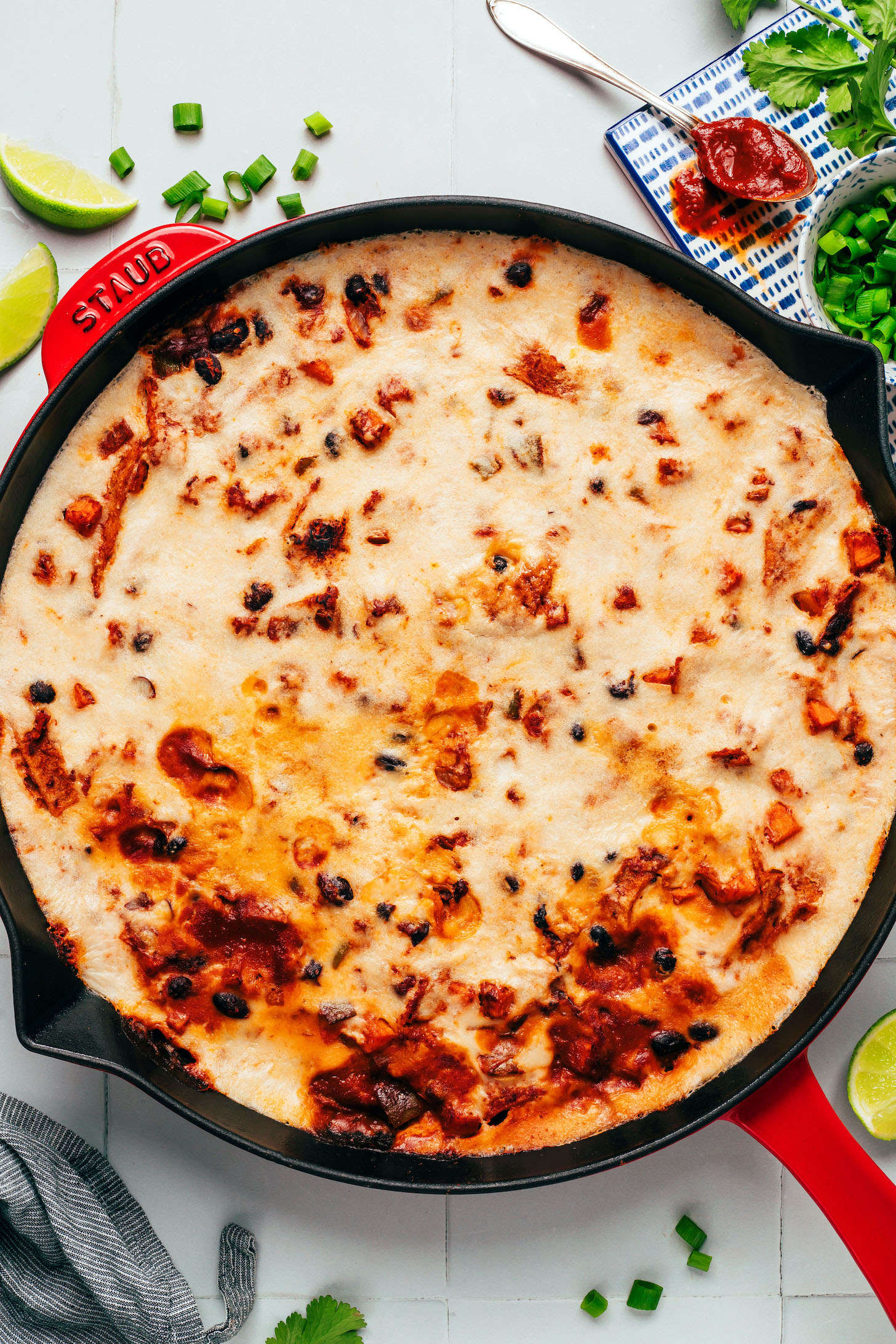
Food scientists and plant-based chefs note that tapioca starch acts as a vital texturizing agent in dairy-free cooking. When exposed to heat and moisture, the starch molecules gelatinize, creating the stretchy, elastic mouthfeel traditionally associated with melted dairy cheese. When poured over the bubbling skillet and covered for the final minutes of cooking, the residual heat activates the tapioca starch, transforming the liquid cashew mixture into a melty, cohesive layer.
Nutritional Profile and Dietary Implications
Nutritional analyses of the dish indicate a well-balanced profile suitable for a variety of dietary regimens. A single standard serving contains approximately 416 calories, 68.2 grams of carbohydrates, 13.6 grams of protein, and 12.2 grams of total fat, with a minimal saturated fat content of 1.8 grams. Notably, the meal delivers a significant dietary fiber boost of 14.3 grams per serving, driven primarily by the combination of sweet potatoes, black beans, and corn tortillas. Furthermore, the absence of animal products ensures zero cholesterol, while the sodium content hovers around 940 milligrams, depending largely on the specific brand or formulation of the red enchilada sauce utilized.
Dietitians and nutritionists frequently highlight the benefits of incorporating plant-forward, bean-based meals into regular weekly rotations. Legumes such as black beans offer sustained glycemic control due to their low glycemic index and high soluble fiber content, making dishes of this nature appealing to individuals managing metabolic health or seeking plant-based protein alternatives.
Consumer Reception and Market Trends
The rapid dissemination of quick-cooking, allergen-friendly recipes reflects broader shifts in consumer behavior within the food media sector. As households face increasing time constraints, recipe platforms have pivoted away from multi-step, labor-intensive weekend baking projects toward streamlined solutions that prioritize speed, minimal dishwashing, and pantry staples.
Industry analysts note that sales of plant-based culinary components—including raw nuts, nutritional yeasts, and specialty starches like tapioca—have maintained steady growth as home cooks experiment with scratch-made vegan alternatives to processed convenience foods. The versatility of the enchilada skillet, which allows for seasonal vegetable substitutions (such as swapping sweet potatoes for winter squash or incorporating leafy greens like kale and spinach), aligns with consumer preferences for customizable home cooking.
Broader Impact and Future Outlook
The evolution of traditional recipes into streamlined, plant-based formats demonstrates the dynamic nature of contemporary global cuisine. By honoring the historical origins of foundational dishes while adapting them to modern nutritional values and time constraints, home cooks and culinary developers continue to redefine everyday dining.
As interest in sustainable, plant-forward eating patterns persists, recipes that successfully bridge the gap between traditional comfort food and modern nutritional efficiency are expected to remain staples of contemporary home cooking. Through continued innovation in technique and ingredient pairing, the culinary community shows that complex, deeply satisfying flavor profiles can be achieved efficiently within the span of a standard thirty-minute weeknight window.