London Climate Week 2026: Five Key Takeaways for the Future of Global Food Systems


As London sweltered under record-breaking temperatures reaching 35C, the irony of the situation provided a sobering backdrop for London Climate Week (LCW) 2026. While headlines noted the cancellation of several outdoor sessions due to the extreme heat—a physical manifestation of the very crisis under discussion—thousands of scientists, policymakers, corporate executives, and environmental activists converged on the capital to debate the future of the planet. Among the most critical threads of this year’s assembly was the role of global food systems, which moved from the periphery to the very center of the discourse. Representatives from the Sustainable Food Trust (SFT), including Bahareh Sarvi, Amy Warner, and Jessica Gunn, participated in these forums to assess how the current agricultural paradigm is failing to reconcile with climate realities.
The event, which has expanded significantly in scope and attendance since its inception, now arguably rivals New York Climate Week in both the volume of attendees and the density of its programming. From the halls of the Palace to the high-level gatherings at Goals House, the message was clear: the current trajectory of industrial agriculture is unsustainable, and the financial, social, and environmental costs of inaction are mounting.
The Affordability Paradox: A Systemic Failure
A central point of contention during the week was the launch of The Economist’s Resilient Food System Index. While the index provides a necessary framework for measuring the performance of food systems—based on pillars of availability, quality, safety, adaptability, and climate—it reignited a long-standing debate regarding the "affordability trap."
For decades, the global food industry has utilized "affordability" as a primary metric of success, often at the expense of soil health, biodiversity, and public nutrition. Critics at the summit pointed out that the pursuit of cheap food has failed to eradicate malnutrition. In a startling disclosure, a UNICEF representative noted that obesity has officially surpassed hunger as the world’s leading form of malnutrition. Both crises disproportionately impact low-income populations, suggesting that the current model of hyper-cheap, ultra-processed food is not a solution to food security but a driver of systemic health failures. The consensus among many experts was that price must no longer be equated with the public good if that price point is subsidized by environmental degradation and poor health outcomes.
The Investment Gap and the Risk of Inaction
The financial sector’s involvement in the agricultural transition remains one of the most significant bottlenecks. Harry Farnsworth of Rabobank highlighted a critical market failure: climate risk is still not adequately priced into agricultural markets. Because the current risk models fail to account for the true costs of degraded soil, climate instability, and biodiversity loss, sustainable farming transitions remain largely unbankable for traditional investors.
While initiatives such as the DEFRA-backed nature bond and the Wildfarmed initiative represent innovative steps, they remain experimental and underfunded relative to the scale of the challenge. The disconnect is stark: the global food industry maintains lobbying budgets in the tens of billions, yet philanthropic and venture capital investment aimed at systemic agricultural reform is measured only in the hundreds of millions. Without large-scale mechanisms to de-risk these transitions—specifically by having government or institutional entities absorb initial losses—private capital will continue to favor the status quo of intensive, extractive production.
Rethinking Net Zero in Agriculture
A sharp critique emerged regarding the dominance of "Net Zero" as a singular framing for climate policy. Several panelists argued that the fixation on carbon metrics has created a form of "tunnel vision," where the focus on CO2 emissions inadvertently overshadows other vital environmental indicators, such as water security, soil health, and community resilience.
The SFT and other observers warned that the current carbon-accounting methodology risks rewarding intensive, industrial-scale agriculture. For example, highly centralized "Big Dairy" operations can appear carbon-efficient on paper due to high output volumes, yet these systems often result in significant negative externalities for local ecosystems and animal welfare. The emerging consensus is that climate policy must shift toward a "whole-systems" approach that integrates carbon reduction with a broader commitment to ecological health and long-term food sovereignty.
The Complexity of Regenerative Agriculture
The term "regenerative agriculture" remained a buzzword, yet the debate at LCW 2026 underscored the difficulty of establishing a universal definition. Participants noted that regenerative agriculture is less of a static destination and more of a dynamic process. It involves a holistic management of the farm, where the rotation of crops—such as legumes and grass leys—is as critical as the primary commodity.
The challenge, however, is that current regulatory and financial infrastructures are designed for commodity-based transactions rather than whole-farm systemic analysis. For regenerative practices to scale, supply chains must shift from a model of passing costs onto the consumer to one where companies invest directly in the transition of their supply bases. The Regen10 Framework was highlighted as a potential pathway, emphasizing that each landscape requires a bespoke approach, rather than a top-down, one-size-fits-all mandate.
The Rise of Big Dairy and Commodity Traps
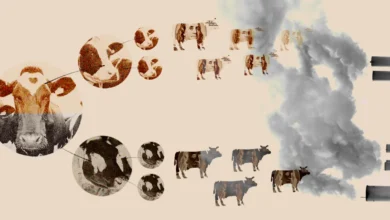
One of the most heated debates centered on the rise of "Big Dairy." Data presented at the conference showed that while the number of dairy farms in the UK has plummeted from 54,000 in 1974 to fewer than 7,000 today, the prevalence of "mega-dairies"—fully housed, high-intensity systems—has doubled in the last decade. Approximately 60% of the milk consumed in the UK now originates from these intensive systems.
This trend has left the industry trapped in a commodity model that forces farmers to "go big or get out." The commodification of dairy has stripped the product of its narrative value, reducing it to a price-sensitive unit rather than a product of stewardship and nutrition. Experts argued that the industry needs a shared measurement framework that recognizes higher welfare standards and environmental sustainability, effectively decoupling dairy quality from the destructive "race to the bottom" in pricing.
Chronology of the Debate: From Policy to Implementation
The week’s events followed a trajectory that moved from theoretical framework to practical application:
- Monday: The focus was on the launch of the Resilient Food System Index, setting the stage for discussions on affordability and metrics.
- Tuesday: Financial experts and NGOs engaged in a critical assessment of the investment gap, highlighting the need for government-led de-risking mechanisms.
- Wednesday: Deep-dive sessions on regenerative agriculture and the dangers of narrow "Net Zero" metrics dominated the schedule.
- Thursday: The SFT hosted a dedicated forum on the future of the dairy industry, focusing on the social and economic impacts of consolidation.
- Friday: The week concluded with a plenary session on the necessity of political and institutional leadership to translate these discussions into actionable policy.
Broader Implications and Future Outlook
The overarching sentiment of London Climate Week 2026 was that the scientific community and the industry experts are in broad agreement regarding the problems facing the food system. The missing component is the political and institutional willpower to enact change.
A notable concern raised by attendees was the relative silence of the mainstream press. Despite the scale of the event and the global importance of the topics discussed, media coverage remained sparse. This "urgency gap"—where critical conversations about land, water, and food security are confined to the conference room—is perhaps the greatest hurdle to systemic change.
As the industry moves toward 2027, the focus must shift from identifying problems to implementing bold, multi-stakeholder solutions. The transition requires a departure from the commodity-first model toward one that prioritizes ecological integrity, public health, and fair compensation for those who manage the land. Without this pivot, the food systems of the future will remain as vulnerable as they are today, struggling to adapt to an increasingly unstable climate. The message from London is clear: the era of incremental change is over; the future of the global food system depends on our ability to embrace complexity and act with systemic courage.