Reflections from London Climate Week 2026: Five Critical Lessons for the Future of Global Food Systems


London Climate Week 2026 arrived amidst a paradox that underscored the very urgency of its mission: while thousands of global stakeholders gathered to debate the mechanics of a warming planet, the city itself faced record-breaking temperatures of 35°C, forcing the cancellation of several outdoor-focused climate resilience events. The irony was not lost on the attendees, yet the intensity of the heat served as a visceral backdrop for a week that proved to be the most expansive assembly of climate discourse in the city’s history, arguably eclipsing the footprint of New York Climate Week in both scale and diversity of programming. Among the organizations present to navigate the complexities of this intersection was the Sustainable Food Trust (SFT), represented by Trials Data Manager Bahareh Sarvi, Head of Fundraising Amy Warner, and Director of Advocacy and Communications Jessica Gunn. Their collective observations highlight a shift in how the industry is beginning to perceive the fundamental flaws in global food production.
A Chronology of the Food System Debate
The discourse throughout the week followed a trajectory moving from institutional accountability to the granular challenges of regenerative practice. Monday opened with the launch of the Resilient Food System Index by The Economist, setting a tone of rigorous, albeit contested, quantification. Mid-week sessions pivoted toward the "investment gap," where financial institutions acknowledged the failure to price climate risk into agricultural assets. By Thursday and Friday, the conversation transitioned into the philosophical and practical definitions of "regenerative" agriculture, culminating in high-level panels addressing the structural dominance of the dairy industry—often referred to as "Big Dairy"—and its implications for both the landscape and the consumer.
The Affordability Paradox and Public Health
The Resilient Food System Index presented by The Economist proposed a framework centered on four pillars: availability, quality and safety, adaptability, and the contentious category of affordability. While designed to hold corporations accountable, the inclusion of "affordability" as a primary success metric drew immediate fire from researchers and policy advocates.
Data provided by UNICEF during the proceedings offered a sobering reality check: global malnutrition is no longer defined primarily by hunger, but by obesity. Both the prevalence of obesity and the persistence of hunger are intrinsically linked to the proliferation of hyper-processed, inexpensive food. The implications are clear: the pursuit of low-cost food as a primary policy goal has facilitated a public health crisis that is as much an environmental failure as a social one. The SFT and other analysts argue that "affordability" has been weaponized by industry lobbyists to bypass necessary shifts in production, effectively prioritizing short-term price stability over the long-term integrity of the food system. The urgent task now facing policymakers is the development of new linguistic and regulatory frameworks that reconcile food access with nutritional quality.
The Investment Gap and the Risk of Inaction
Perhaps the most striking admission of the week came from Harry Farnsworth of Rabobank, who highlighted the systemic failure to price climate-related risks—such as soil degradation, water scarcity, and biodiversity loss—into agricultural markets. Currently, the margins for primary producers are so thin that the transition to sustainable methods remains financially unviable for many farmers without external intervention.
While initiatives like DEFRA-backed nature bonds and the Wildfarmed initiative represent innovative efforts to bridge this gap, they remain marginal. When contrasted with the estimated tens of billions of dollars in annual lobbying expenditures by the conventional food industry, the relative lack of philanthropic or state-led capital for systemic change becomes stark. Without a fundamental shift in how private markets calculate risk, the transition to sustainable agriculture will likely continue to rely on a piecemeal, project-by-project funding model rather than the structural capital infusion required for a global overhaul.
Net Zero: A Metric in Search of Context
A recurring theme throughout the week was the skepticism directed toward the "Net Zero" framing. While universally adopted as a benchmark, critics argued that the narrow focus on carbon sequestration and emissions reduction has created a tunnel-vision effect. By prioritizing a single metric, the global food system risks ignoring other critical indicators of environmental health, such as local water quality, nitrogen runoff, and the preservation of complex biodiversity.
The SFT and its counterparts at the conference suggested that "Net Zero" has, in some instances, incentivized intensive, large-scale production methods that appear carbon-efficient on paper but remain fundamentally destructive to ecosystems. The consensus emerging from the sessions was that future regulatory and investment frameworks must pivot toward a "whole-systems" approach. This requires measuring agricultural performance not through the lens of carbon output alone, but through the holistic health of the farm ecosystem.
The Regenerative Conundrum
The term "regenerative agriculture" continues to dominate industry discourse, yet it remains functionally undefined in many regulatory spaces. The week’s discussions suggested that regenerative agriculture should not be viewed as a static label for a single commodity, but as a dynamic process that operates at the level of the entire farm system.
The Regen10 Framework was highlighted as a potential pathway forward, emphasizing that the transition must be decentralized and tailored to local landscapes. A key challenge identified is that current supply chains are not built to support this complexity. For regenerative practices to scale, corporations must transition from viewing farmers as commodity providers to treating them as partners in a long-term risk-mitigation strategy. This requires an evolution in financial infrastructure, where share prices reflect the genuine climate risks inherent in a company’s supply chain, thereby incentivizing institutional support for the transition.
The Rise of Big Dairy and the Commodity Trap
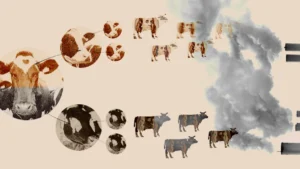
The SFT hosted a dedicated session on the rapid consolidation of the dairy sector. Since 1974, the number of dairy farms in the United Kingdom has plummeted from approximately 54,000 to fewer than 7,000, even as the number of "mega-dairies"—or fully housed, industrial-scale systems—has doubled in the last decade. Today, 60% of the milk consumed in the UK originates from these intensive systems.
This concentration of production is a direct result of a commodity model that mandates a "go big or get out" approach, effectively stripping dairy of its cultural and environmental value. The debate highlighted that the industry is trapped in a race to the bottom, where the primary objective is to keep prices artificially low, regardless of the impact on animal welfare or rural communities. The path forward, according to industry experts and participants, is a robust, shared measurement framework that rewards farmers for high-welfare, sustainable practices, effectively moving the industry away from the commodity trap and back toward a system rooted in stewardship and nutrition.
Implications and the Communication Gap
The lack of mainstream media coverage for London Climate Week 2026 remains a point of significant concern. Despite the gathering of thousands of experts to discuss issues that dictate the survival of global food, water, and climate systems, the event failed to penetrate the broader public consciousness.
The implication is that the urgency of these debates remains sequestered within the walls of conference centers. Without a concerted effort to translate these complex, technical discussions into a narrative that resonates with the public, the political and institutional leadership required to force change will likely remain stalled. The transition of the food system requires more than just technical solutions; it requires a widespread recognition that the current model—based on cheap food, high carbon intensity, and systemic consolidation—is reaching its ecological and economic limit. The challenge for the coming year is to ensure that these conversations move from the boardrooms and panels of London into the heart of national policy and consumer demand.
Related posts: