The Evolution of a Modern Classic: How a South Minneapolis Coffeehouse Staple Became the Ultimate Autumn Pear Streusel Tart

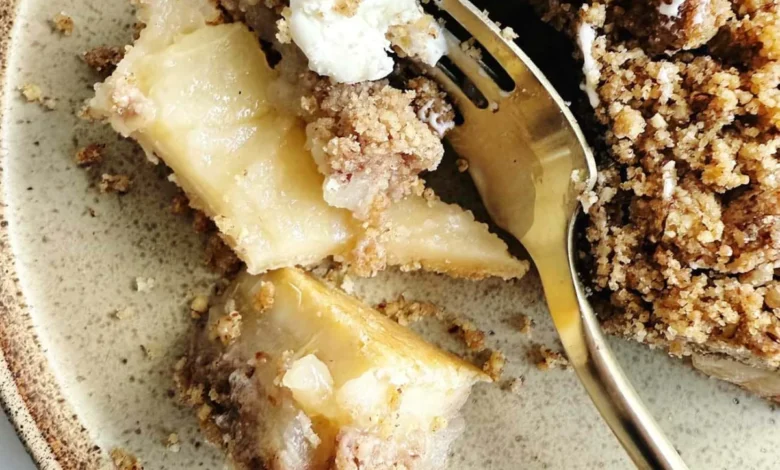
Baking traditions often trace their origins back through generations of family heirlooms, handwritten index cards, and kitchen lore passed down over Sunday dinners. Yet, some of the most enduring recipes of the contemporary culinary landscape emerge from the fast-paced, high-pressure environments of independent commercial kitchens. Such is the case with a celebrated pear streusel tart that has quietly shaped midwestern bakery counters for over two decades, evolving from a classic adaptation into an autumnal staple for home kitchens and holiday tables alike.
Origins in the Twin Cities Coffeehouse Scene
The foundational blueprint for this enduring dessert dates back to the early 2000s within the vibrant and competitive specialty coffeehouse culture of south Minneapolis. During an era when independent coffee shops served as community hubs and culinary incubators for scratch-baked goods, pastry chefs frequently experimented with canonical texts to create accessible yet elevated treats for morning commuters and afternoon espresso drinkers.
The original recipe was born from the pages of a trusted culinary reference volume, specifically the pie and tart edition of the authoritative American cookbook series that has guided generations of cooks. In professional hands, the traditional streusel-topped fruit tart was adapted to suit the rapid workflow and high-volume demands of a bustling neighborhood cafe. Bakers found that the balance of spiced fruit and a crumbly, buttery topping offered universal appeal, bridging the gap between rustic farmhouse baking and urban café culture. As pastry cooks rotated through different local establishments across the Twin Cities, the recipe traveled with them, finding new homes on subsequent coffeehouse menus and undergoing subtle refinements along the way.
Two Decades of Kitchen Iterations and Refinement
Over a span of more than twenty years, the recipe underwent a deliberate evolution driven by practical kitchen experience and a desire for structural and flavor optimization. Professional bakers understand that consumer preferences and home-baking constraints require a delicate balance between artisan quality and approachable execution.
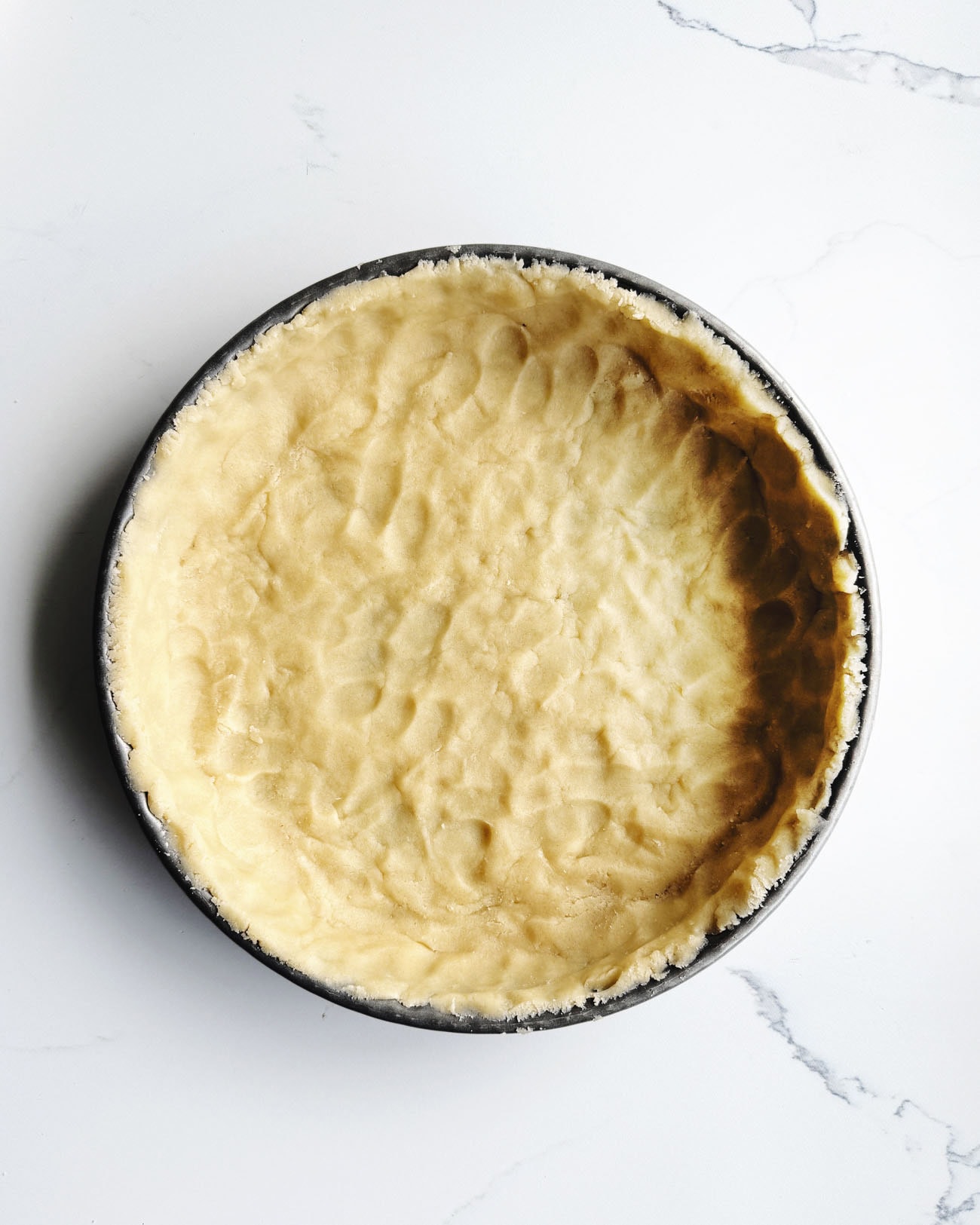
Among the most significant modifications introduced over the years was the transition to a pat-in-the-pan crust methodology. Traditional rolled pastry doughs, while prized for their flakiness, often present a barrier to entry for novice bakers and demand precise temperature control that can be difficult to achieve in home environments. By pivoting to a forgiving, press-in crust, the recipe eliminated much of the intimidation factor associated with tart making while maintaining a sturdy, buttery foundation capable of supporting a heavy fruit filling.
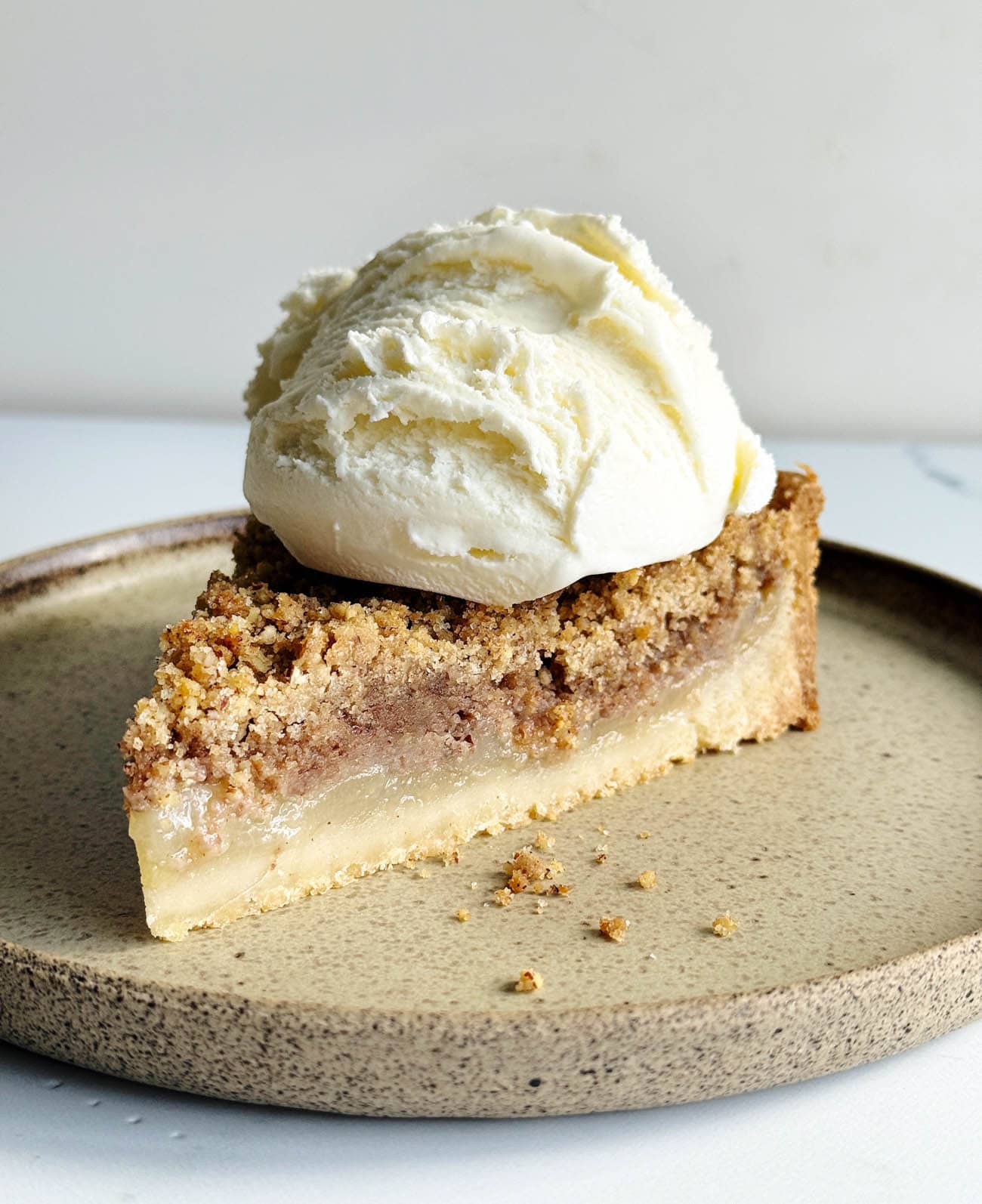
Flavor adjustments were similarly intentional. The filling profile was enhanced with the addition of freshly squeezed lemon juice to brighten the natural sweetness of the fruit, a touch of pure vanilla extract to deepen the aromatic complexity, and a careful dusting of ground nutmeg to complement the warming spices traditionally associated with autumn baking. Finally, the topping was elevated from a standard flour-and-sugar streusel to a rich pecan streusel, introducing a toasted nut texture that contrasts sharply with the tender fruit below.
Technical Notes on Ingredients and Methodology
Achieving consistent results with seasonal fruit desserts requires strict adherence to ingredient selection and technical execution. Culinary testing notes accumulated over years of preparation emphasize several critical factors for success:
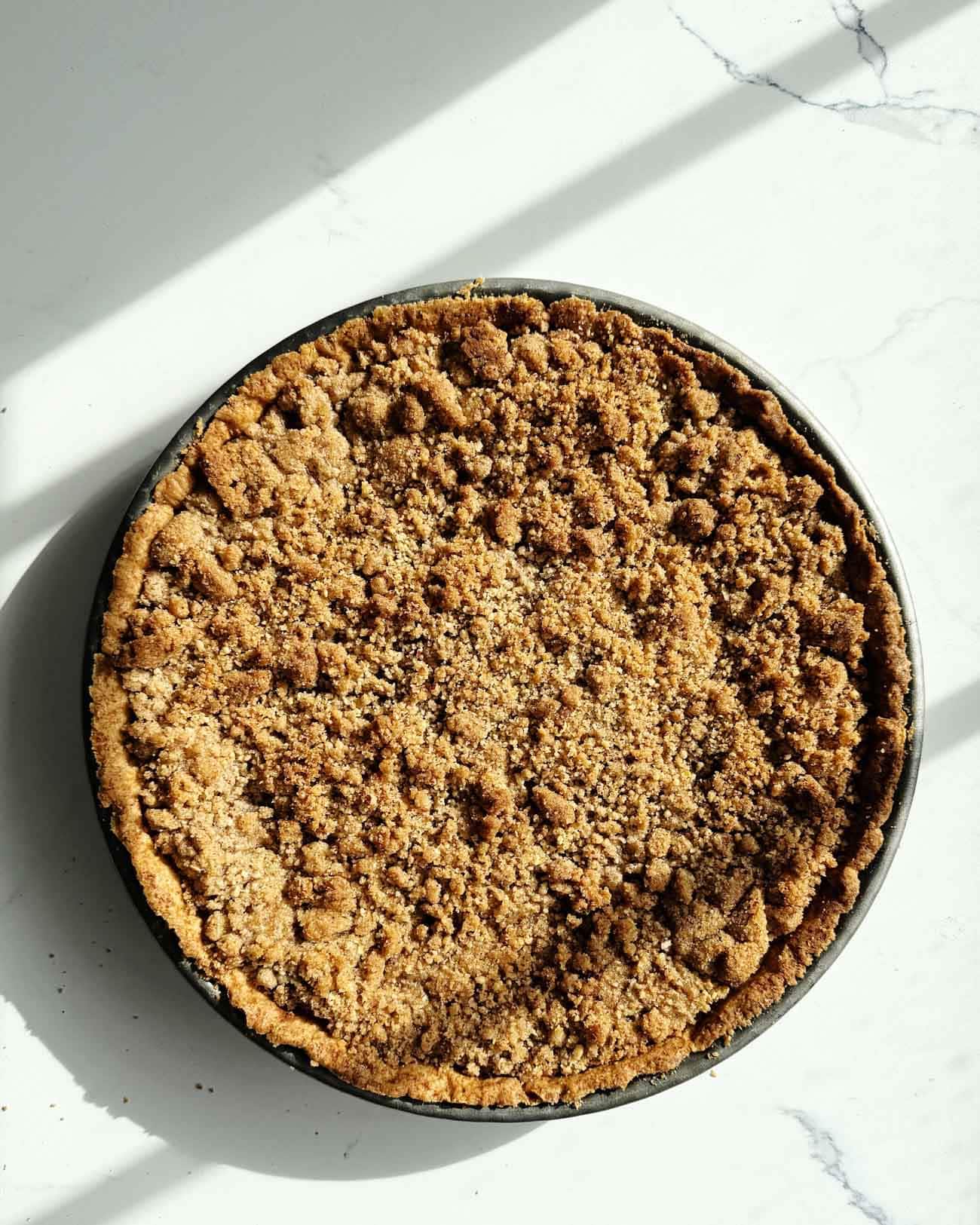
Fruit Selection: The choice of pear variety dictates the structural and moisture integrity of the finished tart. Bartlett pears have consistently proven to be the superior choice for this specific application. Unlike firmer winter varieties that can remain stubbornly dense or dry, Bartletts break down into a naturally juicy, tender consistency when baked, melding seamlessly with the surrounding spiced filling without releasing excess water that could compromise the crust.
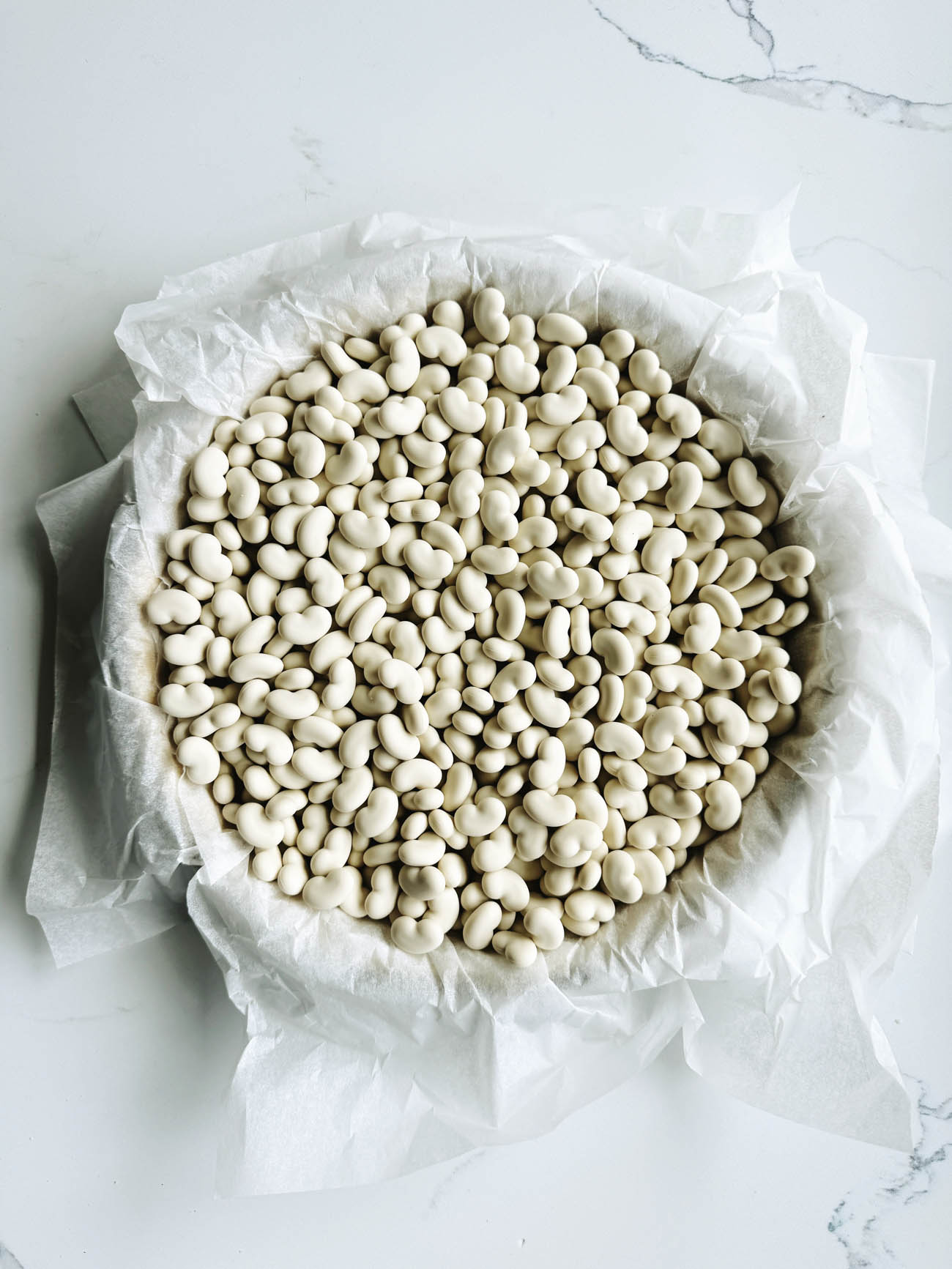
Crust Engineering and Blind Baking: The utilization of a press-in crust offers distinct advantages, primarily its structural forgiveness. Minor tears or inconsistencies in the raw dough can be easily patched by hand without impacting the final presentation. However, professional testing confirms that blind baking remains a non-negotiable step. Without an initial pre-bake, the high moisture content of the pear filling and the butter-heavy formulation will prevent the bottom crust from achieving a crisp texture, frequently resulting in shrinkage or sogginess. Modern culinary innovations, such as reusable, dishwasher-safe silicone baking beans, have simplified this process for home cooks, offering an efficient alternative to traditional ceramic weights or dried legumes.
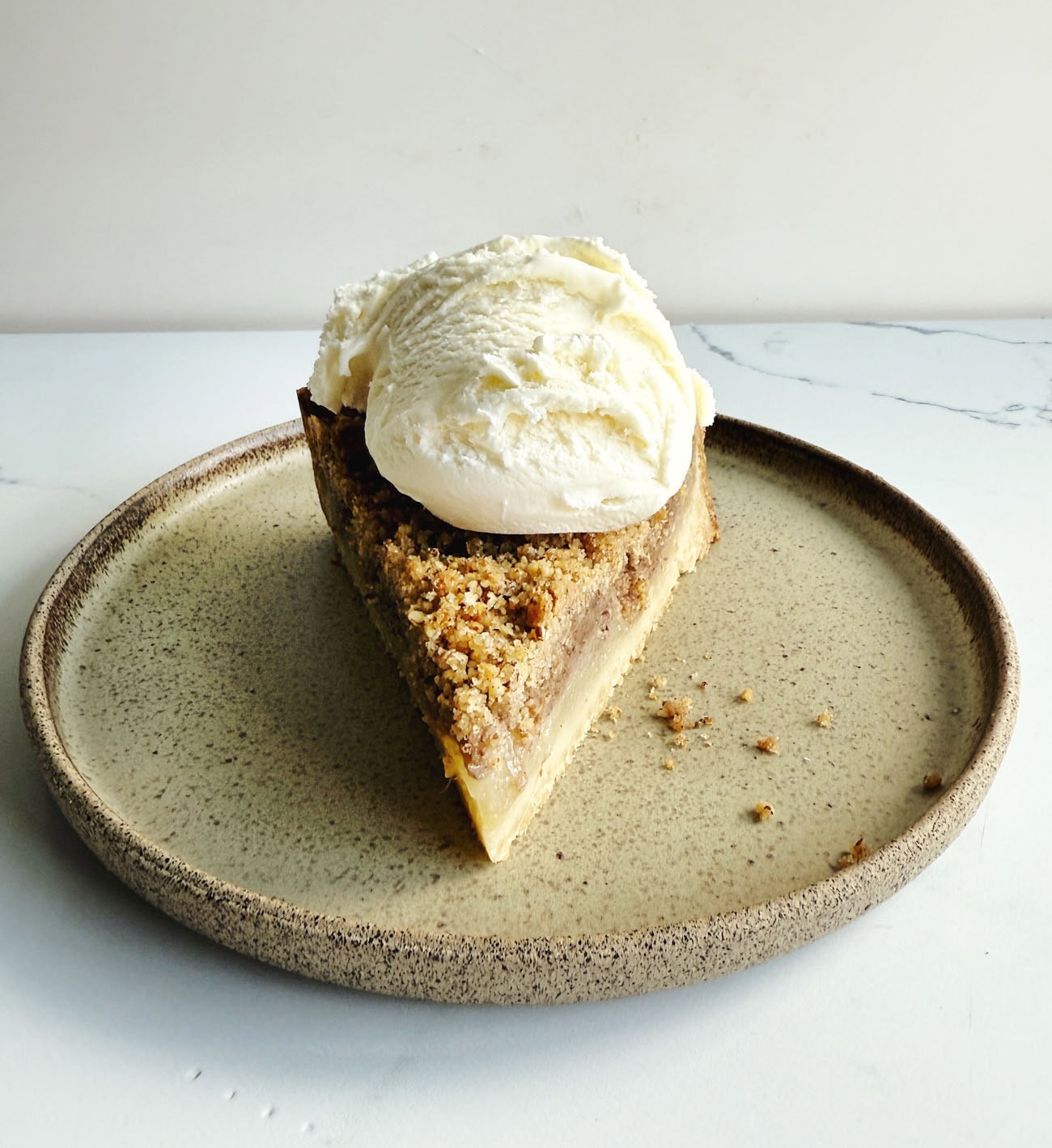
Baking Parameters: Due to the variable moisture content and ripeness levels of fresh pears, baking times cannot be treated as a rigid constant. The tart requires vigilant monitoring until the filling exhibits a vigorous, bubbling boil throughout, ensuring that the fruit has softened completely and the starches within the filling have fully gelatinized.
Cultural Relevance and Seasonal Positioning
As consumer interest in heritage baking and scratch-made comfort food continues to experience a resurgence, recipes with authentic operational histories carry a distinct resonance. The enduring popularity of the pear streusel tart highlights a broader culinary trend: the translation of commercial bakery standards into accessible home-cooking projects.
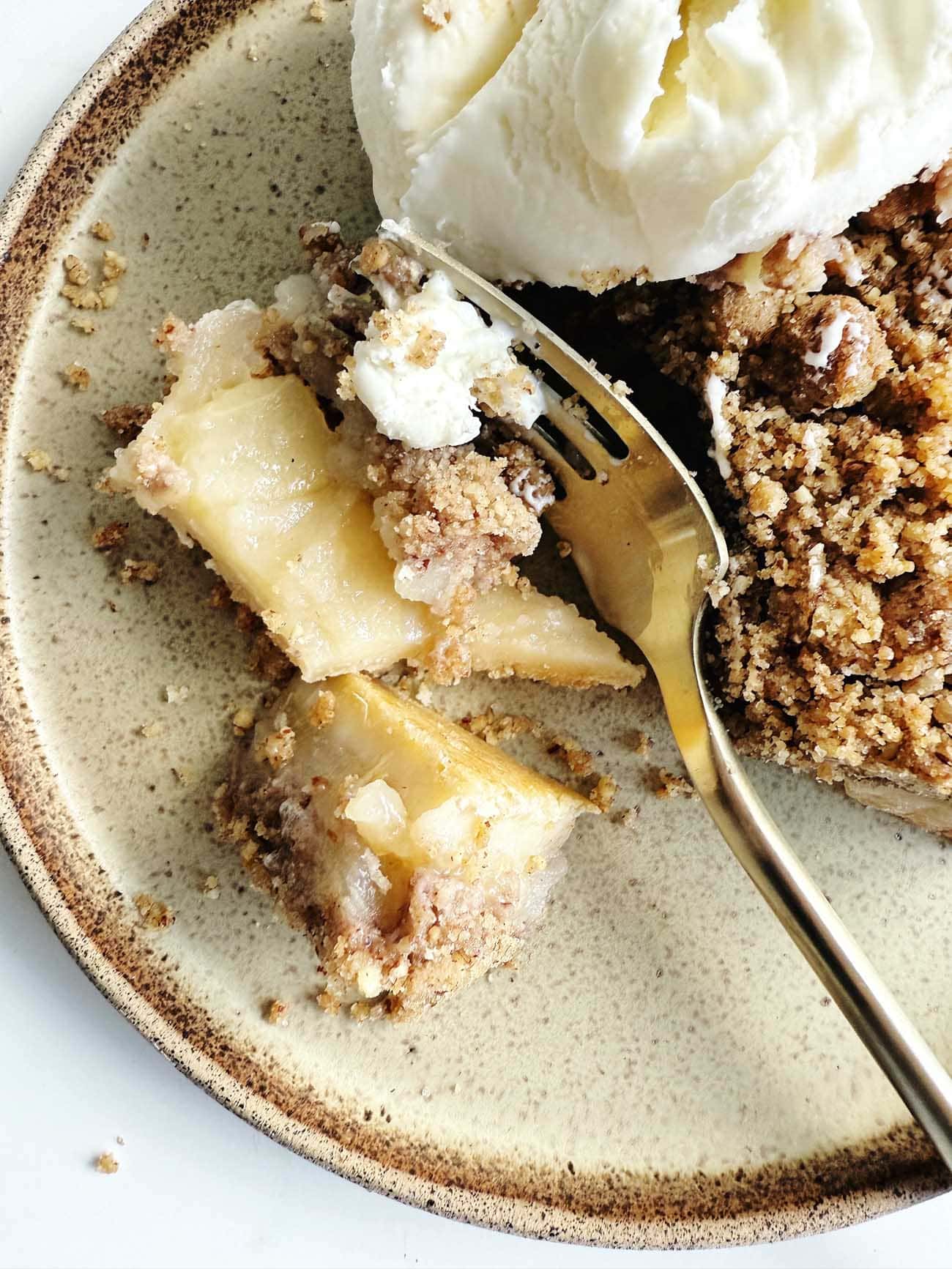
Positioned ideally for the autumn harvest season, the dessert transitions effortlessly from casual weeknight gatherings to formal holiday celebrations such as Thanksgiving. By combining the accessibility of a rustic tart with the sophisticated flavor profile of toasted pecans and spiced pears, the recipe bridges the gap between everyday baking and celebratory feasting. Two decades after its introduction in the coffeehouses of south Minneapolis, this refined classic demonstrates that the most enduring recipes are those shaped by years of practical application, continuous refinement, and a deep respect for foundational techniques.