The Evolution of Modern Fusion Cuisine: The Rise of the Colombian Arepa Burger

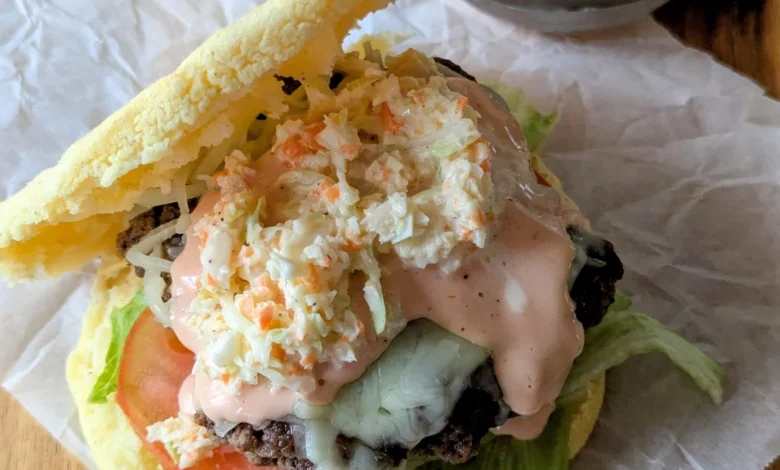
The fusion of traditional South American culinary staples with global fast-food culture has reached a significant milestone with the widespread adoption of the Arepa Burger. This culinary innovation replaces the conventional wheat-based hamburger bun with the arepa, a pre-cooked cornmeal patty that serves as a cornerstone of Colombian and Venezuelan gastronomy. While once relegated to home kitchens and regional street food stalls, the Arepa Burger has recently transitioned into the mainstream, reflecting broader trends in global food consumption that favor gluten-free alternatives and the incorporation of ancestral grains into modern diets.

The Historical and Cultural Context of the Arepa
To understand the emergence of the Arepa Burger, one must first recognize the historical significance of the arepa itself. The arepa dates back to pre-Columbian times, with indigenous populations in the northern regions of South America utilizing corn as a dietary staple for thousands of years. The process involves soaking, grinding, and shaping corn into flat, circular patties, which are then grilled, baked, or fried.
Historically, the arepa has functioned as a versatile "blank canvas" for a wide array of proteins, cheeses, and vegetables. Unlike the mass-produced hamburger bun, which is often criticized for its high glycemic index and lack of nutritional density, the corn-based arepa offers a denser texture and a distinct flavor profile that has appealed to health-conscious consumers seeking alternatives to processed wheat products.

Chronology of Culinary Fusion
The transition from a traditional side dish to a primary burger delivery vehicle was not a singular event but a gradual shift in the culinary landscape. Throughout the early 2010s, chefs in both South America and the Latin diaspora in the United States began experimenting with "deconstructed" burger formats.
By 2012, food bloggers and culinary historians, such as Erica Dinho, began documenting the formalization of the Arepa Burger recipe. This period marked a transition where the concept moved from a creative home-cooking experiment to a fixture on menus in fusion-focused bistros. The strategy was simple: swap the high-carbohydrate, yeast-leavened bun for a crispy, griddled corn cake. This shift not only catered to the growing demand for gluten-free options but also introduced the textures of Colombian street food to a broader demographic.

Supporting Data: The Shift in Consumer Preferences
Market research into the global burger industry indicates a clear shift toward "hybridized" menu items. According to recent food service industry reports, approximately 35% of consumers in North America express interest in trying international variations of classic comfort foods. This demand is driven by a younger demographic—specifically Millennials and Gen Z—who prioritize cultural authenticity and diverse flavor profiles.
Furthermore, the nutritional profile of the Arepa Burger compares favorably to traditional options. A standard wheat bun typically provides empty carbohydrates with minimal fiber. In contrast, the corn-based arepa provides a foundation of complex carbohydrates, with a significantly lower sodium content when prepared traditionally. Caloric data suggests that an average Arepa Burger, including a lean beef patty and standard vegetable toppings, ranges between 300 and 500 calories, depending on the preparation of the corn patty and the inclusion of traditional sauces like salsa rosada or garlic-based condiments.

The Anatomy of a Modern Arepa Burger
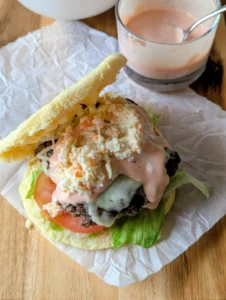
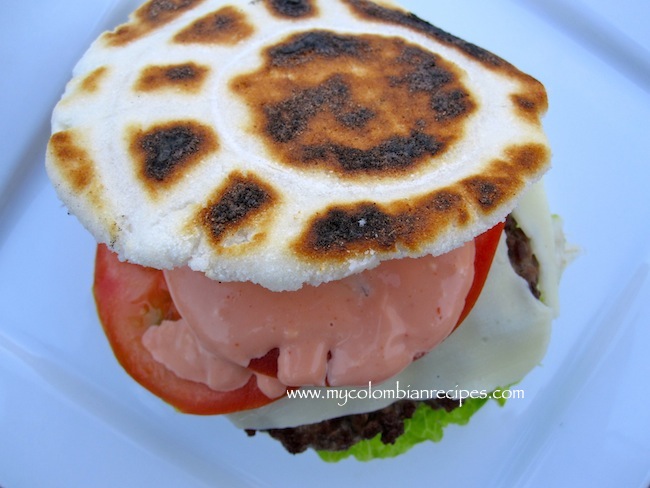
The construction of the Arepa Burger requires adherence to specific preparation standards to maintain structural integrity. The ideal arepa must be thick enough to withstand the moisture of a cooked beef patty while maintaining a crispy exterior.
- The Patty: Typically prepared with seasoned ground beef, reflecting the classic "hamburguesa" style, which often incorporates onion, garlic, and cumin.
- The Base: The arepa is prepared using pre-cooked cornmeal (masarepa). It is griddled until a golden crust forms, which serves as a barrier against the juices of the meat.
- The Toppings: Unlike the standard lettuce-tomato-onion configuration, the Colombian influence mandates the inclusion of coleslaw, a slice of fresh white cheese (such as queso fresco or mozzarella), and a signature pink sauce (salsa rosada).
- The Structural Integrity: A key technical challenge is the crumb structure of the arepa. If the dough is not hydrated properly, the "bun" may crumble under the weight of the meat. Professional kitchens have refined the ratio of water to cornmeal to ensure that the exterior remains firm while the interior retains a soft, slightly chewy consistency.
Official Perspectives and Culinary Criticisms
Culinary experts often weigh in on the "authenticity" of such fusion dishes. While purists argue that the arepa should remain a standalone item or a vessel for traditional fillings like hogao (a Colombian tomato and onion sauce), proponents argue that the fusion is a necessary evolution of the food industry.

"The Arepa Burger is a testament to the adaptability of Latin American ingredients," notes a spokesperson from the International Culinary Institute. "By taking a foundational element like corn and pairing it with the universal appeal of the burger, we see a bridge being built between two disparate culinary worlds. It is not an erasure of tradition, but an expansion of the utility of corn-based products."
Broader Economic and Global Implications
The rise of the Arepa Burger has broader economic implications for agricultural exports and the global grain market. As demand for arepa-based products increases, there is a corresponding rise in the global consumption of white cornmeal. This has benefited agricultural producers in Colombia and Venezuela, and has increasingly attracted the attention of international food conglomerates seeking to diversify their bread-alternative portfolios.
From an industry standpoint, the Arepa Burger is a cost-effective menu item. Because the ingredients—cornmeal, water, salt, and standard proteins—are relatively inexpensive and possess a long shelf life, restaurants can maintain high profit margins while offering a "premium" or "specialty" fusion experience.
Environmental and Sustainability Considerations
As the global food system faces scrutiny regarding its carbon footprint, the move toward corn-based alternatives to wheat buns is being analyzed for its sustainability. Wheat production is heavily water-intensive and often requires significant chemical intervention. While corn also requires substantial resources, the localized production of corn in the Americas for local consumption patterns provides a model for regional food security.

Moreover, the versatility of the Arepa Burger allows for the inclusion of plant-based proteins, further aligning the dish with modern environmental trends. Restaurants are increasingly pairing arepas with black bean patties, lentils, or grilled mushrooms, effectively creating a sustainable, gluten-free, and vegan-friendly option that maintains a high degree of satiety.
Future Outlook: Where the Trend Goes Next
Looking ahead, the trajectory of the Arepa Burger suggests it will continue to move from niche culinary circles into the mainstream fast-casual market. Large-scale food chains are already experimenting with "mini-arepas" as sliders or breakfast sandwiches, indicating that the form factor is highly scalable.

The success of this fusion highlights a fundamental truth about modern gastronomy: consumers are no longer satisfied with static, traditional recipes. They demand innovation that respects the heritage of the ingredients while embracing the convenience and flavor profiles of contemporary dining. As the Arepa Burger continues to evolve, it serves as a case study for how global culinary traditions can be integrated into the mainstream without losing the essence of their origin. Whether served in an upscale fusion restaurant or a roadside stall, the dish remains a powerful symbol of cultural exchange, reflecting a world where borders on a map matter far less than the boundaries on a plate.
Related posts: