The Fragile State of British Dairy: Is Industrial Intensification Undermining National Food Security

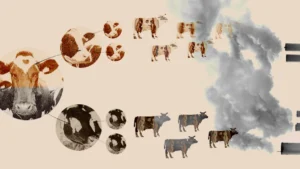
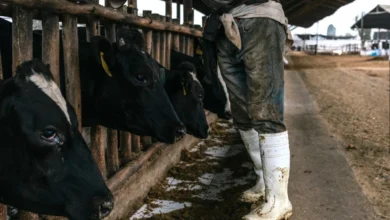
The British dairy sector is currently undergoing a structural metamorphosis that is simultaneously driving record corporate profits and precipitating a crisis of agricultural resilience. Recent investigative findings have brought to light a stark dichotomy: while the number of individual dairy farms across Great Britain has plummeted to historic lows—dropping below the 7,000 threshold for the first time—the prevalence of "mega-dairies," defined as operations housing hundreds or thousands of cattle in permanent indoor environments, has doubled over the past ten years. This shift toward high-intensity, industrial-scale production raises urgent questions regarding the long-term viability of a food system increasingly tethered to volatile global supply chains, synthetic inputs, and fossil fuel dependency.
A Chronology of Consolidation
The trajectory of the British dairy industry over the last two decades reflects a broader trend of agricultural consolidation. In the early 2000s, the landscape was defined by a significantly higher number of independent, family-run farms. However, consistent market pressure characterized by stagnant farm-gate milk prices and escalating operational costs—particularly for energy, imported feed, and synthetic fertilizers—has forced a mass exodus of smaller producers.
By the mid-2010s, the pressure to achieve "economies of scale" became the dominant industry narrative. Farmers who could not afford the heavy capital investment required to modernize or scale up their operations were forced to exit the sector. This has resulted in a concentrated market where fewer producers control a larger share of the total output, fundamentally changing the character of the British countryside from a pastoral landscape to one dominated by intensive, indoor "battery" cattle systems.
Data-Driven Realities and Input Dependency
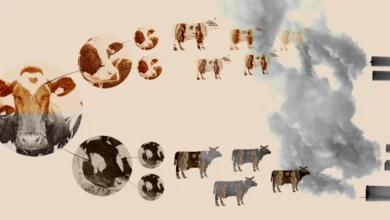
The shift toward intensification is not merely a change in farm size; it is a fundamental pivot in the biological and economic model of food production. Intensive systems rely heavily on external inputs. Unlike traditional pasture-based systems, which utilize the natural regenerative capacity of grasslands and livestock manure, mega-dairies function as high-throughput industrial plants. They require consistent supplies of imported soy and grain-based feed, as well as synthetic nitrogen fertilizers to maintain the high yields necessary to offset the massive overhead costs of indoor housing.
This model is inherently susceptible to geopolitical shocks. The blockade of the Strait of Hormuz, a critical artery for global nitrogen fertilizer transit, highlighted the fragility of this dependency. While the blockade was temporary, its impact on input prices sent shockwaves through the UK farming sector, demonstrating that any disruption in global logistics translates directly into an immediate threat to domestic food production. With experts warning that the global food chain is entering an era of "permanent stress," the reliance on these long, fragile supply chains appears increasingly precarious.
Environmental Degradation and Climate Vulnerability
The Climate Change Committee (CCC) has issued sobering assessments regarding the impact of environmental instability on domestic agriculture. Projections indicate that the proportion of "high-quality farmland" in England and Wales could shrink from 38% to a mere 11% by 2050 under a 2°C warming scenario. Soil erosion, exacerbated by intensive farming practices that prioritize yield over soil health, is expected to increase by at least 15%.
Furthermore, the increasing frequency of extreme weather events—including the severe heatwaves and erratic rainfall patterns observed in the UK over the last decade—has led to three of the worst five harvests on record. These failures have driven the five-year harvest average below the 20-year average, a phenomenon described by agricultural analysts as an "unprecedented reversal" in productivity trends. The irony of the current system is that it relies on intensive methods that contribute to climate degradation, which in turn renders the land less capable of supporting future production.
Perspectives on the Agroecological Transition
Critics of the status quo, including the Sustainable Food Trust (SFT), argue that the industry’s obsession with "product-level footprints" is a flawed metric. By measuring only the carbon output per liter of milk, industrial systems often appear more "efficient" than pasture-based systems. However, this metric ignores the systemic costs: the destruction of biodiversity, the degradation of soil carbon, and the loss of the ecological resilience provided by diverse, grazing-based systems.
Research from Wageningen University offers an alternative perspective, suggesting that a global food system where livestock are integrated into the landscape—fed primarily on human-inedible biomass like grass and crop residues—could theoretically meet global demand while utilizing significantly less arable land than a purely plant-based system. This "upcycling" approach treats livestock as a vital component of a circular agricultural economy rather than a competitor for high-quality, grain-producing land.
Policy Implications and the Need for Systemic Reform
The transition to a more resilient, agroecological model requires a departure from the "bigger is better" ethos that currently dominates policy and private investment. A comprehensive strategy for national food security must address several critical areas:
- Redefining Efficiency: Policy frameworks must move beyond simple output volume and start accounting for system-wide ecological health, nutrient density, and resilience to climate shock.
- Dietary Adaptation: A move away from the current level of intensive meat and dairy consumption toward smaller, higher-quality production will be necessary. This shift would allow for a reduction in the volume of arable land currently dedicated to livestock feed, repurposing that land for food crops and carbon-sequestering grasslands.
- Government Intervention: Given the high cost of entry into sustainable farming and the entrenched nature of the current market, voluntary shifts are unlikely. Experts suggest that government subsidies and public procurement policies must be realigned to reward farmers who prioritize ecosystem services, soil health, and low-input methods.
- Security Assessments: Intelligence and government security agencies are increasingly identifying ecosystem collapse as a threat to national stability. Therefore, agricultural policy should be integrated into national security strategy, emphasizing self-reliance over dependence on volatile global supply chains.
Conclusion: A Choice for the Future
The rise of mega-dairies is a symptomatic development in a broader, unsustainable trend. As the UK faces a future of geopolitical instability and environmental volatility, the current high-input, high-output model of agriculture appears increasingly ill-equipped to handle the challenges ahead.
If the objective of the food system is to ensure the long-term nourishment of the population while stewarding the natural resources upon which all production depends, then a radical shift is required. Continuing to measure success solely through the lens of production volume risks accelerating the collapse of the very infrastructure—the soil, the farmers, and the natural biodiversity—that society needs to survive. The choice, therefore, is not merely about how we produce milk; it is about defining what kind of society we wish to build in an age of uncertainty. The resilience of the future will not be found in bigger machines and more intense confinement, but in a return to systems that work in harmony with the ecological limits of the land.