The harmonization of wine and beef stands as one of the fundamental pillars of culinary arts and oenology, a pairing tradition that has evolved over centuries of gastronomic exploration. As the global palate shifts toward more deliberate, craft-oriented dining experiences, understanding the complex chemical interactions between the structural components of wine—such as tannins, acidity, and alcohol—and the proteins, fats, and preparation methods of various cuts of steak has become an essential study for both casual diners and professional chefs alike.
Historical Context and Culinary Evolution
The practice of pairing red wine with red meat is rooted in both tradition and food science. Historically, regions renowned for cattle production in Europe—such as Bordeaux in France, Piedmont in Italy, and Rioja in Spain—naturally developed robust red wines that accompanied the local livestock. Early culinary practitioners observed intuitively what modern food scientists have since proven: the astringency and high tannin content of dry red wines bind to the proteins and lipids in meat, effectively cleansing the palate between bites and softening the perception of tannins on the tongue.

Over the decades, the culinary world has moved away from generalized rules—such as the rudimentary maxim of "red wine with red meat"—toward a more nuanced, cut-specific approach. With the advent of specialized butchery, dry-aging techniques, and diverse global cooking methods ranging from open-flame charcoal grilling to low-and-slow smoking, the modern dining table demands a sophisticated methodology for wine selection. Culinary historians note that the 21st-century resurgence of artisanal steakhouses and home-cooking culture has further democratized this knowledge, allowing enthusiasts to experiment with micro-regional pairings that elevate both the protein and the vintage.
The Science of Wine and Steak: Tannins, Fat, and Acidity
To master the art of steak and wine pairing, one must examine the underlying biochemical dynamics. The primary elements to consider are fat content, connective tissue, cooking method, and seasoning.
Leaner cuts of beef, which possess lower fat content and finer muscle fibers, require lighter-bodied red wines with softer tannins. When a high-tannin wine is paired with an exceptionally lean cut like a filet mignon, the tannins can strip the palate of moisture, resulting in an unpleasantly metallic or overly dry sensation. Conversely, rich, heavily marbled cuts like the ribeye demand bold, high-tannin wines. The structural components of the wine act as a culinary solvent, slicing through the heavy saturated fats and coating the mouth with fruit-forward complexity that balances the richness of the beef.
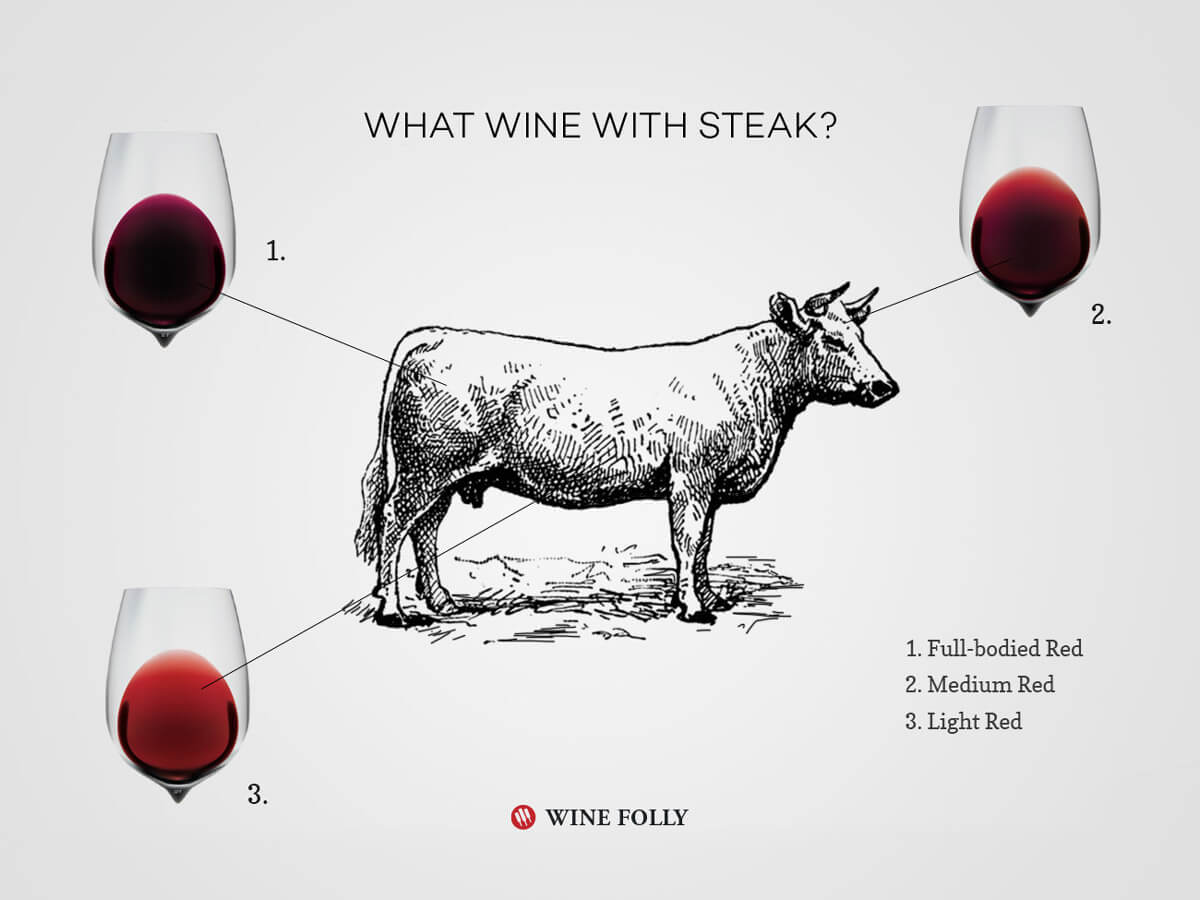
Furthermore, acidity plays a critical role. Wines with bright natural acidity—such as those derived from cooler-climate growing regions—help cut through the butter-basting and heavy char often associated with pan-seared or cast-iron-prepared steaks. According to culinary research organizations, the ideal pairing achieves a state of equilibrium where neither the food nor the wine overwhelms the other, but rather enhances the distinct flavor profiles through contrast or harmonious alignment.
Comprehensive Breakdown of Cuts and Optimal Wine Pairings
Different cuts of beef possess unique textural and flavor profiles, requiring tailored pairings to achieve optimal culinary results.
Sirloin: The Versatile Workhorse
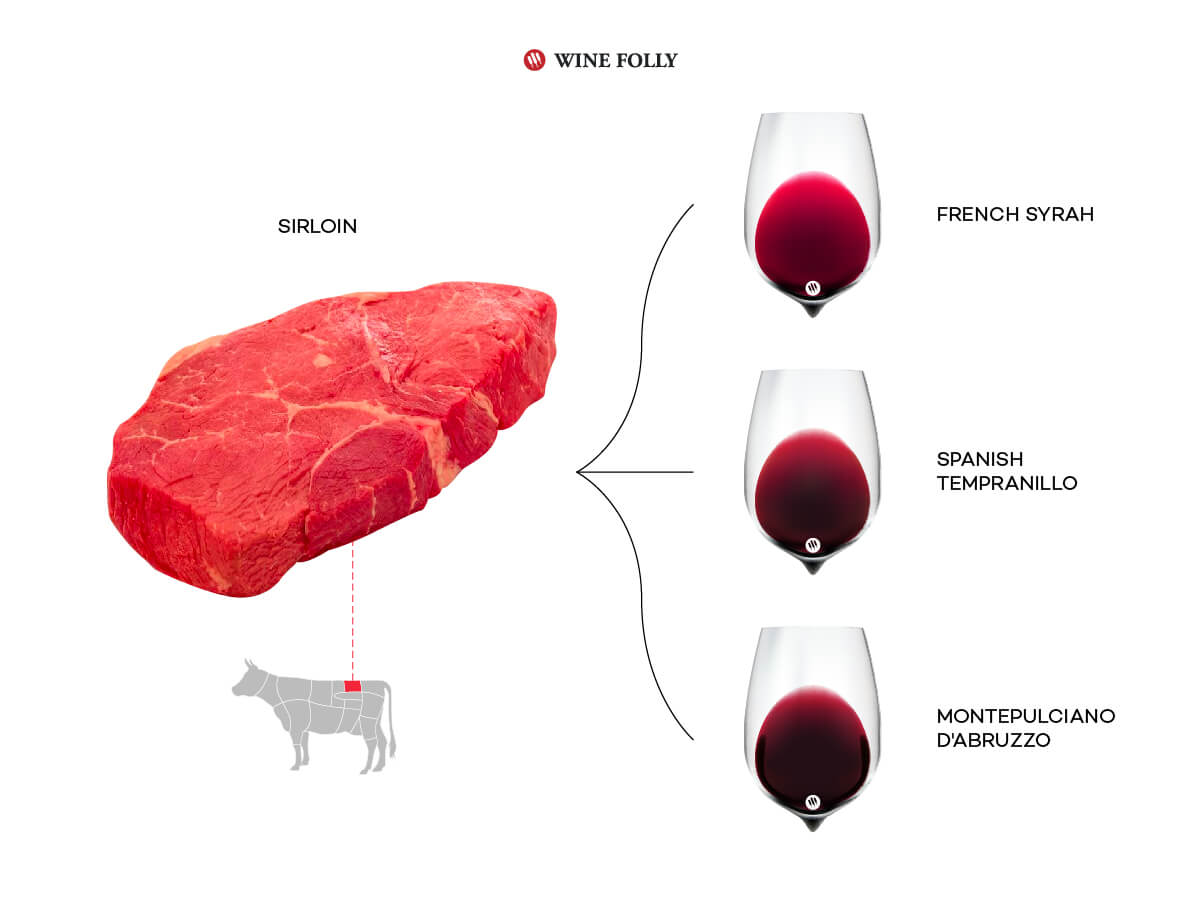
The sirloin is one of the most widely consumed and versatile cuts of beef, characterized by a lean profile with light fat marbling and typically bordered by a strip of external fat. Because sirloin can be prepared via grilling, oven roasting, or pan-searing—and frequently accommodates a wide variety of marinades, rubs, and pan sauces—it requires a flexible wine selection. Medium-to-full-bodied red wines with moderate tannins and bright fruit characteristics adapt well to the variable flavor profiles of a well-seasoned sirloin. The wine must be chosen with careful attention to the specific spices or sauces utilized, ensuring the acidity supports the preparation method.
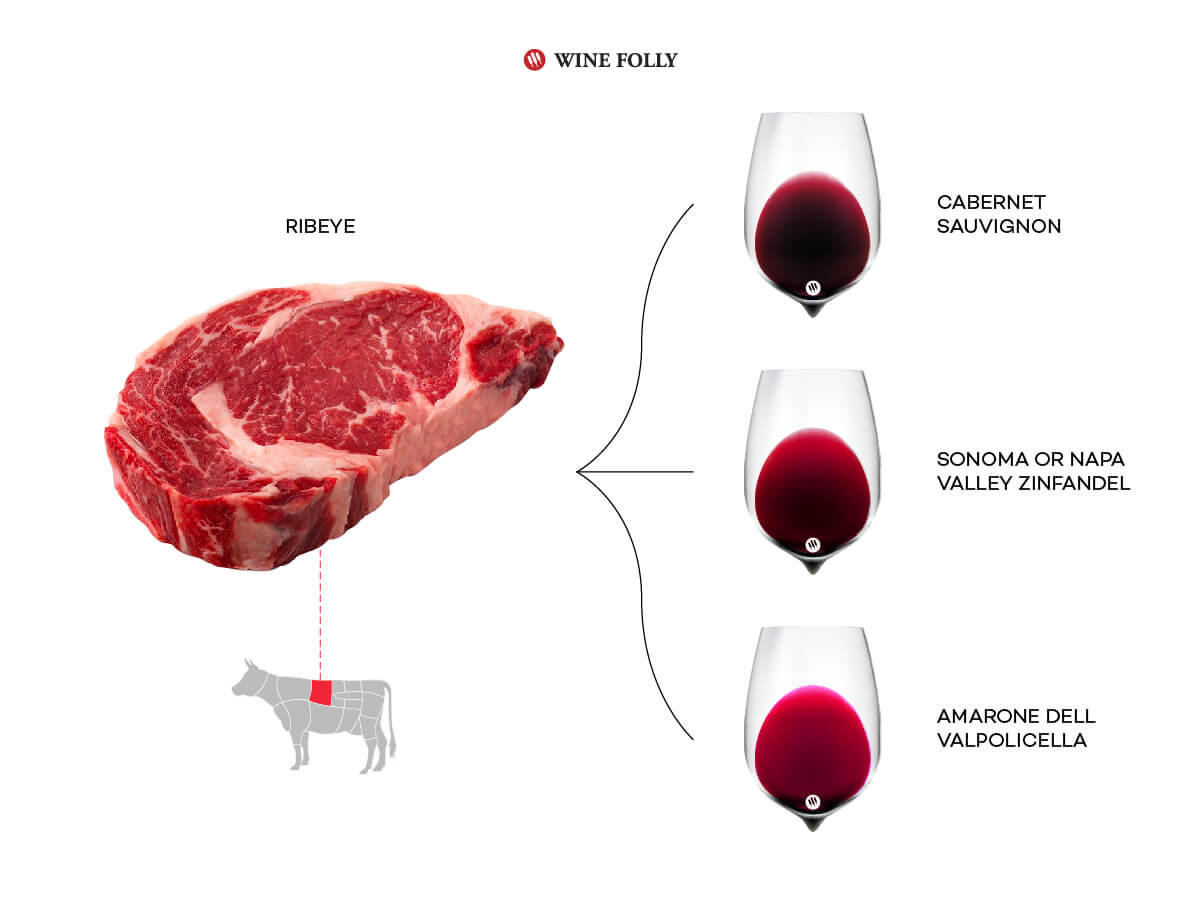
Ribeye and Bone-In Ribeye: Richness and Marbling
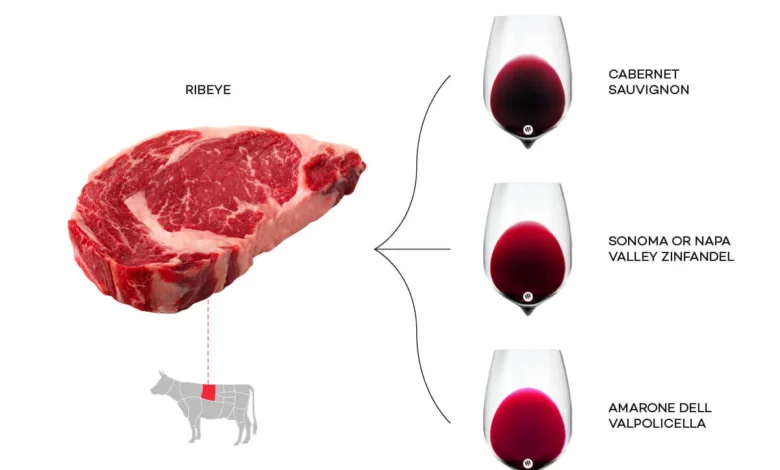
Known for its exceptional tenderness and abundant intramuscular fat (marbling), the ribeye is widely regarded as one of the most flavorful cuts available. The high fat content renders a buttery texture when subjected to the dry, intense heat of a grill. To counterbalance this richness, experts recommend robust, high-tannin red wines or selections with intense dark fruit notes. The structural tannins react directly with the abundant fat molecules, softening the wine’s perceived astringency while cleansing the palate, creating a luxurious and balanced dining experience. The bone-in variant follows identical pairing principles, though the presence of the bone can alter heat distribution during the cooking process, requiring careful temperature management.
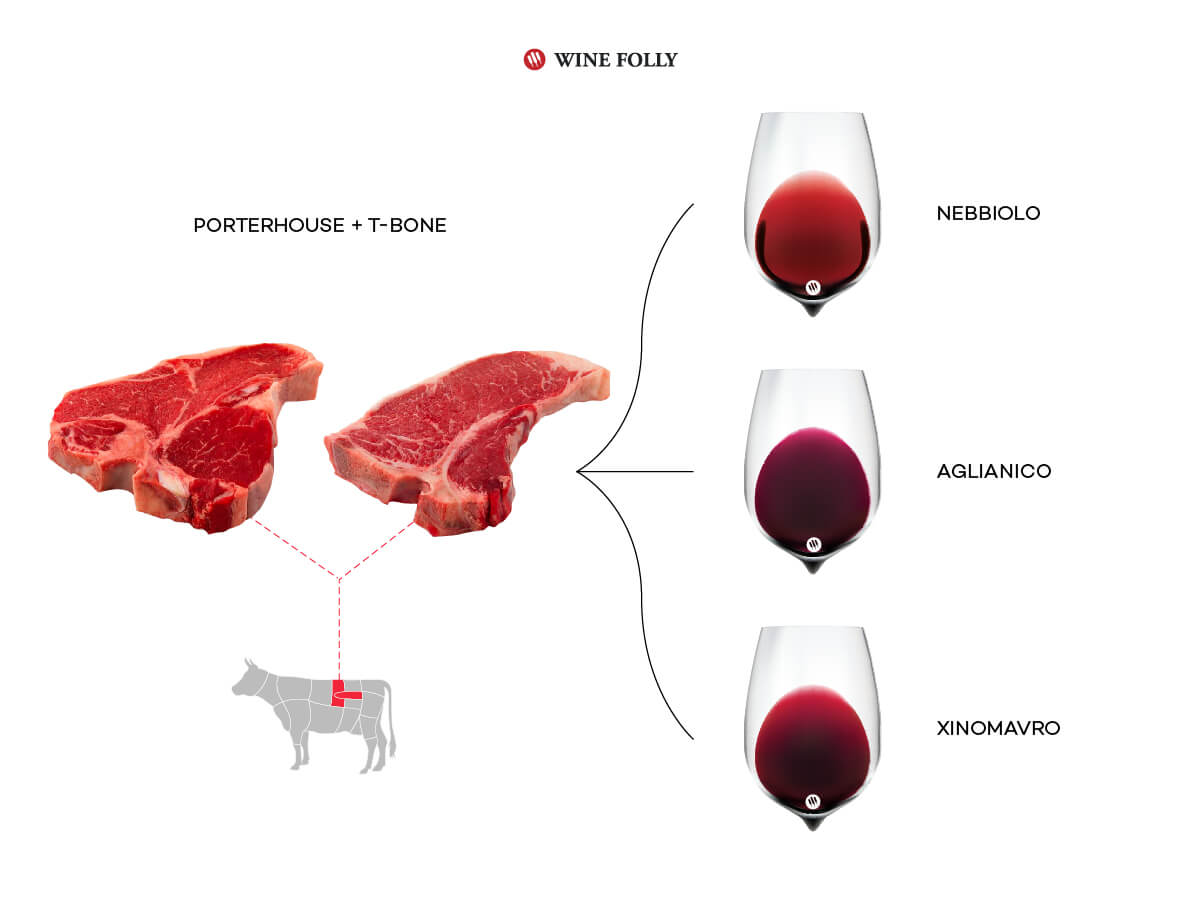
Porterhouse and T-Bone: The Dual-Profile Cut
Separated only by a T-shaped lumbar vertebra, the Porterhouse and the T-bone offer a unique combination of two distinct muscles: the tender, fine-grained tenderloin on one side, and the firmer, robustly flavored strip steak on the other. While pan-searing is viable, open-flame grilling is frequently utilized to ensure even cooking across both distinct sections. Because these cuts combine lean tenderness with savory strip characteristics, aromatic and flavorful red wines with balanced acidity and medium-to-high tannins serve as the ideal accompaniment, bridging the gap between the contrasting textures on the plate.
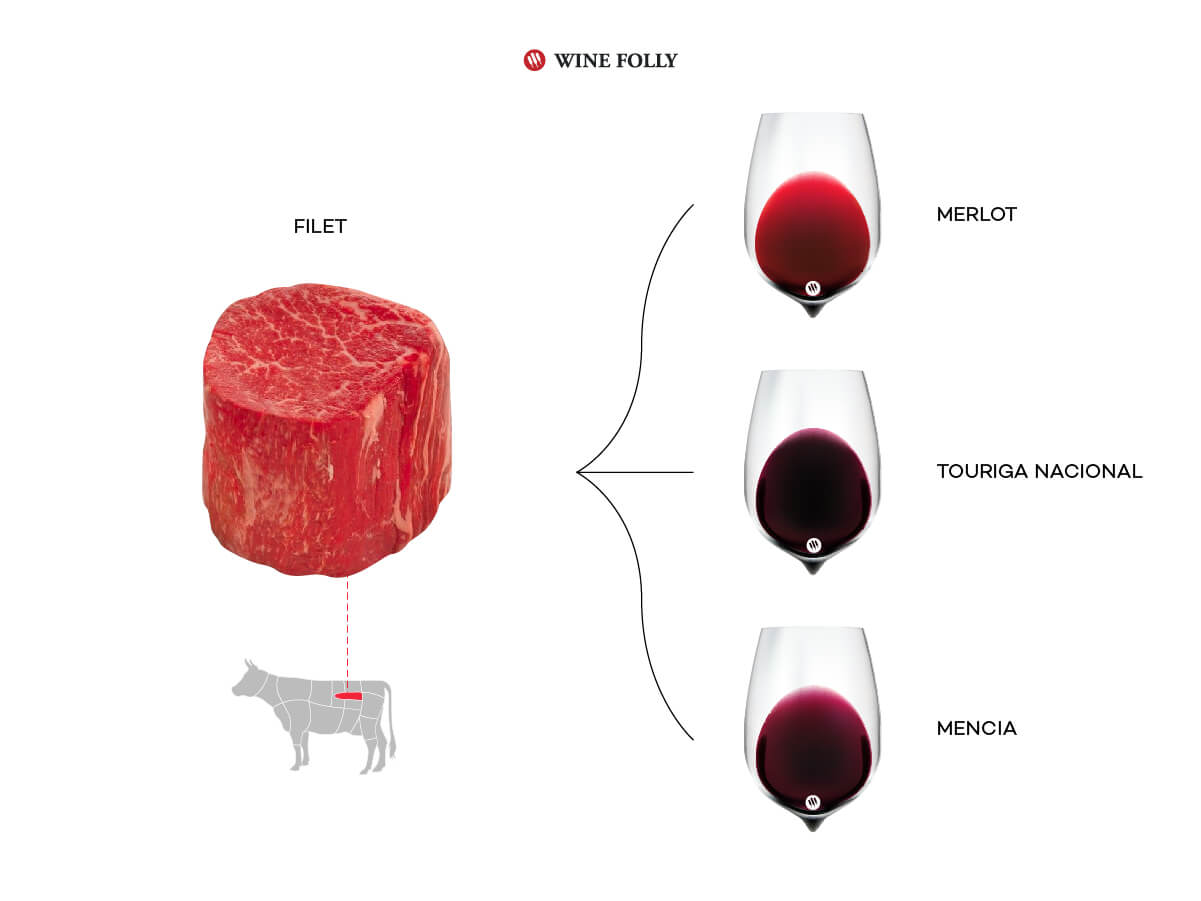
Filet Mignon: The Pinnacle of Tenderness
Often referred to as the crown jewel of steak cuts, the filet mignon is sourced from the tenderloin, a muscle that does very little heavy lifting, resulting in a remarkably tender texture and a subtle, delicate flavor profile. Frequently served with rich reduction sauces, bearnaise, or simply pan-seared and basted in butter, the filet requires a delicate touch. Heavy, aggressive wines can easily overpower its subtle nuances. Consequently, elegant red wines with refined, softer tannins and complex secondary aromas complement the meat without overshadowing its delicate profile.
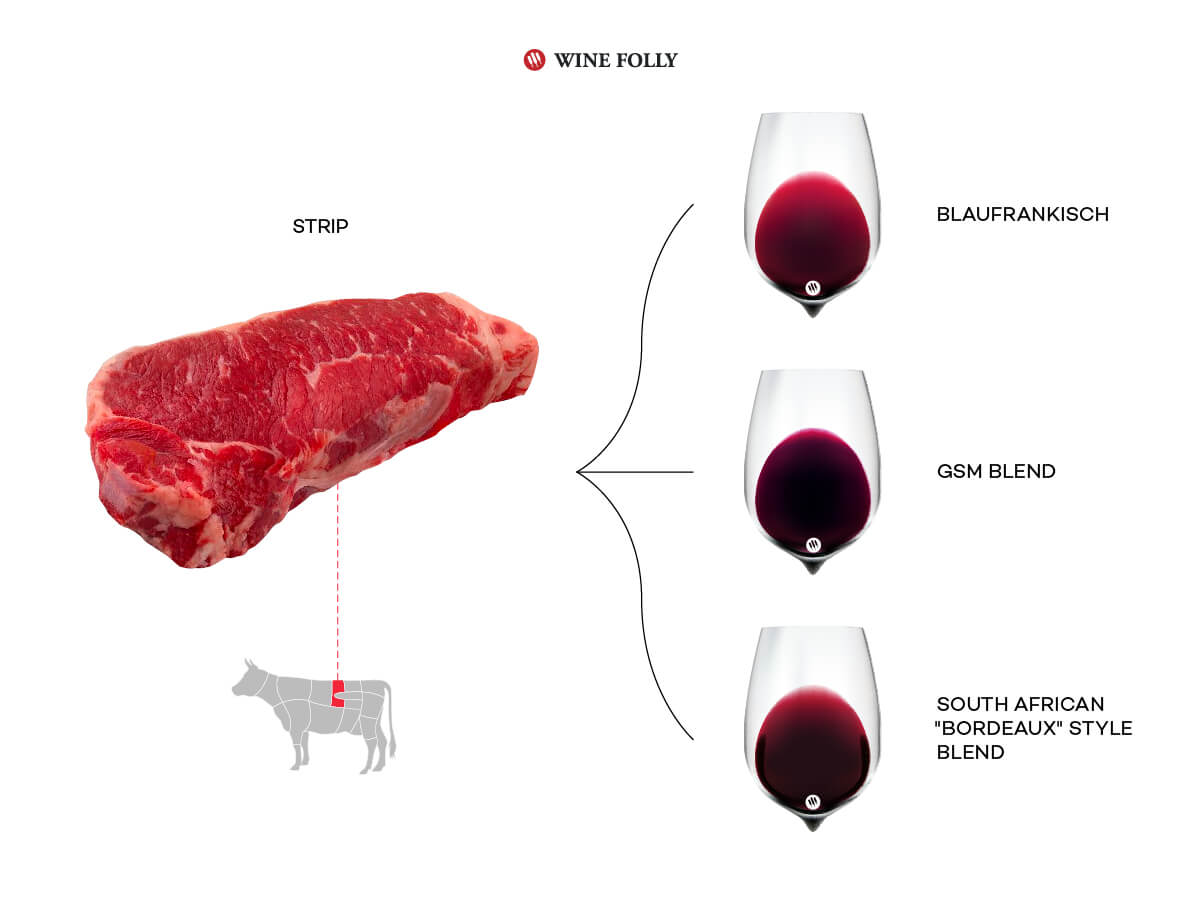
New York Strip and Shell Steak
The strip loin—known variously as the New York strip, shell steak, or Kansas City strip—is celebrated for its deep beef flavor and firm, satisfying grain. Featuring slightly more connective tissue than a tenderloin, it thrives when cooked in a cast-iron skillet with generous amounts of salt, butter-basting, and a proper resting period. Because the strip is both flavorful and rich in fat, it requires a wine equipped with strong fruit flavors, pronounced acidity, and sturdy tannins. These components work in tandem to cut through the fat while harmonizing with the robust, savory character of the beef.
Rump Steak: Firm Texture and Deep Flavor
Sourced from a harder-working muscle group in the hindquarter, the rump cut is naturally firmer and requires deliberate culinary techniques, such as careful aging, precise temperature control, or marinades, to achieve optimal tenderness. Despite its firmness, it delivers an intensely savory, beef-forward flavor profile. Wine selections must take into account both the natural firmness of the meat and any marinades or sauces applied during preparation. Flexible, medium-to-full-bodied reds provide the structural support necessary to stand up to the robust character of the meat.
Flank and Skirt Steak: Textured and Savory
Flank and skirt steaks are prized for their intense, beefy flavor and pronounced grain structure. Though structurally tougher than loin cuts, they excel when marinated and grilled over high heat or prepared as fajitas and stir-fries. When served as a pure steak experience, proper slicing against the grain is critical to prevent a chewy texture. The accompanying wines must possess enough acidity and structural backbone to complement the chewy, highly savory nature of the meat, transforming what could be a challenging dining experience into a deeply satisfying one.
Brisket: Low, Slow, and Smoky
While brisket is not traditionally categorized as a standard steak, its prominence in the realm of smoked meats makes it a vital inclusion in comprehensive pairing guides. Requiring low-and-slow preparation methods over wood smoke—typically utilizing hickory, oak, or fruitwoods—brisket develops a thick bark and a deeply infused smoky flavor profile. The wine selection for brisket is heavily influenced by the type of wood fuel used in the smoking process. Smokier, spice-forward red wines that feature notes of black pepper, dark fruit, and earthy undertones enhance and elevate the rich, caramelized bark of a properly prepared brisket.
Broader Implications and Industry Perspectives
Culinary analysts and hospitality industry experts note that the rising consumer interest in wine and steak pairings reflects a broader cultural trend toward food literacy and experiential dining. Restaurants and specialty wine merchants report an increase in consumer demand for educational workshops, guided tastings, and curated pairing menus.
According to professional sommeliers, the democratization of wine knowledge through digital platforms and specialized guides has empowered home cooks to experiment beyond traditional boundaries. Rather than adhering to rigid, dogmatic rules, contemporary pairing philosophy encourages personal exploration, trial, and individual preference. As culinary science continues to advance, the understanding of how volatile organic compounds in wine interact with Maillard reaction compounds on a seared steak surface will only deepen, offering new avenues for gastronomic creativity.
Ultimately, while established guidelines provide a reliable framework for achieving culinary harmony, the final arbiter of any pairing remains the individual palate. Enthusiasts are encouraged to use foundational rules as a starting point, remaining open to unexpected combinations that resonate with personal taste and cultural context.