The Renaissance of Backyard Agriculture: A Comprehensive Guide to Modern Seed Saving and Horticultural Self-Sufficiency

The landscape of domestic agriculture has undergone a profound structural shift over the past decade, characterized by a surging national interest in home gardening, food sovereignty, and sustainable living. Driven by supply chain vulnerabilities, economic inflation, and a cultural pivot toward analog hobbies that counteract screen fatigue, millions of households have embraced cultivating their own produce. As urban and suburban agrarianism matures from a pandemic-era hobby into a permanent lifestyle choice, gardeners are increasingly seeking ways to optimize their yields, reduce waste, and build long-term resilience. Enter seed saving—an ancient practice experiencing a modern renaissance that bridges historical agricultural traditions with contemporary sustainability goals.
Seed saving, defined as the meticulous process of harvesting, drying, and storing plant reproductive material for subsequent planting cycles, represents a cornerstone of human civilization. For millennia, agrarian societies practiced seed preservation out of absolute necessity, selecting and safeguarding traits that ensured food security against harsh climates and pests. Furthermore, this practice has historically served as a vital mechanism for preserving biodiversity and maintaining cultural heritage. In the modern context, adopting this millennia-old technique yields tangible financial and ecological dividends for the home gardener. By harvesting seeds from high-performing plants, growers can significantly reduce operational costs, eliminate harvest waste, improve crop adaptability to micro-climates, and foster absolute self-reliance.
Understanding Botanical Classifications: Open-Pollinated, Heirloom, and Hybrid Varieties
Before initiating a seed-saving program, cultivators must understand the fundamental biological taxonomy of plant seeds. The foundational knowledge of plant reproduction dictates whether a saved seed will replicate the desirable characteristics of its parent plant in the following season.
Open-pollinated seeds represent the most accessible and reliable category for novice seed savers. These plants rely on natural pollination vectors—including wind, insects, birds, and manual human intervention—and are genetically "true to type." This biological trait ensures that offspring retain the exact phenotypic characteristics, flavor profiles, and growth habits of the parent generation year after year.
Heirloom seeds constitute a specific subset of open-pollinated varieties, typically defined by strains that have been systematically preserved and passed down through families, communities, or regions for at least 50 years. Because they are open-pollinated, heirloom varieties offer reliable genetic stability across generations, making them prized possessions for culinary historians and biodiversity advocates alike.
Conversely, hybrid seeds—frequently commercialized and labeled as F1 hybrids—are intentionally bred through the cross-pollination of two distinct strains within the same plant species. Agricultural scientists develop hybrids to express specific heterosis traits, such as disease resistance or uniform sizing. However, saving seeds from hybrid plants is universally discouraged by horticulturalists. The resulting offspring do not breed true to type, frequently segregating into wildly unpredictable traits and diminished vigor in subsequent generations.
Beyond genetic categories, gardeners must differentiate between self-pollinated and cross-pollinated species. Self-pollinated plants possess reproductive structures that fertilize internally, either within a single flower or plant, without requiring external environmental vectors. This biological isolation makes them exceptionally predictable for beginners. Cross-pollinated species, however, mandate the transfer of pollen between separate plants. While viable for seed saving, cross-pollinated crops require strict spatial isolation to prevent unintended genetic drift from neighboring varieties.
Step-by-Step Protocols for Beginner-Friendly Fruit and Vegetable Seeds
While commercial seed processing involves advanced mechanical sorting and climate-controlled drying facilities, backyard seed saving requires minimal specialized equipment. Common kitchen utensils, glass jars, parchment paper, and fine-mesh sieves are typically sufficient to execute professional-grade seed extraction.
Legumes: Peas and Beans
Peas and beans represent the gold standard for beginning seed savers. Because the edible portion of the plant is structurally the seed itself, the harvesting mechanism aligns naturally with standard culinary practices, albeit delayed.
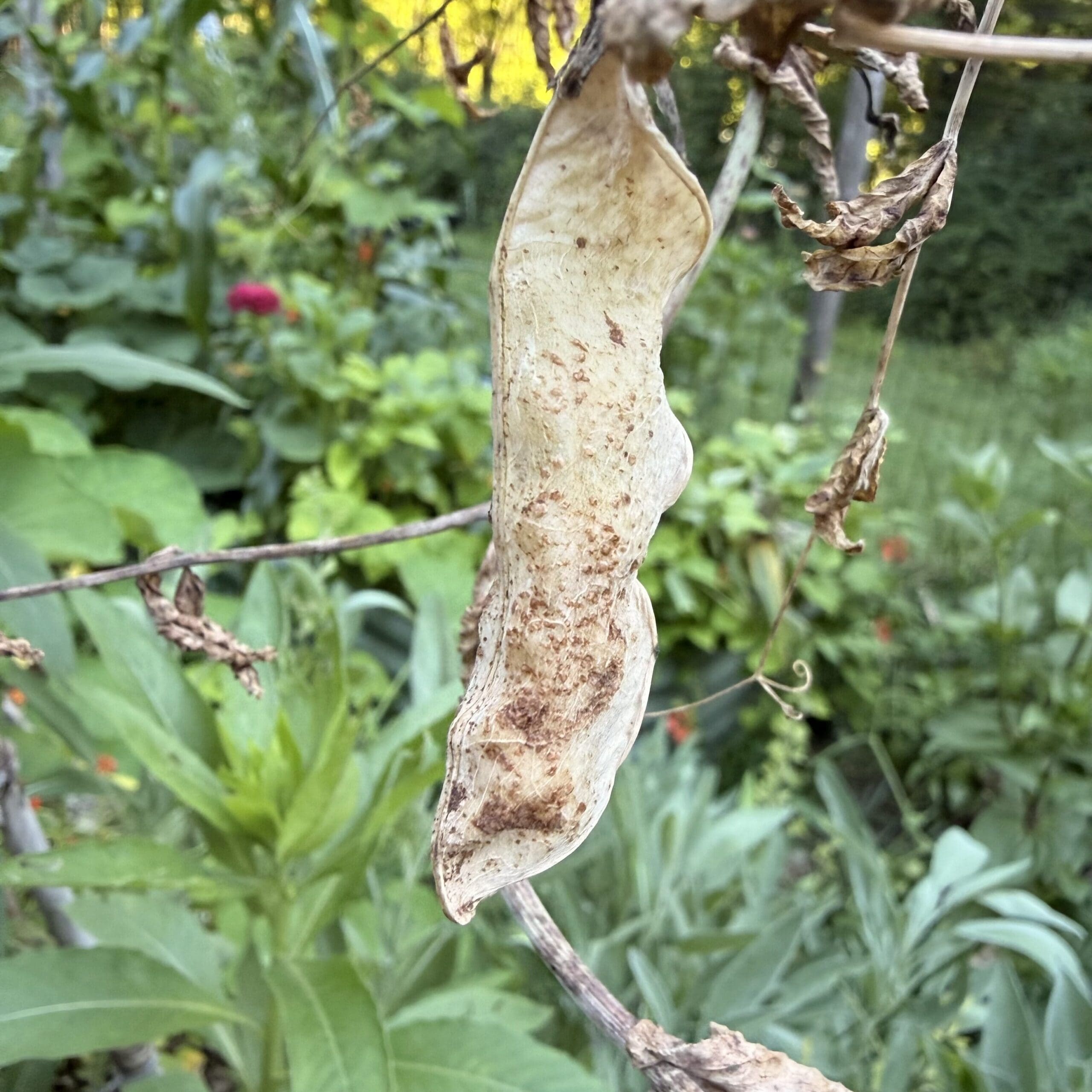
To harvest viable legume seeds, cultivators must abandon the traditional practice of picking pods at peak culinary tenderness. Instead, vines must remain undisturbed at the end of the growing season until the pods turn completely brown, brittle, and dry. Agronomists recommend a simple auditory test: shaking the pod should produce a distinct, loud rattling sound caused by loose seeds colliding against the dry pod walls. For beans, a tactile thumbnail test provides final verification; if a seed resists indentation, it is fully mature.
Following harvest, a sustainable cleanup protocol involves severing the plant at the soil line rather than uprooting the entire root system. This allows nitrogen-fixing nodules attached to the roots to decompose in situ, naturally enriching the soil microbiome for the subsequent growing season.
Leafy Greens: Lettuce
The phenomenon of bolting—traditionally viewed by gardeners as a crop failure when summer heat forces leafy greens to turn bitter—actually represents a crucial biological milestone in seed production.
When ambient temperatures rise, lettuce initiates a stress response, shifting cellular energy from foliage production to reproductive bolting. The plant elongates a central vertical stalk, produces delicate yellow blossoms, and ultimately generates seed heads encapsulated in feathery white tufts reminiscent of dandelion seed structures. Gardeners can harvest these tufts manually or shear the seed heads directly into collection bags. After a brief air-drying period of several days, gentle mechanical friction separates the viable seeds from the surrounding botanical fluff.
Solanaceous Crops: Peppers
Pepper cultivation offers a straightforward introduction to saving seed from fleshy fruits, though it requires specific maturation milestones. While green bell peppers and immature chili varieties are entirely suitable for immediate consumption, seed viability depends entirely on letting the fruit achieve full physiological maturity on the vine. This requires waiting until the fruit transitions to its terminal coloration—typically deep red, vibrant yellow, or bright orange.
Extracting the seeds involves slicing open the fully ripe fruit, scraping the interior placental walls, and spreading the seeds across parchment paper or unbleached paper towels. Air-drying typically takes between three to five days. A conclusive break test—attempting to snap the seed cleanly in half—confirms readiness for long-term storage. Cultivators must remain cognizant of spatial isolation requirements; despite being self-pollinated, distinct pepper varieties planted within 300 feet of one another can cross-pollinate via insect vectors, compromising genetic purity.
Solanaceous Crops: Tomatoes
Tomato seed saving introduces cultivators to the processing of "wet seeds," which necessitates a specialized extraction technique due to evolutionary adaptations designed to prevent premature germination.
Tomato seeds are encased in a gelatinous membrane containing biochemical germination inhibitors. If this membrane is left intact during storage, germination rates plummet to approximately 30 percent. Horticultural scientists recommend a controlled microbial fermentation process to dissolve this protective barrier safely.
The procedure begins by extracting seeds and surrounding pulp from a disease-free, fully ripe tomato into a glass vessel, supplementing the mixture with an equal volume of water. The container opening is sealed with a breathable fabric secured by a rubber band to exclude insect pests while permitting gas exchange. Stored at room temperature for three to five days, the mixture undergoes natural anaerobic and aerobic microbial activity, frequently developing a frothy white surface film and a characteristic yeasty aroma.
The fermentation endpoint is visually distinct: viable seeds, freed from their gelatinous coating, settle to the bottom of the vessel, while suspended pulp, mold layers, and non-viable floating seeds rise to the top. Gardeners must carefully decant the upper layer, pour the settled seeds through a fine-mesh sieve, and rinse them thoroughly with cold water. The cleaned seeds are then spread across a non-stick surface to dry for a minimum of one week. As with peppers, maintaining a minimum physical separation of 10 feet between distinct tomato varieties prevents unwanted cross-pollination.
Scientific Storage Protocols and Long-Term Viability
The culmination of an entire season’s labor in seed saving can be instantly compromised by improper post-harvest management. Horticultural institutions emphasize that seeds must be thoroughly desiccated and entirely free of organic debris prior to packaging.
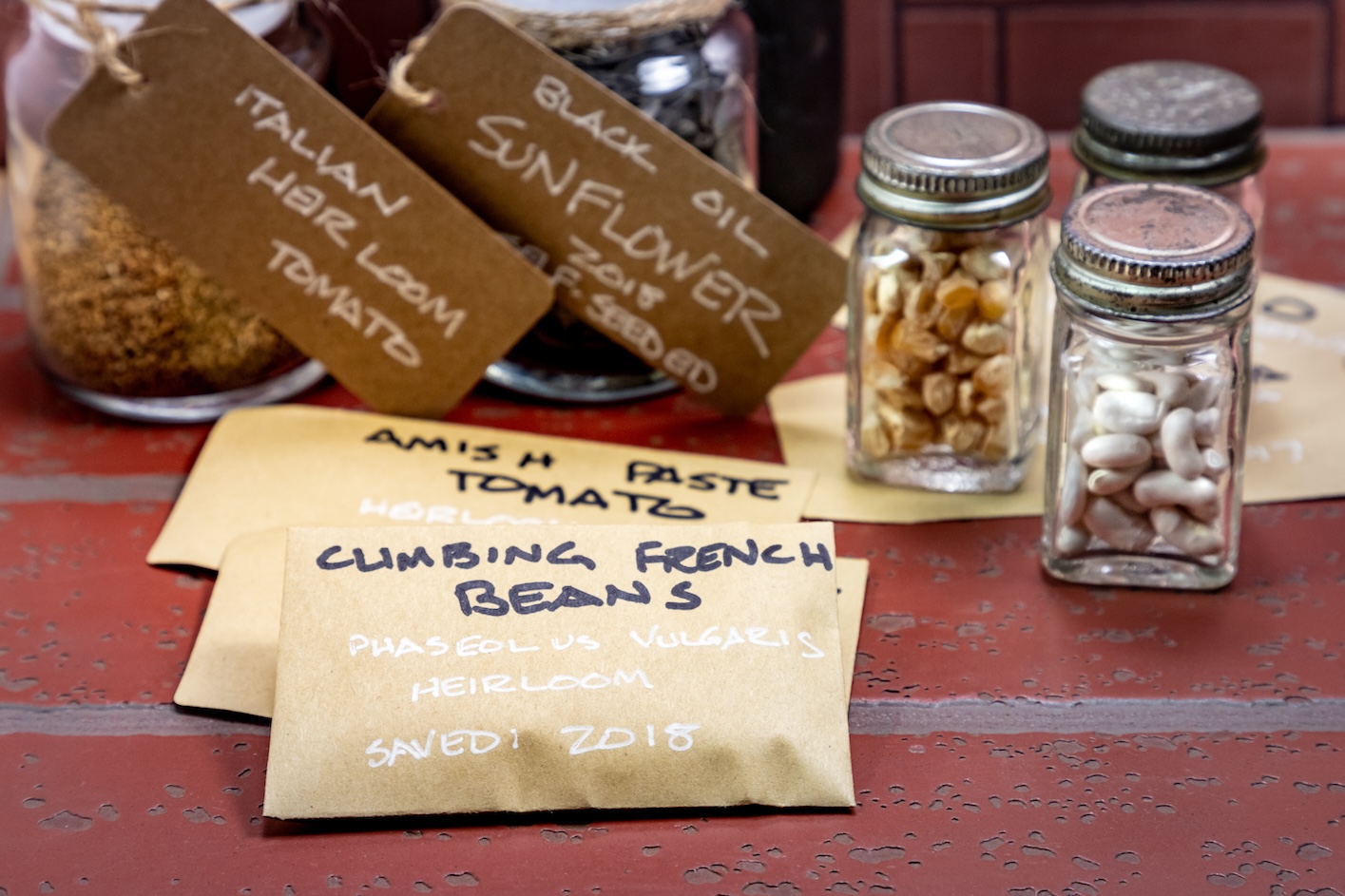
For short-term storage spanning a single season, small paper envelopes—including repurposed commercial seed packets—are optimal because they allow residual moisture to slowly dissipate. For long-term preservation exceeding one year, airtight containers such as glass mason jars are mandatory to prevent ambient humidity fluctuations and exclude destructive insect pests. Plastic containers must be avoided, as their vapor-barrier properties can trap microscopic moisture, rapidly inducing fungal mold and cellular rot.
Every storage vessel must feature comprehensive exterior labeling documenting the specific plant variety, exact harvest date, and notable phenotypic characteristics such as flavor notes, coloration, disease resistance, and environmental preferences. Finally, containers must be placed in an environment characterized by low temperature, minimal humidity, and complete darkness—typically a cool basement, root cellar, or dedicated seed cabinet. By adhering to these rigorous botanical standards, contemporary home gardeners can actively participate in global biodiversity preservation while securing a resilient, sustainable food supply for future generations.