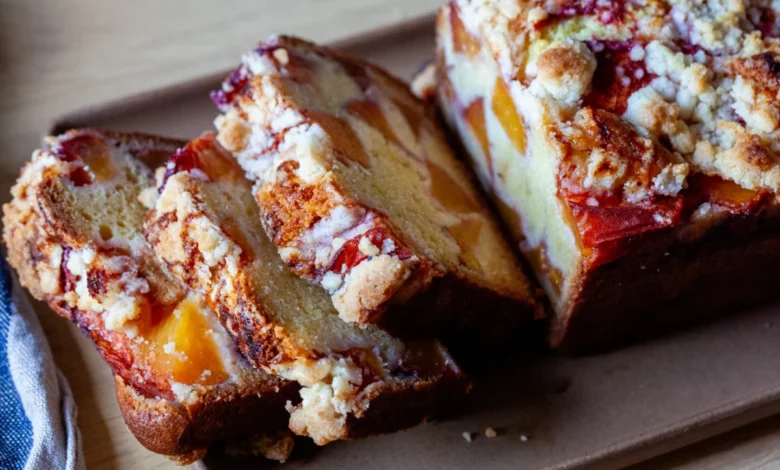
The pursuit of culinary perfection often demands patience, but few baking projects test endurance quite like a six-year recipe development cycle. In the competitive landscape of home baking and food journalism, refining a single seasonal pastry requires overcoming persistent technical hurdles, including fruit moisture control, batter density, and structural integrity. Recently, a breakthrough in summer baking concluded a multi-year culinary investigation, resulting in the introduction of the Peach Cobbler Loaf. This detailed chronicle examines the evolution of the recipe, the operational challenges of baking with stone fruit, and the technical specifications required to achieve a balanced dessert.
Chronology of a Culinary Project

The development timeline of the Peach Cobbler Loaf spans six consecutive stone fruit seasons, categorized by trial, error, and meticulous data collection.
2018–2019: The Initial Phase
The project began as an informal kitchen experiment aimed at translating the flavor profile of a traditional Southern peach cobbler into a portable loaf format. Early iterations suffered from structural failures. Diced peaches yielded bland results due to uneven distribution of natural juices, while thinly sliced fruit disintegrated completely within the crumb during the baking process.
2020–2021: The Seasoning and Batter Trials
During the third and fourth years, experimentation shifted toward the chemical composition of the batter. Incorporating ground spices directly into the flour mixture failed to enhance flavor, instead resulting in a muted, unappealing beige appearance. Furthermore, moisture released by the fruit during baking frequently compromised the center of the loaf, creating an unbaked pocket beneath the top crust.

2022–2023: Refinement of Pan Ratios and Sugar Balance
The penultimate phase focused on precise measurements. Developers determined that standard loaf pans yielded inconsistent results depending on volume capacity. A pan holding precisely six liquid cups (approximately 1,420 milliliters)—measuring 8 by 4 inches at the base and expanding to 9 by 5 inches at the rim—became the standardized testing vessel. Adjustments were also made to the butter-to-sugar ratio and the inclusion of cultured dairy (such as yogurt or sour cream) to maintain crumb tenderness without sacrificing structural strength.
2024: Finalization and Publication
With the structural integrity issues resolved through layered assembly and a controlled baking time of 60 to 70 minutes at 375°F (190°C), the recipe reached its final iteration, timed to coincide with the conclusion of the commercial peach harvest.
Technical Specifications and Ingredients

Baking with stone fruit presents distinct scientific challenges, primarily related to water content and sugar distribution. Peaches are approximately 89% water, meaning that incorporating them into baked goods requires careful management of liquid migration.
According to the finalized formulation, the Peach Cobbler Loaf relies on a precise hierarchy of ingredients to prevent the fruit from sinking or rendering the pastry soggy:
- Cake Base: Combines finely grated lemon zest, melted butter, granulated sugar, brown sugar, cultured yogurt or sour cream, eggs, leavening agents (baking powder and baking soda), salt, and all-purpose flour.
- Fruit Component: Fresh peach wedges treated with fresh lemon juice, cinnamon, and a measured quantity of brown sugar to draw out excess moisture and enhance acidity.
- Streusel Topping: A combination of melted butter, granulated sugar, a pinch of salt, and flour designed to create a contrasting textural crust over the fruit layer.
- Assembly Technique: The batter and fruit are stratified within the loaf pan, with half the batter laid down first, followed by a layer of seasoned peaches, the remaining batter, a second layer of fruit, and the accumulated fruit juices poured directly over the top before the streusel is applied.
Industry Context and Baking Implications

The commercial and domestic baking sectors frequently grapple with the limitations of seasonal produce. According to agricultural data from the United States Department of Agriculture (USDA), peach yields fluctuate annually based on late-spring frost events and regional precipitation levels, placing a temporal constraint on recipe testing. For professional pastry chefs and culinary developers, utilizing seasonal window periods efficiently is critical for successful publication cycles.
The challenges encountered during the six-year development of the Peach Cobbler Loaf—specifically managing fruit density and moisture control—highlight common obstacles in fruit-based pastry formulation. Culinary analysts note that consumer preferences have increasingly shifted toward hybrid comfort desserts that combine the rustic appeal of traditional cobblers with the convenience of quick-bread formats.
Storage and Shelf-Life Analysis

A notable finding from the final phase of development involves the post-baking maturation of the loaf. Food science principles suggest that high-moisture cakes often improve in texture over a 24- to 48-hour period as moisture redistributes evenly throughout the crumb.
Recommended storage protocols dictate that the loaf should remain unwrapped at room temperature within the baking pan, utilizing a sheltered environment such as an unpowered microwave or oven to protect the exterior streusel crust from ambient humidity. Stored correctly, the flavor profile matures significantly by the second and third days following production, offering extended viability for both home bakers and commercial operators seeking make-ahead capabilities.