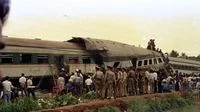
Tragedi Kemanusiaan di Laut Jawa: Menguak Kembali Luka Lama Tenggelamnya KM Tampomas II pada Januari 1981

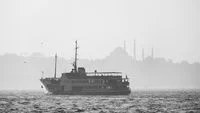
The Java Sea witnessed one of the darkest maritime disasters in Indonesian history when KM Tampomas II sank on January 27, 1981, claiming the lives of 666 people officially, though many historical estimates suggest the true death toll may have been significantly higher due to an unrecorded number of black-market passengers.
Published as part of the CNBC Insight historical review series to understand present-day conditions through the lens of past lessons, the sinking of KM Tampomas II remains a poignant reminder of the lethal intersection between regulatory laxity, corporate negligence, maritime corruption, and systemic safety failures. The vessel, operating under PT PANN (Pengembangan Armada Niaga Nasional) and managed by PT Pelni, was navigating a treacherous path from Tanjung Priok Port in Jakarta to Makassar, South Sulawesi. What was supposed to be a routine inter-island transit transformed into an inferno and a watery grave, exposing profound vulnerabilities in Indonesia’s burgeoning transportation sector during the early 1980s.
The Overloaded Voyage and Structural Anomalies
From its inception, the final journey of KM Tampomas II was plagued by logistical nightmares and blatant disregard for maritime carrying capacities. Originally constructed and deployed as a cargo vessel rather than a passenger liner, the ship had been retrofitted to accommodate travelers alongside commercial freight. On that fateful voyage, the vessel’s cargo holds were aggressively packed with 191 cars and 200 motorcycles, severely compromising the ship’s center of gravity and safety margins.
While official manifests listed approximately 1,000 registered passengers, independent estimates and historical journalistic investigations place the actual number of people on board between 1,442 and 2,000. This massive discrepancy was driven by widespread ticket scalping and the inclusion of numerous undocumented "black market" passengers who boarded with the tacit complicity of unscrupulous port and ship personnel.
The trouble began even before the vessel cast off. The departure, originally slated for January 23, 1981, was delayed due to persistent engine malfunctions. Despite these ominous mechanical red flags, temporary safety certificates and superficial patches permitted the vessel to clear port authority inspections and embark into the unpredictable waters of the Java Sea.
Chronology of a Catastrophe: From First Smoke to Final Submersion
The sequence of events that led to the ultimate disaster unfolded over several agonizing days, transforming a mechanical failure into an unmitigated human tragedy.
- January 23, 1981: The scheduled departure of KM Tampomas II from Tanjung Priok is delayed due to unexpected engine trouble, signaling early mechanical unreliability.
- January 23–24, 1981: Repairs are hastily completed, and the vessel departs Jakarta for Makassar, heavily overloaded with commercial vehicles, cargo, and thousands of passengers.
- January 25, 1981, 20:00 WITA: Around 8:00 PM Central Indonesia Time, a fuel leak ignites a devastating fire deep within the engine room. A passenger named Endang becomes the first to sound the alarm after detecting a heavy burning smell and intense heat.
- Late Night, January 25, 1981: The ship’s engineers immediately shut down the engines, and the fire alarm rings across the decks, plunging passengers into panic. Crew members issue basic instructions regarding life jackets, but chaotic evacuation procedures quickly take hold.
- Early Hours, January 26, 1981: Engine room crew members attempt to deploy portable fire extinguishers, but subsequent investigations by the newspaper Berita Yudha reveal that a significant portion of the ship’s mates were completely untrained in operating the vessel’s fire detection and suppression systems.
- January 26, 1981 (Daytime): The fire rages out of control. The main generator fails, cutting off the water pumps needed to combat the blaze. The flames rapidly spread to the vehicle storage decks, igniting the fuel tanks of the cars and motorcycles onboard.
- January 26–27, 1981: As torrential rain begins to fall, water mingles with the chaos on deck. Passengers jump into the churning sea or attempt to launch malfunctioning lifeboats. Passing vessels notice the burning ship but are severely hampered by the adverse weather conditions and the sheer speed of the disaster.
- January 27, 1981, 12:45 WIB / 13:45 WITA: The engine room suffers a cataclysmic explosion. KM Tampomas II finally loses its remaining structural integrity and plunges beneath the surface of the Java Sea near the Masalembu islands, taking hundreds of souls down with it.
The Acquisition Controversy: A Secondhand Ship and Allegations of Corruption
Beyond the immediate tactical failures during the emergency response, the underlying procurement of KM Tampomas II became the subject of intense public scrutiny and investigative journalism. According to archival reports from Berita Yudha in March 1981, the vessel was a secondhand purchase made by PT Pengembangan Armada Niaga Nasional (PANN) from a Japanese firm, Comodo Marine Co. SA, at a steep price of US$8.3 million.
This transaction immediately raised eyebrows within maritime circles and government oversight committees. Financial analysts and parliamentary observers pointed out that PANN had previously received alternative acquisition offers for comparable vessels priced as low as US$3.6 million. The multimillion-dollar variance fueled widespread allegations of corruption, kickbacks, and administrative collusion in the procurement process.
Investigators later discovered that the vessel failed to meet several fundamental international safety conventions. Its structural layout as a converted cargo ship meant that evacuation routes, compartment seals, and ventilation systems were inherently unsuited for high-density passenger transportation. Furthermore, the persistence of temporary safety certificates indicated that regulatory oversight bodies had bypassed rigorous compliance checks, favoring commercial expedience over human safety.
Official Inquiries and Findings by the Maritime Court
In the aftermath of the tragedy, the Indonesian Maritime Court (Mahkamah Pelayaran) initiated extensive formal hearings to determine culpability. The official inquiry concluded that the primary catalyst for the fire was a discarded cigarette butt, which found its way into a volatile environment rich with fuel vapor.
However, the court emphasized that the spark alone would not have escalated into a mass-casualty catastrophe had it not been for gross negligence on multiple levels:
- Operational Negligence: The crew failed to maintain strict fire safety protocols and lacked the basic technical competence required to operate sophisticated marine fire suppression technology.
- Management Failures: PT Pelni and the vessel’s operators permitted systemic overloading, ignored critical pre-departure mechanical warnings, and failed to maintain an accurate passenger manifest.
- Regulatory Oversight Failures: State inspectors allowed a compromised, overpriced, and ill-adapted secondhand vessel to obtain sailing clearance.
Despite the gravity of the findings, accountability remained fractured, and critics argued that systemic institutional reforms were slow to materialize in the immediate aftermath, leaving maritime workers and passengers vulnerable to similar systemic hazards for years to come.
Broader Implications and Historical Significance
The sinking of KM Tampomas II stands as a watershed moment in the history of Indonesian transportation safety. It brutally illuminated the darker side of national development policies in the early 1980s, where rapid economic expansion and the pressing need for inter-island connectivity frequently superseded adherence to basic human safety standards.
The disaster forced a reluctant modernization of Indonesia’s maritime regulatory framework, prompting stricter enforcement of passenger manifests, mandatory safety drills, and more rigorous vessel inspections by the Directorate General of Sea Transportation. It also catalyzed public demand for transparency in state-owned enterprise procurements, shifting how the government acquired secondhand maritime assets.
Decades later, the ghosts of the Java Sea continue to haunt the collective memory of the nation. The tragedy of KM Tampomas II serves as a permanent, sobering warning against the deadly costs of corruption, regulatory complacency, and the prioritization of profit over human life on the high seas.