The global movement toward sustainable agriculture has reached a critical inflection point, characterized by a surge in interest from the next generation of food producers and an urgent push for transparency from corporate retailers. Patrick Holden, CEO and Founder of the Sustainable Food Trust (SFT), has spent the past month traversing continents to engage with this shifting landscape, participating in high-level dialogues that bridge the gap between small-scale traditional farming and the massive, multinational systems currently undergoing a transformation toward regenerative practices. From Ireland to New York, and through the corridors of power in Scotland, the discourse is increasingly dominated by the necessity of a standardized, data-driven approach to environmental and ethical stewardship in food production.
A Chronology of Engagement: From Ballymaloe to Turin
The month-long itinerary began in Ireland, where Holden addressed students at Ballymaloe’s inaugural six-week Food and Farming course. The program serves as a microcosm of a broader demographic shift; the students, primarily in their 20s and 30s, represent a growing cohort of young professionals seeking to move away from desk-bound careers and into direct food production. The existence of a lengthy waiting list for this specialized training suggests that the "back-to-the-land" movement is not merely a niche trend but a burgeoning vocational pivot driven by climate consciousness and a desire for localized food security.
Following his visit to Ireland, Holden traveled to Scotland for a pivotal summit hosted by The King’s Foundation, the SFT, and the Circular Bioeconomy Alliance (CBA). The gathering, focused on "Harmony in Food and Farming," brought together policymakers, including Defra Secretary of State Angela Eagle, and influential figures such as Chris van Tulleken, whose recent academic and popular work on ultra-processed foods has fundamentally altered the public discourse on nutrition and supply chain transparency.
The trajectory of these engagements then moved to the United States for the Real Organic Conference in upstate New York. Holden joined a panel with agricultural luminary Eliot Coleman to debate the intersection—and occasional friction—between "organic" and "regenerative" agricultural movements. This was followed by a strategic shift to New York City for Climate Week, where the focus turned to the Sustainable Markets Initiative (SMI) and the expansion of the "Beacon Farms" project. The final leg of the tour saw a return to Europe for Terra Madre in Turin, Italy, a global forum for the Slow Food movement, which served as a poignant tribute to the late Carlo Petrini.
The Regenerative Debate: Transparency vs. Greenwashing
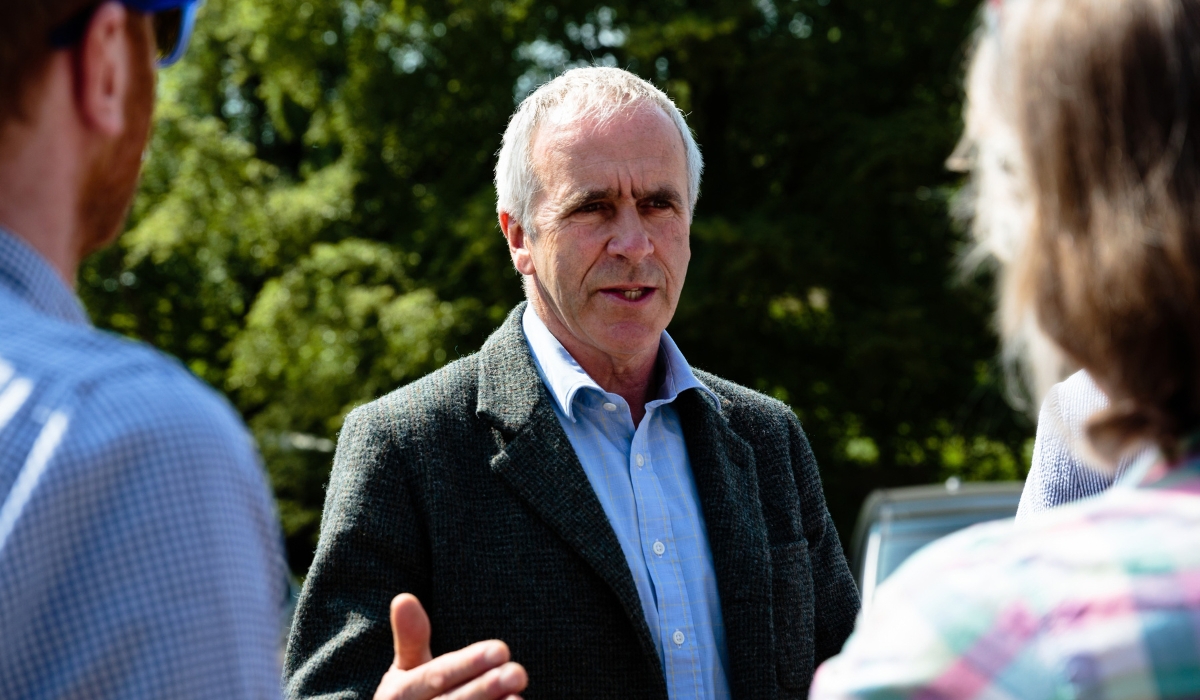
A central theme throughout these events has been the ambiguity surrounding the term "regenerative farming." While corporate interest in regenerative agriculture has exploded, the lack of a standardized definition creates a significant risk of greenwashing. Data suggests that while many UK farms now self-identify as regenerative, they continue to rely on conventional inputs, including chemical fertilizers and synthetic pesticides such as glyphosate.
From an analytical standpoint, the confusion is a barrier to market integrity. When consumers purchase products labeled "regenerative," they are implicitly paying for environmental outcomes—such as carbon sequestration, soil health improvement, and biodiversity gain—that are not always delivered. Holden argues that the solution lies in a common framework for measurement. By adopting metrics that track performance across climate, nature, and social criteria, the industry could move from vague marketing claims to verifiable, transparent data. This is the premise of the Global Farm Metric (GFM), a tool developed by the SFT to provide a unified language for farmers, retailers, and policymakers to assess sustainability.
Scaling the Beacon Farms Initiative
During New York Climate Week, the collaboration between the SFT and the Sustainable Markets Initiative (SMI) reached a milestone with the announcement of an expansion plan for the Beacon Farms project. Currently, there are approximately 50 such farms in the UK, with a recent successful rollout in Ireland. The initiative functions as a network of farms that serve as models for sustainable, circular, and nature-friendly production.
The decision to scale this into the US market is a response to the growing demand from retail organizations for more resilient supply chains. By partnering with US-based organizations, the SFT aims to replicate the success of the UK model, which focuses on reconnecting consumers with the provenance of their food. The implications for the US market are significant; as major retailers face mounting pressure from investors and consumers to reduce their Scope 3 emissions—the emissions resulting from their supply chains—investing in regenerative "beacon" models provides a tangible path toward meeting these sustainability targets.
The Economic and Environmental Context
The global agricultural sector is currently responsible for approximately one-quarter of global greenhouse gas emissions. The urgency of the current moment is highlighted by the recent shift in institutional support. The involvement of the Sustainable Markets Initiative and high-ranking government officials like Angela Eagle signals that regenerative agriculture is moving from the fringe to the mainstream of agricultural policy.

However, the economic transition remains complex. Small-scale farmers often lack the capital to transition from conventional to regenerative systems, which may require years of soil recovery and reduced yields during the conversion period. During the Terra Madre gathering, which attracted hundreds of thousands of participants, the message was clear: the transition is not just an environmental imperative but a social one. The loss of biodiversity and the degradation of topsoil are existential threats to global food security. The massive turnout in Turin served as a barometer for the political capital now held by the sustainable farming movement, signaling to policymakers that there is a broad, international constituency demanding systemic reform.
Implications for the Future of Food Systems
As the agricultural sector looks toward the next decade, the convergence of these diverse events points to three distinct, emerging realities:
- Metric-Driven Accountability: The industry is moving toward a standardized, tech-enabled verification process. The reliance on qualitative "promises" of sustainability is being replaced by quantitative requirements. Without a common denominator for measurement, such as the GFM, the "regenerative" label risks losing its market value to skepticism.
- Corporate-Producer Symbiosis: Large-scale retailers are no longer merely buying commodities; they are beginning to act as stakeholders in the health of the farms that supply them. The expansion of the Beacon Farms project suggests that the future of large-scale retail involves direct investment in the transition of their supply base, rather than simply passing the cost of environmental compliance down to the producer.
- The Rise of the "Producer-Citizen": The demographic shift witnessed at the Ballymaloe course indicates that the next generation of food producers is motivated by a synthesis of professional vocation and social activism. This new breed of farmer is well-educated, data-literate, and deeply skeptical of industrial-scale monoculture.
In summary, the engagements undertaken by the SFT over the past month highlight a transition that is gaining velocity. While the challenges—ranging from the definition of regenerative practices to the economic realities of transitioning land—remain substantial, the alignment of interest between high-level policy, corporate strategy, and the grassroots movement provides a framework for genuine, measurable change. As Patrick Holden and his colleagues continue to push for a unified global metric, the goal of a truly sustainable, organic, and regenerative food system appears increasingly within the realm of the achievable, provided that the industry can maintain its focus on transparency and verifiable, long-term outcomes. The upcoming months, marked by the formal expansion of the Beacon Farms project into the US, will likely serve as a litmus test for whether these ambitious, cross-continental strategies can deliver tangible, large-scale results on the ground.
Related posts: