The Technical Mechanics of Interactive Bread Design
The structural integrity of Bloomin’ Pizza Bread relies heavily on the choice of its foundation: the sourdough loaf. In the realm of professional baking and food science, sourdough is preferred for this application due to its dense crumb and robust crust. Unlike softer white breads or brioche, sourdough can withstand the deep, longitudinal and latitudinal incisions required to create the "blooming" effect without collapsing under the weight of the fillings.
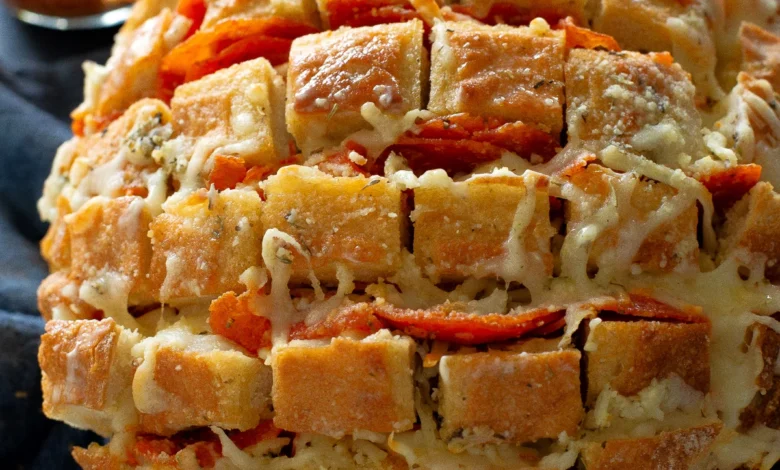
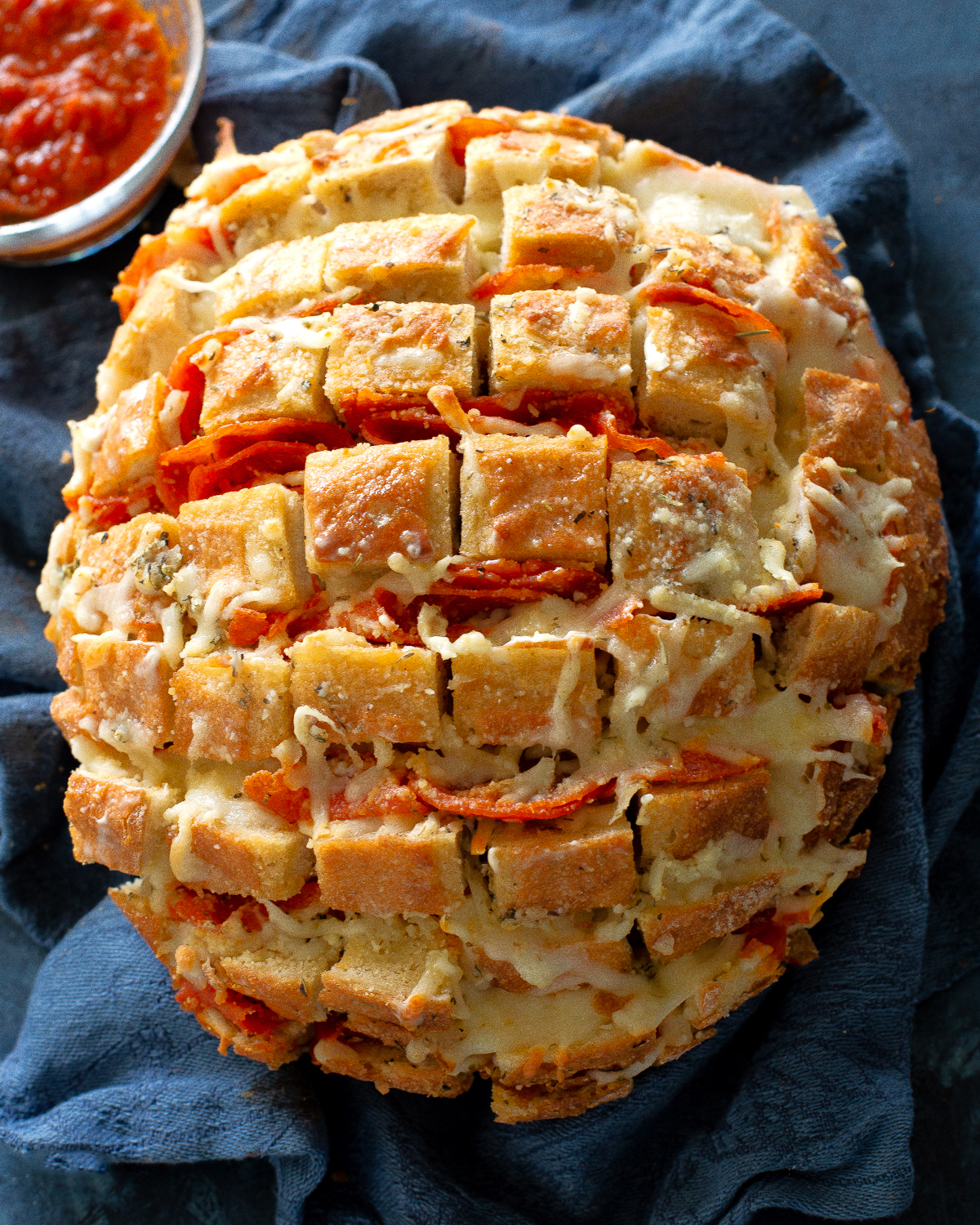
The "blooming" technique involves cutting the loaf into a grid pattern, ensuring the knife does not penetrate the bottom crust. This creates individual columns of bread that remain attached at the base. From a culinary engineering perspective, this increases the surface area of the interior bread, allowing for maximum absorption of the garlic butter glaze and providing deep pockets for the cheese and pepperoni to melt into. The result is a thermodynamic environment where the interior remains moist and elastic while the exterior edges achieve a Maillard reaction—the chemical reaction between amino acids and reducing sugars that gives browned food its distinctive flavor.
Historical Evolution: From the Onion to the Loaf
The concept of "blooming" food gained mainstream cultural prominence in the late 1980s and early 1990s, largely popularized by American casual dining chains. The most notable precursor is the "Bloomin’ Onion," a deep-fried appetizer where a large onion is cut to resemble a flower. This visual and interactive style of eating resonated with consumers, leading to a decade-long exploration of how other food items could be adapted into this "pull-and-eat" format.
By the early 2010s, food innovators and digital creators began applying this logic to bakery products. Christy Denney, a prominent figure in the digital culinary space and creator of "The Girl Who Ate Everything," identified the potential for a bread-based version of the blooming concept. Following the success of her "Bloomin’ Onion Bread," which utilized onions and cheese, the transition to a pizza-infused variant was a logical progression driven by consumer data. Market research consistently shows that pizza remains the most popular "crowd-pleasing" flavor profile in North America, making the Bloomin’ Pizza Bread a high-performing concept in both social media engagement and practical household application.
Market Analysis: The Rise of the Interactive Appetizer
The popularity of dishes like Bloomin’ Pizza Bread aligns with broader trends in the $30 billion U.S. appetizer and snack market. According to recent industry reports, "shareable plates" have seen a 15% increase on restaurant menus over the last five years. This shift is attributed to a change in consumer psychology; modern diners increasingly prioritize "experience-based" eating.
Data from the American Culinary Federation suggests that interactive foods—those that require the consumer to tear, dip, or assemble—enhance the social bonding aspect of a meal. In the context of a potluck or a "game day" gathering, Bloomin’ Pizza Bread functions as a centerpiece that encourages guest interaction. Furthermore, the DIY nature of the dish reflects a growing "semi-homemade" trend in the $600 billion grocery sector, where consumers combine pre-made artisanal products (like sourdough loaves) with fresh ingredients to create high-impact dishes with minimal labor.
Nutritional and Ingredient Composition
A standard iteration of Bloomin’ Pizza Bread involves a specific ratio of fats, proteins, and carbohydrates designed for palatability. The core components typically include:
- The Base: A 1-pound sourdough loaf, providing approximately 1,200 calories and serving as a complex carbohydrate foundation.
- The Binding Agent: Mozzarella cheese, selected for its high moisture content and superior "stretch" (elasticity) when melted. This is essential for the visual appeal of "pull-apart" bread.
- The Flavor Profile: Pepperoni slices, which introduce sodium and nitrites that act as a flavor enhancer, and garlic butter, which provides the aromatic lipid layer necessary to prevent the bread from drying out during the baking process.
- The Finishing Element: A side of warm pizza sauce (marinara), which adds acidity to balance the richness of the fats and cheese.
From a food safety and preparation standpoint, the recipe is designed for efficiency. The bread is typically wrapped in foil during the initial baking phase to steam the interior and melt the cheese, followed by a brief period of uncovered baking to crisp the crust.
Sociocultural Impact and the Role of Food Blogging
The dissemination of the Bloomin’ Pizza Bread recipe highlights the influential role of food bloggers in the modern domestic economy. Creators like Christy Denney act as intermediaries between professional culinary techniques and the home kitchen. By simplifying complex concepts into "user-friendly" formats, these influencers drive significant retail activity in the grocery sector.
The 2011 release of this specific recipe coincided with the "Golden Age" of food blogging, a period when digital platforms began to replace traditional cookbooks as the primary source of culinary inspiration for the Millennial demographic. The "Bloomin’ Pizza Bread" became a viral sensation because it solved a common social dilemma: how to provide a hot, flavorful, and visually impressive appetizer that is easy to transport and requires no utensils.
Chronology of Development
The timeline of the "Bloomin’" bread phenomenon can be traced through the following milestones:
- 1988: The "Bloomin’ Onion" is trademarked, sparking interest in "flower-cut" appetizers.
- 2008–2010: The rise of Pinterest and food-focused social media creates a demand for "highly visual" food.
- July 2011: Christy Denney publishes the "Bloomin’ Onion Bread" on her platform, which quickly becomes one of her most-trafficked recipes.
- Late 2011: Recognizing the demand for variety, the pizza-infused variant is developed, utilizing the same structural cutting technique but pivoting to an Italian-American flavor profile.
- 2015–Present: The recipe remains a perennial favorite, frequently resurfacing during the NFL season and major American holidays.
Broader Implications for the Food Industry
The success of Bloomin’ Pizza Bread has broader implications for the frozen food and "ready-to-bake" industries. Major food conglomerates have taken note of the pull-apart trend, leading to the introduction of "tear-and-share" products in the freezer aisles of major supermarkets. However, the homemade version remains superior in the eyes of many enthusiasts due to the ability to customize the quality of the bread and the quantity of the fillings.
Furthermore, the dish reflects the "comfort food" resurgence observed during periods of economic or social stress. The combination of bread, cheese, and garlic triggers a dopamine response, and the act of sharing a single loaf reinforces feelings of community and safety.
Conclusion and Future Outlook
As the culinary world continues to move toward a blend of convenience and "Instagrammable" aesthetics, dishes like Bloomin’ Pizza Bread are likely to evolve further. Future iterations may include gluten-free sourdough bases to accommodate dietary shifts or the integration of plant-based cheeses and meat alternatives to appeal to the growing vegan demographic.
Ultimately, Bloomin’ Pizza Bread is more than just a recipe; it is a cultural artifact of the early 21st-century’s obsession with interactive, shareable, and comfort-driven gastronomy. It stands as a testament to how a simple modification—a series of cuts in a loaf of bread—can transform basic ingredients into a social phenomenon that continues to resonate with home cooks and party-goers a decade after its inception. Through the careful balance of sourdough’s structural integrity and pizza’s universal flavor appeal, it remains a gold standard in the category of modern American appetizers.