
Japanese Egg Salad Sandwich Tamago Sando

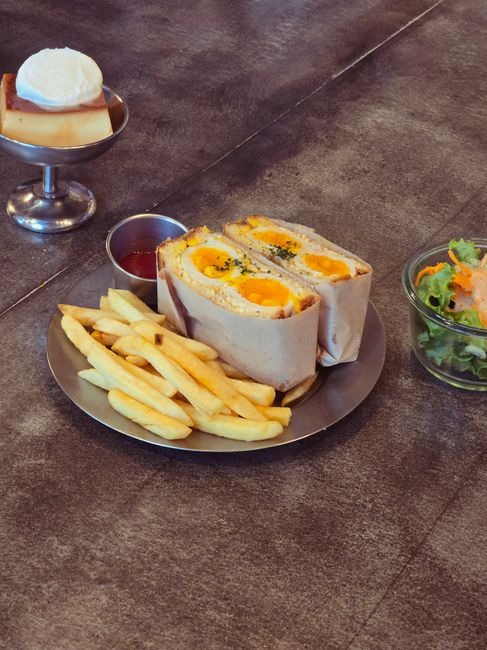
The Ultimate Guide to Tamago Sando: Japan’s Beloved Egg Salad Sandwich
The tamago sando, or Japanese egg salad sandwich, is more than just a simple sandwich; it’s a cultural icon, a testament to the Japanese appreciation for delicate flavors, precise preparation, and aesthetically pleasing food. While egg salad sandwiches exist in various forms globally, the tamago sando possesses a unique character that sets it apart, making it a sought-after delicacy in Japan and increasingly, around the world. This comprehensive guide will delve into the history, ingredients, preparation, variations, and cultural significance of the tamago sando, offering insights for both culinary enthusiasts and those simply seeking to understand this beloved Japanese staple.
The origins of the tamago sando are rooted in the post-World War II era of Japan, a period of significant Western influence on Japanese cuisine. Following the war, American occupation brought with it new food items and culinary techniques, including the concept of the sandwich. However, Japanese chefs and home cooks didn’t simply adopt Western recipes; they adapted them, infusing them with their own distinct culinary philosophies. The tamago sando emerged as a sophisticated yet accessible interpretation of the Western egg salad sandwich. Early versions likely focused on simplicity and quality ingredients, reflecting the Japanese emphasis on ingredient integrity. The widespread availability of eggs and mayonnaise, coupled with the growing popularity of Western-style bread (shokupan), paved the way for the tamago sando’s emergence as a convenient and delicious meal option. Its popularity grew steadily, particularly in its association with bento boxes and convenience stores (konbini), where it quickly became a best-seller due to its portability, affordability, and satisfying taste. The konbini version, in particular, played a crucial role in its mass appeal, making it a daily staple for students, office workers, and anyone seeking a quick and tasty bite.
At its core, the tamago sando is characterized by its exceptional simplicity, which belies the depth of flavor achieved through meticulous attention to detail. The foundational elements are eggs, mayonnaise, and shokupan. However, the type of egg and its preparation are crucial. Japanese eggs are renowned for their vibrant yolks and rich flavor, often enjoyed in their freshest state. The eggs are typically hard-boiled to perfection, ensuring a creamy yolk and firm white. The cooking time is critical; overcooked eggs can lead to a rubbery texture and a greenish ring around the yolk, which is considered undesirable in the tamago sando. The boiled eggs are then finely mashed or chopped, creating a base for the salad.
The mayonnaise is another non-negotiable component, and here, the Japanese context is paramount. Japanese mayonnaise, most famously Kewpie, is distinct from its Western counterparts. It is typically made with only egg yolks (rather than whole eggs), rice vinegar, and a blend of vegetable oils, resulting in a richer, creamier, and slightly tangier flavor profile. Kewpie mayonnaise’s unique umami notes and smooth texture are integral to the tamago sando’s signature taste. While Western mayonnaise can be used as a substitute, the authentic flavor experience is significantly altered. Some recipes also incorporate a touch of milk or cream to further enhance the creaminess and prevent the egg salad from becoming too dry. Seasoning is typically restrained, often limited to a pinch of salt and white pepper, allowing the quality of the eggs and mayonnaise to shine through. The emphasis is on enhancing, not masking, the core flavors.
The bread, shokupan, is arguably as important as the filling. Shokupan is a Japanese milk bread characterized by its soft, fluffy, and slightly sweet crumb and a delicate, golden crust. Its texture is incredibly tender, providing a luxurious contrast to the creamy egg salad. The bread is usually sliced thickly and, crucially, the crusts are removed before assembly. This "crustless" preparation is a hallmark of the refined tamago sando and contributes to its melt-in-your-mouth quality. The removal of the crusts also creates a visually appealing, uniformly colored sandwich. The bread is often lightly toasted or served plain, depending on regional preferences and the desired texture. The goal is to create a cohesive bite where the bread and filling are in perfect harmony.
The preparation of the tamago sando, while seemingly straightforward, involves several techniques that contribute to its superior quality. The hard-boiling of the eggs requires precision. Many prefer to boil eggs for 10-12 minutes to achieve a perfectly cooked yolk. Immediately plunging the boiled eggs into an ice bath stops the cooking process, preventing overcooking and making them easier to peel. After peeling, the eggs are typically mashed with a fork or passed through a sieve for a smoother consistency. Some purists prefer to chop the eggs very finely, creating small, distinct pieces within the salad, while others opt for a more homogenous mash.
The mixing of the egg salad is a delicate dance. The mashed eggs are combined with mayonnaise, salt, and pepper. The key is to use just enough mayonnaise to bind the eggs and create a creamy texture without making the filling greasy or overly wet. The ratio of egg to mayonnaise is a matter of personal preference, but a good starting point is typically one part mayonnaise to two or three parts egg. Some cooks add a touch of Dijon mustard for a subtle kick, though this is not traditional in the most basic versions. The mixture is gently folded, ensuring even distribution of ingredients.
The assembly of the sandwich is equally important for achieving the desired aesthetic and textural outcome. Two slices of shokupan, with their crusts removed, form the foundation. A generous but not excessive amount of egg salad is spread evenly onto one slice of bread, reaching close to the edges. The second slice of bread is then placed on top, and the sandwich is gently pressed to ensure the filling is distributed and the layers adhere. The sandwich is then typically cut into neat, bite-sized portions. The most common cuts are into two rectangles or four triangles, showcasing the perfectly layered filling. This precise cutting is not just for presentation; it makes the sandwich easier to handle and eat, especially when served as part of a bento or enjoyed on the go.
Variations of the tamago sando abound, reflecting regional differences and individual creativity. One popular variation is the yude tamago sando, which simply refers to the classic version using boiled eggs. Another is the onsen tamago sando, which utilizes onsen tamago, or hot spring eggs. Onsen tamago are slow-cooked at low temperatures, resulting in a custard-like egg white and a semi-liquid, creamy yolk that adds an extra layer of richness and decadence to the sandwich. The unique texture of the onsen tamago creates a remarkably smooth and luxurious egg salad.
A more distinct variation is the aji tamago sando, which incorporates marinated ramen eggs (ajitsuke tamago). These eggs are marinated in a savory mixture of soy sauce, mirin, sake, and other flavorings, imbuing them with a deep umami flavor. While the ramen egg itself is delicious, its inclusion in a tamago sando can sometimes overpower the delicate balance of the traditional sandwich. However, for those seeking a more robust and savory flavor profile, it’s an interesting experiment.
Another notable variation is the ebi tamago sando, which adds cooked, finely chopped shrimp to the egg salad. The shrimp provide a subtle sweetness and a pleasant textural contrast. The katsu sando, while not strictly a tamago sando, is a related Japanese sandwich that often features a breaded pork cutlet. Sometimes, a tamago sando might be served alongside or incorporated into a larger bento, demonstrating its versatility.
The tamago sando’s presence in Japanese society is pervasive. Convenience stores (konbini) like 7-Eleven, FamilyMart, and Lawson are perhaps the most ubiquitous purveyors of tamago sando, offering their consistently well-made versions at affordable prices. These konbini tamago sandos have played a significant role in popularizing the sandwich across all demographics. Department store basements (depachika) often feature artisanal tamago sandos from specialty bakeries and delis, using premium ingredients and presenting them with exquisite artistry. Cafes and kissaten (traditional Japanese coffee shops) also serve their own interpretations, often with slightly different spice profiles or bread choices.
In the context of bento boxes, the tamago sando is a common and highly appreciated addition. Its mild flavor and appealing appearance make it a crowd-pleaser, especially for children. It provides a satisfying protein component without being too heavy or overpowering. The sandwich’s portability and ability to maintain its texture at room temperature make it ideal for packed lunches.
The cultural significance of the tamago sando lies in its embodiment of Japanese culinary ideals: simplicity, quality of ingredients, meticulous preparation, and aesthetic appeal. It’s a testament to the fact that even the most humble ingredients, when treated with care and respect, can yield extraordinary results. The tamago sando is a comfort food for many Japanese, evoking feelings of nostalgia and home. Its widespread availability and consistent quality across different vendors speak to the high standards of Japanese food production and consumer expectations.
For those looking to recreate the authentic tamago sando experience at home, sourcing quality ingredients is paramount. Japanese short-grain rice (which can be used to make a Japanese-style mayonnaise if desired, though buying Kewpie is easier), shokupan, and fresh, high-quality eggs are essential. Patience and attention to detail in the cooking and assembly processes will elevate the final product. Experimenting with the ratio of egg to mayonnaise, the texture of the mashed eggs, and even a subtle addition of finely chopped chives or a tiny pinch of sugar can lead to personalized perfection. However, it is always recommended to start with the classic recipe to fully appreciate its inherent beauty and flavor.
In conclusion, the tamago sando is a celebrated Japanese culinary creation that, despite its humble ingredients, offers a complex and satisfying eating experience. From its historical evolution influenced by Western sandwich culture to its present-day ubiquity in konbini and its status as a beloved comfort food, the tamago sando is a dish that perfectly encapsulates the Japanese dedication to refined simplicity. Its enduring popularity is a testament to its deliciousness, its accessibility, and its ability to bring a touch of comfort and understated elegance to any meal. Mastering the tamago sando is a journey into understanding the nuances of Japanese home cooking and the profound impact of attention to detail on even the most straightforward of dishes.


