
Thin And Crispy Oatmeal Raisin Cookies
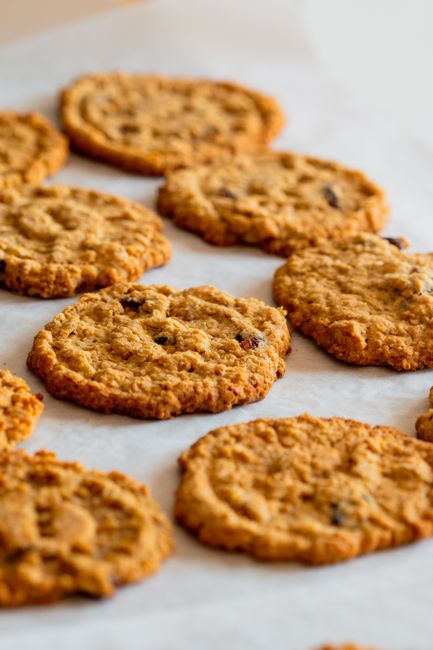
The Quest for the Ultimate Thin and Crispy Oatmeal Raisin Cookie: A Culinary Deep Dive
Achieving the perfect thin and crispy oatmeal raisin cookie is a culinary holy grail for many home bakers. This iconic cookie, beloved for its chewy raisins, warming spices, and satisfyingly brittle texture, can be surprisingly elusive. Unlike its thicker, softer counterparts, the thin and crispy version demands precision in ingredient ratios, baking temperature, and handling. This article delves into the science and art behind creating these delightful treats, exploring the key factors that contribute to their characteristic texture and flavor, and offering practical tips for consistent success.
The foundational element of any successful cookie, especially a thin and crispy one, lies in its fat content and type. Butter, with its complex flavor profile and ability to contribute to crispness, is the undisputed champion. For thin and crispy cookies, using melted butter is often preferred over softened butter. Melted butter coats the flour particles more thoroughly, hindering gluten development and resulting in a more tender and spreadable dough. This increased spread is crucial for achieving thinness. Furthermore, the water content in melted butter evaporates more readily during baking, contributing to a crispier finish. The amount of fat relative to flour is also critical. A higher fat-to-flour ratio promotes spread and crispness. Conversely, too much flour will lead to a drier, cakier cookie, while insufficient fat will result in a cookie that is too tough or lacks spread. The quality of the butter also matters; unsalted butter allows for greater control over the salt content, which plays a vital role in flavor enhancement and dough structure.
Sugar is another paramount ingredient, and its role in thin and crispy cookies is multifaceted. The combination of granulated sugar and brown sugar is key to achieving the desired texture and flavor. Granulated sugar, being pure sucrose, is highly hygroscopic, meaning it attracts and holds moisture. In the context of baking, this moisture is released during baking, contributing to crispness. It also aids in caramelization, imparting a beautiful golden-brown hue and a rich, toasty flavor. Brown sugar, on the other hand, contains molasses, which adds moisture and chewiness. However, for thin and crispy cookies, the proportion of granulated sugar should ideally be higher than brown sugar. The molasses in brown sugar can contribute to a softer texture if present in excess. The type of brown sugar (light vs. dark) also influences the outcome. Light brown sugar contains less molasses and will contribute to a crisper cookie than dark brown sugar, which will impart a chewier texture. Experimenting with the granulated to brown sugar ratio is a common strategy for fine-tuning the final cookie. For instance, a 1:1 ratio might lean too chewy, while a 2:1 ratio of granulated to brown sugar is a good starting point for crispness.
The flour choice significantly impacts cookie texture. All-purpose flour is the standard for most cookie recipes, providing a good balance of protein and starch. The protein content in flour is responsible for gluten development. Gluten is a network of proteins that gives dough its structure. For thin and crispy cookies, minimizing gluten development is essential. This is achieved through several techniques, including using less flour, not overmixing the dough, and sometimes even using cake flour, which has a lower protein content. However, relying solely on cake flour can sometimes lead to a cookie that is too delicate or crumbly. The key is to find the right balance. Measuring flour accurately is paramount. Scooping flour directly from the bag can result in too much flour, leading to a dry, tough cookie. Weighing flour is the most accurate method, but if using measuring cups, spoon the flour into the cup and level it off with a straight edge.
Oats, the defining ingredient of oatmeal raisin cookies, contribute significantly to both texture and flavor. For thin and crispy cookies, rolled oats (also known as old-fashioned oats) are generally preferred over quick-cooking oats. Rolled oats are whole oats that have been steamed and flattened. They retain their shape better during baking, providing a pleasant chew and textural contrast without making the cookie overly dense or thick. Quick-cooking oats have been processed to cook faster, meaning they are more broken down and will absorb more liquid and cook down more during baking, potentially leading to a softer, cakier cookie. Steel-cut oats are the least processed and will likely result in an unpleasantly chewy or tough cookie in this application. The ratio of oats to flour is also important. A higher proportion of oats can lead to a more rustic texture and can absorb more moisture, potentially leading to a crisper cookie, but too many oats can make the cookie too dry and crumbly.
Raisins, the sweet counterpoints to the spices, add chewiness and pockets of moisture. The type and preparation of raisins can influence the final cookie. Standard Thompson Seedless raisins are the most common. For optimal texture, plump raisins are preferred. If your raisins are on the dry side, soaking them briefly in warm water or a liquid like rum or orange juice can rehydrate them and prevent them from drying out the cookie dough. However, be mindful of not over-soaking, as this can lead to soggy raisins and a greasy cookie. The quantity of raisins should also be considered. Too many raisins can lead to a cookie that is too wet and doesn’t spread as much, potentially hindering crispness. Distributing them evenly throughout the dough is also key for consistent flavor and texture in every bite.
The leavening agents, baking soda and baking powder, play a critical role in cookie spread and texture. Baking soda, an alkaline ingredient, reacts with acidic components in the dough (such as brown sugar or molasses) and heat to produce carbon dioxide gas, which causes cookies to spread and brown. For thin and crispy cookies, the amount of baking soda is often slightly higher relative to baking powder. This is because baking soda promotes spread, which is essential for achieving thinness. Baking powder contains both an acid and a base, and it reacts in two stages: once when mixed with liquid and again when heated. While it also contributes to leavening, too much baking powder can lead to a cakier texture. Many successful thin and crispy recipes utilize baking soda exclusively, or a much higher ratio of baking soda to baking powder, to encourage maximum spread.
The baking process itself is arguably the most critical stage for achieving thinness and crispness. Oven temperature is paramount. A slightly higher oven temperature, typically between 350°F and 375°F (175°C to 190°C), is often recommended for thin and crispy cookies. This higher heat promotes faster evaporation of moisture and encourages browning and crisping. However, it also means the cookies can burn quickly, so vigilant monitoring is essential. The baking time will vary depending on the size of the cookie and your oven, but generally, thin and crispy cookies bake for a shorter duration than their thicker counterparts. They should be baked until the edges are golden brown and the centers appear set, but not completely dry. Overbaking will result in a dry, brittle cookie that can easily turn to dust. Underbaking will leave the cookie too soft.
The cooling process is equally important. Thin and crispy cookies need time to crisp up as they cool. Immediately transferring hot cookies from the baking sheet to a wire rack can cause them to break. It’s best to let them cool on the baking sheet for a few minutes (2-5 minutes) before carefully transferring them to a wire rack to cool completely. This allows them to set up and firm up. During this cooling period, the residual heat continues to bake the cookies gently, and any remaining moisture evaporates, contributing to the desired crispness. Storing these cookies in an airtight container once completely cooled is crucial to maintain their crispness. Exposure to air will lead to them becoming soft and chewy.
Beyond the fundamental ingredients and techniques, several subtle nuances can elevate your thin and crispy oatmeal raisin cookies. Incorporating a touch of salt enhances all the flavors, balancing the sweetness of the sugar and raisins and bringing out the warmth of the spices. Vanilla extract is a classic addition, providing a fragrant aroma and depth of flavor. Spices like cinnamon, nutmeg, and sometimes a pinch of cloves or allspice are essential for the characteristic oatmeal raisin flavor profile. The quality of these spices matters; freshly ground spices will yield a more vibrant flavor. Some recipes even incorporate a small amount of molasses or corn syrup for added chew and shine, but for a truly crisp cookie, these should be used sparingly.
Troubleshooting is an inevitable part of the baking journey. If your cookies are spreading too much and becoming greasy, it might indicate too much butter, too low an oven temperature, or overmixing the dough. If they are too thick and cakey, it could be due to too much flour, insufficient spread (perhaps due to too much brown sugar or not enough baking soda), or baking at too low a temperature. If they are burning on the edges before the center is cooked, your oven temperature might be too high, or your baking sheet might be too thin and conducts heat too quickly. Using a heavy-duty baking sheet, or even two sheets stacked, can help to mitigate this. Rotating your baking sheets halfway through baking can also promote more even baking.
Ultimately, the pursuit of the perfect thin and crispy oatmeal raisin cookie is a journey of understanding the interplay of ingredients and techniques. By mastering the role of fat, sugar, flour, oats, and leavening, and by paying close attention to the baking and cooling processes, home bakers can consistently create these beloved cookies, achieving that ideal balance of delicate crispness and satisfying chew that makes them so irresistible. Experimentation with small adjustments to ingredient ratios, oven temperatures, and baking times will undoubtedly lead you to your own personal definition of the ultimate thin and crispy oatmeal raisin cookie.





