Unearthing History on Jonker Street: The Culinary Evolution and Enduring Legacy of Melaka’s Iconic Hainanese Chicken Rice Balls

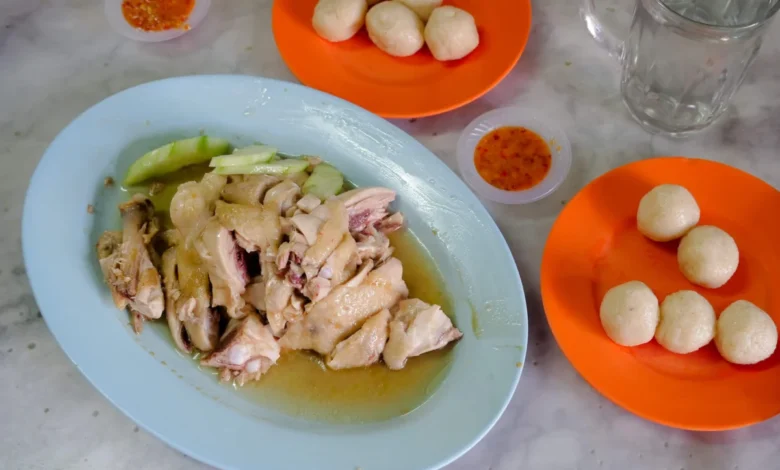
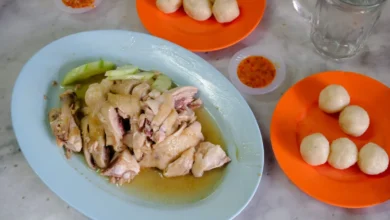
The historic coastal city of Melaka, Malaysia, situated along the strategic maritime highway of the Straits of Melaka, remains a global crossroads of trade, migration, and gastronomy. Among its myriad culinary offerings, one establishment stands out as a testament to centuries of cross-cultural exchange: Kedai Kopi Chung Wah. Located on a prominent corner near the flower-adorned bridge leading into Jonker Street, this family-run kopitiam (traditional coffee shop) draws daily lines of locals and international tourists alike. Their signature dish—Hainanese chicken rice shaped into compact, hand-rolled spherical portions paired with poached chicken and a distinct local-Malay dipping sauce—encapsulates the rich migratory history and culinary adaptation of the Chinese diaspora in Southeast Asia.
Historical Origins and Cultural Synthesis
The presence of international visitors in Melaka is far from a modern phenomenon. Since the mid-15th century, merchants and travelers from across Asia and Europe have converged on the city, attracted by its pivotal geographic position in maritime trade. However, the most enduring culinary influences arrived centuries later with waves of immigrants from southern China, specifically the island province of Hainan.
While Hainanese chicken rice is deeply embedded in the culinary fabric of Malaysia, Singapore, and Thailand, it is distinct from the Peranakan (Straits Chinese) and Nyonya cuisines that also define Melaka’s gastronomic identity. The dish represents a localized evolution of Hainan’s traditional Wenchang chicken, adapted by early diaspora communities using available local ingredients and cooking techniques.
The invention of the chicken rice ball—a defining feature at Kedai Kopi Chung Wah—has practical historical roots. According to culinary historians and local oral traditions, early Hainanese laborers and travelers shaped cooked rice into tightly packed spheres to keep the grain warm longer and to facilitate easy transport for working in the fields or embarking on journeys. Over generations, this utilitarian practice evolved into a localized delicacy, preserved by families dedicated to traditional preparation methods.

Anatomy of the Dish: Preparation and Ingredients
Despite its deceptively simple appearance, producing a traditional plate of Hainanese chicken rice requires rigorous preparation, adhering to the culinary principle that meticulous attention to detail defines high-quality traditional fare.
The process begins with the rice, which departs significantly from standard culinary expectations. Prepared using chicken stock, garlic, and animal fats derived from the cooking of the poultry, the rice possesses a distinct smoky aroma and a firm, cohesive texture. The grains are compressed by hand while still hot into dense, spherical portions capable of holding their shape when served on traditional orange melamine plates. This texture recalls the crispy, caramelized bottom layer of rice formed in traditional cookers, offering a unique mouthfeel that distinguishes it from loose-grain preparations found elsewhere.

The accompanying poached chicken is cooked to retain maximum tenderness, served steaming hot with skin that remains soft and infused with subtle aromatics. Culinary analysts note that while the chicken itself is relatively mild, it acts as a neutral vehicle for the restaurant’s signature chili and vinegar dipping sauce. Heavy on garlic and fermented bird’s eye chilies, this tangy, acidic condiment bridges the gap between Chinese culinary techniques and Malay flavor profiles, elevating the dish through a sharp, vibrant flavor contrast.
Operations, Consumer Experience, and Economic Impact
Operating daily from morning until mid-afternoon, Kedai Kopi Chung Wah maintains a high-turnover business model designed to manage steady foot traffic. The ordering process is streamlined to maximize efficiency: patrons calculate their party size to determine the number of rice-ball portions required, followed by the selection of chicken quantity, offered in half or whole portions. Due to the high volume of visitors, particularly during weekends and holiday periods, seating is managed rapidly, encouraging a dynamic dining environment rather than a prolonged leisure space.

Economically, establishments like Kedai Kopi Chung Wah contribute significantly to Melaka’s heritage tourism sector. Cultural tourism analysts observe that food-driven travel constitutes a primary economic driver for the historical district, drawing visitors who patronize adjacent heritage sites, local craft markets, and hospitality providers. A typical meal for two at the establishment remains accessible, averaging approximately 28 Malaysian Ringgit (around $6.70 USD), ensuring that traditional street food heritage remains affordable for domestic and international travelers alike.
Broader Culinary Implications and Regional Gastronomy
The enduring popularity of Kedai Kopi Chung Wah highlights broader trends in intangible cultural heritage preservation within Southeast Asia. As rapid modernization and commercialization transform historic urban centers like Melaka—designated as a UNESCO World Heritage Site in 2008—family-owned heritage food businesses face pressures related to generational succession, real estate costs, and shifting consumer preferences.

Food safety regulations and labor-intensive preparation methods further challenge traditional kopitiams, many of which rely on decades-old recipes passed down through familial lines. Despite these pressures, institutions specializing in heritage dishes continue to serve as vital archives of migration history, illustrating how diaspora communities successfully integrated their culinary traditions with indigenous Southeast Asian ingredients.
Beyond Melaka, Malaysia’s diverse regional cuisines offer further insight into the country’s multicultural landscape. Culinary researchers frequently recommend exploring northern states such as Kelantan and Terengganu, where distinct cross-border influences from Thailand and indigenous Malay culinary traditions produce unique specialties, such as tempoyak (fermented durian paste).
Ultimately, establishments such as Kedai Kopi Chung Wah perform a dual function: operating as commercial dining spaces while preserving historical narratives through flavor, technique, and tradition. For travelers and culinary historians navigating Jonker Street, the simple plate of chicken rice balls remains a tangible link to the complex migratory histories that continue to shape the cultural identity of modern Malaysia.