A Culinary Expedition Through Melaka: Exploring Malaysia’s Historic Food Capital

The coastal historic town of Melaka, situated in Peninsular Malaysia, has long occupied a preeminent position on the global culinary map. Renowned for its vibrant fusion of Malay, Chinese, and Peranakan influences, the city offers a complex gastronomic profile heavily reliant on aromatic herbs, fiery chilies, and intricate spice pastes. As culinary tourism continues to drive regional travel within Southeast Asia, Melaka stands out as an essential destination for epicurean exploration, warranting a structured and comprehensive itinerary for visitors seeking authentic regional cuisine.
Gastronomic Heritage and Cultural Synthesis
Melaka’s culinary identity is intrinsically linked to its history as a major international trading port. The convergence of Malay indigenous traditions with immigrant Chinese flavors, coupled with the unique heritage of the Straits Chinese (Peranakan or Baba-Nyonya community), has produced a distinct regional cuisine found nowhere else in the archipelago. Local food historians note that the heavy utilization of rhizomes, local citrus fruits, fermented seafood pastes, and bird’s eye chilies serves a dual purpose: enhancing rich proteins and preserving ingredients in a tropical climate.

Tourists arriving in Melaka are typically advised to approach the city with a deliberate, chronological food itinerary. Because many of the city’s most celebrated eateries operate during strict morning or afternoon hours, careful planning is required to experience the full spectrum of local specialties.
Morning Traditions: Hainanese Chicken Rice Balls on Jonker Street

The culinary journey traditionally begins in the historic downtown district, specifically near the vicinity of Jonker Street. Among the foundational dishes of the region is Hainanese chicken rice, adapted locally into the iconic sphere-shaped rice ball iteration.
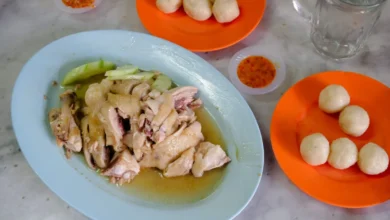
At Kedai Kopi Chung Wah, a traditional Malay-Chinese coffee shop situated at a prominent junction on Jonker Street, the preparation method reflects decades of culinary continuity. The establishment produces dense, golf-ball-sized portions of rice that are tightly packed after being cooked in a nutrient-dense broth infused with poultry fat, garlic, and ginger. This imparts a distinct savory depth and a smoky aroma to each bite.

The accompanying poached chicken is prepared in the classic Hainanese style, yielding meat that is taut yet succulent, complemented by a gelatinous layer beneath a fragrant skin. Culinary analysts emphasize that the success of the dish relies heavily on the accompanying house-made chili and garlic vinegar sauce. This condiment provides a sharp, acidic contrast that balances the rich, unctuous qualities of the poultry and rice. Operating primarily from 9:00 AM until mid-afternoon, the venue routinely experiences high patronage, necessitating early arrival to navigate the brisk service and limited seating.
The Science and Culture of Asam Pedas

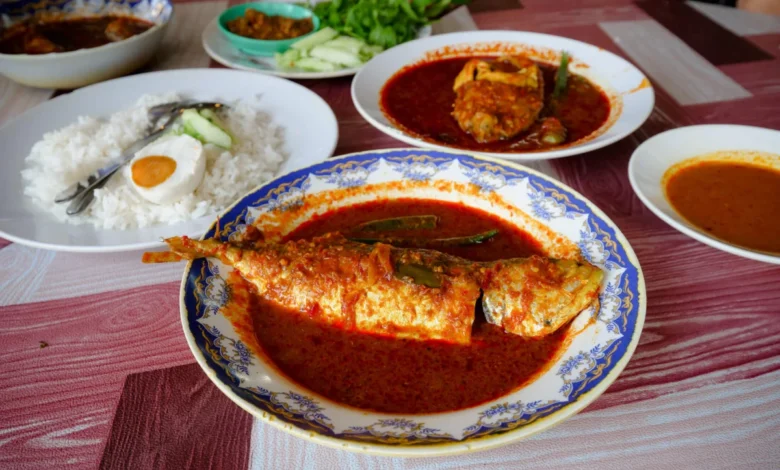
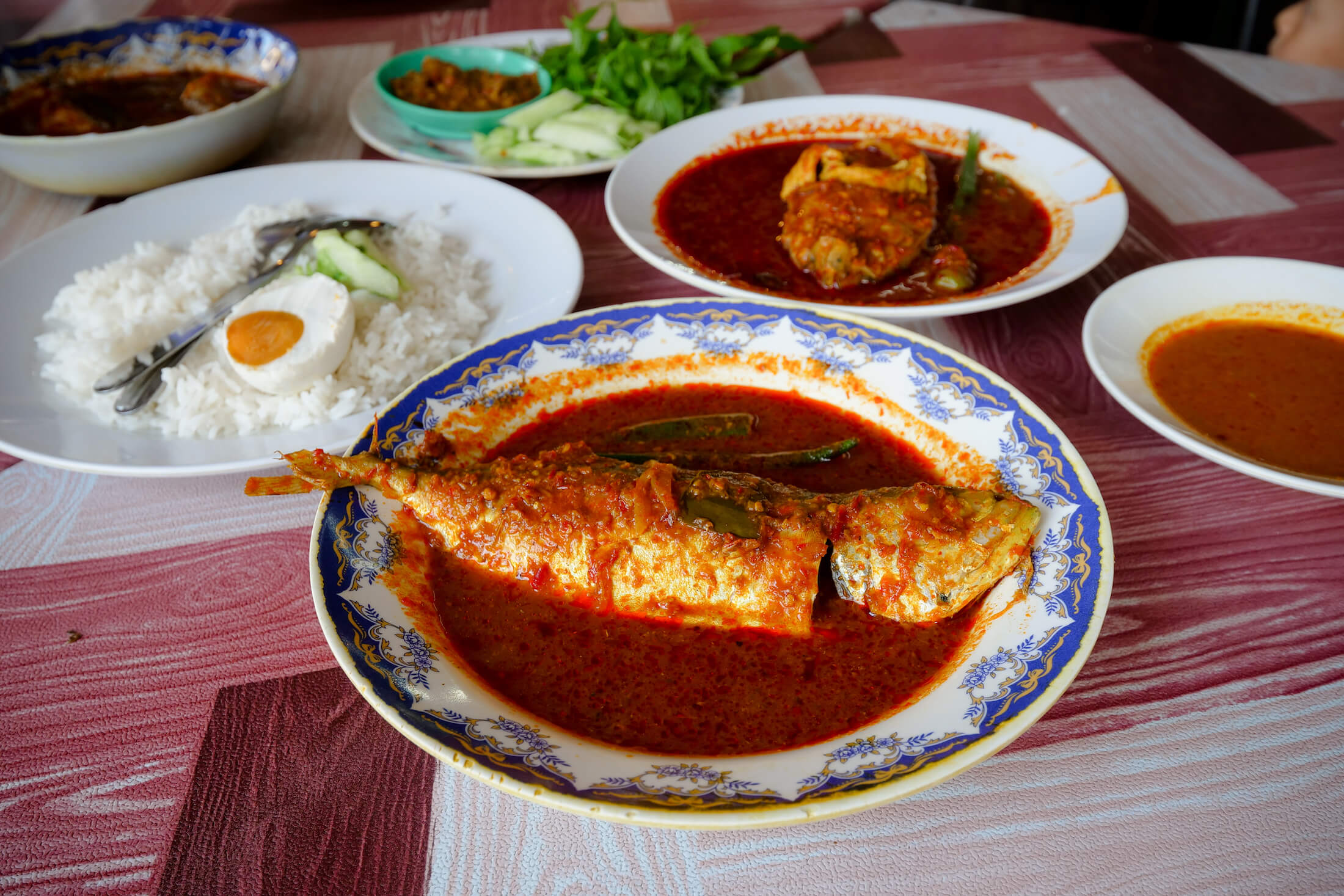
Moving deeper into regional specialties, asam pedas represents one of the most prominent sour and spicy curry preparations in Malaysian cuisine. Translating literally to "sour and spicy," the dish is anchored by a tamarind-infused base heavily fortified with chili paste, lemongrass, and polygonum leaves (daun kesum).
At Asam Pedas Pak Man, a widely recognized culinary institution in Melaka, the preparation of the broth begins in the early hours of the morning. Local patrons frequently frequent the establishment not only for the midday curry service but also for traditional breakfast accompaniments, including roti canai and a diverse array of kuih—coconut-based Peranakan confections that often sell out shortly after opening.

The core offering features fresh catches from the nearby coastal waters, with baramundi (ikan tenggiri) and skipjack tuna being standard inclusions. The fish is simmered extensively within the acidic, red broth, allowing the flesh to absorb the complex flavor profile. Culinary experts note that the balance of tartness from the tamarind and heat from the chilies stimulates the palate, making the dish a staple of southern Peninsular Malay cuisine. The meal is traditionally rounded out with sambal belacan, a potent shrimp paste and chili condiment that exhibits regional variations in texture and pungency.
Evolution of Local Refreshments: The Klebang Coconut Shake Phenomenon

As culinary tourism modernizes, beverage culture in Melaka has similarly evolved. The Klebang Coconut Shake, originating from a coastal suburb just outside the central business district, has transformed from a roadside stall into a major regional beverage landmark.
The preparation involves blending fresh coconut water and tender coconut meat with crushed ice, served with a generous topping of vanilla ice cream. The operational scale of the original location is extensive, processing thousands of fresh coconuts daily to meet continuous consumer demand. Beyond the beverage itself, the venue reflects a broader trend in Malaysian food culture where traditional ingredients are incorporated into accessible, modern street food formats, supported by adjacent stalls offering savory items such as nasi lemak and fried fish products (keropok).

Communal Dining: Satay Celup at Ban Lee Siang
Returning to the urban center, communal dining traditions are best observed through the lens of satay celup, a specialty unique to Melaka. While skewered meats and peanut sauces are common across Southeast Asia, the Melaka variant—popularized by establishments such as Ban Lee Siang—involves a self-service interactive format.

Patrons select from a vast array of raw and processed skewers, including meats, seafood, vegetables, and tofu products, which are then cooked directly in a communal pot of rich, boiling peanut and chili sauce situated at each table. From a sociological perspective, this dining style fosters social engagement while drawing clear lines between traditional steamboat methods and local satay flavor profiles. The billing method, calculated by tallying the wooden skewers remaining at the end of the meal, exemplifies an efficient, traditional inventory management system still practiced in many heritage coffee shops.
Coastal Grilling Traditions at Ikan Bakar Hj Musa

No comprehensive survey of Melaka’s gastronomy is complete without examining regional seafood preparation, specifically ikan bakar (charcoal-grilled fish). At Ikan Bakar Hj Musa, situated in a relaxed seaside environment, the culinary focus shifts to open-flame cooking techniques.
The ordering process follows a market-style selection model where customers inspect raw catches—ranging from stingray (ikan pari) to tiger prawns—priced per 100 grams. The distinguishing characteristic of this establishment is its proprietary chili sambal applied during the grilling process. As the seafood cooks over charcoal embers, the ambient heat partially cooks the thick, pungent sambal layer, creating a caramelized, jam-like glaze rich in shallots, chili, and aromatics. Food critics frequently cite this specific application method as a benchmark for coastal Malay grilling traditions.

Broader Economic and Tourism Implications
The culinary landscape of Melaka functions as a vital economic driver for the region, supporting local fisheries, agricultural producers, and small-to-medium enterprise food vendors. Tourism authorities emphasize that gastronomy is a primary motivator for domestic and international visitors traveling to the historic state, directly bolstering the hospitality and service sectors.

By maintaining traditional preparation methods while accommodating modern tourist infrastructure, Melaka’s food establishments preserve intangible cultural heritage. As food tourism continues to evolve globally, Melaka’s distinct synthesis of Malay, Chinese, and Peranakan flavors ensures its status as a cornerstone of the Malaysian culinary identity.