Two Decades of Culinary Science: Hervé This Publishes Summary of 20 Years of Molecular Gastronomy Seminars in Paris

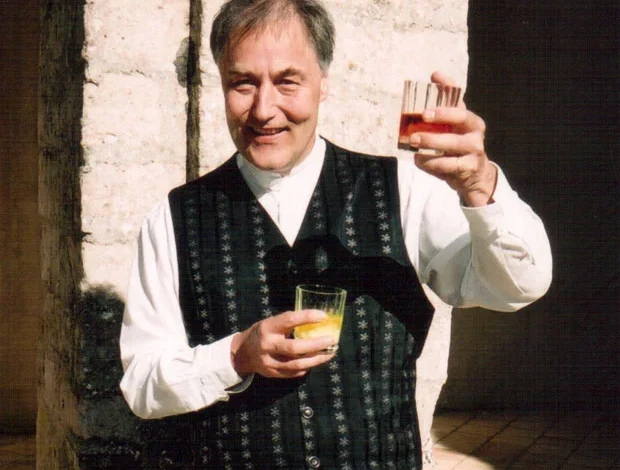
The intersection of culinary arts and hard science has reached a significant milestone with the release of a comprehensive document summarizing two decades of monthly molecular gastronomy seminars held in Paris, France. Spearheaded by renowned physical chemist Hervé This—a foundational figure in the scientific discipline of food physics and chemistry—the newly released archive offers a sweeping look at twenty years of empirical kitchen experimentation. The findings, now accessible to the global public in both French and English translations, bridge the gap between home cooking, professional fine dining, and academic chemistry.
For decades, the culinary world operated largely on tradition, folklore, and passed-down techniques. However, the formalization of molecular gastronomy as a scientific pursuit has steadily dismantled kitchen myths through rigorous testing, observation, and documentation. The publication of these seminar summaries serves not merely as a retrospective, but as a methodological roadmap for chefs, educators, and researchers seeking to understand the physical and chemical transformations that occur during food preparation.
Origins and Evolution of Molecular Gastronomy
To understand the weight of this two-decade milestone, it is essential to examine the historical origins of the discipline. The term "molecular gastronomy" was officially coined in the early 1990s by Hervé This and the late Oxford physicist Nicholas Kurti. Recognizing a profound disconnect between the precision of laboratory science and the subjective artistry of the kitchen, Kurti and This sought to establish a formal scientific discipline dedicated to the study of culinary phenomena.
A pivotal moment in this movement was the establishment of the International Workshops on Molecular Gastronomy, hosted in Erice, Italy. These gatherings brought together an international cadre of physicists, chemists, and pioneering chefs—including culinary icons such as Ferran Adrià and Heston Blumenthal—who were eager to apply scientific principles to textures, flavors, and cooking equipment. While the mainstream media often conflated "molecular gastronomy" with high-end modernist cuisine, foams, and liquid nitrogen spherification, practitioners like Hervé This consistently emphasized that the core of the discipline is purely investigative: it is the systematic study of the physical and chemical mechanisms underlying traditional and modern recipes alike.
Chronology of the Paris Seminars
The monthly seminars in Paris, hosted primarily under the banner of AgroParisTech (formerly INA P-G), became a unique institution. Beginning two decades ago, these gatherings established a collaborative forum where scientists, students, industry professionals, and passionate amateurs could propose hypotheses regarding everyday culinary techniques, design experiments to test them, and record the empirical outcomes.
Over a twenty-year timeline, these meetings evolved from localized academic discussions into an international reference point for food science. The newly released documents encapsulate hundreds of these localized tests. While the English translation provides concise summaries, the exhaustive French archives—accessible through AgroParisTech—detail the precise experimental conditions, variables, and analytical data for every test conducted.
Breaking Down Kitchen Dogma: Methodology and Findings
The primary philosophy driving the Paris seminars is that no culinary claim, no matter how deeply entrenched in traditional cookbooks or generational wisdom, is immune to scientific scrutiny. Throughout the twenty-year span, participants have subjected everyday practices—ranging from the boiling of eggs and the whipping of creams to the salting of meats and the emulsification of sauces—to rigorous laboratory parameters.
Even seemingly minor findings illustrate the value of this empirical approach. For instance, testing whether the temperature of water at the start of boiling affects the peeling ease of an egg, or evaluating how minor variations in whisking speed alter the stability of a meringue, demonstrates that anecdotal kitchen advice frequently conceals complex physical chemistry. By documenting these phenomena, Hervé This and his collaborators have provided educators with tangible examples that can be translated directly into high school and university chemistry lab exercises.
Reactions from the Scientific and Culinary Communities
The release of the bilingual PDF summaries has drawn warm praise from international educators, food scientists, and professional chefs who view the compilation as an invaluable pedagogical tool.
Academic reactions highlight the utility of food as a medium for science communication. Chemistry educators have long noted that students who might otherwise feel intimidated by abstract chemical equations become instantly engaged when those principles are applied to chocolate ganache, baking bread, or clarifying stocks. By turning the kitchen into a laboratory, the seminars have democratized scientific inquiry, proving that advanced chemical principles are at play in every household kitchen.
Meanwhile, professional culinary professionals have lauded the findings for offering deeper control over consistency and quality. While master chefs often rely on intuition and sensory feedback, understanding the underlying mechanisms of starch gelatinization, protein denaturation, and lipid emulsion allows for troubleshooting and innovation that purely intuitive cooking cannot always achieve.
Broader Impact and Future Implications
The publication of these twenty-year summaries arrives at a time of heightened global interest in the science of food. As the lines between culinary arts, food technology, and nutritional science continue to blur, the foundational work done in Paris serves as an enduring reminder of the importance of empirical validation.
The implications of this archive extend far beyond the restaurant kitchen. In an era where nutritional misinformation and unverified health claims about food preparation frequently circulate in digital media, the rigorous methodology championed by Hervé This provides a reliable standard for factual investigation. By encouraging individuals to question assumptions, design experiments, and demand reproducible evidence, the molecular gastronomy seminars foster a culture of critical thinking.
As these documents circulate among chefs, teachers, and scientists worldwide, they invite a renewed spirit of experimentation. Whether applied to high-tech culinary innovation or basic educational demonstrations, the twenty-year archive of the Paris seminars stands as a testament to the power of curiosity-driven science, ensuring that the kitchen remains one of humanity’s most accessible and fascinating laboratories.