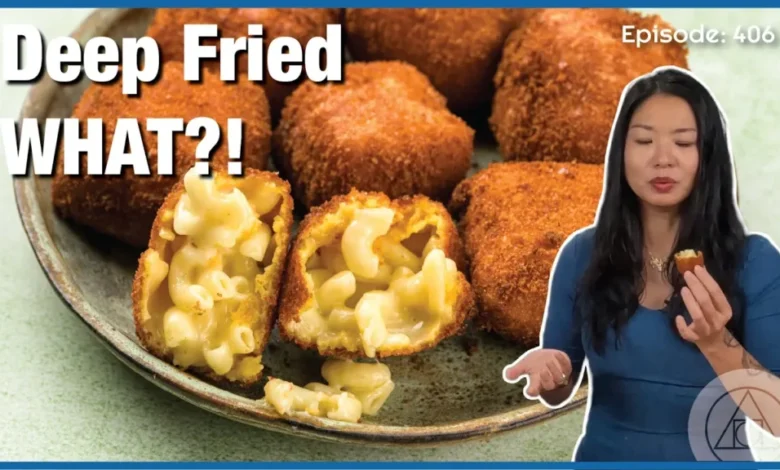
The pursuit of the perfect deep-fried mac and cheese has long been a culinary challenge, often resulting in structural failures where the internal cheese matrix collapses under high heat, leading to significant oil contamination and the loss of the dish’s integrity. However, recent developments in modernist culinary techniques have introduced a scientifically backed methodology to stabilize cheese emulsions, allowing home cooks and professional chefs alike to achieve a crispy exterior paired with a stable, molten core. By utilizing specific food-grade emulsifying salts, the "We Transform Food" (WTF) series has demonstrated a method to prevent the dreaded "blowout" in the deep fryer, marking a significant step forward in the preparation of this classic comfort food.
The Science of Emulsification and Thermal Stability
At the heart of this culinary advancement is the use of sodium citrate and sodium hexametaphosphate. To understand why these additives are revolutionary for fried mac and cheese, one must first look at the chemistry of melting cheese. Natural cheeses, such as sharp cheddar, are composed of proteins, fats, and water held together in a complex structure. When heated, the protein network—specifically the casein—tends to contract, squeezing out the fat and water. This results in the separation of the cheese into a pool of oil and a clump of rubbery, denatured protein.
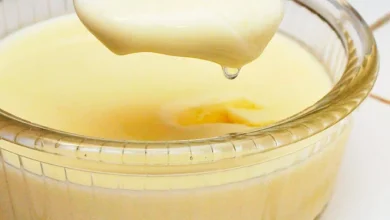
Sodium citrate acts as an emulsifying salt, which essentially rearranges the proteins in the cheese. By sequestering calcium ions, it prevents the proteins from clumping together, creating a smooth, velvety texture that remains stable even when subjected to the extreme temperatures of a deep fryer. Sodium hexametaphosphate adds an additional layer of stability by further inhibiting the protein-protein interaction that leads to separation. When incorporated into a cheese sauce, these agents ensure that the internal filling of the deep-fried mac and cheese remains a cohesive, creamy mass rather than a liquid mess that escapes the breading during the frying process.
A Chronology of Culinary Innovation
The evolution of fried mac and cheese can be traced back to the mid-20th century, though it gained significant popularity in the American gastro-pub scene in the early 2000s. Originally, chefs relied on heavy breading and extremely cold, pre-set blocks of mac and cheese to survive the transition from the refrigerator to the fryer. However, this method often resulted in a "cold center" problem, where the breading would burn before the cheese reached the desired internal temperature.
In recent years, the intersection of technology and gastronomy—often referred to as Modernist Cuisine—has shifted the focus from brute-force cooling to chemical stabilization. The WTF series, produced by Modernist Pantry, serves as a contemporary platform for this shift. By testing and documenting these ingredients in episode 406, the series provides a scalable framework for chefs to experiment with high-stability emulsions. This represents a transition from traditional "trial and error" kitchen practices to a standardized, reproducible scientific approach to deep-frying delicate ingredients.
Supporting Data and Technical Requirements
Achieving this level of culinary consistency requires precision. According to food science guidelines for cheese stabilization, the recommended usage of sodium citrate typically ranges between 2% and 3% of the total weight of the cheese. Exceeding this threshold can impart a slightly metallic or overly salty flavor profile, which can detract from the intended profile of the mac and cheese.
Furthermore, the integrity of the fry is dependent on the "breading architecture." Even with a stable sauce, if the outer coating is not robust, the pressure buildup from steam inside the ball will cause a rupture. The standard industry recommendation involves a three-stage breading process: a fine dusting of flour (to absorb surface moisture), an egg wash (to act as the adhesive), and a coarse breadcrumb or panko coating (to provide the thermal barrier). When combined with the chemically stabilized cheese, this dual-layered defense ensures that the product remains intact during the 350°F to 375°F frying window.
Official Perspectives and Industry Implications
The broader implications of these techniques extend beyond the singular dish of deep-fried mac and cheese. The ability to manipulate cheese texture through sodium-based emulsifiers has profound applications in the food manufacturing sector. Large-scale food producers utilize similar technology to create shelf-stable cheese products, processed cheese slices, and high-quality cheese sauces for fast-casual restaurant chains.
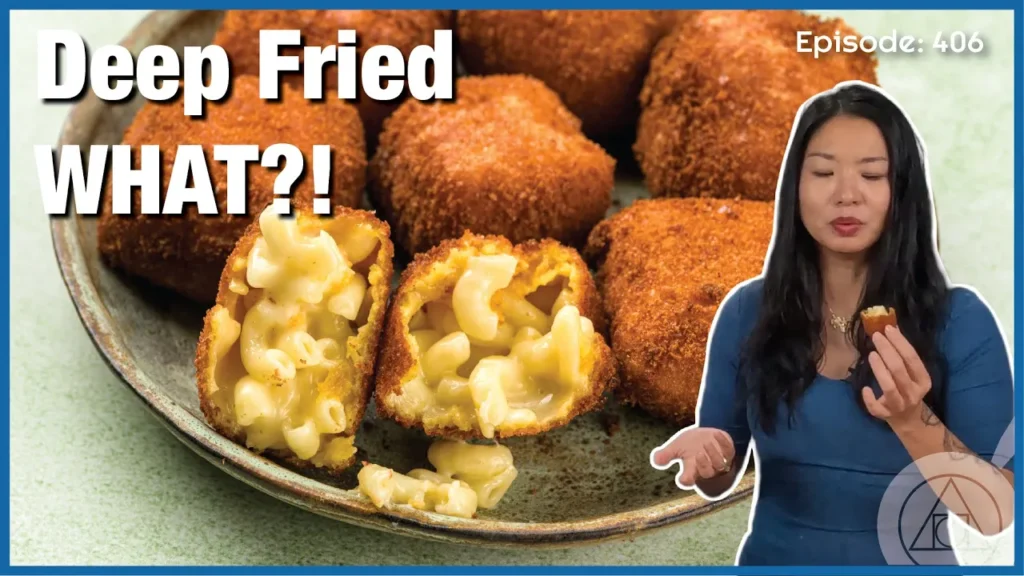
From a culinary standpoint, the WTF series argues that these ingredients should not be viewed as "artificial" in a pejorative sense, but rather as tools for expanding the creative potential of the kitchen. By controlling the physics of the melt, chefs can experiment with higher-fat, higher-quality cheeses that would otherwise be impossible to use in a fryer. This allows for a more premium product, as the chef is no longer restricted to using only low-moisture, "easy-melt" commercial cheeses.
Broader Impact on the Culinary Arts
The dissemination of these techniques via digital media—such as the WTF series—highlights a democratization of modernist culinary knowledge. Historically, access to information regarding emulsifying salts and their specific applications was restricted to professional chefs with access to expensive laboratories or specialized training. Today, that knowledge is available to any individual with an internet connection and the curiosity to explore the chemistry behind their food.
The impact of this trend is twofold. First, it raises the bar for home cooking, as amateur chefs become more comfortable with technical ingredients. Second, it encourages a more analytical approach to recipe development. When a home cook understands the why behind the how, they are better equipped to troubleshoot issues in other areas of their cooking, such as creating stable ganaches, perfect Hollandaise sauces, or even better-textured baked goods.
Addressing the Risks of High-Heat Frying
While the chemistry of the cheese sauce is paramount, safety remains a critical factor in the preparation of deep-fried foods. The interaction between water-based cheese sauces and hot oil is inherently dangerous if the internal structure fails. The "blowout" mentioned in the WTF series is not merely a cosmetic issue; it is a significant safety hazard. A sudden release of steam and boiling cheese into hot oil can lead to dangerous splashing.
By stabilizing the emulsion, the cook is effectively reducing the risk of these violent reactions. A stable, viscous cheese center does not "boil" in the same way a thin, broken sauce would. The density of the stabilized cheese allows for a more controlled release of heat, making the cooking process safer and more predictable. This is a primary reason why the adoption of emulsifying salts is being encouraged by safety-conscious culinary educators.
Future Directions for Emulsified Comfort Foods
As we look toward the future of comfort food, it is likely that we will see an increased reliance on these functional food ingredients. The fusion of traditional recipes with modernist techniques is not a passing trend but a refinement of the craft. Future episodes of the WTF series and similar educational platforms are expected to delve into other applications, such as the use of hydrocolloids to modify the texture of sauces or the application of pressure-cooking to accelerate flavor extraction in complex broths.
For those attempting this recipe, the key takeaway is the necessity of precision. Measuring ingredients by weight—rather than by volume—is the standard in professional kitchens for a reason, particularly when dealing with potent chemical stabilizers. By maintaining this level of rigor, the home chef can replicate the professional results shown in the video series, turning a volatile experiment into a consistent, repeatable success.
In conclusion, the transformation of the deep-fried mac and cheese from a kitchen hazard into a refined, consistent dish serves as a testament to the power of food science. By utilizing sodium citrate and sodium hexametaphosphate, the cook gains the ability to defy the natural limitations of dairy, resulting in a product that satisfies both the craving for comfort and the desire for culinary excellence. The "We Transform Food" series provides the essential roadmap for this endeavor, underscoring that with the right knowledge and ingredients, even the most challenging dishes can be mastered.