A Decade of Culinary Science: Khymos Returns with an Essential Reading List of Food Physics and Chemistry Texts for 2020

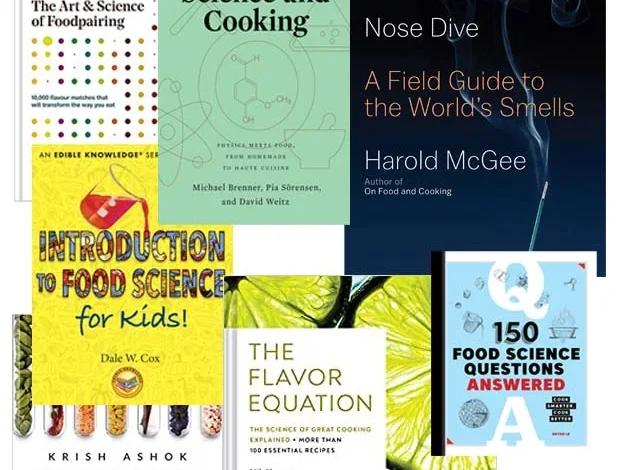
Following an extended hiatus from publishing literary recommendations that stretches back to 2013, the influential food science blog Khymos has officially broken its silence to curate a definitive reading list for culinary professionals, amateur scientists, and home cooks alike. The newly published compendium highlights a remarkable literary renaissance that took place in 2020, a year that yielded an extraordinary crop of academic and practical texts exploring the intersection of gastronomy, physics, chemistry, and sensory perception. This curated selection arrives at a time when public interest in molecular gastronomy, kitchen chemistry, and the science of everyday cooking has reached an unprecedented global peak, driven largely by home-bound populations during the COVID-19 pandemic seeking to elevate their domestic culinary practices through empirical understanding.
The Evolution of Culinary Science Publishing
To understand the significance of the 2020 publishing wave, one must examine the trajectory of culinary science literature over the past several decades. For generations, cooking was treated predominantly as an empirical craft passed down through domestic tradition and sensory intuition. However, the turn of the twenty-first century witnessed a paradigm shift, catalyzed by seminal works such as Harold McGee’s 1984 masterpiece, On Food and Cooking: The Science and Lore of the Kitchen, which fundamentally altered how professional chefs and curious diners viewed the transformations occurring on the stove and in the oven.
Throughout the 2010s, this academic-culinary synthesis matured. Molecular gastronomy transitioned from an avant-garde restaurant gimmick championed by elite establishments like elBulli and The Fat Duck into an accessible, democratization-focused movement. Home cooks no longer viewed chemical terms like emulsion, Maillard reaction, and volatile compounds as intimidating jargon, but rather as practical tools to achieve superior textures and deeper flavors. The 2020 publishing cycle captured this maturation, offering texts that bridged the gap between rigorous university-level laboratory research and accessible home kitchen application.
Spotlight on 2020’s Defining Food Science Texts
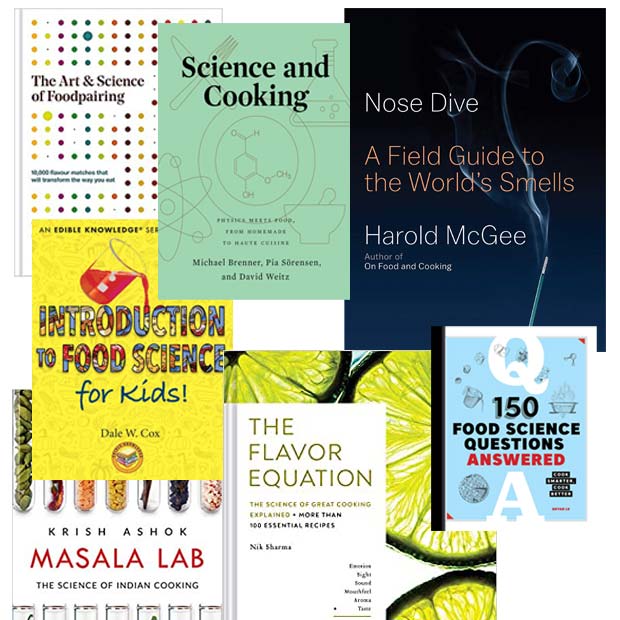
The Khymos review highlights seven distinct volumes published in 2020, each approaching the scientific study of food through a unique lens, ranging from global sensory analysis to regional kitchen physics.
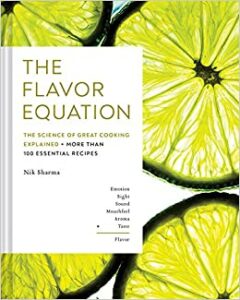
The Flavor Equation by Nik Sharma
Spanning 352 pages, Nik Sharma’s work integrates approximately 100 meticulously tested recipes with rigorous scientific explanations. Crucially, Sharma embeds his pedagogical approach directly into the recipes via a recurring section titled “The Flavor Approach,” ensuring readers understand the neurological and chemical mechanisms driving taste combinations. Furthermore, the book dedicates a full third of its contents to exploring flavor from multiple multidisciplinary perspectives while adopting metric units—a welcome standard for international culinary scientists.
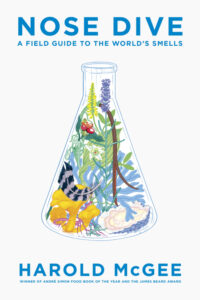
Nose Dive: A Field Guide to the World’s Smells by Harold McGee
Harold McGee, whose earlier works inspired generations of food scientists, returned in 2020 with a massive 688-page opus entirely dedicated to human olfaction. Eschewing a strict focus on culinary ingredients alone, McGee expands his field guide to encompass environmental and biological aromas worldwide. By cataloging volatile chemical molecules, McGee provides an exhaustive reference text that demystifies how the human olfactory system interacts with the chemical environment, cementing his status as the premier chronicler of sensory science.
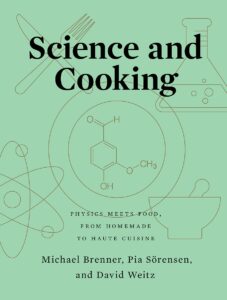
Science and Cooking: Physics Meets Food, From Homemade to Haute Cuisine by Michael Brenner, Pia Sørensen, and David Weitz
Originating from the wildly popular Harvard University general education course of the same name, this 320-page text distills a decade of interdisciplinary pedagogy. Authored by applied mathematicians and physicists, the book pairs high-level academic concepts—ranging from fluid dynamics to thermodynamics—with accessible home cooking techniques and recipes. Bolstered by metric measurements and a decade’s worth of guest lectures from world-renowned chefs and scientists, the volume represents the pinnacle of modern university-level culinary education.
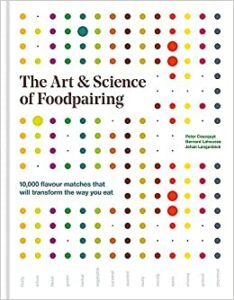
The Art and Science of Foodpairing by Peter Coucquyt, Bernard Lahousse, and Johan Langenbick
Clocking in at 388 pages, this book crystallizes years of proprietary research from the culinary intelligence company Foodpairing. Building upon pioneering concepts discussed in early culinary forums and experimental conferences like Belgium’s Flemish Primitives, the authors explore the analytical data behind ingredient pairings based on shared aromatic compounds. While the methodology of food pairing has occasionally faced skepticism from traditionalist culinary purists who argue that it reduces cooking to mere algorithmic matching, the book successfully navigates the boundary where empirical data ends and human artistic intuition begins.
Masala Lab by Krish Ashok
In a vital contribution to the representation of regional culinary traditions within food science literature, Indian software engineer and author Krish Ashok published Masala Lab across 280 pages. Ashok applies computational thinking and empirical observation to traditional South Asian cooking techniques, demystifying the physics of tempering spices, the biochemistry of gravies, and the thermodynamics of flatbread production. Initially distributed primarily via regional digital channels, the book has been widely celebrated for validating non-Western domestic cooking traditions through a scientific framework.
150 Food Science Questions Answered: Cook Smarter, Cook Better by Bryan Le
Designed as an accessible entry point for novices, Bryan Le’s 198-page volume is structured entirely around frequently asked questions. Divided into logical chapters covering cooking basics, flavor dynamics, ingredient categorizations, and food safety storage protocols, Le provides concise, evidence-based answers that remove the intimidation factor from kitchen science. The reference-style layout encourages both targeted troubleshooting and casual browsing.
Introduction to Food Science for Kids!: A Kitchen-Based Workbook by Dale W Cox
Rounding out the 2020 selections, Dale W. Cox’s 112-page workbook targets the youngest demographic of aspiring scientists. By utilizing the domestic kitchen as a literal laboratory, the book introduces foundational chemical and physical transformations—such as states of matter, microbial activity, and heat transfer—through safe, engaging, and age-appropriate experiments.
Broader Implications and the Future of Culinary Education
The enthusiastic reception of these titles by prominent science bloggers like the creator of Khymos points toward a permanent structural shift in how culinary knowledge is consumed and disseminated. No longer confined to the institutional gatekeeping of professional culinary academies or specialized food science departments, empirical food knowledge has been successfully democratized.
Industry analysts note that the commercial success of scientifically grounded cookbooks reflects a broader cultural demand for transparency, sustainability, and efficiency in the kitchen. When home cooks understand the underlying microbial processes of fermentation, the Maillard reactions responsible for crust formation on bread and meat, or the volatile compounds that dictate aroma, they reduce food waste, improve nutritional outcomes, and elevate the creative scope of home cooking.
As publishing houses continue to recognize the appetite for evidence-based gastronomy, the boundary between the chemistry laboratory and the domestic kitchen will continue to dissolve. For those seeking to upgrade their culinary repertoire through the lens of empirical science, the 2020 literary catalog provides an unparalleled intellectual and practical foundation for the decade ahead.