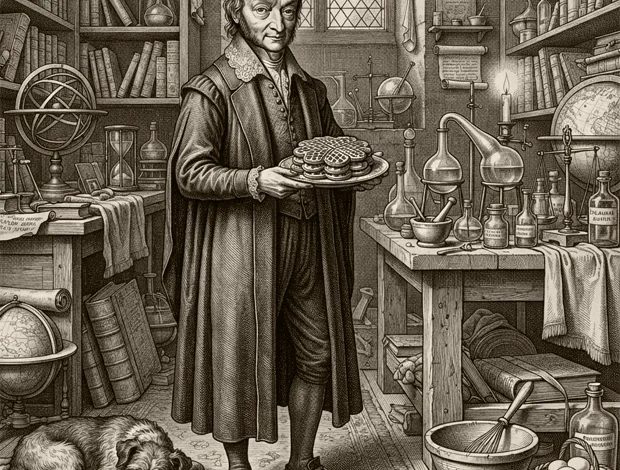
The intersection of molecular science and culinary arts reached an unusual milestone on August 9, 2026, coinciding with the 250th anniversary of the birth of renowned Italian physicist and chemist Amedeo Avogadro. Culinary technologist and food science researcher behind the platform Khymos has officially launched "Avogadro," a sophisticated parametric waffle recipe generator designed to explore the mathematical and chemical boundaries of traditional baking. Built upon a corpus of approximately 1,000 Scandinavian and Norwegian waffle recipes, the newly unveiled tool breaks away from traditional static recipe databases. Instead, it utilizes an algorithmic engine that computes unique batter formulations in real-time based on user-selected ingredients and sliding scales of sensory properties such as sweetness, richness, and tanginess.
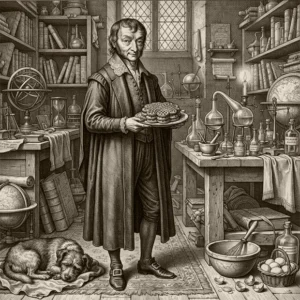
The launch of the Avogadro generator brings to fruition a conceptual project that began more than a decade ago. Originally conceived in 2014 as a rudimentary collection of dummy interface screenshots supported by a basic spreadsheet model, the idea remained dormant for years due to technological and structural limitations. The realization of the project in August 2026 honors the exact sesquicentennial of Avogadro’s birth in Turin, Italy, on August 9, 1776. The historical chemist is best remembered for Avogadro’s Law, which established that equal volumes of all gases, at the same temperature and pressure, contain the same number of molecules—a foundational concept that eventually led to the definition of the mole in chemistry.
By naming the application after the 19th-century scientist, the creators draw a direct parallel between the microscopic composition of matter and the precise measurements required in baking chemistry. The tool spans an astronomical number of theoretical control settings—specifically $10^27$ potential configurations. When compared to Avogadro’s constant, which is approximately $6.022 times 10^23$ particles per mole, the generator covers the equivalent of roughly 1,660 moles of distinct waffle batter configurations. This staggering theoretical breadth allows users to navigate a vast matrix of ingredient proportions that stretch far beyond the limits of conventional cookbooks.
Structure and Functionality of the Parametric Engine
Unlike standard online recipe repositories that rely on fixed proportions stored in relational databases, the Avogadro generator operates entirely on-the-fly. Users begin by selecting fundamental categories of ingredients, including liquids, dairy products, fats, eggs, starches, and sweeteners. Once the core components are established, the user adjusts a series of interactive sliders that dictate the qualitative attributes of the final product, including sweetness, richness, moisture, and acidity.

The application calculates precise gram measurements scaled dynamically to the number of eggs integrated into the formula. To assist users in navigating this vast combinatorial space, the interface incorporates a visual feedback mechanism referred to as the waffle heart quality indicator. This indicator serves a dual purpose: it instantly evaluates whether a specific combination of ingredients will produce a chemically and structurally viable batter, and it compares the user’s custom formulation against empirical data gathered from real-world recipes.
Interestingly, the developer notes that several commercially successful, mass-market waffle mixes score surprisingly far outside the average cluster of traditional recipes, proving that unconventional formulations can still yield successful culinary outcomes. The platform is divided into two distinct operational tiers: a standard mode tailored for casual users with simplified controls and guaranteed workability, and an expert mode that unlocks the full catalog of ingredients, eight simultaneous property sliders, and advanced presets designed for culinary experimentation.
Historical Context and the Evolution of Waffle Craftsmanship
The empirical foundation of the Avogadro project stems from an extensive archival collection of roughly 1,000 historical waffle recipes, predominantly sourced from Norway and Scandinavia. Historically, waffle preparation relied heavily on tacit knowledge rather than precise weights and measures. Older manuscripts frequently omitted exact flour quantities, instructing practitioners merely to "add flour until the batter has the right consistency." This reliance on sensory experience created an invisible barrier in culinary documentation, where traditional expertise was passed down through practice rather than explicit formulation.
This historical ambiguity prompted the core research question behind the development of the Avogadro platform: At what precise threshold does a batter cease to be a viable waffle mixture, and what fundamental parameters define the archetype of a waffle batter? By analyzing patterns across hundreds of traditional recipes, the developer constructed an algorithmic approximation of what historical bakers understood intuitively as the "right consistency."
While the application boasts $10^27$ theoretical control settings, the creators maintain scientific transparency regarding the practical limitations of the model. Due to rounding algorithms and the systematic pruning of negligible trace ingredients, many distinct slider positions resolve into identical batter compositions. Furthermore, extreme configurations frequently land outside the boundary of workable batter physics, which the interface flags by disabling the lobes of the waffle heart quality indicator. Nevertheless, the vast majority of the configuration space yields functional, albeit highly experimental, culinary outputs.

Implications for Culinary Science and Public Engagement
The release of the Avogadro generator highlights a broader trend within modern gastronomy: the integration of parametric design and computational modeling into home cooking and food science research. By treating recipe development as a multi-variable optimization problem, tools of this nature allow researchers and home cooks to systematically test hypotheses regarding ingredient interactions, such as the structural role of proteins in eggs versus the tenderizing effects of dairy fats.
Culinary educators and food historians have noted that digital platforms utilizing gamified scientific frameworks significantly enhance public interest in food chemistry. By tying the launch to a major scientific anniversary, the project bridges the gap between historical commemoration and contemporary digital utility. Observers suggest that similar parametric models could eventually be adapted for other complex culinary matrices, such as bread doughs, emulsions, and fermented beverages.
Future Outlook and Community Contribution
As the platform opens to the global public, the development team has adopted an open-feedback model to refine the algorithmic parameters further. Because it is mathematically impossible for any single researcher to physically test $10^27$ variations, the project relies on crowdsourced experimentation. Users who encounter anomalous behavior, structural failures in their generated batters, or conversely, exceptionally successful culinary discoveries, are encouraged to submit detailed feedback alongside direct URLs to their specific recipe configurations.
The launch of the Avogadro generator ultimately transforms a theoretical mathematical constant into an accessible, interactive kitchen instrument. Whether utilized by professional pastry chefs seeking novel textural profiles or home cooks celebrating the 250th anniversary of Amedeo Avogadro through experimental baking, the platform redefines how recipes are conceptualized, calculated, and brought to life in the modern kitchen.