The transition from late summer to early autumn is often marked by a cultural push toward cooler-weather produce, but culinary traditionalists continue to advocate for the preservation of warm-weather staples. As retail markets begin displaying autumnal decor and winter squash during unusually warm September weeks, a segment of the culinary community is pushing back against premature seasonal shifts. At the center of this culinary resistance is the tomato, a fruit whose peak growing season aligns with the warmest months of the year. Food writers and home cooks are increasingly emphasizing the importance of utilizing seasonal produce to its absolute limit, challenging commercial timelines that dictate when specific ingredients should disappear from domestic kitchens.

This seasonal friction highlights a broader tension between retail marketing cycles and agricultural realities. While agricultural production in many regions continues to yield vibrant summer crops well into September and October, consumer products heavily promote heavy, warming foods, such as root vegetable stews and wool apparel, months before ambient temperatures begin to drop. Culinary analysts note that this premature pivot can result in consumers abandoning fresh, local produce prematurely. In response, home cooking platforms and recipe developers are publishing late-summer dishes designed to celebrate remaining crops, such as fresh tomatoes, eggplants, and corn, bridging the gap between seasons without succumbing to commercial pressure.
Culinary Mechanics and Traditional Methods
The culinary technique behind modern tomato-forward dishes often relies on extracting pure, unadulterated flavors without the heavy interference of rich broths or excess dairy. A prime example of this approach is found in simplified rice preparations and oven-baked risotto variants that challenge traditional Italian cooking dogmas. Historically, preparing authentic risotto requires standing over a hot stove for upwards of thirty minutes, adding warm broth ladle by ladle, and maintaining a constant stirring motion to release starch from the arborio or carnaroli rice.

However, modern kitchen innovation and culinary testing have dismantled several of these rigid requirements. Studies in home economics and culinary science indicate that oven-baked risotto methods yield comparable, if not superior, textural consistency while eliminating the need for continuous agitation. By utilizing a heavy-bottomed Dutch oven or braiser, home cooks can achieve the desired creamy emulsion by combining rice, aromatics, wine, and grated tomato pulp directly in the pot, bringing the mixture to a simmer before transferring it to a preheated oven. This method not only saves active preparation time but also allows the grains of rice to absorb the natural starches and liquids evenly without scorching.
Furthermore, substituting traditional meat- or vegetable-based broths with water—when paired with exceptionally flavorful, grated fresh tomatoes—allows the pure essence of the fruit to take center stage. The grating process, which utilizes the large holes of a box grater to extract pulp and juices while discarding the fibrous outer skin, provides a concentrated tomato liquid that functions simultaneously as the cooking medium and the primary flavor profile.

The Recipe: Tomato Risotto with Frizzled Red Onions
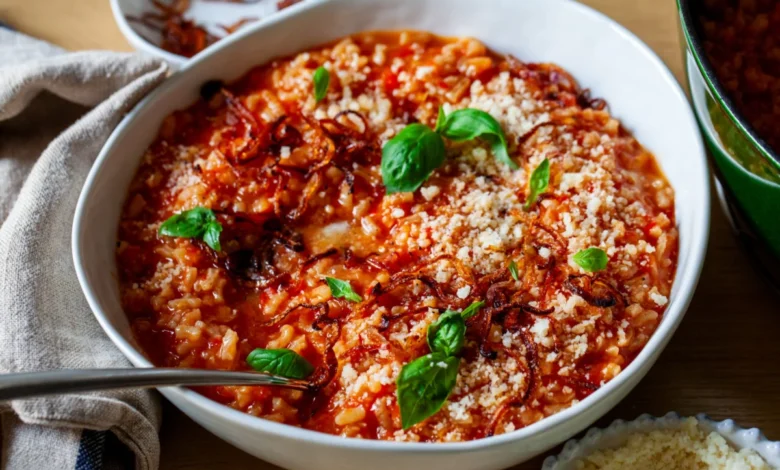
To understand the practical application of these culinary principles, consider the specific formulation for Tomato Risotto with Frizzled Red Onions, a dish designed to maximize late-season tomato yields while introducing textural contrast through complementary aromatics.
Ingredients and Preparation Parameters
- Primary Yield: Serves 4 to 6 individuals as a main or side course.
- Oven Temperature: Preheated to 350°F (175°C).
- Equipment: A 4-quart cast-iron Dutch oven or a deep, oven-safe lidded saucepan.
Step-by-Step Methodology
- Tomato Extraction: Halve fresh, ripe summer tomatoes. Press the cut side firmly against the large holes of a box grater, collecting the escaping pulp and juices in a bowl while reserving and discarding the fibrous outer skins. The target yield is approximately 2.5 to 3 cups of tomato pulp.
- Onion Frizzling: Place the Dutch oven over medium-high heat and add 3 to 4 tablespoons of olive oil. Introduce thinly sliced red onions, stirring frequently until they soften and progress to a deeply golden brown, mostly crisp state. This process typically requires 8 to 10 minutes. Using a slotted spoon, transfer half of the onions to a paper towel-lined plate, season with salt, and set aside.
- Aromatics and Toasting: Add minced garlic to the remaining onions in the pan, sautéing for approximately one minute. Season with salt, freshly ground black pepper, and a pinch of red pepper flakes. Introduce uncooked short-grain rice (such as arborio), allowing it to toast gently within the oil, garlic, and residual onion mixture for roughly 3 minutes.
- Deglazing and Simmering: Pour in a splash of white wine, stirring continuously until the liquid is fully absorbed or evaporated. Add the reserved grated tomato pulp alongside 2 cups of water. Season generously with approximately 2 teaspoons of kosher salt and additional black pepper. Bring the entire mixture to a gentle simmer, then immediately extinguish the heat source.
- Oven Baking: Secure the lid tightly on the Dutch oven and transfer it to the center rack of the preheated oven. Bake for 25 to 30 minutes, monitoring the moisture levels around the halfway mark. If the liquid appears depleted before the rice is tender, incorporate an additional 0.5 cups of water.
- Emulsification and Finishing: Remove the pot from the oven and place it on a heat-safe surface. Remove the lid and vigorously stir the contents for approximately 2 minutes to encourage starch release and achieve a creamy, cohesive texture. Adjust seasoning with additional salt and pepper if necessary. Stir in 2 to 3 tablespoons of high-quality butter or extra virgin olive oil to enrich the final consistency.
- Garnish and Service: Scatter the dish with freshly grated Parmesan cheese and torn fresh basil leaves. Top with the reserved crispy frizzled red onions just prior to serving to maintain textural integrity.
Broader Culinary Trends and Nutritional Impact
The inclusion of contrasting elements, such as frizzled red onions rather than traditional cured meats like bacon or prosciutto, reflects a broader shift toward plant-forward versatility in contemporary home cooking. Red onions, when subjected to high heat in olive oil, undergo the Maillard reaction, developing complex savory notes that balance the natural acidity and sweetness of fresh summer tomatoes. This technique provides both depth of flavor and a distinct crunch, serving a similar sensory function to fried shallots in Southeast Asian cuisines.

Nutritionally, dishes centered around fresh tomatoes and olive oil offer significant health advantages. Tomatoes are a primary dietary source of lycopene, a potent antioxidant associated with cardiovascular health and certain cancer preventions. Research demonstrates that lycopene bioavailability increases significantly when tomatoes are cooked in the presence of healthy fats, such as the olive oil and butter utilized in this risotto preparation. Furthermore, by relying on whole-food ingredients and minimizing processed additives or heavy cream, this preparation aligns with contemporary dietary guidelines that advocate for Mediterranean-style eating patterns rich in produce, whole grains, and monounsaturated fats.
As seasonal availability continues to shift, the intentional preservation of summer cooking traditions serves as both a culinary choice and a cultural statement. By extending the lifespan of peak-season produce through thoughtful kitchen techniques, home cooks can bridge the gap between agricultural reality and commercial retail calendars, ensuring that the flavors of summer remain accessible long after the official season has concluded.