The Physics and Chemistry of Coffee Extraction: Deconstructing the Pour-Over and Immersion Brewing Methods

The global specialty coffee industry has long operated at the intersection of artisanal craft and hard science. While millions of consumers rely on morning routines to deliver a predictable source of caffeine, coffee researchers and analytical chemists view the humble cup of coffee as a complex chemical matrix comprising hundreds of volatile and non-volatile compounds. The concentration of these compounds spans nine orders of magnitude, each possessing a distinct solubility profile and extraction rate. Understanding these variables transforms coffee preparation from a culinary guessing game into an empirical science.
Roast profiles are rarely chemically uniform, and even perfectly roasted coffee beans contain a diverse array of compounds that behave differently when introduced to water. If all soluble elements dissolved at an identical rate, the pursuit of specialty coffee would lack nuance and creative variability. Instead, baristas navigate a delicate balancing act known as selective extraction.
The Chemistry of Extraction: Uneven vs. Even Extractions
Achieving an accurate reflection of a coffee bean’s soluble mass requires a fine grind and extended steeping time—a process that mirrors Turkish coffee preparation. While such methods can yield high extraction rates approaching 30 percent, the resulting beverage is often heavy, aggressive, and lacking in flavor separation.
For a superior flavor profile, practitioners aim for a selective and intentionally uneven extraction. This methodology ensures that desirable flavor compounds are dissolved while harsh, over-extracted bitter elements remain trapped within the coffee bed. The pour-over, or percolation method, remains the industry standard for achieving this precise chemical separation.
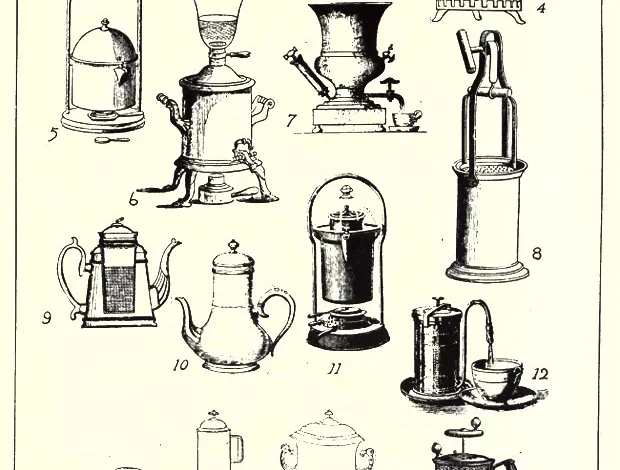
Percolation relies on gravity, pulling heated water down through a bed of coffee grounds. However, this process must not be confused with historical coffee percolators, which utilize thermal convection to continuously cycle boiling water upward through a central tube—a technology invented more than two centuries ago that gained widespread popularity in the 1970s.
Modern pour-over brewing appears deceptively simple: hot water is introduced to ground coffee, filtering downward into a vessel. In practice, however, the process is dictated by a complex network of independent and dependent variables. Core parameters—such as brew ratio, particle size distribution, water temperature, mineral composition, and filter porosity—interact dynamically to dictate the final cup.
Navigating the Variable Maze: Particle Size, Flow, and Channeling
One of the most critical independent variables is grind size and its resulting particle size distribution. Finer grinds increase the total surface area available for water-coffee interaction, accelerating extraction rates. However, finer particles also impede water flow, extending contact time and raising the risk of filter clogging.
This creates a hydrodynamic dilemma known in fluid dynamics as the path of least resistance. Water, acting under the influence of gravity, naturally flows through the easiest route available. When a coffee bed becomes excessively dense due to a fine grind, standing water on top of the slurry may bypass the core coffee bed entirely, trickling down the sides of the filter holder.
This phenomenon, commonly called channeling or bypassing, results in under-extracted zones alongside localized over-extraction. The degree of bypass is heavily influenced by the design of the filter holder itself, particularly whether its interior surface features ridges, patterns, or smooth walls that allow filter paper to cling tightly.
Historical Evolution of Brewing Hardware
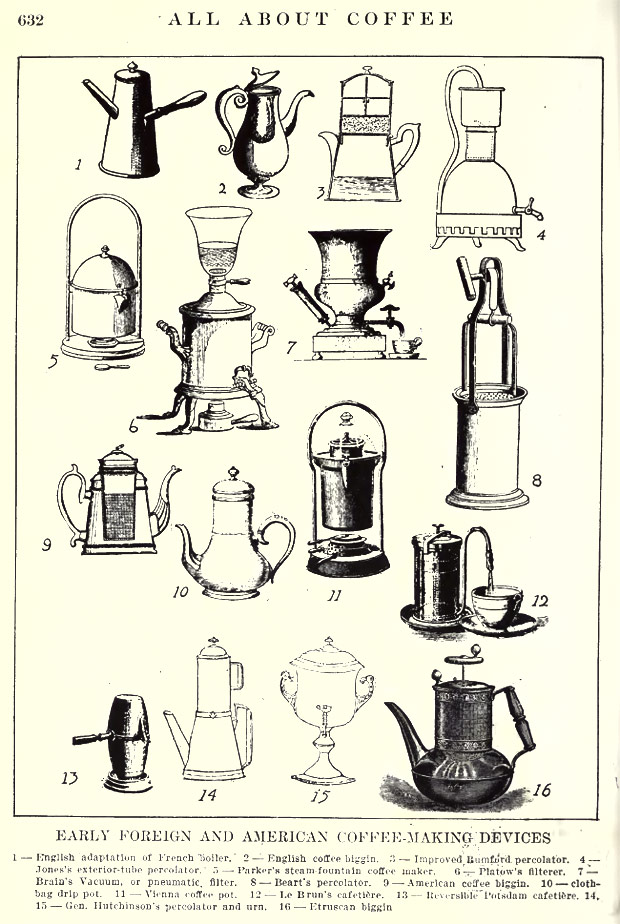
To understand how contemporary equipment attempts to solve these hydrodynamic challenges, one must look at the historical trajectory of coffee maker design. Archival illustrations from W.A. Ukers’ seminal 1922 publication, All About Coffee, demonstrate that inventors have spent over a century attempting to optimize drip and percolation mechanics.
Today’s market features dozens of distinct filter holders, each engineered to manipulate specific physical parameters. A comprehensive analysis of these devices reveals how inventors target four primary structural pillars: material composition, geometry, inflow control, and outflow resistance.
Material and Thermal Dynamics
Thermal retention is paramount during extraction. Highly conductive materials like uninsulated metals rapidly draw heat away from the brewing slurry, depressing the extraction temperature. While vacuum-insulated metal drippers—such as the Stagg X/XF—effectively mitigate heat loss, they remain outliers. Glass offers poor durability under heavy commercial handling, leading industry professionals and home enthusiasts alike to favor robust plastics like polypropylene or structural ceramics. These materials offer an optimal balance of low thermal conductivity, structural integrity, and cost-effectiveness.
Geometry and Bed Dynamics
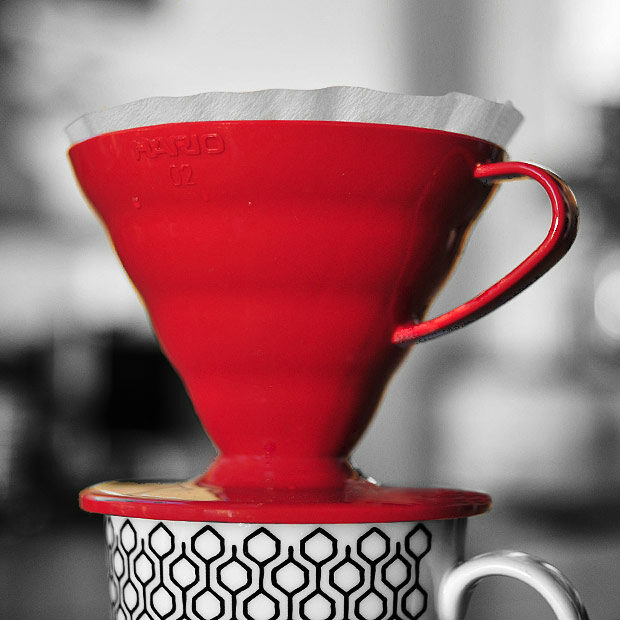
Brewer geometry dictates the shape of the coffee bed, directly altering extraction dynamics. Traditional trapezoidal Melitta-style holders contrast sharply with cone-shaped drippers like the Hario V60 and flat-bottom brewers like the Kalita Wave.
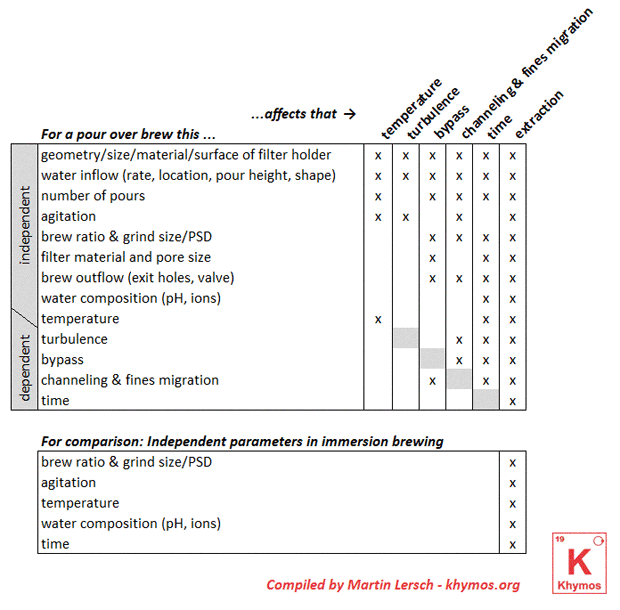
Cylindrical, deep-bed configurations maximize water-coffee contact time but increase flow resistance. Conversely, shallow, flat-bottomed beds encourage faster draw-down times but heighten vulnerability to edge-channeling.
Inflow Control and Water Distribution
Pouring water directly onto a coffee bed via a standard kettle invariably disrupts the grounds, creating localized channels. The adoption of gooseneck kettles allows baristas to regulate pour height and stream velocity.
More recent innovations, such as the Gabi Dripmaster and Melodrip, utilize perforated shower screens suspended above the coffee bed. These devices break the water stream into dozens of gentle droplets, ensuring an even, non-disruptive distribution that maintains a flat, uniform coffee bed—though sometimes at the cost of slight heat loss.
Exit Holes, Valves, and Bypass Minimization
Outflow velocity is governed by exit hole architecture and valve mechanisms. Drippers featuring large, single-opening exits rely entirely on internal ridges or fluted filter papers to maintain adequate flow.
Conversely, filter holders equipped with mechanical stop valves—such as the Clever Dripper or Hario Switch—decouple extraction time from grind size entirely. By closing the valve during the initial phase, these devices allow for a pure immersion steeping stage, followed by a controlled percolation draw-down. This flexibility eliminates the need to radically alter grind sizes when adjusting batch volumes.
Comparative Benchmarking of Modern Coffee Brewers
To benchmark these design philosophies, industry analysts categorize equipment based on material insulation, side geometry, interior structure, filter type, bottom configuration, and susceptibility to bypass.
| FILTER HOLDER | MATERIAL | INSULATION | SIDE | STRUCTURE | FILTER | BOTTOM | BYPASS | INFLOW CONTROL | OUTFLOW CONTROL |
|---|---|---|---|---|---|---|---|---|---|
| Aeropress | Plastic | Material | Straight | None | Plain | Flat (#97) | No | No | Pressure |
| April Pour Over | Ceramic | Material | Tapered | Ridge | Folded | Flat/Open | Yes | No | None |
| Bonavita Immersion | Ceramic | Material | Tapered | Ridge | Plain | Trapezoid (#1) | Yes | No | Stop Valve |
| Chemex | Glass | Material | Tapered | None | Plain | Cone | No | No | None |
| Clever Dripper | Plastic | Material | Tapered | Ridge | Plain | Trapezoid (#1) | Yes | No | Stop Valve |
| December Dripper | Metal | None | Tapered | None | Folded | Flat (#12) | Yes | No | Stop Valve |
| Hario V60 | Plastic/Ceramic | Material | Tapered | Ridge | Plain | Cone | Yes | No | None |
| Kalita Wave | Glass/Metal/Ceramic | Material/Vacuum | Tapered | None | Folded | Flat (#3) | Yes | No | None |
| Stagg X/XF | Metal | Vacuum | Tapered | None | Folded | Flat (#10) | Yes | No | None |
| Tricolate | Plastic | Material | Straight | None | Plain | Flat (#51) | No | Yes | None |
Immersion Brewing as an Alternative Paradigm
While pour-over methods offer exceptional flavor clarity and customization, they inherently lack high repeatability. Minor inconsistencies in pouring technique, water temperature, or pouring cadence can yield perceptible variations in the final cup.
For environments demanding consistency and reduced operator error, immersion brewing offers a compelling alternative. In immersion systems—typified by the French Press or the standard Aeropress method—coffee grounds are steeped directly in water for a predetermined duration before separation via physical filtration or pressure.
From a chemical perspective, immersion brewing represents a robust equilibrium system. Total Dissolved Solids (TDS) and Extraction Yield (EY) increase steadily over time before leveling off as the liquid reaches chemical equilibrium with the coffee grounds. Because extraction temperatures naturally decline below 90°C during steeping, immersion inherently limits the extraction of overly harsh, bitter compounds, even when using coarser grinds.
However, traditional immersion methods utilizing open wire mesh filters—such as the standard French Press—allow fine particulate matter (fines) to pass into the final beverage. These suspended solids contribute heavy body and texture, but can leave a tangible sediment on the palate and introduce bitterness from prolonged particulate extraction. Filtering immersion brews through paper can significantly clarify the cup, though some critics argue it mutes the distinct aromatic oils characteristic of the method.
Implications for the Future of Coffee Extraction
The ongoing evolution of coffee brewing hardware highlights a fundamental tension in specialty coffee: the desire for absolute control versus the need for operational simplicity. Whether utilizing the hydro-mechanical precision of modern flat-bed drippers, the robust equilibrium of immersion systems, or advanced multi-stage extraction builds, the ultimate objective remains unchanged.
As coffee scientists continue to map the complex interplay of thermal dynamics, fluid mechanics, and organic chemistry, future innovations will likely bridge the gap between scientific reproducibility and the sensory ideals pursued by baristas worldwide.