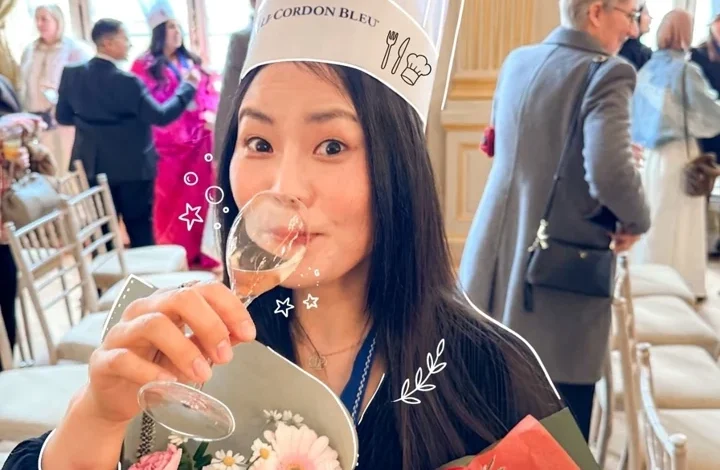
After a rigorous nine-month academic and culinary residency at the prestigious Le Cordon Bleu in Paris, renowned chef and culinary content creator Seonkyoung Longest has officially completed her diploma program. The graduation ceremony, held in the French capital, marks the culmination of a transformative period for the chef, who transitioned from an established digital media presence to a formal student of the classical French culinary arts. This milestone represents more than just the acquisition of technical skills; it serves as a significant intersection between her established professional background and a period of deep personal introspection regarding identity, belonging, and the nature of professional development in the global culinary landscape.

A Legacy of Culinary Excellence
Le Cordon Bleu, founded in Paris in 1895, remains one of the world’s most influential culinary institutions. The Paris campus is recognized globally for its intensive focus on traditional techniques, serving as the benchmark for professional cooking and patisserie. For students like Longest, the curriculum demands significant stamina, requiring mastery of complex culinary foundations, precision in execution, and the ability to operate within high-pressure, professional-grade kitchens.

The nine-month program at the Paris campus typically covers a structured progression from fundamental culinary techniques to advanced gastronomy. This period of study is notoriously demanding, often requiring long hours of practice, theoretical examinations, and practical assessments judged by master chefs. For international students, the experience is compounded by the necessity of navigating a foreign culture, adding a layer of sociological complexity to the academic rigor.

Chronology of the Nine-Month Residency
The timeline of Longest’s tenure in Paris began nearly ten months ago, representing a deliberate step away from her established career to focus on the refinement of her craft. The residency followed a clear, progressive path:

- Arrival and Integration: The initial weeks were defined by the adjustment to the French culinary discipline, which emphasizes hierarchy, exactitude, and historical technique.
- Intermediate Development: By the midpoint of the program, the focus shifted to the application of complex pastry and savory techniques, mirroring the professional evolution required of culinary students.
- The "Kumquat" Support Network: Throughout the duration of the program, Longest and a small cohort of fellow international students formed a peer-support group. This internal community, referred to as the "kumquat" group, proved essential for navigating the academic challenges and the inherent loneliness of living abroad.
- Graduation: The final ceremony concluded the formal nine-month period, signaling not just the end of an academic requirement but the beginning of a transition toward future professional endeavors.
Navigating the Liminal Space
While the completion of the program is a measurable academic achievement, it has also prompted a profound public reflection on the concept of "liminality"—the state of being in transition between two points. Longest has openly discussed the sense of displacement that often accompanies individuals who have lived in multiple countries, including South Korea and the United States.

Sociologists often define this as the "third culture" experience, where the individual possesses a identity that is not tethered to a single geography. In the context of her graduation, this sense of being "suspended" in space has become a central theme. The lack of a clear, singular "home" is a common narrative among international culinary professionals, who often find that their professional identity is shaped by the fusion of various cultures and experiences rather than a singular origin.

Professional Implications and Future Outlook
The completion of this program does not signal an end to Longest’s academic or professional development. Rather, it serves as a catalyst for her next phase of work. It has been confirmed that she will continue her residency in Paris, transitioning to advanced pastry studies at the historic École Ritz Escoffier.

The Ritz Escoffier, situated within the Ritz Paris, is a legendary institution that carries the legacy of Auguste Escoffier, the father of modern French cuisine. By moving from the foundational rigor of Le Cordon Bleu to the specialized, high-end environment of the Ritz, Longest is positioning herself within the upper echelon of technical pastry arts. This move indicates a strategic decision to refine her expertise in a niche sector of the culinary industry, moving beyond general culinary knowledge to mastery in a specific domain.

Analysis of the Culinary Transformation
The transition of a successful, self-taught culinary personality into a formal academic environment is a notable trend in the digital age. Many high-profile influencers and chefs are increasingly seeking formal validation from heritage institutions to bridge the gap between audience-facing content and industry-recognized credentials.

For Longest, this journey has provided more than just a diploma. It has served as a crucible for testing her professional convictions. The "trauma" and "exhaustion" she mentioned in her reflections suggest that the decision to pursue formal education was a strategic move to address burnout and gain a renewed sense of purpose. By returning to the role of a student, she effectively reset her professional trajectory, allowing for a period of growth that was not dictated by the demands of digital content creation or public expectation.

The Role of Mentorship and Peer Support
The importance of the peer cohort in this process cannot be overstated. In high-stakes culinary education, the mental health of students is a frequent subject of academic discourse. The development of support networks—such as the one formed by Longest and her colleagues—is a common survival strategy in competitive programs. These relationships often transcend the academic setting, creating professional networks that can span continents, thereby reinforcing the global nature of the modern culinary industry.

Broader Impact on the Culinary Community
The visibility of Longest’s journey has resonated with a wide audience, as evidenced by the high volume of community engagement following the announcement of her graduation. Her willingness to discuss the uncertainty, the "imposter syndrome" often associated with elite programs, and the genuine struggle of navigating life in a foreign country has added a humanizing dimension to the typically polished image of a culinary school graduate.

As she prepares for the next chapter at the Ritz Escoffier, the broader implications of her journey remain clear: the path to culinary mastery is rarely linear. It is a process of constant iteration, requiring both the humility to learn from the past and the courage to remain uncertain about the future. By documenting her journey, Longest has provided a candid, fact-based look at the reality of culinary education, offering a template for how professionals can successfully pivot and evolve in a rapidly changing industry.

The uncertainty regarding her plans beyond the summer remains, yet this is not portrayed as a failure. In the professional world, particularly in the creative arts, such ambiguity is often a precursor to innovation. Whether she chooses to integrate these new techniques into her existing media platforms or move into a traditional kitchen role, the foundation laid in Paris ensures that her next steps will be backed by the rigorous standards of the world’s most respected culinary institutions. The narrative of her nine-month journey serves as a reminder that personal and professional growth are often inextricable, and that the value of an education lies as much in the internal transformation as it does in the certification achieved.