How to Make Fast and Crispy Spiced Chinese Candied Walnuts on the Stovetop

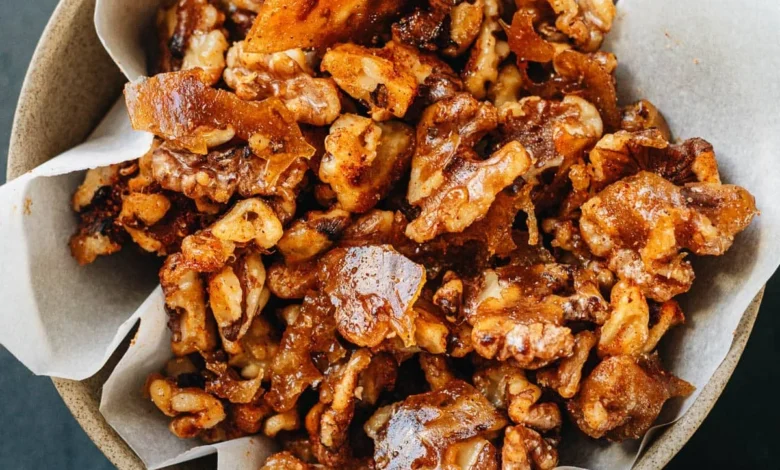
The culinary landscape of traditional Chinese home cooking has long featured candied walnuts, prized for their dual utility as a standalone snack or a texturally contrasting garnish for cold dishes. Historically, achieving the characteristic glassy shine and crisp finish involved either labor-intensive deep-frying or extended oven baking. However, a modern home-kitchen adaptation of classic Chinese stovetop sugar techniques—traditionally utilized for candied apples and sweet potatoes—has streamlined this preparation into a rapid, 15-minute process. This innovative method eliminates the safety hazards of hot oil splattering while yielding a robust crunch, meeting the demands of contemporary home cooks seeking efficiency without sacrificing authenticity.
Evolution of the Recipe: From Deep-Frying to Stovetop Efficiency

The traditional preparation of candied walnuts often relied on a complex two-step deep-frying method. While this approach successfully produced a high-gloss, crackling exterior, it demanded significant time, constant supervision, and the management of large volumes of hot oil at high temperatures. In domestic environments, particularly for busy parents and culinary enthusiasts managing time constraints, deep-frying presents distinct safety and logistical challenges.
Recognizing these limitations, culinary developers redesigned the workflow by adapting techniques from traditional Chinese street confections. By drawing inspiration from methods used to candy whole fruits and root vegetables on a stovetop, chefs engineered a streamlined process. This updated version utilizes a minimal quantity of neutral oil combined with standard granulated white sugar in a skillet. The technique successfully replicates the desired structural integrity and shatteringly crisp texture of deep-fried variants while reducing active preparation time to a fraction of its original duration, offering a wider margin for error for home cooks operating on tight schedules.
Culinary Profile and Ingredient Mechanics
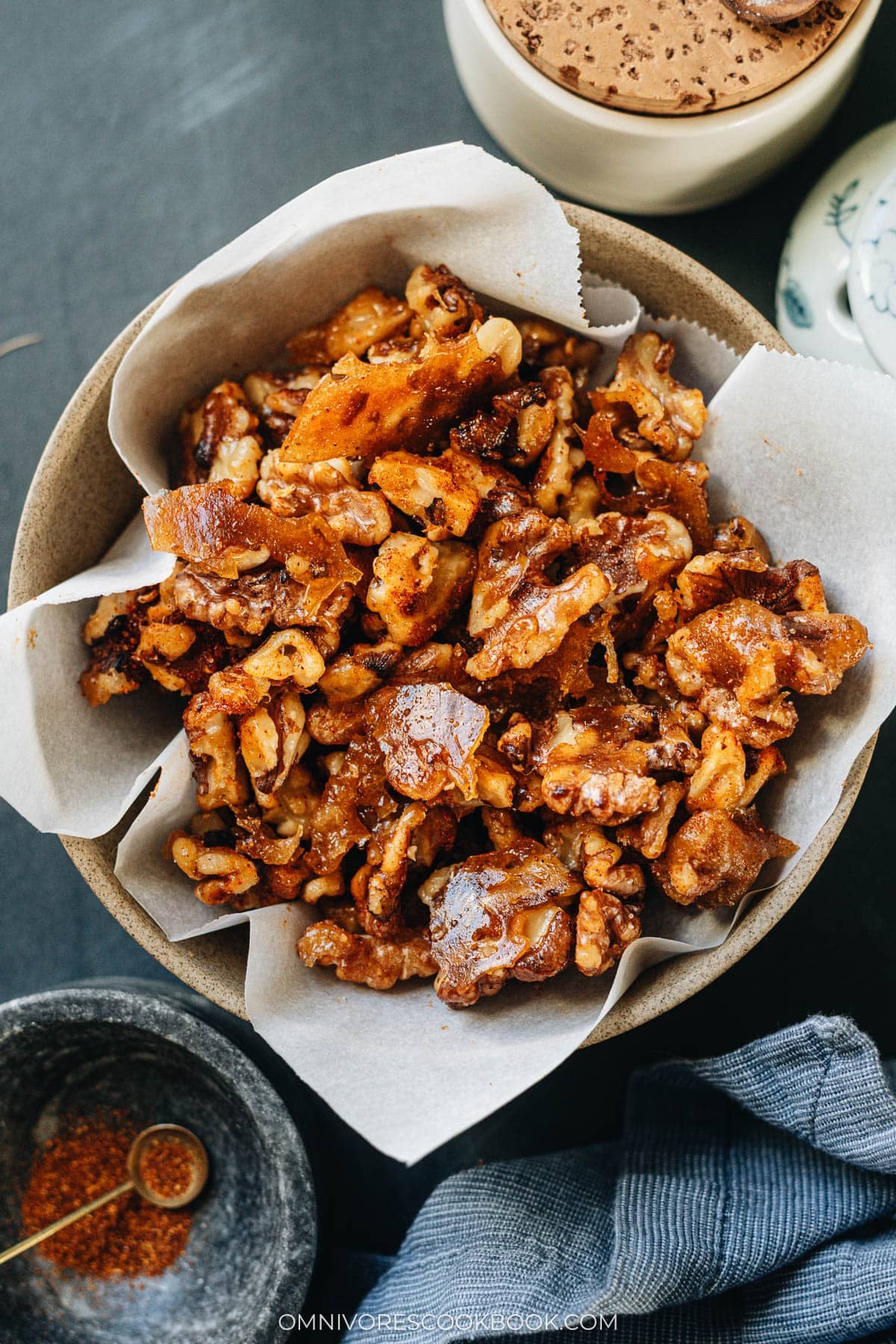
The distinct flavor profile of these spiced candied walnuts relies heavily on the integration of traditional aromatics balanced against foundational pantry staples. Unlike Western variations that typically favor simple cinnamon-and-sugar profiles, this recipe incorporates a complex spice blend rooted in regional Chinese flavor architectures.
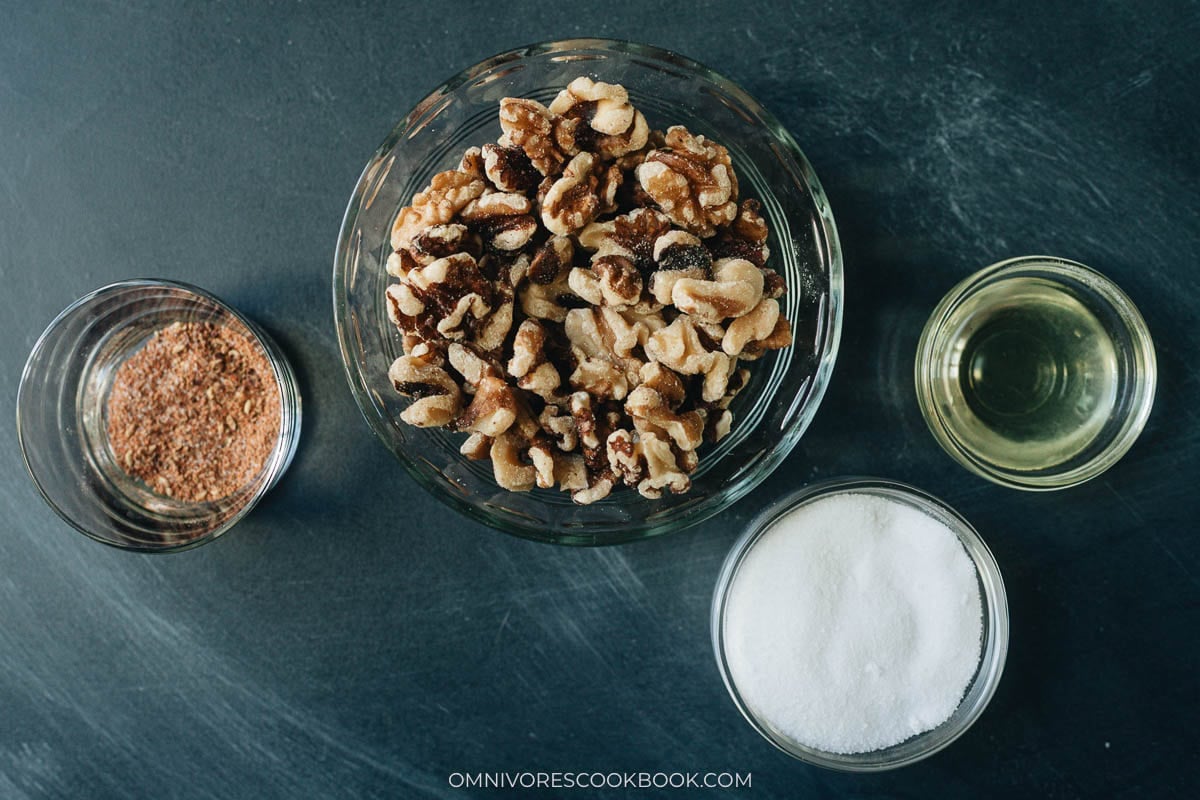
The spice matrix comprises fine sea salt, ground nutmeg, ginger, paprika, a pinch of cumin, and crucially, ground Sichuan peppercorn. The inclusion of Sichuan peppercorn is non-negotiable for achieving authentic regional depth, imparting a subtle, citrusy tingle that elevates the confection from a purely sweet treat to a nuanced sweet-and-savory experience.
The structural foundation relies on specific ingredients to ensure chemical success during the rapid caramelization phase:
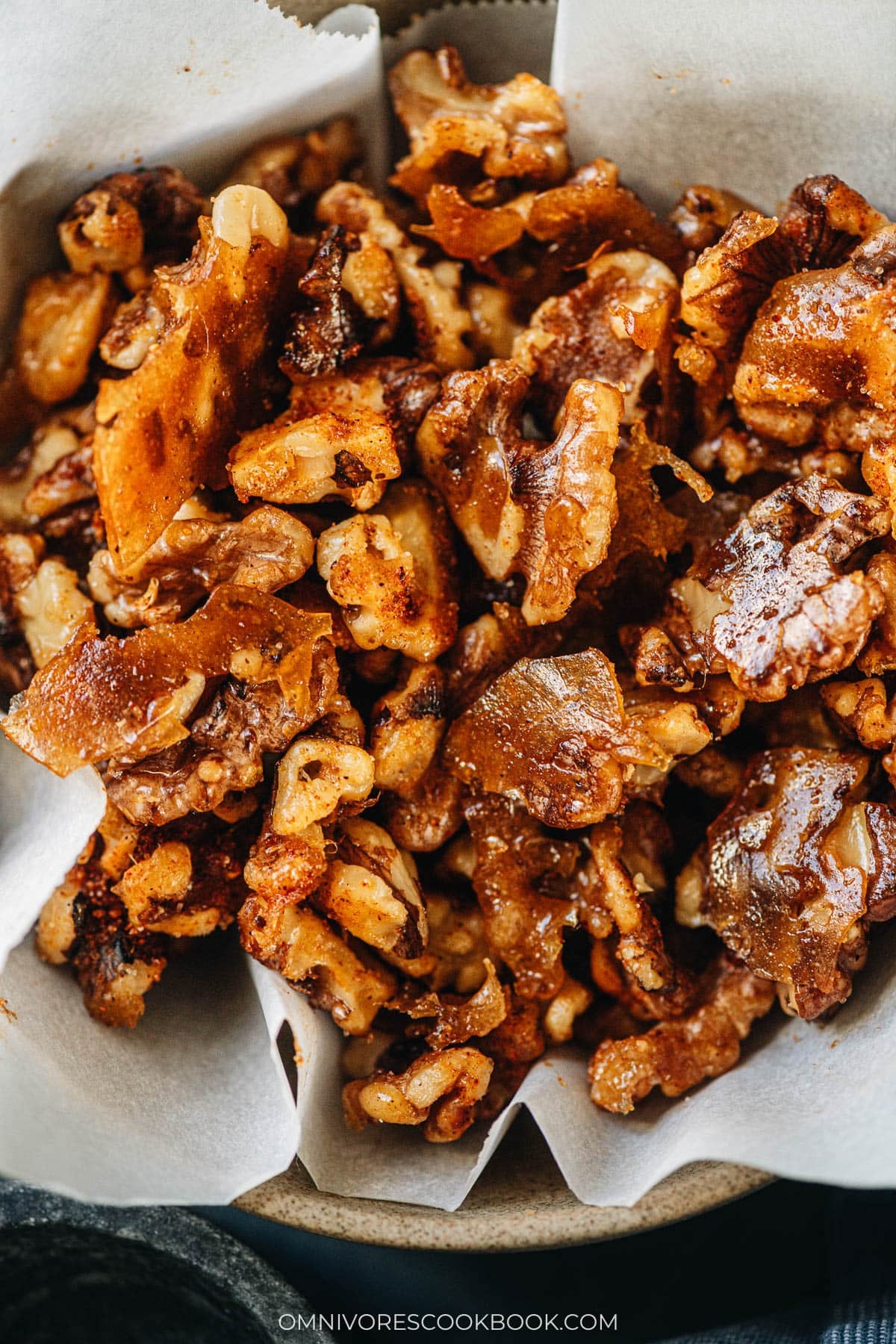
- Walnuts: Skinless walnut halves and pieces are selected to eliminate the inherent bitterness found in walnut skins, providing a milder base flavor while offering a combination of substantial halves and smaller fragments for varied textural interest.
- Sugar: Standard white granulated sugar is mandatory. Coarse sugars, such as raw or turbinado varieties, feature larger crystal structures that fail to melt uniformly within the abbreviated cooking window, resulting in scorched patches and uneven texture.
- Oil: A measured quantity of neutral vegetable oil primes the skillet, facilitating the transition of sugar into a smooth, manageable syrup without rendering the final coating excessively greasy.
Step-by-Step Stovetop Methodology
Executing the recipe requires precision and preparation due to the rapid pace of sugar caramelization. The workflow is organized into distinct chronological phases to prevent burning or crystallization failure.
Preparation and Mise en Place
Before introducing heat to the ingredients, the workspace must be fully prepared. The spice mix—combining salt, nutmeg, ginger, paprika, Sichuan peppercorn, and cumin—is thoroughly blended in a small vessel and placed immediately within arm’s reach. A baking sheet lined with parchment paper is positioned adjacent to the stovetop to receive the finished nuts without delay.
Thermal Activation and Sugar Melting
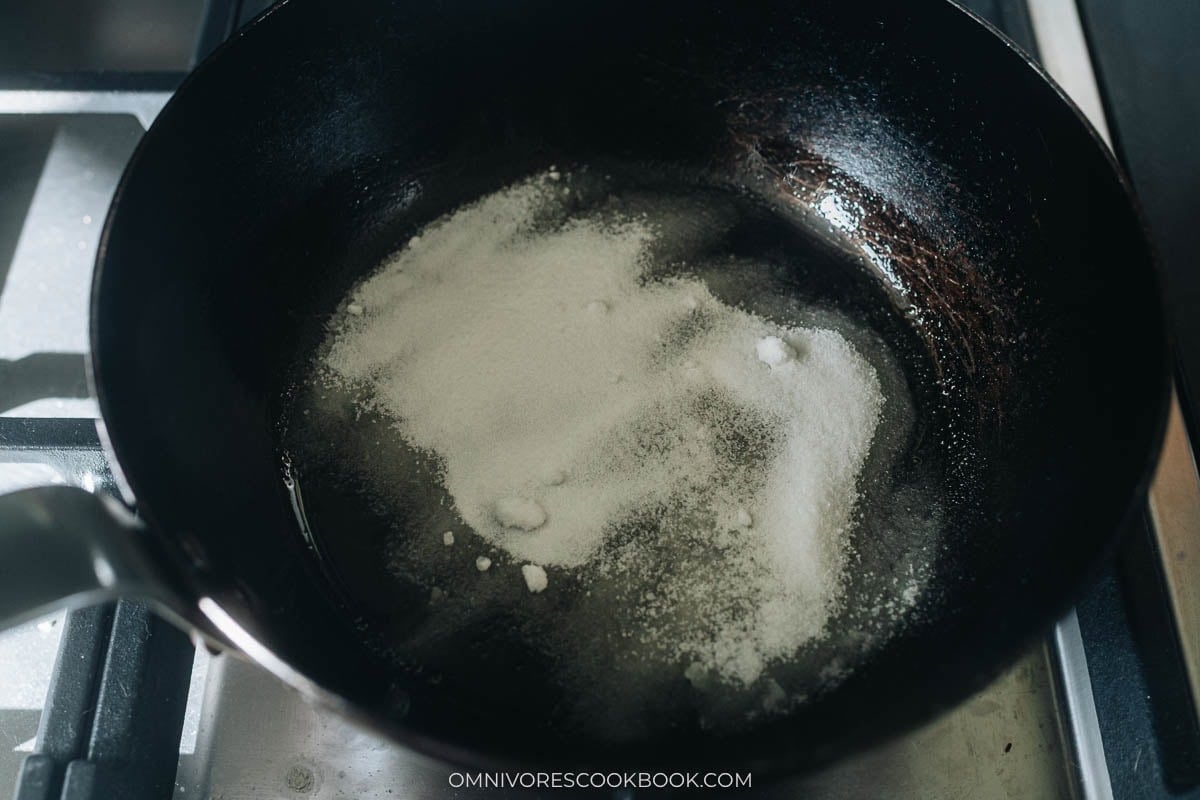
Neutral oil is introduced to a medium skillet over medium heat until warmed, then swirled to coat the pan’s surface evenly. A thin, uniform layer of white granulated sugar is sprinkled directly over the oil. The heat is subsequently reduced to medium-low.
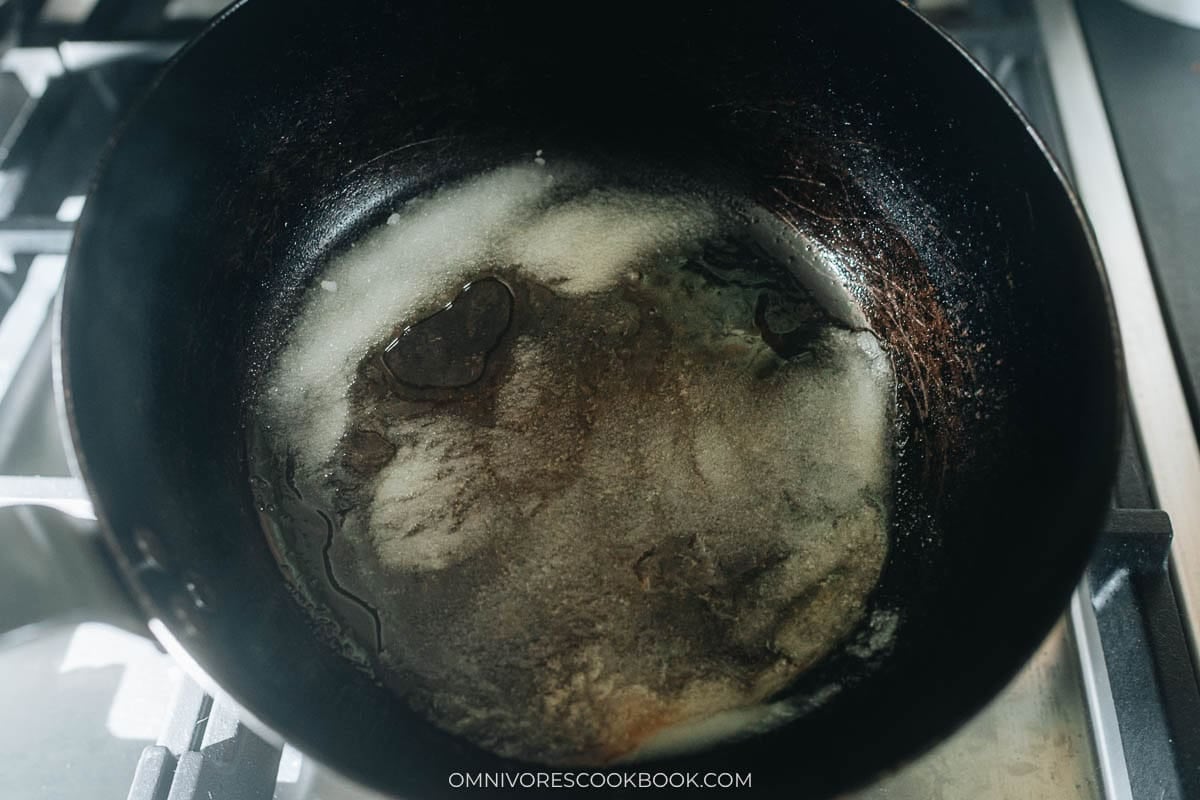
Unlike traditional caramel methods that require constant agitation, this technique dictates that the pan be periodically swirled while left unstirred for approximately three minutes. This restraint prevents premature sugar crystallization. As thermal energy transfers through the oil, the sugar liquefies, developing an amber hue accompanied by small, rising bubbles.
Coating and Thermal Transfer
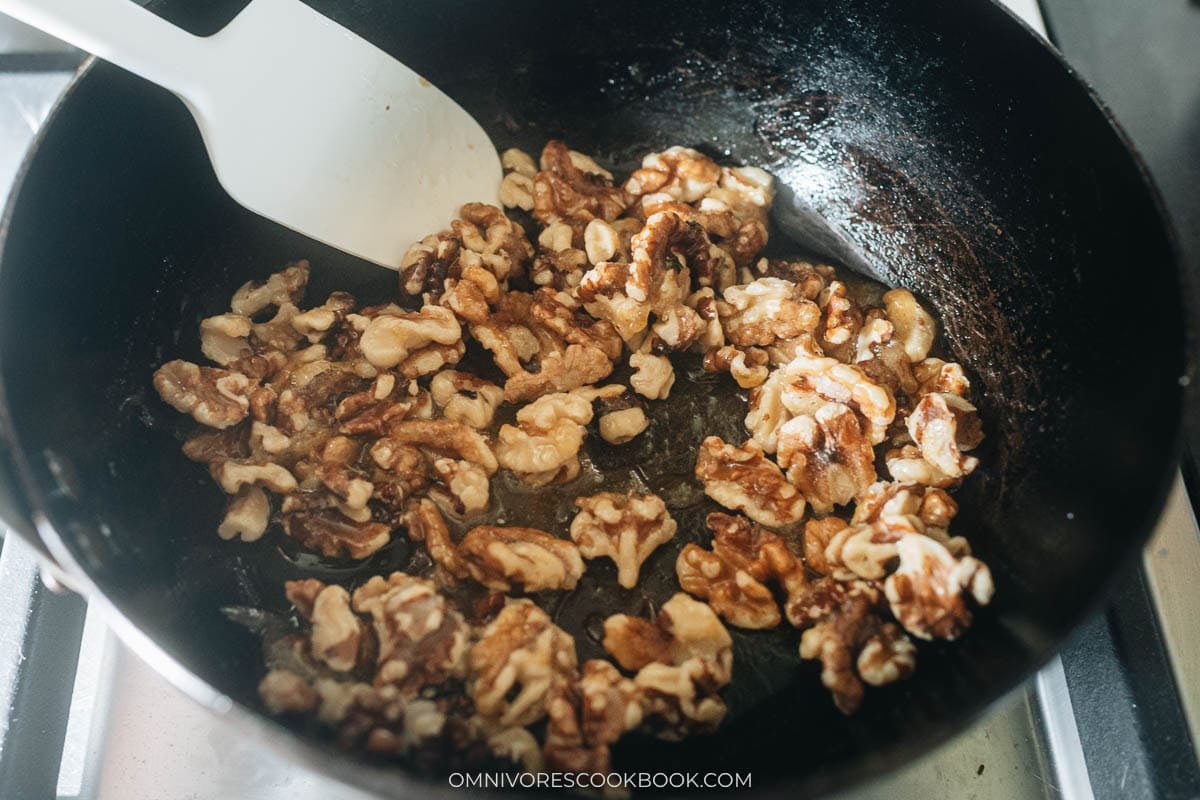
Walnuts are folded into the amber syrup, and the mixture is stirred continuously for roughly two minutes until the remaining sugar liquefies and assumes a deep golden-brown coloration. The entire contents of the skillet are immediately transferred onto the prepared parchment-lined baking sheet to halt the cooking process.
Finishing and Curing
While the walnuts remain piping hot, the pre-measured spice mix is dusted evenly over the surface. A spatula is utilized to toss the nuts and separate them into a single layer, preventing large, unmanageable clusters. The confection is left undisturbed to cool for approximately ten minutes, during which the sugar glaze sets into a hard, brittle shell before being broken apart by hand for consumption or storage.
Technical Troubleshooting and Practical Notes
Culinary execution at high sugar temperatures presents minor variables that can alter the final product. Understanding these mechanics ensures consistent results across batches.
Addressing Crystallization
Occasional graininess or crystallization of the sugar can occur, stemming from the intentionally reduced oil ratio used to avoid a greasy mouthfeel. While a smooth, glossy finish is ideal, a slightly craggy, crystallized texture does not compromise structural crunch or flavor integrity. To mitigate this, cooks must strictly avoid utilizing utensils to stir the sugar during the initial melting phase.
Batch Management and Scaling
When producing larger quantities, scaling must be managed horizontally rather than vertically. Crowding the skillet disrupts thermal distribution, causing uneven sugar melting and localized scorching before the surrounding mass liquefies. Consequently, cooks are advised to execute multiple single-layer batches sequentially.
Nutritional Overview and Culinary Applications
A standard single-serving portion of these spiced candied walnuts delivers approximately 271 kilocalories, accompanied by 21.9 grams of total fat (1.7 grams saturated), 15.7 grams of carbohydrates, 2.2 grams of dietary fiber, 12.9 grams of sugar, and 7.5 grams of protein. The inclusion of sodium is controlled at 148 milligrams, balancing the sweet profile with a savory backbone.
Beyond standalone consumption, these candied walnuts function as versatile culinary components. Their robust crunch and complex flavor profile make them effective texturing agents when scattered over cold green salads or incorporated into festive holiday charcuterie and treat boards. Furthermore, their extended shelf life—maintaining optimal crispness for up to two weeks when stored in an airtight container at room temperature—makes them practical for advance preparation and gifting. Packaged in glass jars secured with decorative ribbon, they integrate seamlessly into seasonal gift sets alongside complementary confections such as Sichuan peppercorn gingersnap cookies, sesame miso shortbread sandwiches, and traditional Chinese peanut brittle.