Culinary publication Smitten Kitchen has released its first-ever hot dog feature, shifting focus away from complex from-scratch curing processes and toward optimized preparation, structural technique, and regional topping influences. While the platform has historically gained recognition for publishing labor-intensive recipes for items such as cream cheese, Fig Newtons, bagels, and vanilla extract, the latest post draws a firm line at industrial meat processing. By leaving the emulsification, casing, and smoking stages to commercial producers like Hebrew National, the publication centers its attention entirely on modern assembly methods designed to elevate the standard backyard frank.
The Core Technique: The Structural and Textural Benefits of the Butterflied Frank

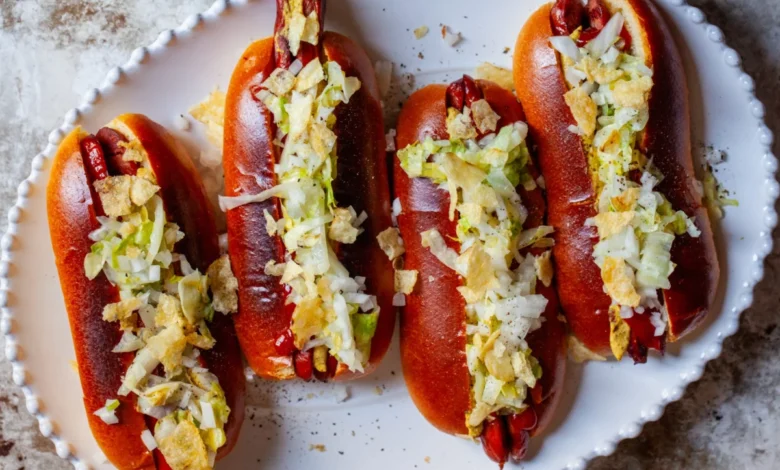
At the center of the newly outlined preparation method is the technique of butterflying. Rather than cooking a hot dog whole—which can result in uneven heating, rolling on the grill, and inadequate structural support for condiments—the recipe directs cooks to slice the frank down the center while leaving a small hinge intact along the bottom.
When opened flat and placed cut-side down on a hot grill or griddle pan, the increased surface area allows the meat to develop a deep, crisp brown crust from the inside out. Culinary experts note that this geometry serves two distinct purposes: it minimizes movement during cooking, ensuring even heat distribution, and creates a stable, cradle-like base for heavy toppings. For optimal browning, the use of weighted grill presses is recommended, followed by a brief final sear on the skin side.
Elevating the Profile: Vinegared Iceberg Lettuce and Crumbled Potato Chips

Moving beyond traditional condiments such as yellow mustard, ketchup, and minced raw onions, the recipe introduces two unconventional yet culturally established toppings: vinegared iceberg lettuce and crushed potato chips.
The vinegared iceberg component involves soaking shredded crisp lettuce in a simple brine of water, vinegar, salt, and sugar for anywhere from 30 minutes to a full day. This process imparts a sharp acidity and preserves the vegetable’s structural crunch, providing a cooling contrast to the rich, salty profile of the cooked meat. The concept draws inspiration from family culinary traditions, aiming to reposition standard sandwich iceberg into a premier topping for cured meats.
The addition of crushed potato chips aligns with widespread street food traditions across Latin America. While ultra-thin potato sticks are frequently utilized at sports stadiums and vendor carts throughout the region, standard kettle chips—crumbled to provide texture—offer a comparable dimensional crunch. This technique parallels the long-standing American diner practice of embedding potato chips directly into sandwiches, introducing a contrasting texture that complements the softness of a traditional hot dog bun.

Adapting to Climate Extremes: Indoor Preparation Alternatives
The release of the recipe coincides with severe meteorological conditions across the eastern United States, where persistent heat domes have driven ambient temperatures past triple digits. Acknowledging the impracticality and discomfort of utilizing outdoor metal grates during extreme weather events, the publication emphasizes the viability of indoor kitchen appliances.
By utilizing cast-iron griddle pans, indoor ranges, and conventional ovens, home cooks can replicate the textures traditionally associated with outdoor grilling without exposing themselves to hazardous environmental conditions. This approach mirrors a broader seasonal shift in domestic cooking, where culinary platforms increasingly adapt traditional summer grilling staples—such as ribs, dry-rub chicken, and pulled pork—for indoor environments to maintain kitchen efficiency and operator comfort.

Humanitarian Context: Ongoing Relief Efforts in Venezuela
Interwoven with the recipe’s nod to Latin American street food culture is a direct call to action regarding recent natural disasters in Venezuela. Following twin earthquakes measuring 7.2 and 7.5 in magnitude, local infrastructure has suffered extensive damage, prompting widespread emergency response operations.
Rescue teams and humanitarian organizations continue to operate under critical conditions to locate survivors and provide emergency aid to displaced families. Among the primary responders is World Central Kitchen (WCK), an internationally recognized non-governmental organization specializing in delivering freshly prepared meals to communities affected by natural disasters and humanitarian crises. WCK teams have mobilized on the ground to supply nourishment to impacted residents and first responders, relying heavily on public contributions to sustain their logistical operations. In light of these events, food media platforms have utilized their reach to direct public attention toward relief fundraising campaigns, emphasizing international solidarity during times of catastrophe.

Broader Implications for Contemporary Food Media
The integration of technique-driven comfort food with global culinary influences and social advocacy reflects a broader evolution in digital food journalism. Modern recipe development increasingly prioritizes accessibility over exhaustive scratch-cooking, while simultaneously leveraging mainstream food culture to raise awareness for international humanitarian crises. By combining precise mechanical optimizations—such as weight-pressed butterflying—with accessible global flavor profiles, the latest culinary guidelines underscore a shift toward practical, high-impact home cooking designed to navigate both seasonal climate pressures and interconnected global communities.