Amedeo Avogadro’s 250th Birthday Celebrated With the Launch of Avogadro, a Parametric Waffle Recipe Generator

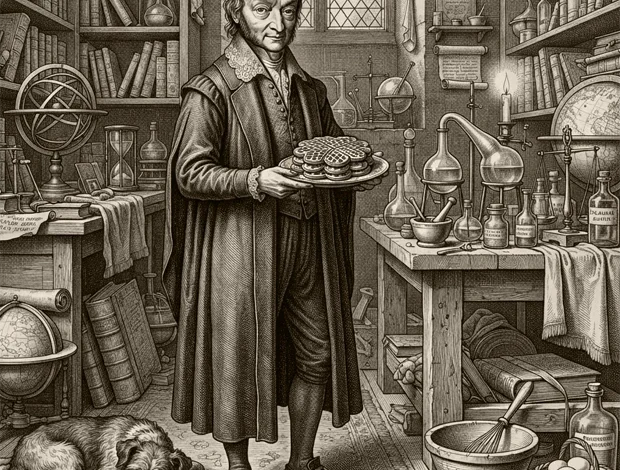
The intersection of computational culinary science and historical chemical principles has yielded an unexpected digital innovation: the launch of Avogadro, a parametric waffle recipe generator. Released on August 9, 2026, the platform coincides with the 250th anniversary of the birth of Amedeo Avogadro, the 18th-century Italian physicist and chemist renowned for his foundational contributions to molecular theory. Developed as an interactive web tool, the application aims to demystify the chemical and structural boundaries of waffle batter through algorithmic modeling, allowing users to dynamically formulate bespoke recipes without relying on traditional static databases.
Background and Historical Context
Amedeo Avogadro was born in Turin, Italy, on August 9, 1776. His most enduring scientific contribution, now known as Avogadro’s Law, posited that equal volumes of all gases, at the same temperature and pressure, contain the same number of molecules. This hypothesis established the concept of the mole as a fundamental unit in chemistry, representing approximately $6.022 times 10^23$ particles. Two and a half centuries later, the creator of the new culinary generator has leaned into this numerical legacy, naming the tool after the scientist to reflect the staggering scale of mathematical permutations the platform makes possible.
The genesis of the project dates back more than a decade. Initial conceptualization began in 2014, marked by rudimentary interface mockups and preliminary mathematical models constructed in Microsoft Excel. For years, the project remained dormant while broader culinary research continued. That research involved the accumulation and analysis of approximately 1,000 traditional waffle recipes, predominantly sourced from Norway and Scandinavia.
A central challenge identified during this archival phase was the historical reliance on tacit knowledge in culinary arts. Older recipes frequently omitted precise measurements, instructing practitioners vaguely to "add flour until the batter has the right consistency." This reliance on sensory evaluation rather than standardized ratios prompted a fundamental research question: What precisely defines the compositional threshold of a functional waffle batter, and at what point does a mixture cease to function as one? Avogadro was engineered to provide a data-driven response to this query.
Architecture and Functionality of the Generator
Unlike conventional culinary websites or digital cookbooks, Avogadro operates entirely without a recipe database. The platform neither stores nor retrieves pre-existing formulas. Instead, it generates batters dynamically in real-time based on user inputs.

Users begin by selecting fundamental ingredient categories, which include liquids, dairy products, fats, eggs, starches, and sweeteners. Once the core components are chosen, operators adjust a series of interactive sliders to modulate specific sensory and structural properties, such as sweetness, richness, and tanginess. The application computes a precise recipe scaled in grams, determined automatically by the number of eggs designated for the batch.
To assist users in navigating the complexity of the formulation process, the tool provides two distinct operational environments: a standard mode and an expert mode. Standard mode restricts the ingredient list and limits the number of active sliders, ensuring that any generated combination yields a viable, structurally sound batter. Expert mode removes these guardrails, offering access to the full inventory of ingredients, all eight control sliders, and a broader array of preset configurations designed for advanced culinary exploration.
Embedded within the interface is a diagnostic feature known as the waffle heart quality indicator. This visual metric provides immediate feedback on two critical parameters: whether the computed batter possesses the physical characteristics necessary to bake successfully, and how closely its composition aligns with commercially successful or traditional waffle recipes. Notably, the system accommodates atypical formulations, recognizing that several popular commercial mixes deviate significantly from historical norms without compromising structural integrity.
Data Complexity and Theoretical Scale
The mathematical foundation of the generator accounts for its namesake. By calculating the total possible permutations of ingredient selections and slider positions, the platform spans approximately $10^27$ distinct control settings. When contextualized against Avogadro’s number—$6.022 times 10^23$—the tool’s combinatorial capacity encompasses roughly 1,660 moles’ worth of potential waffle batters.
However, developers have offered an important methodological caveat regarding this astronomical figure. While the control panel yields $10^27$ theoretical configurations, these do not all translate into meaningfully distinct culinary outcomes. System rounding, the automated pruning of trace ingredients, and the mathematical boundaries of fluid dynamics mean that numerous distinct settings converge on identical batter compositions. Furthermore, extreme slider adjustments frequently generate non-viable mixtures, a condition visually communicated by the absence of lobes on the application’s quality indicator.
Despite these limitations, the combinatorial space remains vast, ensuring that users engaging with the expert mode are likely to encounter novel formulations that have no precedent in culinary history.
Implications for Culinary Science

The deployment of parametric recipe generators represents a notable shift in how domestic cooking intersects with computational modeling. By abstracting recipes into quantitative variables, tools like Avogadro bridge the gap between empirical gastronomy and food science.
In professional kitchens and industrial food development, parametric design is frequently utilized to optimize textures and flavor profiles systematically. Bringing this methodology to a household food item such as the waffle invites amateur cooks to engage directly with the ratios of hydration, fat content, and protein coagulation that dictate baking outcomes.
Furthermore, the project highlights the value of digital archives in preserving and analyzing regional culinary traditions. By synthesizing data from a thousand Scandinavian recipes, the model establishes a baseline for what constitutes a culturally authentic product while simultaneously dismantling the necessity for rigid adherence to static texts.
Future Outlook and User Engagement
As the platform opens to the public, the developer has emphasized that the system functions as an approximation of historical cooking wisdom rather than an infallible authority. Because testing $10^27$ individual batters is physically impossible, the project relies on community engagement to refine its underlying algorithms.
Users encountering anomalies, structural failures, or edge cases within the software are encouraged to submit feedback detailing specific configuration errors. Similarly, those who discover particularly successful or unconventional flavor profiles are invited to share their direct URLs for community review.
By merging the rigorous legacy of 18th-century chemical theory with modern web-based computation, the launch of Avogadro provides both a novel commemorative tribute to its namesake and an enduring resource for the global culinary community.