Police Confirm ISIS Responsibility for Central Jakarta Terror Attack Involving Explosives and Firearms

The National Police of the Republic of Indonesia have officially confirmed that the coordinated terror attacks that struck the heart of Jakarta’s business district on Jalan Thamrin were orchestrated by the Islamic State (ISIS) militant group. Speaking from the scene of the incident in Central Jakarta, Deputy Chief of National Police, Police Commissioner General Budi Gunawan, stated that the perpetrators utilized a combination of firearms and explosive devices to carry out the assault, which targeted both security forces and public landmarks. The confirmation brings clarity to a day of chaos in the Indonesian capital, as authorities worked to secure the area and neutralize multiple threats across the bustling thoroughfare.
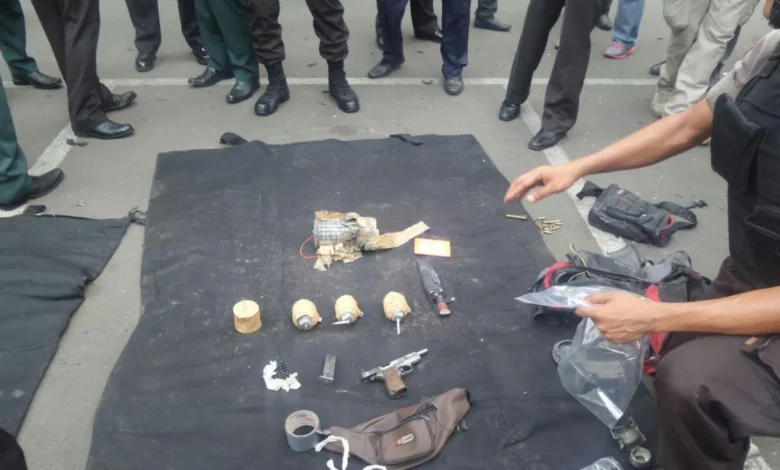
According to General Budi Gunawan, the evidence collected from the site indicates a sophisticated level of preparation, although the scale of the weaponry suggests a mobile, urban guerrilla-style operation. "It is confirmed that ISIS is behind this," General Gunawan told reporters on Thursday. He detailed that the attackers were armed with FN-type handguns and a variety of explosives, including functional grenades and improvised explosive devices (IEDs). "There are FN-type weapons. There are also bombs and grenades, some of which were found still active and had to be neutralized by our bomb disposal units," he added, highlighting the ongoing danger even after the initial exchange of fire had ceased.
The attack, which unfolded near the historic Sarinah department store and a busy Starbucks outlet, has sent shockwaves through Southeast Asia, marking a significant escalation in the regional threat posed by international extremist networks. General Gunawan reassured the public that the situation is now under control and dismissed rumors of further hostage situations or secondary explosions elsewhere in the city. Despite the swift response from the police, the incident resulted in several fatalities and injuries, including among foreign nationals and members of the police force.
Detailed Chronology of the Thamrin Attack
The assault began during the mid-morning rush on Thursday, a time when Jalan Thamrin is typically teeming with office workers, tourists, and commuters. At approximately 10:39 AM local time, the first explosion occurred inside a Starbucks café located in the Skyline Building. Witnesses described a scene of immediate panic as the blast shattered glass and sent debris flying onto the sidewalk. Moments later, as bystanders and security personnel rushed toward the site of the first blast, a second explosion targeted a police traffic post located at the center of the Thamrin-Wahid Hasyim intersection.
Following the initial detonations, a dramatic shootout ensued between the militants and police officers. Eyewitness accounts and amateur video footage captured two of the attackers standing in the middle of the road, brandishing handguns and firing at police officers who were attempting to cordons off the area. The militants appeared to be moving toward the Sarinah parking lot, using parked vehicles as cover while they engaged in a gun battle with members of the Jakarta Metropolitan Police and the Densus 88 counter-terrorism unit.
By 11:00 AM, heavy reinforcements arrived, including armored vehicles and elite tactical units. Sniper teams were deployed to the rooftops of surrounding skyscrapers to provide overwatch. The confrontation lasted for nearly an hour before the police were able to neutralize the attackers. By midday, the National Police confirmed that all active threats at the Thamrin location had been eliminated, though a sweep of the surrounding buildings continued for several hours to ensure no accomplices remained at large.
Casualties and Impact on Foreign Nationals
The human cost of the attack became clearer as the afternoon progressed. General Budi Gunawan provided a preliminary breakdown of the casualties, stating that seven people were confirmed dead. This figure includes four of the suspected terrorists, who were killed either by their own explosives or by police gunfire during the shootout. The remaining three deceased individuals consist of two civilians and one police officer who was stationed at the traffic post during the initial blast.
The international dimension of the attack was underscored by the involvement of foreign victims. "There was one foreign national among the deceased," General Gunawan confirmed, while another foreign national sustained serious injuries and was transported to a nearby hospital for emergency surgery. The presence of foreign casualties at a location popular with international tourists and expatriates suggests that the attackers may have specifically chosen the site to maximize international media coverage and strike at global interests within Indonesia.
Hospitals across Central Jakarta, including Gatot Soebroto Army Hospital and Cipto Mangunkusumo Hospital, were placed on high alert to treat the wounded. Reports indicate that at least 20 people were injured in the blasts and subsequent gunfire, with several suffering from shrapnel wounds and hearing loss due to the proximity of the explosions.
The Weaponry: FN Pistols and Improvised Explosives
The use of FN-type pistols is a significant detail in the investigation. The FN (Fabrique Nationale) is a well-known brand of high-quality firearms, and their presence in the hands of militants raises questions regarding the illicit arms trade within the region. Security analysts suggest that these weapons may have been smuggled into the country or sourced from local militant networks that have long sought to upgrade their arsenals from homemade "rakitan" guns to factory-standard firearms.
In addition to the handguns, the attackers used "low-grade" but highly effective pipe bombs and grenades. General Gunawan’s mention of "active grenades" remaining at the scene suggests that the attackers intended to cause significantly more casualties than they ultimately achieved. The police’s tactical response, which included the use of frequency jammers to prevent remote detonation of any remaining devices, was crucial in preventing a higher death toll.
Analysis of the ISIS Connection in Indonesia
The confirmation of ISIS involvement marks a pivotal moment for Indonesian internal security. While Indonesia has battled domestic extremist groups like Jemaah Islamiyah (JI) for decades, the emergence of ISIS-affiliated cells represents a shift toward "lone wolf" or small-cell tactics inspired by global jihadist propaganda. General Gunawan noted that the targets were varied: "There were indeed officials who were targets, command headquarters, and government officials. Foreign-owned objects were also included in the target list."
Intelligence officials believe the attack may have been coordinated or inspired by Bahrun Naim, an Indonesian militant currently believed to be in Syria. Naim has been identified by security experts as a key figure in bridging the gap between the central ISIS leadership in the Middle East and radicalized individuals in Southeast Asia. This "Paris-style" attack—characterized by simultaneous bombings and shootings in a high-profile urban center—is a hallmark of recent ISIS operations designed to project power and instill fear in major global capitals.
Official Government Response and National Security
President Joko Widodo, who was on a working visit to Cirebon, West Java, at the time of the attack, immediately cut his trip short to return to the capital. In a televised address, the President condemned the "acts of terror" and urged the public to remain calm but vigilant. "Our nation and our people should not be afraid. We will not be defeated by these acts of terror. I hope the public remains calm," the President stated, emphasizing that the state would hunt down every individual involved in the network.
The National Police have since raised the security alert level to ‘Siaga 1’ (highest alert) across the country, with a particular focus on vital installations, embassies, and shopping centers. General Budi Gunawan urged citizens to be proactive in their communities. "We still need to anticipate things so as not to be deceived," he said. He specifically called on residents to report any suspicious new neighbors or unusual activities in their residential areas, as many terror cells operate out of rented houses in suburban neighborhoods.
Broader Implications for Regional Security
The Thamrin attack is expected to trigger a significant overhaul of Indonesia’s counter-terrorism legislation. Currently, Indonesian law limits the ability of security forces to preemptively arrest individuals for associating with extremist groups or traveling abroad to join foreign conflicts. In the wake of this attack, there is growing pressure on the People’s Representative Council (DPR) to strengthen the Anti-Terrorism Law to allow for more robust preventative measures.
Regionally, the incident has prompted neighboring countries like Malaysia and Singapore to tighten their borders and increase surveillance. The fear of a "wilayat" (province) of ISIS being established in Southeast Asia has moved from a theoretical threat to a pressing security reality. The coordination seen in Jakarta suggests that local cells are gaining the technical capability and the will to strike at the heart of the state.
Resilience and the Public Reaction
Despite the horror of the morning’s events, the reaction from the citizens of Jakarta has been one of defiance. Within hours of the attack, the hashtag #KamiTidakTakut (We Are Not Afraid) began trending on social media, reflecting a collective refusal to let the city be paralyzed by fear. Street vendors near the blast site reportedly returned to their stalls by the late afternoon, and the city’s iconic "ojek" (motorcycle taxi) drivers continued to operate, signaling a rapid return to normalcy.
The National Police have vowed to maintain a visible presence on the streets of Jakarta in the coming days. "The state is present, and the police are on the ground to ensure that every citizen feels safe," General Budi Gunawan concluded. As the investigation continues, the focus will turn to tracing the financial trail of the attackers and identifying the broader network that provided the FN pistols and explosives used in this brazen assault on the heart of Indonesia.