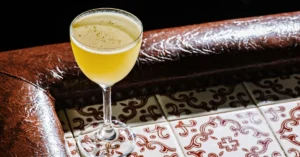
An updated guide to the bracing herbal liqueur, a close cousin of Chartreuse, which adds an alpine twist to any drink.


For decades, the high-altitude regions of the French and Italian Alps have guarded a closely held secret of distillation: the production of Génépy. Derived from the Artemisia plant—a resilient, aromatic shrub that thrives in the rugged, rocky terrain above the tree line—this herbal liqueur has long served as a fundamental element of mountain culture. Traditionally consumed as a digestive aid or a warming tonic after a grueling day of skiing, Génépy was once a regional curiosity, rarely seen on international shelves. However, as global interest in craft spirits and herbal modifiers has surged, the liqueur has transitioned from a niche alpine specialty to a sophisticated, versatile fixture in modern cocktail programs across the United States and beyond.
The Botanical Foundation and Historical Context
The identity of Génépy is inextricably linked to its botanical source. Artemisia genipi, a relative of the plant used to create absinthe and vermouth, is a protected species in many parts of the Alps, requiring sustainable harvesting practices. The production process is relatively straightforward but demands precision: the dried flowers and stems are macerated in a neutral, high-proof grain spirit. This extraction process pulls essential oils and chlorophyll from the plant, resulting in the spirit’s signature pale, straw-like hue or, occasionally, a deeper, more vibrant green.

Historically, the production of Génépy was largely domestic or confined to small-batch distillers in the Savoie region of France and the Aosta Valley of Italy. Its rise in the United States, however, is a relatively recent phenomenon, gaining significant momentum within the last five to seven years. This shift was largely catalyzed by the "Chartreuse shortage"—a period of extreme market scarcity for the iconic French liqueur, which forced bartenders to look for alternatives that could provide similar herbal complexity, high-proof structure, and structural balance in cocktails.
A Comparative Analysis: Génépy vs. Chartreuse
In the lexicon of professional mixology, Génépy is frequently compared to its more famous counterpart, Chartreuse. While both belong to the broad category of herbal liqueurs, their profiles are distinct. Yellow Chartreuse is characterized by a honeyed, floral sweetness, whereas Green Chartreuse is renowned for its intense, aggressive, and highly herbaceous profile.
Génépy occupies a unique middle ground. It possesses a refined, cooling bitterness that is less sugary than Yellow Chartreuse and significantly less assertive than the medicinal, pungent notes of Green Chartreuse. This makes it an ideal "utility player" for the modern bar. It provides the essential "alpine" backbone—a sensation of fresh pine, mountain flora, and menthol—without overwhelming the more delicate ingredients in a cocktail.

The Evolution of the American Backbar
The entry of domestically produced Génépy expressions into the U.S. market has played a critical role in its current popularity. Previously, availability was limited to imports, which often carried steep price points and inconsistent supply chains. Today, craft distillers in states like Colorado, Washington, and New York are experimenting with local botanicals that mirror the flavor profile of the European Artemisia.
This domestic production has democratized the spirit, allowing for greater experimentation. At bars like San Francisco’s ABV, the versatility of the liqueur has been tested and proven. Bar staff have documented a range of uses, from the simple, classic preparation of serving it ice-cold with a few dashes of Angostura bitters, to more complex, high-concept applications.
One such example is the High Altitude Highball. By pairing a Japanese whisky like Hakushu—which is itself noted for its "green," forest-like characteristics—with a measure of Génépy and soda, bartenders have created a drink that celebrates the terroir of mountain regions. Ryan Fitzgerald, a lead voice in this movement, notes that the success of such a drink lies in the thematic cohesion between the spirit and the modifier; both are influenced by the altitude and the flora of their respective origins.

Culinary Applications and Structural Versatility
Beyond the highball, Génépy has found a home in the "re-imagined classic" category. Its ability to provide an herbal lift makes it a natural substitute for Cointreau or triple sec in drinks like the Margarita. The resulting "El Pepe" is a testament to this, where the herbal notes of the Génépy act as a bridge between the smoky, earthy qualities of mezcal and the bright acidity of fresh lime juice.
The spirit also excels in the "White Negroni" family. By replacing the traditional sweet vermouth with Lillet Blanc or Cocchi Americano and using Suze as the bitter agent, the addition of a splash of Génépy adds a layer of depth that prevents the cocktail from feeling too one-dimensional.
Perhaps most intriguingly, the industry has discovered the liqueur’s affinity for dairy and coffee. Because Génépy is fundamentally a cooling, clean herb, it provides a sharp contrast to the density of heavy cream or the bitterness of roasted beans. In the "Strong Start," developed by bartender Troy Sidle, the liqueur is used as a sweetener for heavy cream, which is then whipped and floated over coffee and rum. The result is a texturally rich, aromatic experience that highlights the liqueur’s capacity for dessert-leaning cocktails. Similarly, the "Génépy Suisse"—a blend of coffee cordial, crème de cacao, absinthe, and Génépy—demonstrates how the spirit can provide a "wintry" quality to a drink, turning a standard mocha-style cocktail into something more nuanced and sophisticated.

Data and Market Trends
Industry reports from the last half-decade indicate a sustained interest in "botanical-forward" liqueurs. While gin remains the dominant spirit category for herbal notes, the sub-category of herbal liqueurs has seen a growth rate of approximately 4–6% annually, outpacing more traditional, single-note liqueurs.
The primary driver for this growth is the shifting palate of the modern consumer. There is a demonstrable preference for "dry" and "complex" flavors over cloyingly sweet options. Génépy fits perfectly into this demographic shift. Furthermore, the "bar-at-home" movement, which accelerated during the pandemic years, saw a spike in sales of artisanal modifiers. Consumers who were previously intimidated by the "monastic" complexity of Chartreuse found Génépy to be a more accessible, entry-level herbal spirit.
Professional Perspectives on Future Growth
Industry experts suggest that the trajectory for Génépy is not merely a passing trend but a structural change in how cocktail menus are built. "The industry has moved toward a more nuanced understanding of bitters and modifiers," says one industry consultant. "Ten years ago, a bar might have had one or two herbal liqueurs. Today, a well-curated backbar treats them as a spectrum. Génépy is essential to that spectrum because it fills the gap between the sweet and the bitter."

The implications for the broader spirits industry are clear: as consumers continue to seek out authentic, regional, and sustainable products, the story of the Artemisia plant and the alpine traditions of the Alps will continue to resonate. Whether it is used as a sophisticated modifier in a complex sour or simply served as a chilled digestif, Génépy has firmly established itself as a necessary component of the contemporary bartender’s toolkit.
Summary of Notable Preparations
The current landscape of Génépy usage can be categorized into four primary cocktail archetypes:
- The Alpine Highball: Utilizing the spirit’s natural affinity for carbonation and mountain-influenced spirits (e.g., Hakushu whisky, gin).
- The Herbal Sour: Replacing or supplementing traditional modifiers in Sours to add a layer of complexity (e.g., The Thirsty Monk).
- The Cream-Based Dessert Cocktail: Exploiting the interplay between herbal oils and dairy fats (e.g., The Strong Start, Génépy Suisse).
- The Botanical Riff: Using Génépy to provide a "green" or "earthy" finish to classic recipes like the Margarita or the Negroni (e.g., The Greenbelt, Alpine White Negroni).
As the category matures, it is likely that we will see more regional variations of the liqueur produced within the United States, utilizing local mountain flora. This regionalization will likely deepen the connection between the spirit and the environment, ensuring that Génépy remains a permanent fixture of the craft cocktail movement for the foreseeable future.