Conquering Wat Phu Tok: Thailand’s Architectural Wonder on the Edge of a Cliff

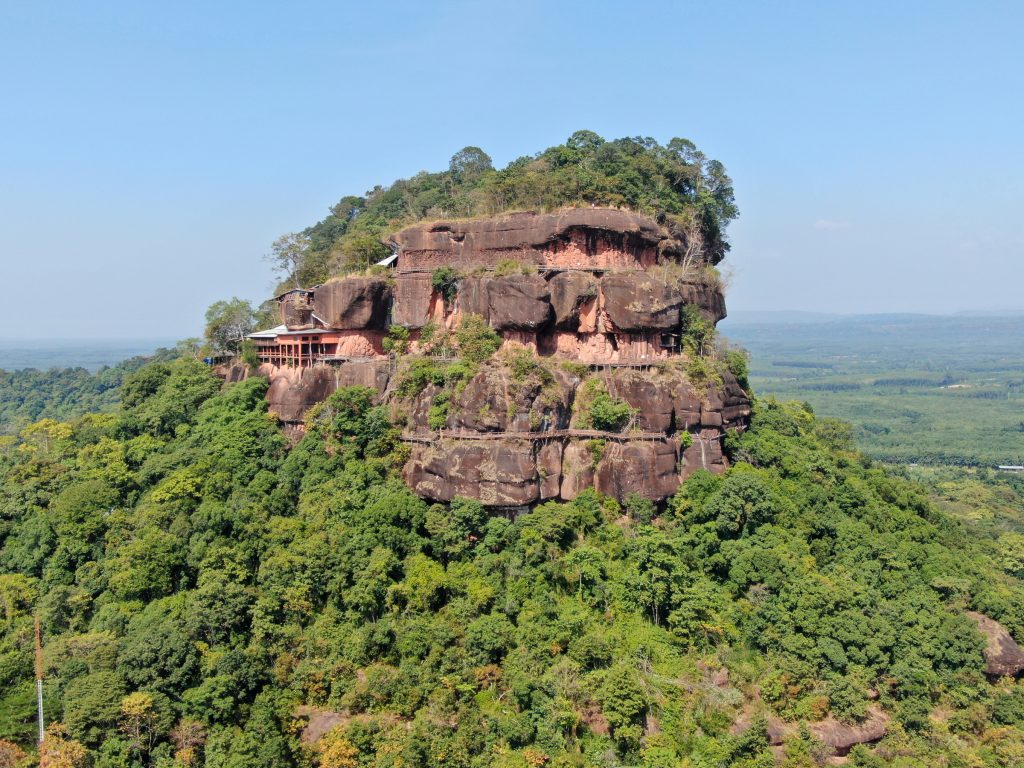
Rising sharply from the remote plains of Thailand’s northeastern Isan region, Wat Jetiyakhiri—universally known as Wat Phu Tok—stands as one of Southeast Asia’s most extraordinary architectural and spiritual achievements. Located in the sparsely populated Bueng Kan province, this remote monastic site challenges the limits of both traditional temple construction and human endurance. Translating literally to "lonely mountain" in the local Isan dialect, the 359-meter-high isolated sandstone monolith resembles a smaller, more rugged counterpart to Sri Lanka’s famed Sigiriya fortress. Yet, unlike ancient royal citadels, Wat Phu Tok was conceived as an intricate pathway to spiritual liberation, constructed entirely of hand-built wooden scaffolding clinging precariously to sheer vertical cliffs.
Main Facts and Structural Overview
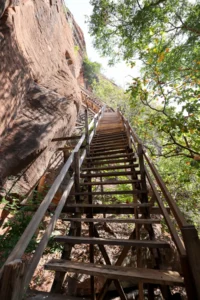
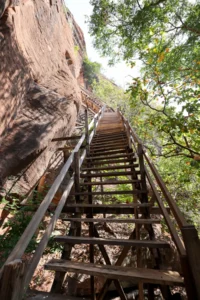
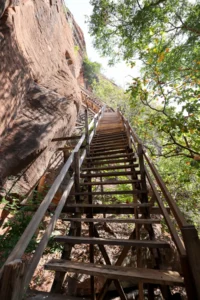
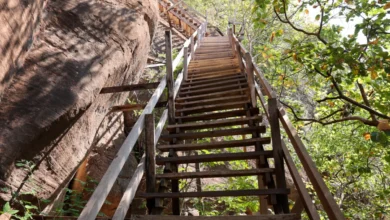
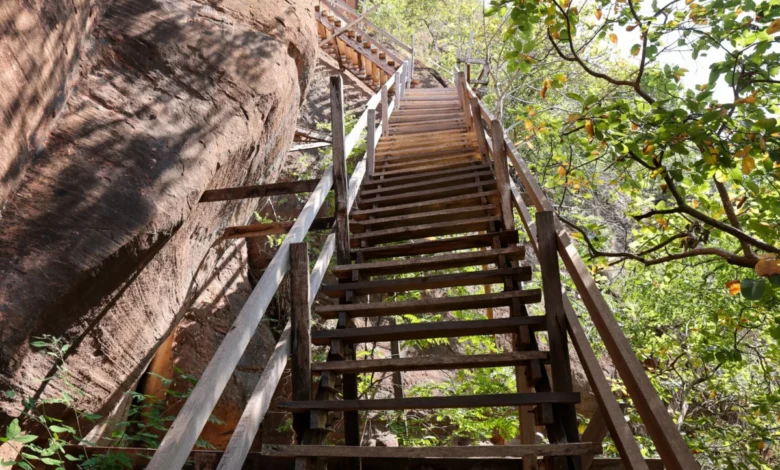
Officially designated as Wat Jetiyakhiri, the temple grounds encompass a massive ecological and religious park situated approximately 30 minutes by road from Bueng Kan city. The defining feature of the complex is a network of handcrafted wooden staircases, ladders, and cantilevered plank walkways that snake around the perimeter of the red rock mountain.

Engineered to span seven distinct tiers, the layout directly corresponds to the seven stages of Buddhist meditation, guiding monks and visitors upward through increasingly isolated and demanding terrain. While the initial levels present manageable stone and timber staircases leading to the primary ordination hall on the fifth tier, the upper sections evolve into a heart-pounding exercise in spatial navigation. The sixth level, recognized as the architectural climax of the ascent, features a series of wooden pathways anchored directly into the rock face. These suspension-style walkways offer uninterrupted panoramic vistas of the surrounding Mekong River basin and the dense, verdant canopy of Bueng Kan, while simultaneously exposing travelers to sheer drop-offs that demand absolute focus.
Chronology and Historical Development

The history of Wat Phu Tok is inextricably linked to the region’s geographical isolation and its history as a sanctuary for wildlife, notably venomous snakes. For generations, the dense forests and jagged topography of the solitary mountain deterred casual human settlement, making it an ideal environment for ascetic Buddhist monks seeking solitude for intensive meditation.
The transformation of the wilderness into a sacred pilgrimage site began under the leadership of the revered meditation master Phra Ajarn Juan Kulachettho (commonly known as Luang Pu Juan). Recognizing the spiritual potential of the rugged terrain, the monk spearheaded a monumental construction project in the mid-20th century. Utilizing basic tools and local materials, labor crews comprising monks and devout local villagers spent years manually drilling into the sheer sandstone cliffs to anchor iron beams and wooden scaffolding.

The resulting seven-level labyrinth was designed to physically test the practitioner’s detachment from fear and worldly anxieties. Although the visionary founder, Luang Pu Juan, tragically died in a commercial aircraft accident near Bangkok in 1979—an event that deeply shook the Thai monastic community—his disciples and regional authorities have continuously maintained and restored the wooden infrastructure to preserve the remote sanctuary.
Supporting Data and Environmental Context

Bueng Kan province, established formally as Thailand’s 77th province in March 2011 after separating from Nong Khai, remains one of the country’s least commercialized destinations. This administrative shift brought increased regional focus to eco-tourism and cultural preservation in the Isan territory, which shares a border with Laos along the Mekong River.
Geologically, the isolated mountain of Phu Tok is a remnant of the Khorat Plateau’s sedimentary rock formations, characterized by high concentrations of iron oxide that give the exposed sandstone its distinctive reddish hue. The mountain’s ecosystem supports a diverse array of flora and fauna typical of dry dipterocarp forests and tropical monsoon zones. The seventh and highest level of the temple remains largely untamed, serving as a protected natural habitat. Local forestry and wildlife departments frequently issue advisories warning visitors that the uppermost tier is frequented by indigenous wildlife, including venomous pit vipers, advising that ascents to the summit be undertaken strictly at one’s own risk.

Official Responses and Safety Protocols
Local tourism boards and municipal authorities in Bueng Kan have implemented structured management guidelines to balance public accessibility with safety at Wat Phu Tok. Given the inherent risks associated with aging timber and vertical drop-offs, provincial maintenance teams conduct regular structural evaluations of the anchored walkways and staircases.

Tourism officials emphasize that while the wooden planks occasionally flex underfoot, rigorous safety maintenance ensures structural integrity. However, due to the absence of heavy modern handrails along certain cliff-side segments, visitors are officially urged to exercise extreme caution, wear appropriate footwear, and refrain from ascending during severe weather events such as the monsoon season’s heavy downpours, when wooden surfaces become dangerously slick. Search-and-rescue teams maintain a localized emergency response protocol in cooperation with regional monasteries to assist injured hikers or travelers experiencing vertigo on the upper tiers.
Broader Impact and Implications for Regional Tourism

The enduring appeal of Wat Phu Tok highlights a broader shift in Thailand’s tourism strategy toward sustainable, off-the-beaten-path exploration. While the kingdom’s central and southern beaches attract mass international tourism, remote northeastern provinces like Bueng Kan rely on sites of profound cultural and natural significance to draw independent travelers interested in eco-tourism, anthropology, and spiritual heritage.
Economic analysts note that while increased promotion of Wat Phu Tok brings vital revenue to rural Isan communities through guesthouses, local guides, and transport services, authorities face the ongoing challenge of preserving the monastic tranquility of the site. Monastic leadership continuously reminds visitors that Wat Phu Tok is, first and foremost, an active place of Buddhist worship and ascetic practice, rather than a conventional amusement attraction. Consequently, regulations regarding respectful attire, noise levels, and restricted access zones are strictly enforced.

Ultimately, Wat Phu Tok transcends its reputation as a thrilling adventure destination. By merging the raw, intimidating topography of the Isan wilderness with centuries-old spiritual traditions, the lonely mountain provides a rare intersection of architectural audacity and meditative introspection, securing its place as one of Thailand’s most compelling cultural landmarks.