Few spirits in the modern bar carry the weight of five centuries of history quite like Bénédictine. This rich, golden-hued liqueur, characterized by a complex, aromatic profile of 27 botanicals, serves as a bridge between the medicinal alchemy of the Renaissance and the refined mixology of the 21st century. While often relegated to the back bar as a niche ingredient, Bénédictine has proven itself an essential component in some of the most celebrated cocktails in history, from the sophisticated Vieux Carré to the humble, yet iconic, B&B. Understanding how to harness its unique blend of honeyed sweetness and sharp, herbal spice is key for any bartender—professional or amateur—looking to add depth to their repertoire.

A Chronology of Discovery and Resurrection
The origins of Bénédictine are rooted in the Benedictine Abbey of Fécamp in Normandy, France. According to historical records, the liqueur traces its beginnings to the year 1510, when a monk named Dom Bernardo Vincelli allegedly crafted a medicinal elixir derived from local herbs and spices. For nearly three centuries, this tonic was produced by the monastic order, serving as a health-giving restorative for the infirm and a warming spirit for the monks during the cold, damp winters of Northern France.
The French Revolution, which erupted in 1789, brought an abrupt end to this tradition. As the state moved to seize ecclesiastical property, the Abbey of Fécamp was suppressed, and the monks were dispersed. In the ensuing chaos, the original formula was presumed lost to time. For over 70 years, the elixir remained a memory, until 1863, when Alexandre Le Grand, a wealthy wine merchant from Fécamp, purportedly stumbled upon an ancient manuscript in his library.

Le Grand’s discovery proved to be the catalyst for the modern Bénédictine brand. He claimed to have deciphered the cryptic, handwritten notes and spent a year experimenting to recreate the original essence. By 1863, he launched the commercial production of "Bénédictine D.O.M."—the acronym standing for Deo Optimo Maximo, or "To God, most good, most great." Le Grand’s marketing genius was as significant as his recipe; he turned a monastic tonic into a global luxury brand, securing its place in the burgeoning café society of late 19th-century Europe.
The Anatomy of a Secret Recipe
The allure of Bénédictine lies in its guarded secret. While the exact proportions remain one of the best-kept secrets in the spirits industry, the manufacturer acknowledges that the final product is the result of a multi-stage distillation and maceration process. The 27 herbs and spices utilized in the blend are known to include angelica, hyssop, juniper, myrrh, saffron, mace, coriander, and lemon balm.

The complexity of these ingredients creates a sensory profile that is difficult to replicate. Upon the palate, the liqueur presents an initial hit of honey and citrus peel, followed by a mid-palate of dried, autumnal spices—cinnamon, clove, and nutmeg—and a finish characterized by the bitter, medicinal bite of angelica and juniper. This structure makes it exceptionally versatile. Because it contains sugar, it can serve as a modifying sweetener in a cocktail, but its high aromatic intensity means it often acts as a bridge between disparate spirits, binding base liquors like rye whiskey, Cognac, or gin into a cohesive whole.
Historical Context and Evolution in Mixology
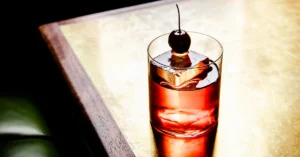
Bénédictine’s entry into the American cocktail lexicon was solidified during the golden age of the cocktail in the late 19th and early 20th centuries. It became a staple in New Orleans, most notably in the Vieux Carré, a classic creation from the Monteleone Hotel’s Carousel Bar. The drink, which combines rye, Cognac, sweet vermouth, and a dash of Bénédictine, highlights the liqueur’s ability to soften the aggressive edges of aged spirits.

The 1930s saw the rise of the "B&B," an abbreviation for Bénédictine and Brandy. Legend suggests that bartenders at the "21" Club in New York City popularized the mixture to cater to patrons who found straight Bénédictine too sweet. By cutting the liqueur with dry brandy, they created a drier, more sophisticated digestif that became a hallmark of mid-century high-end drinking culture.
In recent decades, the craft cocktail movement has rediscovered Bénédictine, viewing it not just as a historical curiosity, but as a "seasoning" agent. Modern bartenders utilize it in fractions of an ounce to lift the aromatics of a drink. For instance, adding a quarter-ounce to a standard Daiquiri introduces a layer of spice that contrasts with the acidity of lime and the clean sweetness of rum.

Modern Applications: From Classics to Innovations
For those looking to incorporate Bénédictine into home bartending, the key is balance. Because it is a powerful modifier, it is rarely the primary base of a cocktail. Instead, it is best treated as a supporting character that elevates the base spirit.
- The Bridge Builder: When pairing Bénédictine with brown spirits like bourbon or Scotch, the liqueur’s honey notes draw out the vanilla and oak characteristics of the barrel-aged liquor.
- The Herbal Counterpoint: In gin-based drinks, such as the Tom Collins or a variety of martini riffs, the herbal botanicals in the Bénédictine harmonize with the juniper and citrus peel of the gin.
- The Acid Modifier: When used in sour-style cocktails—those containing lemon or lime juice—Bénédictine provides a rounded mouthfeel that compensates for the sharp acidity, effectively negating the need for additional simple syrup.
Several recipes have emerged as modern benchmarks for using the liqueur. The Rainmaker, for example, uses the unexpected pairing of pineapple juice and Bénédictine to create a tropical profile that is still grounded by the liqueur’s spice. Meanwhile, the Rolls Royce serves as a classic example of a Martini-style drink where Bénédictine replaces vermouth to create a richer, more opulent texture. For those who prefer a drier, more bitter profile, the Bitter Tom blends Campari and Bénédictine to create a complex, refreshing highball that challenges the palate.

The Economic and Cultural Impact of Botanical Liqueurs
The resurgence of Bénédictine is part of a broader trend in the spirits market: the "premiumization" of herbal liqueurs. As consumer interest in botanical profiles—driven by the popularity of gin and craft vermouths—has grown, so has the demand for legacy liqueurs. Market analysts note that while the consumption of high-proof base spirits has remained steady, the category of "specialty modifiers" has seen a consistent uptick in shelf space in both retail and on-premise accounts.
The implication of this shift is significant. It suggests a move away from simple, sugar-heavy cocktails toward more complex, "sipping" drinks that require a sophisticated understanding of flavor layering. Bénédictine, with its centuries-old recipe, fits perfectly into this narrative. It offers the modern drinker a connection to a pre-industrial era of craftsmanship, where recipes were not merely written, but lived and guarded.

Concluding Thoughts
Bénédictine remains a testament to the endurance of tradition. From its supposed inception in a French monastery to its survival through the French Revolution and its subsequent commercial success under the vision of Alexandre Le Grand, the liqueur has navigated the centuries by remaining relevant to the changing tastes of the public. Whether one is mixing a pre-Prohibition classic like the Brainstorm or experimenting with contemporary riffs like the Pantheon, the presence of Bénédictine ensures a drink that is layered, thoughtful, and deeply aromatic.
For the modern bartender, the liqueur is a reminder that the most essential tools in the bar are not always the newest or the most advertised. Sometimes, the most transformative ingredient is the one that has been sitting on the shelf for 500 years, waiting to be rediscovered. By understanding its chemical composition, its historical context, and its functional role in the glass, one can unlock a world of flavor that is as deep and complex as the history of the liqueur itself.