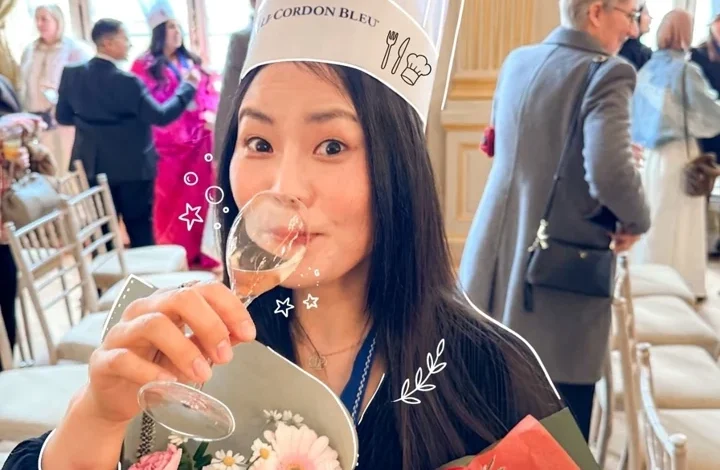
After ten months of residence in Paris and nine months of rigorous culinary training, Seonkyoung Longest has officially graduated from Le Cordon Bleu Paris. The milestone marks the culmination of an intensive academic program at one of the world’s most prestigious culinary institutions. While the graduation ceremony serves as the formal conclusion of this chapter, it also invites a broader reflection on the nature of professional development, the transient nature of global education, and the personal evolution of students navigating international culinary landscapes.

An Academic Milestone in the Culinary Capital
Le Cordon Bleu, founded in Paris in 1895, remains a global benchmark for French culinary education. The curriculum is structured around the mastery of classic French techniques, encompassing both savory cuisine and pâtisserie. For students like Longest, the nine-month journey represents more than just the acquisition of technical skills; it is a full immersion into a high-pressure, professional kitchen environment that demands precision, endurance, and cultural adaptability.

The graduation signifies the completion of a multi-tiered program where students progress from basic fundamentals—such as knife skills, mother sauces, and classical preparations—to advanced culinary arts. This structured progression is designed to prepare graduates for diverse career paths, ranging from executive roles in Michelin-starred restaurants to independent ventures and media-based culinary consulting.

Chronology of the Nine-Month Intensive
The timeline of the program is notoriously compressed. Students often begin with little experience in professional French kitchens and are expected to perform at an industry-standard level within a matter of months.

- Months 1-3 (Foundations): The initial phase focuses on the "Basic" level, where the primary objective is the internalization of French culinary vocabulary and fundamental heat management.
- Months 4-6 (Intermediate): The focus shifts to regional variations and more complex plate compositions. During this period, students often report the highest levels of mental and physical exhaustion as the technical requirements increase.
- Months 7-9 (Superior/Graduation): The final stage integrates creativity with technical execution. Students are tested on their ability to manage a professional kitchen station, ensure consistency, and maintain the rigorous hygiene standards required in French hospitality.
The Phenomenon of the Transient Culinary Student
The experience of graduating from Le Cordon Bleu often triggers a "post-academic vacuum." As noted by many alumni, the transition from a highly structured, objective-driven environment to the uncertainty of the professional world can be disorienting. This phenomenon, often described as "liminality"—the state of being between two distinct stages of life—is common among international students who relocate to Paris specifically for the program.

Research into international culinary education suggests that students are not merely seeking technical certification; they are often undergoing a period of self-reinvention. For many, the "home" they return to is no longer the place they left. Having spent months in a foreign environment, the student’s identity is permanently altered, creating a sense of detachment from both their country of origin and the city of their training.

Professional Dynamics and Social Support Systems
A critical, often overlooked aspect of the culinary school experience is the formation of informal support networks. Longest’s reference to a small group of peers, colloquially known as the "kumquat" group, illustrates the necessity of social cohesion in a high-stress academic environment. In institutions like Le Cordon Bleu, where competition is high and performance is constantly scrutinized, these micro-communities function as essential psychological safety nets.

These groups often transcend national boundaries, providing a forum where students can process the unique challenges of living in Paris, including language barriers, the complexity of local administrative systems, and the emotional toll of culinary failure. These relationships often evolve into professional networks that extend well beyond the classroom, potentially influencing the career trajectories of graduates in the international food industry.

The Shifting Landscape of Culinary Education
The decision to continue education at the Ritz Escoffier, another storied institution in Paris, reflects a growing trend among culinary professionals. Advanced students are increasingly seeking supplementary certifications to refine specific skill sets—in this case, pastry arts—rather than relying solely on a single foundational diploma.

This educational path indicates a strategic move toward specialization. By extending her time in Paris, the graduate is positioning herself within a niche market, leveraging the reputation of two of the world’s most elite culinary schools. This trend of "stackable credentials" is becoming increasingly common in the culinary arts, as the industry becomes more competitive and the demand for highly specialized pastry and confectionery experts rises.

Socio-Economic Implications and Global Mobility
The ability to pursue such specialized education in Paris is a testament to the global mobility of the culinary arts. However, it also highlights the economic disparity within the industry. Culinary education at this level is a significant financial investment, often inaccessible to the average aspiring chef. The success of a graduate is therefore measured not only by their technical prowess but by their ability to leverage this international training into a sustainable career in a highly volatile market.

Industry analysts note that while diplomas from prestigious institutions like Le Cordon Bleu do not guarantee immediate professional success, they provide an essential "global passport." The techniques mastered in Paris are recognized universally, allowing graduates to move between international markets with a standardized baseline of competence.

Looking Toward the Future
As the graduation ceremony concluded, the prevailing sentiment among the cohort was one of uncertainty masked by the celebratory nature of the event. The transition from the "student" label to that of a "professional" is rarely a single event; it is a gradual process of integration into the culinary workforce.

For Longest, the immediate future involves a shift in focus toward the Ritz Escoffier. The absence of a long-term plan is not, in this context, a lack of direction, but rather a reflection of the reality of the contemporary culinary landscape. Many modern chefs are opting for "portfolio careers," which may include media production, private consulting, and specialized culinary arts, rather than traditional paths such as ascending the brigade system in a single restaurant.

Conclusion: A Foundation for Continued Growth
The completion of the program at Le Cordon Bleu Paris is a definitive achievement. It represents the successful navigation of a curriculum designed to challenge the limits of a student’s technical and emotional endurance. As the graduate prepares for the next phase of her education, the focus shifts from the validation of the past to the potential of the future.

While the "home" of a global citizen may remain a fluid concept, the professional tools acquired during these nine months are static. The ability to execute at a high level, combined with the resilience gained from the experience, provides a robust foundation for whatever path follows. The journey from Korea to the United States and finally to the kitchens of Paris has not been a linear path, but rather a deliberate accumulation of experiences that, while disparate, coalesce into a singular, unique professional identity. The next steps remain unwritten, but the infrastructure for a successful career in the culinary arts has been firmly established.