Yukhoe Kimbap: A Modern Culinary Fusion of Traditional Korean Beef Tartare and Seaweed Rice Rolls

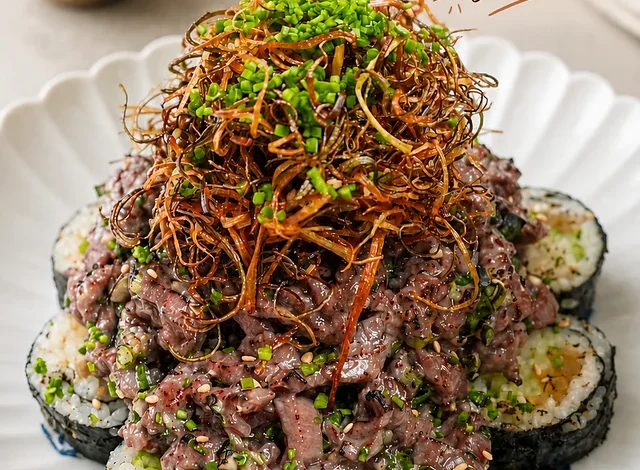
The evolution of traditional Korean cuisine continues to manifest in creative reinterpretations, with the recent emergence of Yukhoe Kimbap standing as a prominent example of culinary fusion. By marrying the delicate, raw textures of Yukhoe—a storied Korean beef dish—with the structured, portable nature of kimbap, chefs are introducing a sophisticated, appetizer-style evolution of street food. This dish serves as an intersection between the historical roots of Korean beef preparation and the contemporary demand for visually striking, party-friendly finger foods that maintain traditional flavor profiles.

Historical and Culinary Context of Yukhoe

Yukhoe, historically recognized as a cornerstone of Korean beef consumption, dates back centuries. Unlike Western beef tartare, which often relies on heavy emulsifiers, Yukhoe focuses on the purity of the protein. Traditionally prepared using high-quality lean cuts such as top round or eye of round, the beef is julienned and lightly seasoned with a precise balance of soy sauce, toasted sesame oil, garlic, and scallions. The dish is frequently served with julienned Korean pear, which provides a necessary acidic sweetness to offset the savory richness of the meat.

The transition of this dish from a standalone entrée or side item to a topping for kimbap reflects a broader trend in Korean gastronomy: the "gourmet-ification" of portable meals. While traditional kimbap—rice rolled in roasted seaweed—typically features cooked ingredients like sautéed spinach, carrots, and processed meats, the Yukhoe variant shifts the focus toward fresh, high-protein components. This transformation necessitates a rigorous approach to food safety, given the raw nature of the primary ingredient.

Chronology of Preparation and Food Safety Protocols

The preparation of Yukhoe Kimbap requires a strictly sequential process to ensure both structural integrity and microbiological safety. Culinary experts emphasize that the beef must be sourced from high-quality suppliers with specific designations for raw consumption. The process begins with the chilling of the beef to just above freezing, which facilitates the precision of the julienne cuts. Slicing against the grain is mandatory to ensure the texture remains tender rather than fibrous.

In a professional or home kitchen environment, the timeline for assembly is critical. The rice, seasoned with sesame oil and salt, must be allowed to cool to room temperature before being spread across the roasted nori. The interior components—typically pickled radish (danmuji), cucumber, and Korean pear—are placed inside the roll to maintain a crisp, refreshing profile. The seasoned beef is then applied as a final topping immediately prior to service. This delay is a calculated measure to prevent the juices from the meat from softening the seaweed, which would otherwise compromise the texture of the roll.

Technical Analysis: The Role of Aromatics and Texture

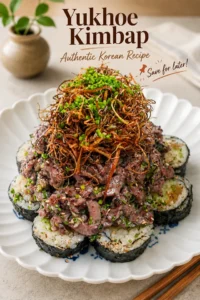
The inclusion of fried green onions is not merely a garnish but a functional component of the dish’s flavor profile. By frying the green onion, chefs create a "green onion oil," which serves as a dual-purpose ingredient. The oil is often infused into the beef seasoning, while the crispy fried shards provide a textural contrast to the soft, raw beef.

Analytical feedback from the culinary community suggests that this contrast is essential for the dish’s success. The softness of the raw meat, the snap of the Korean pear, and the crunch of the fried scallion create a multi-sensory experience that is often lacking in standard, uniform rolls. Furthermore, the use of "Ulwae jubak-jangajji"—a pickled oriental melon aged in sake lees—is noted as a sophisticated substitute for standard yellow pickled radish, adding a depth of flavor that appeals to more discerning palates.

Economic and Social Implications of Modern Korean Fusion

The rise of high-end kimbap variations mirrors the global growth of the Korean culinary export market. Data from the Korea Agro-Fisheries & Food Trade Corporation has indicated a steady increase in the international appreciation of Korean staples. Dishes like Yukhoe Kimbap, which blend traditional techniques with modern presentation, are increasingly featured in upscale dining establishments and private supper clubs.

From a sociological perspective, the popularization of this dish in settings such as Paris or Seoul highlights a shift in how traditional foods are consumed. It is no longer restricted to traditional dining halls but is adapted for social environments where "small plates" or "finger foods" are the preferred format. This accessibility allows for the preservation of traditional recipes while adapting to the logistical needs of modern social gatherings.

Standardization and Best Practices

For those preparing this dish, industry best practices dictate strict adherence to raw-food safety guidelines. Professional chefs recommend:

- Procurement: Sourcing beef from butchers who are aware that the product will be consumed raw.
- Temperature Control: Maintaining the cold chain throughout the preparation process until the moment of consumption.
- Ingredient Separation: Keeping the garlic and green onion separate from the sauce until the final assembly to prevent the oxidation of aromatics and the degradation of the sauce’s integrity.
- Finishing Touches: While optional, the use of a culinary torch to lightly char the surface of the beef is a common modification that introduces a smoky, umami-forward profile without fully cooking the meat.
Broader Impact on Culinary Innovation

The emergence of Yukhoe Kimbap serves as a case study for how a cuisine can maintain its identity while innovating. By utilizing the framework of kimbap, chefs are essentially creating a vehicle for the appreciation of Korean beef. The dish provides a bridge for consumers who may be unfamiliar with raw beef preparations, as the presence of the seaweed and rice makes the experience more approachable and less intimidating than a traditional bowl of tartare.

As food tourism and interest in Korean culture continue to rise, the refinement of such dishes is expected to persist. The emphasis on high-quality ingredients, specifically the use of crisp Korean pears and properly aged pickles, demonstrates a commitment to the foundational elements of Korean cuisine. This trend suggests that while the format of the meal may evolve to suit global tastes and modern convenience, the underlying respect for balance—between sweet and savory, and between soft and crunchy—remains an immutable feature of the culinary tradition.

Future Outlook

Looking ahead, the culinary landscape will likely see further variations of the kimbap roll. The success of the Yukhoe variant suggests that there is a significant market for "deconstructed" or "reconstructed" traditional meals. Whether served in a formal setting or as a highlight of a contemporary menu, Yukhoe Kimbap represents a successful convergence of heritage and innovation. It remains a testament to the adaptability of Korean culinary arts, proving that even a dish as time-honored as Yukhoe can be transformed into a modern, globally relevant masterpiece without losing its essential character. Through careful preparation and an appreciation for the nuances of texture and flavor, this dish effectively elevates the standard kimbap from a convenient snack to a complex, gourmet offering.