Peach Pie The Old Fashioned Two Crust Way
The Classic Two-Crust Peach Pie: A Timeless American Dessert
The quintessential two-crust peach pie, a cornerstone of American baking, represents a comforting and delicious tradition. This article delves into the meticulous process of creating this iconic dessert, focusing on achieving the perfect balance of sweet, juicy peaches and a flaky, buttery crust. We will explore the critical components: selecting the right peaches, crafting an exceptional pie dough, and mastering the art of assembly and baking. Whether you’re a seasoned baker or embarking on your first pie-making adventure, this comprehensive guide aims to equip you with the knowledge and techniques to produce a truly memorable peach pie.
Choosing the Perfect Peaches: The Foundation of Flavor
The quality of your peach pie is intrinsically linked to the quality of the peaches you select. For the most flavorful and texturally pleasing pie, opt for ripe, but not overly soft, freestone peaches. Freestone varieties are crucial because their flesh easily separates from the pit, simplifying preparation. Look for peaches with a vibrant color, free from significant bruises or blemishes. A gentle squeeze should yield slightly to pressure, indicating ripeness, but avoid peaches that are mushy, as they will result in a watery filling.
While any peach variety can be used, certain types are particularly well-suited for pies due to their flavor profile and texture. Elberta, J.H. Hale, and Redhaven are excellent choices, offering a good balance of sweetness and tartness, along with a firm texture that holds its shape during baking. If you are fortunate enough to have access to heirloom varieties, explore their unique characteristics, as many possess intensified flavors.
The quantity of peaches required will depend on the size of your pie plate and how generously you wish to fill it. A standard 9-inch pie plate typically requires about 6-8 cups of sliced peaches. It’s always better to have slightly too many than too few.
Preparing the Peaches: The Key to Avoiding a Soggy Bottom
Properly preparing the peaches is a critical step in preventing a watery pie filling. Begin by blanching the peaches. This involves immersing them in boiling water for about 30 seconds, then immediately transferring them to an ice bath. This process loosens the skins, making them incredibly easy to peel. Once peeled, halve the peaches, remove the pits, and then slice them into approximately ½-inch thick pieces. Consistency in slicing ensures even cooking of the fruit.
To address the natural juices released by the peaches, a technique involving sugar and a thickening agent is essential. While some recipes call for simply tossing sliced peaches with sugar and cornstarch, a more effective method involves maceration. Place the sliced peaches in a large bowl and gently toss them with the sugar (amount varies based on peach sweetness and personal preference, typically ½ to ¾ cup). Allow the peaches to sit for at least 30 minutes, or up to an hour, in the refrigerator. This maceration process draws out excess juice, which can then be drained off. The drained juice, rich in peach flavor, can be reserved and simmered down to a syrupy consistency, then added back to the peach mixture. This intensifies the peach flavor without adding extra liquid.
The Thickening Agent: Achieving the Perfect Consistency
The choice of thickening agent is paramount to achieving a sliceable, yet not stiff, peach pie filling. Common options include cornstarch, flour, and tapioca starch.
-
Cornstarch: A popular and effective thickener, cornstarch provides a clear and glossy finish. Use approximately 3-4 tablespoons of cornstarch for a 9-inch pie. It’s crucial to dissolve cornstarch in a small amount of cold liquid (like the reserved peach juice) before adding it to the peaches to prevent clumping.
-
Flour: All-purpose flour is another viable option, though it can result in a slightly cloudier filling. Use about 4-5 tablespoons of flour. Similar to cornstarch, it’s best to mix flour with a small amount of cold liquid before incorporating it into the peach mixture.
-
Tapioca Starch (or Instant Tapioca): This offers a wonderful clarity and a slightly more gelatinous texture that holds up well. Use about 3-4 tablespoons of instant tapioca. It’s important to note that instant tapioca generally doesn’t require pre-dissolving.
Many bakers also incorporate a touch of lemon juice (1-2 tablespoons) into the peach filling. This brightens the flavor, adds a subtle tartness that complements the sweetness, and also aids in the thickening process. A pinch of cinnamon or nutmeg can also be added for a warming spice note, though for a purist peach pie, these are often omitted to let the pure peach flavor shine.
Mastering the All-Butter Pie Dough: The Foundation of Flakiness
A truly exceptional two-crust peach pie begins with a superior pie dough. For the ultimate in flavor and texture, an all-butter pie dough is unparalleled. The key to a flaky crust lies in keeping the butter cold and in large enough pieces to create steam pockets during baking.
Ingredients for a Classic All-Butter Pie Dough:
- 2 ½ cups all-purpose flour, plus more for dusting
- 1 teaspoon salt
- 1 cup (2 sticks) unsalted butter, very cold and cut into ½-inch cubes
- ½ cup ice water, plus more if needed
The Process:
- Combine Dry Ingredients: In a large bowl, whisk together the flour and salt.
- Cut in the Butter: Add the cold, cubed butter to the flour mixture. Using a pastry blender, two knives, or your fingertips, cut the butter into the flour until the mixture resembles coarse meal with some pea-sized pieces of butter remaining. It is crucial not to overwork the dough at this stage; these butter pieces are what create flakiness.
- Add Ice Water: Gradually add the ice water, one tablespoon at a time, mixing gently with a fork until the dough just comes together. You may not need all of the water, or you might need a little more depending on the humidity. The dough should not be sticky but should hold together when squeezed.
- Divide and Chill: Divide the dough into two slightly unequal portions (one for the bottom crust, slightly larger, and one for the top crust). Flatten each portion into a disc, wrap tightly in plastic wrap, and refrigerate for at least 1 hour, or up to 2 days. Chilling is crucial to allow the gluten to relax and the fat to firm up, making the dough easier to roll and preventing shrinkage during baking.
Assembling the Two-Crust Peach Pie: The Art of the Double Layer
With your prepared peaches and chilled pie dough ready, it’s time to assemble your masterpiece.
- Prepare the Bottom Crust: On a lightly floured surface, roll out the larger disc of chilled dough into a circle approximately 12 inches in diameter. Carefully transfer the dough to your 9-inch pie plate, gently pressing it into the bottom and up the sides. Trim any excess dough, leaving about a 1-inch overhang.
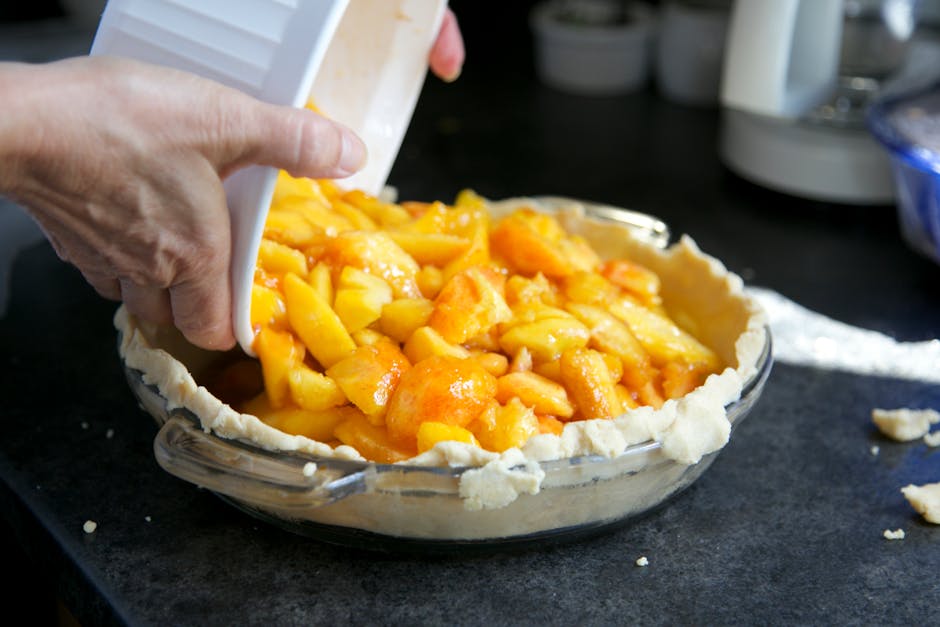
- Fill the Pie: Pour the prepared peach filling into the pie crust. Dot the top of the filling with a few small pieces of butter (about 1-2 tablespoons total) for added richness.
- Prepare the Top Crust: Roll out the second disc of dough into a circle approximately 11 inches in diameter. This can be a solid top crust or a lattice top.
- Solid Top Crust: Place the rolled-out dough over the peach filling. Trim the excess dough, leaving about a 1-inch overhang. Crimp the edges of the top and bottom crusts together to seal. Cut several vents in the top crust with a sharp knife to allow steam to escape.
- Lattice Top: Cut the rolled-out dough into ½ to ¾-inch wide strips. Arrange half of the strips over the filling, spaced evenly. Fold back every other strip and lay a new strip perpendicular to the first set. Unfold the first set of strips. Continue this process, alternating directions, to create a woven lattice pattern. Trim the lattice strips to match the overhang of the bottom crust and crimp them together.
- Egg Wash (Optional but Recommended): For a golden-brown, glistening finish, brush the top crust with an egg wash. Whisk together one egg with 1 tablespoon of water or milk.
- Sugar Sprinkle (Optional): A light sprinkle of granulated sugar over the egg wash adds a delightful crunch and visual appeal.
Baking the Perfect Peach Pie: Temperature and Time are Key
Baking a peach pie requires careful attention to temperature and timing to ensure a perfectly cooked filling and a beautifully browned, flaky crust.
- Preheat the Oven: Preheat your oven to 425°F (220°C).
- Initial High Heat: Place the assembled pie on a baking sheet (to catch any drips) on the lower-middle rack of the preheated oven. Bake for 15-20 minutes at 425°F. This initial high heat helps to set the crust and begin the cooking process of the filling.
- Reduce Heat: Reduce the oven temperature to 375°F (190°C). Continue baking for another 35-45 minutes, or until the crust is golden brown and the filling is bubbling through the vents. You may need to loosely tent the pie with aluminum foil during the last 15-20 minutes of baking if the crust edges are browning too quickly.
- Checking for Doneness: To ensure the filling is cooked through, insert a knife or skewer into one of the vents. The peaches should be tender, and the juices should be thick and bubbling. If the filling still seems runny, continue baking for additional 5-10 minute intervals.
- Cooling: This is perhaps the most challenging part of peach pie, but it is crucial. Once baked, remove the pie from the oven and place it on a wire rack to cool completely. This allows the filling to set properly. Cutting into a hot peach pie will result in a runny, unappealing mess. Allow at least 3-4 hours for the pie to cool.
Serving and Enjoying Your Classic Peach Pie
Once fully cooled, your classic two-crust peach pie is ready to be enjoyed. It’s delicious served simply on its own, allowing the pure peach flavor to shine. However, it’s also traditionally paired with a scoop of vanilla ice cream or a dollop of freshly whipped cream. For an extra decadent experience, a drizzle of sweetened condensed milk can be added.
Troubleshooting Common Peach Pie Pitfalls
- Soggy Bottom Crust: This is often due to under-baking the bottom crust or using a filling that is too wet. Ensure your oven is properly preheated, consider pre-baking the bottom crust slightly (blind baking), and always use a thickening agent and drain excess juice from the peaches.
- Watery Filling: Insufficient thickening agent or not draining the macerated peach juices are the primary culprits. Re-evaluate your thickening agent ratio and ensure you’re draining the accumulated juices.
- Tough or Dry Crust: Overworking the dough or not using enough fat are common causes. Be gentle when mixing and handling the dough, and ensure you have enough cold butter.
- Shrinking Crust: Not chilling the dough sufficiently before rolling can lead to shrinkage. Always allow ample chilling time.
By understanding these fundamental principles and techniques, you can confidently create a classic two-crust peach pie that will be a treasured dessert for years to come. The journey from selecting ripe peaches to the final cooling period is a rewarding one, culminating in a truly iconic taste of American culinary heritage.