Revolutionizing Restaurant Operations: The Indispensable Role of Modern Point-of-Sale Systems

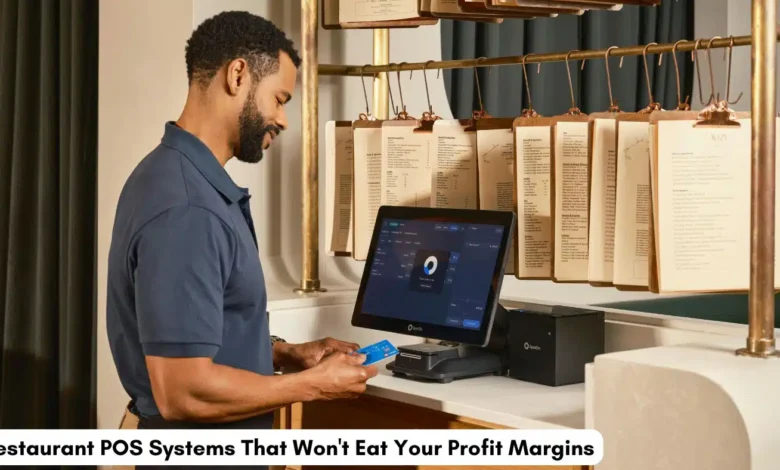
Running a successful restaurant, whether a bustling downtown eatery or a charming neighborhood café, demands an intricate blend of culinary artistry, meticulous financial management, and relentless operational efficiency. The hospitality sector remains one of the most challenging industries globally, characterized by notoriously thin profit margins, escalating operating costs, and a survival rate that often trails many other business ventures. In this demanding landscape, technology has transcended its role as a mere convenience, evolving into an indispensable strategic asset for managing the complex interplay of operations and finances.
The Evolving Landscape of Restaurant Technology
The global point-of-sale (POS) terminal market is experiencing exponential growth, projected to reach an astounding $181 billion by 2030. This robust expansion is fueled by transformative technological advancements, including the widespread adoption of cloud computing, the proliferation of mobile payment solutions, the integration of artificial intelligence (AI), and the emergence of voice ordering capabilities. Modern POS systems are no longer simply cash registers; they are sophisticated, real-time data processing hubs that streamline virtually every facet of restaurant management, from initial order taking and payment processing to intricate inventory control and complex staff scheduling. This technological shift represents a critical evolution, moving restaurants from reactive management to proactive, data-driven decision-making.
Historical Context: From Manual Processes to Digital Integration
Historically, restaurant operations relied heavily on manual processes. Orders were scribbled on notepads, kitchen communication involved shouting, and financial reconciliation was a laborious, error-prone task of tallying paper receipts. The advent of early electronic cash registers marked the first step toward automation, providing basic transaction recording. However, these standalone machines offered little in the way of integrated management. The true revolution began with the introduction of computerized POS systems in the late 20th century, which initially focused on inventory and sales tracking. Over the past two decades, and particularly in the last five to ten years, the integration of internet connectivity, cloud infrastructure, and mobile devices has transformed POS into a comprehensive ecosystem. This evolution was accelerated by the COVID-19 pandemic, which necessitated contactless interactions, expanded online ordering, and highlighted the critical need for operational resilience and adaptability.
The Stark Reality of Restaurant Profit Margins
The increasing pressure to adopt advanced technological tools stems directly from the challenging economic realities of the modern restaurant business. As Sean Kennedy, Executive Vice President for Public Affairs at the National Restaurant Association, eloquently articulated via Time magazine, "The restaurant business, in the best of times, only barely works if you have almost a full house for every meal service. If you can make that happen, you have a good shot at a 3% to 5% profit margin." This statement underscores the precarious financial tightrope many operators walk.
With soaring costs across the board—including rising food prices due to supply chain volatility, increasing labor expenses driven by minimum wage adjustments and a competitive job market, and escalating occupancy costs in desirable locations—restaurants are squeezed from every conceivable angle. In such an environment, operational friction is not merely an inconvenience; it translates directly into lost revenue. A sluggish or inefficient POS system during peak hours, such as the Friday night dinner rush, can directly impede table turnover rates and lengthen wait times, costing hundreds or even thousands of dollars in potential sales. The average table turn time, a critical metric for profitability, can be significantly impacted by slow order entry or payment processing, demonstrating the tangible financial implications of an outdated or underperforming system.
The Imperative of Modern POS Systems
Today’s leading restaurant POS platforms, exemplified by solutions from companies like SpotOn, Toast, Square, and Lightspeed, have evolved far beyond basic payment processing. They are sophisticated, interconnected ecosystems that seamlessly integrate with a multitude of essential business functions. This includes online ordering and third-party delivery services, comprehensive accounting software, real-time inventory management tools, and robust customer loyalty programs. This level of integration provides operators with an unprecedented, real-time, 360-degree view of every aspect of their business, enabling informed decisions and proactive problem-solving.
The industry’s trajectory is unequivocally toward further technological integration and intelligence. Leading payment technology companies are continuously innovating, rolling out AI-powered handheld devices specifically engineered for frontline restaurant staff. These mobile solutions are designed to make tableside service faster, more accurate, and significantly more efficient, enhancing both staff productivity and the overall customer experience. These handhelds often feature intuitive interfaces, integrated payment processing, and direct communication channels to the kitchen, minimizing errors and maximizing speed.

Key Considerations for Selecting a Restaurant POS System
Given the critical role of POS systems, selecting the right platform is a strategic decision that can significantly impact a restaurant’s long-term viability and profitability. Nearly 500 operators surveyed by Nation’s Restaurant News recently indicated that their point-of-sale system was the single piece of technology they were most actively looking to upgrade, highlighting the industry-wide recognition of its importance. When evaluating potential systems, several factors stand out as paramount:
- Reliability and Offline Capabilities: In a live service environment, system outages can be catastrophic. The ability of a POS to function seamlessly even when internet connectivity is lost, with automatic syncing once service is restored, is non-negotiable.
- Hardware Durability and Ergonomics: Restaurant environments are demanding. Hardware must be robust, spill-proof, and designed for high-volume use. Mobile handhelds should be lightweight, durable, and offer long battery life for extended shifts.
- Comprehensive Integration Ecosystem: A truly effective POS system integrates with other critical restaurant software, including inventory management, payroll, accounting, online ordering, reservations, and customer relationship management (CRM) tools. This prevents data silos and reduces manual data entry.
- User-Friendliness and Training: The interface must be intuitive for staff, minimizing training time and reducing order entry errors. Ease of use directly impacts operational efficiency and staff satisfaction.
- Reporting and Analytics: Powerful, customizable reporting dashboards that provide real-time insights into sales trends, labor costs, menu performance, and customer behavior are essential for strategic decision-making. AI-powered analytics are increasingly valuable for uncovering deeper insights.
- Scalability: The system should be able to grow with the business, accommodating additional locations, increased transaction volumes, or new service models (e.g., catering, retail).
- Customer Support: Responsive and knowledgeable 24/7 customer support is crucial, as issues can arise at any time during operational hours.
- Pricing Structure and Processing Fees: Transparency in pricing for both software and payment processing is vital. Operators must understand the total cost of ownership, including hardware, software subscriptions, and transaction fees.
Leading Restaurant POS Platforms: A Detailed Comparison
Understanding these critical factors, let’s delve into four platforms that consistently stand out in the competitive restaurant POS market.
1. SpotOn: Robustness and Integration for Independent Operators
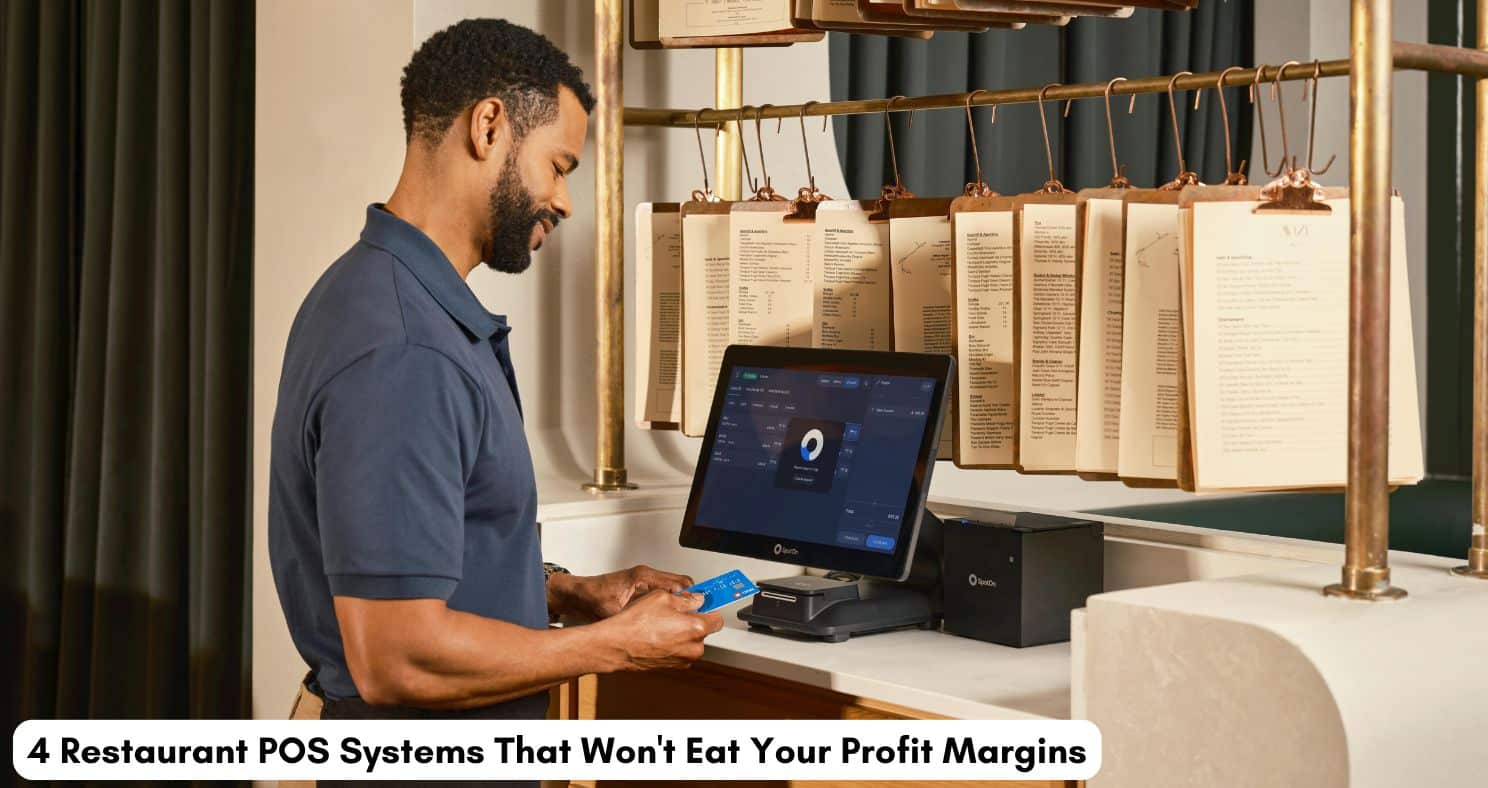
SpotOn is a cloud-based platform meticulously engineered to serve the diverse needs of both independent local cafes and high-volume, multi-concept restaurants. Its core strength lies in pairing exceptionally durable, restaurant-grade hardware with sophisticated software designed for demanding transaction volumes. A prime example is the Station 15, a large, spill-proof terminal built to withstand the rigors of a busy kitchen or service counter, complemented by lightweight and efficient SpotOn Handhelds for tableside ordering and payment.

A standout feature that particularly benefits independent eateries is its enterprise-grade, blackout-proof offline mode. This crucial functionality ensures that when internet service falters or drops, stations remain operational, and orders continue to fire seamlessly to the kitchen, preventing costly disruptions and maintaining service continuity. Payments processed offline automatically sync once connectivity is restored, ensuring no revenue is lost.
Beyond its robust hardware and reliability, SpotOn excels in back-of-house integration. The platform syncs effortlessly with leading inventory management tools such as MarginEdge and Craftable, significantly reducing manual data entry and saving managers countless hours each week. This integration provides granular control over food costs and supply chain management. Furthermore, SpotOn incorporates an innovative AI menu assistant, empowering operators to build and modify digital menus rapidly using simple text prompts, adapting quickly to seasonal changes or daily specials. Its reporting dashboard leverages point-of-sale intelligence to identify slow-moving menu items and suggest profitable upsell combinations. Employee management, including detailed tip distribution and payroll integrations (like Gusto), is built directly into the system, eliminating the need for separate, costly third-party solutions for these standard features. SpotOn’s flexible processing style, offering custom and interchange-plus options, can be particularly cost-effective for high-volume establishments.
SpotOn Highlights:
- Hardware: Station 15 (large, spill-proof display) & SpotOn Handhelds for tableside service.
- Standout Feature: Blackout-proof offline mode with automatic payment sync, ensuring uninterrupted service.
- Key Integrations: Deep integration with inventory management (MarginEdge, Craftable), payroll (Gusto), and delivery services (DoorDash, Uber Eats). AI menu assistant for quick menu modifications.
- Pricing: Transparent tiered pricing, typically $0 to $55 per station per month, with custom options for complex setups.
- Processing Style: Offers custom/interchange-plus options, often more economical for higher transaction volumes compared to flat rates.
2. Toast: The All-in-One Ecosystem for Restaurants
Toast stands as a dominant force in the restaurant POS market, having been conceived and developed exclusively for the unique demands of the hospitality industry. Its philosophy revolves around a comprehensive, unified ecosystem that integrates payments, online ordering, payroll, inventory, and workforce management into a single, cohesive platform. This proprietary approach, powered by restaurant-grade hardware, has made it one of the most widely adopted solutions across the industry, catering to everything from small neighborhood cafes to expansive multi-location restaurant groups.
Toast’s greatest strength is the sheer breadth and depth of its integrated ecosystem. Operators can manage a vast array of functions—including staff scheduling, payroll processing, customer loyalty programs, gift card sales, and targeted marketing campaigns—all within the Toast environment, minimizing reliance on disparate third-party tools. This singular platform approach simplifies management and ensures data consistency across all operational areas.

Restaurant staff directly benefit from Toast’s purpose-built hardware, which includes spill-resistant Toast Go handhelds for mobile order taking and payment processing, and robust kitchen display systems (KDS) designed to optimize workflows in fast-paced service environments. The KDS ensures clear communication between front-of-house and back-of-house, reducing errors and improving ticket times. Like SpotOn, Toast provides offline functionality to maintain order flow during connectivity issues, a vital feature for operational continuity. Its detailed reporting capabilities offer managers real-time, actionable insights into sales performance, labor costs, and menu item profitability. Toast is particularly well-suited for full-service restaurants seeking a tightly integrated, all-in-one platform and are prepared to invest in a dedicated ecosystem.
Toast Highlights:
- Hardware: Proprietary terminals, kitchen display systems, and Toast Go 3 handhelds with LTE capabilities for maximum mobility.
- Standout Feature: Unified fintech, POS data, and comprehensive workforce management (payroll, HR, scheduling) within a single platform.
- Key Integrations: Deeply embedded Toast Payroll, HR workflows, and highly targeted loyalty programs.
- Pricing: Custom pricing per location and device, based on the selected software tier and feature set.
- Processing Style: Requires exclusive in-house payment processing, meaning operators cannot shop around for external processors.
3. Square for Restaurants: Accessibility and Simplicity for Growing Businesses
Square for Restaurants has carved out a significant niche by democratizing sophisticated restaurant technology, making it accessible to businesses of all scales. Its intuitive user interface, straightforward pricing model, and attractive free entry-level plan make it an ideal choice for independent restaurants, bustling cafes, mobile food trucks, artisan bakeries, and various quick-service concepts seeking to modernize their operations without a substantial upfront investment.
The platform excels at unifying omnichannel order management, seamlessly consolidating dine-in, online, takeout, and delivery orders into a single, coherent dashboard. This simplifies order flow and prevents missed sales. Square offers flexible hardware options, ranging from cost-effective iPad-based setups to its proprietary Square Register and compact Square Terminal devices, providing adaptability for different operational footprints.
Despite its emphasis on simplicity, Square for Restaurants includes a comprehensive suite of features such as efficient table management, detailed customer profiles, robust sales analytics, customizable loyalty programs, and access to a vast marketplace of third-party integrations. This modularity allows operators to begin with essential functionalities and expand the system’s capabilities as their business grows, making it one of the most scalable and adaptable options for smaller and expanding operators. Its transparent, flat-rate processing fees offer predictability, which is particularly appealing to businesses with lower transaction volumes, although it can become less cost-effective for very high-volume operations compared to interchange-plus models.

Square Highlights:
- Hardware: Versatile options including Square Register, Square Terminal, and iPad docks.
- Standout Feature: Unified omnichannel order management for dine-in, delivery, and takeout, all from one dashboard.
- Key Integrations: Native Square Online integration for digital ordering, extensive third-party app marketplace.
- Pricing: Offers a compelling free plan; transparent, flat-rate processing with no hidden fees.
- Processing Style: Flat-rate processing (typically 2.6% + $0.10 per transaction), which is excellent for lower volumes but can be pricier for high-volume businesses.
4. Lightspeed Restaurant: Advanced Analytics and Multi-Location Management
Lightspeed Restaurant is tailored for operators who demand deeper operational insights and granular control over complex, often multi-location, restaurant businesses. It is a favored choice among upscale restaurants, large hotel dining operations, exclusive golf clubs, and rapidly expanding multi-unit brands. The platform distinguishes itself by combining advanced inventory management with centralized menu administration and powerful business analytics, providing a holistic view of enterprise operations.
One of Lightspeed’s most significant advantages is its robust capability for managing multiple locations from a single, centralized interface. This feature allows for coordinated control over inventory tracking, supplier management, menu updates, and performance reporting across an entire portfolio of establishments. Such centralization dramatically reduces administrative overhead and ensures consistency in branding, pricing, and service standards across all locations.
The company’s recent introduction of Lightspeed AI further enhances its analytical prowess. This conversational AI allows managers to pose business questions in natural language, enabling rapid identification of trends affecting profitability, such as slow-moving items, peak sales periods, or labor cost anomalies. This empowers operators to make swift, data-driven adjustments to optimize performance.
While Lightspeed offers more advanced functionality than many competitors, it also requires a willingness from operators to invest the time to fully leverage its extensive capabilities. For growing restaurant groups seeking powerful, centralized reporting, sophisticated inventory control, and enterprise-grade operational tools, Lightspeed represents one of the most comprehensive and scalable platforms available on the market. Its competitive match processing options ensure that high-volume businesses can secure favorable rates.

Lightspeed Highlights:
- Hardware: Flexible iPad-based setups with the option for proprietary terminals.
- Standout Feature: Conversational Lightspeed AI for natural-language business insights and advanced multi-location management.
- Key Integrations: Embedded payments, comprehensive inventory management, staff management, and supplier management.
- Pricing: Tiered software plans priced per location, with custom hardware quotes.
- Processing Style: Offers custom/interchange-plus options, often providing competitive rates for high-volume transactions.
The Strategic Choice: Aligning Technology with Business Needs
The ongoing digital transformation of the restaurant industry means that a modern, robust POS system is no longer a luxury but a fundamental necessity for survival and growth. Each of the platforms discussed—SpotOn, Toast, Square, and Lightspeed—excels in different areas, catering to distinct operational models and strategic priorities.
- SpotOn is ideal for independent and growing restaurants prioritizing robust offline capabilities, deep back-of-house integrations, and transparent, flexible pricing.
- Toast is the quintessential all-in-one solution for full-service restaurants seeking a deeply integrated ecosystem for payroll, HR, and comprehensive restaurant management.
- Square offers unparalleled accessibility and simplicity, making it perfect for smaller, agile operations, food trucks, and quick-service concepts that value predictable pricing and ease of use.
- Lightspeed caters to complex, multi-location brands and upscale establishments that require advanced analytics, centralized management, and sophisticated operational control.
Ultimately, the optimal choice hinges on a restaurant’s specific concept, budgetary constraints, current operational priorities, and future growth aspirations. A thorough evaluation of these factors will enable restaurateurs to select a POS system that not only streamlines daily operations but also serves as a strategic partner in navigating the complexities of the modern culinary landscape, driving efficiency, enhancing profitability, and ensuring long-term success.