Global Shocks and Food Security: Redefining Resilience in a Fragile UK Agricultural Landscape


The escalating geopolitical instability in the Middle East has sent profound shockwaves through the global economy, precipitating an urgent re-evaluation of food security frameworks worldwide. As conflict continues to disrupt critical trade routes and energy supplies, the United Kingdom finds itself at a crossroads, facing a system that experts describe as increasingly "not fit for purpose." The convergence of military conflict, volatile energy markets, and the accelerating climate emergency has exposed deep-seated vulnerabilities in the industrial agricultural model. According to Megan Perry, Head of Policy at the Sustainable Food Trust (SFT), and Senior Researcher Robert Barbour, the current crisis serves as a stark warning that the UK’s reliance on globalized, input-heavy supply chains is a liability that requires immediate and radical transformation.
The Strait of Hormuz: A Chokepoint for Global Nutrition
The primary catalyst for the current agricultural anxiety is the disruption of the Strait of Hormuz, a narrow waterway that serves as a vital artery for global commerce. While the strait is frequently discussed in the context of the 20% of global oil and gas that passes through its waters, its role in food production is equally critical and far less publicized. Approximately one-third of the world’s seaborne trade in fertilizers or their precursor chemicals moves through this passage.
The closure or restricted access to this route has immediate consequences for the Haber-Bosch process, the industrial method used to create synthetic nitrogen fertilizer. This process is heavily dependent on natural gas as both an energy source and a chemical feedstock. As gas supplies are diverted or prices spike due to conflict, the global production of fertilizer has begun to contract. This contraction is not theoretical; it is already manifesting in the shuttering of fertilizer plants across South Asia, specifically in India, Bangladesh, and Pakistan.
A Domino Effect Across Global Markets
The impact of the Middle East conflict extends far beyond the immediate region, creating a domino effect that threatens the stability of food-exporting nations. India, which accounts for roughly 25% of the world’s rice exports, is facing severe production hurdles as domestic fertilizer manufacturing stalls. A prolonged conflict in the Middle East could lead to a significant reduction in global rice availability, driving up prices in markets that rely on Indian grain.
In South America, Brazil—often referred to as the world’s "breadbasket"—is particularly vulnerable. The nation imports over 60% of its fertilizers, with a vast majority of those shipments originating from or passing through the Middle East. Any sustained disruption to these flows threatens Brazil’s capacity to export agricultural commodities such as soy, corn, and sugar. Similarly, Australia has warned that its domestic fertilizer stocks could be exhausted by mid-April, while the United States reports that its fertilizer inventories are already 25% lower than seasonal norms. In Southeast Asia, the Philippines has moved to declare a national emergency as the agricultural and transport sectors buckle under the weight of rising costs.
The Socioeconomic Impact of Energy Volatility
Food security is defined not only by the availability of calories but by the economic ability of populations to access them. The current crisis has demonstrated how energy disruption leads to industrial paralysis, which in turn erodes purchasing power. In Gujarat, India, a critical shortage of natural gas has forced the closure of the ceramics industry, leaving an estimated 400,000 workers without income. In Mumbai, the hospitality sector is struggling, with approximately 20% of hotels and restaurants partially closed since early March due to rising costs and supply shortages.
In the Philippines, the impact is felt in the transport sector, where "Jeepney" drivers—the backbone of the nation’s public transit—are facing pay cuts of 50-60% due to soaring fuel prices. When energy costs rise, the cost of living increases while employment opportunities decrease, creating a "pincer movement" that pushes millions into food insecurity even when food remains physically present on shelves.
The Environmental Toll of Conflict
The environmental cost of the conflict adds another layer of complexity to the global food crisis. The United Nations recently issued a statement warning that the Earth’s climate is "more out of balance than at any time in observed history." Military actions in the Middle East are exacerbating this imbalance at an alarming rate. Reports indicate that 5 million tonnes of greenhouse gas (GHG) emissions were released within the first 14 days of the Iran conflict alone.

Patrick Bigger, Research Director at the Climate and Community Institute, has argued that the current crisis highlights the incompatibility of "fossil-fuelled geopolitics" with a liveable planet. Every missile strike and refinery fire represents a "down payment on a hotter, more unstable planet." The environmental degradation caused by war—including the destruction of soil health and the release of massive amounts of carbon—further undermines the long-term capacity of the earth to produce food, creating a feedback loop of instability.
The UK’s Domestic Vulnerability
For the United Kingdom, the crisis has highlighted the fragility of a highly centralized and import-dependent food system. Currently, the UK imports 60% of its fertilizer and nearly 50% of its total food supply. Many of these imports originate from countries that are themselves struggling with fertilizer shortages and input-heavy production models.
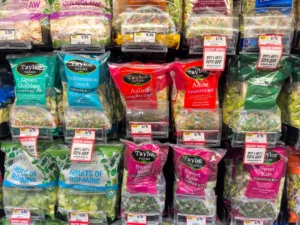
Furthermore, the UK’s retail landscape is one of the most consolidated in the world, with nine major retailers controlling more than 94% of the market. This centralization, while efficient in times of peace and stability, becomes a significant risk factor during global shocks. A disruption at a single major distribution hub or a failure in a specific international supply line can lead to rapid shelf-emptying across the country.
Criticism has also been leveled at the government’s "Land Use Framework," which emphasizes increasing efficiency and production through industrial sectors like poultry. George Monbiot, a prominent environmental commentator, has described the focus on expanding the poultry sector as "moronic," given the industry’s total dependence on imported livestock feed, such as soy from Brazil, which is currently under threat.
Redefining Resilience: From Efficiency to Stability
The term "resilience" has become a buzzword in government and farming circles, yet experts argue that current policy focuses on "tweaking" rather than "transforming." True resilience, according to the SFT, requires a radical shift away from the input-heavy, agrochemical-dependent model that has dominated since the mid-20th century.
Professor Tim Benton, a leading expert on food systems, suggests that it often takes a crisis of this magnitude to catalyze real change. The proposed alternative is a "whole farm approach" that integrates nature with food production through agroecological methods. This includes:
- Reducing Chemical Dependency: By moving away from synthetic nitrogen fertilizers—which are tied to volatile gas markets—and instead using nitrogen-fixing crops (such as clover and beans) and organic manures, farmers can insulate themselves from global price shocks.
- Decentralizing Supply Chains: Building localized infrastructure, such as small-scale processing plants and regional distribution hubs, would create a more flexible system. A decentralized network is harder to disrupt and can pivot more quickly during a national or international crisis.
- Dietary Shifts: Aligning national diets with what the UK can sustainably produce would reduce the reliance on high-input livestock and out-of-season produce. This includes a renewed focus on domestic horticulture and market gardens to address the massive reliance on imported fruits and vegetables.
- Community Empowerment: Supporting community-supported agriculture (CSA) and embedding food-growing skills in the national curriculum can build a culture of self-sufficiency and local resilience.
Conclusion: The Path Forward
The current geopolitical crisis in the Middle East is not merely a temporary disruption; it is a signal that the global food system is built on foundations of sand. The reliance on fossil fuels for both the energy to transport food and the chemicals to grow it has created a system that is inherently vulnerable to conflict and climate change.
The SFT argues that the UK has the knowledge and resources to transform its food system into one that is both resilient and restorative. This transformation mirrors the transition required in the energy sector: a wholesale shift toward alternative, sustainable forms of production. However, while the energy transition is widely recognized as a necessity, the radical shift needed in food production remains marginalized in mainstream policy discussions.
As the global carbon budget is drained by conflict and food prices continue to climb, the choice for policymakers is clear. They can continue with "business as usual," managing a series of increasingly severe crises, or they can implement the enabling policies and infrastructure needed to create a truly secure and sustainable food future. The consequences of failure are dire, but the potential for a regenerative, resilient system remains within reach if action is taken now.