The Ultimate Guide to Crafting Authentic Fresh Chinese Chili Oil at Home

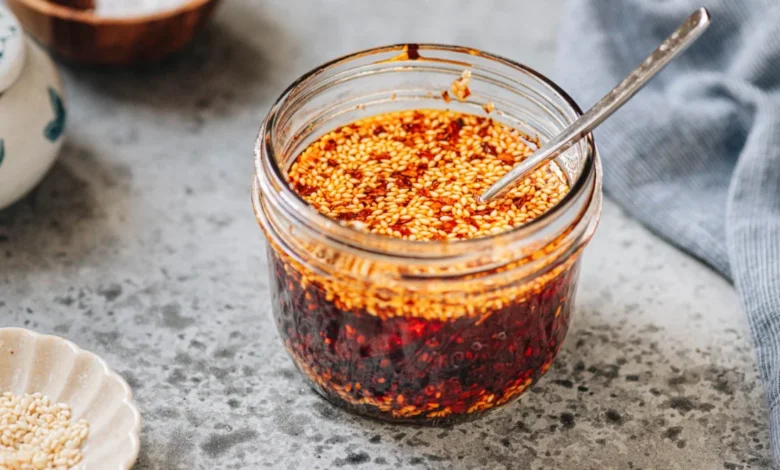
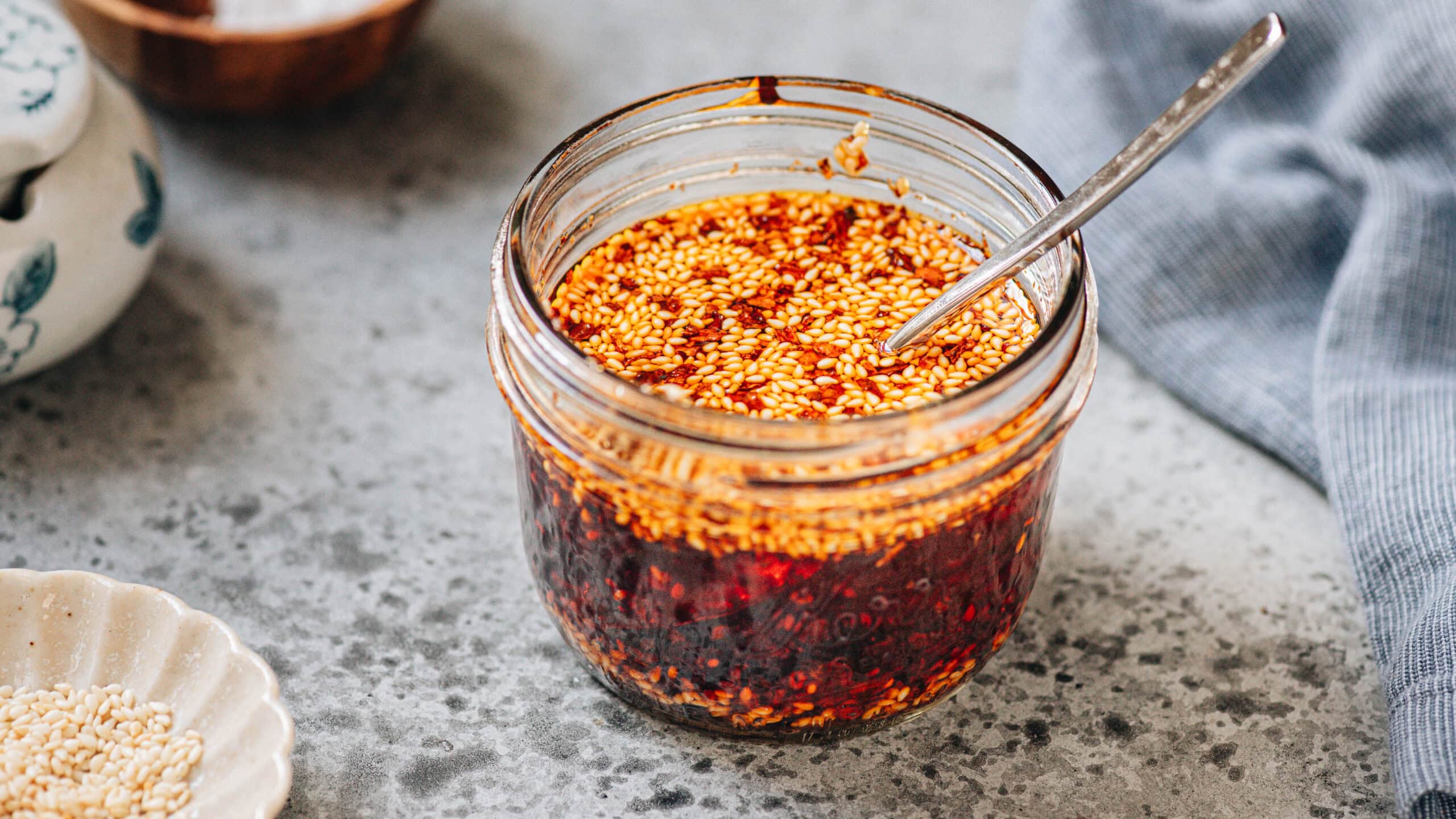
The culinary landscape of Chinese gastronomy is anchored by a triad of table condiments: soy sauce, black vinegar, and chili oil. While commercial jarred chili crisps have surged in popularity across global supermarkets—offering a dense, crunchy medley of fried alliums and peppers—the traditional table chili oil found in noodle shops and dumpling counters across China remains distinct. Thinner, more aromatic, and designed to finish rather than overpower a dish, homemade chili oil delivers a freshness and complexity that bottled alternatives on store shelves simply cannot replicate.
Culinary traditions dictate that fresh preparation avoids artificial additives, preservatives, and flavor enhancers like monosodium glutamate (MSG). By utilizing a rapid hot-oil infusion method, home cooks can transform raw flakes into a smoky, nutty condiment in approximately ten minutes. This comprehensive guide examines the history, ingredients, step-by-step methodology, and cultural significance of crafting authentic Chinese chili oil at home.
Historical Background and Cultural Significance
Chili peppers are not native to China; they were introduced via maritime trade routes from the Americas by way of Portuguese traders during the late Ming dynasty, landing first in coastal provinces like Zhejiang and Fujian before migrating inland to Sichuan, Guizhou, and Hunan. Over the centuries, mountainous regions with humid climates embraced chilis for their perceived medicinal properties in expelling dampness and internal chill.
The evolution of chili oil—known locally as hóng yóu (red oil)—transformed regional street food. In Sichuan cuisine, particularly, it serves as the literal foundation for iconic dishes such as Dan Dan noodles (Dàndàn miàn), wontons in red oil (Hóng yóu chāo shǒu), and Mapo Tofu. Historically, families developed proprietary spice blends based on geography, ingredient availability, and personal tolerance for heat. While northern styles often feature a higher concentration of toasted flakes with a heavy sediment, southern and southwestern variants emphasize complex numbing profiles driven by high-grade Sichuan peppercorns (Huājiāo).
Essential Ingredients and Quality Standards
Achieving restaurant-quality results at home depends heavily on ingredient selection. Compromising on the core components alters the color, aromatic profile, and structural integrity of the final product.
Chili Flakes
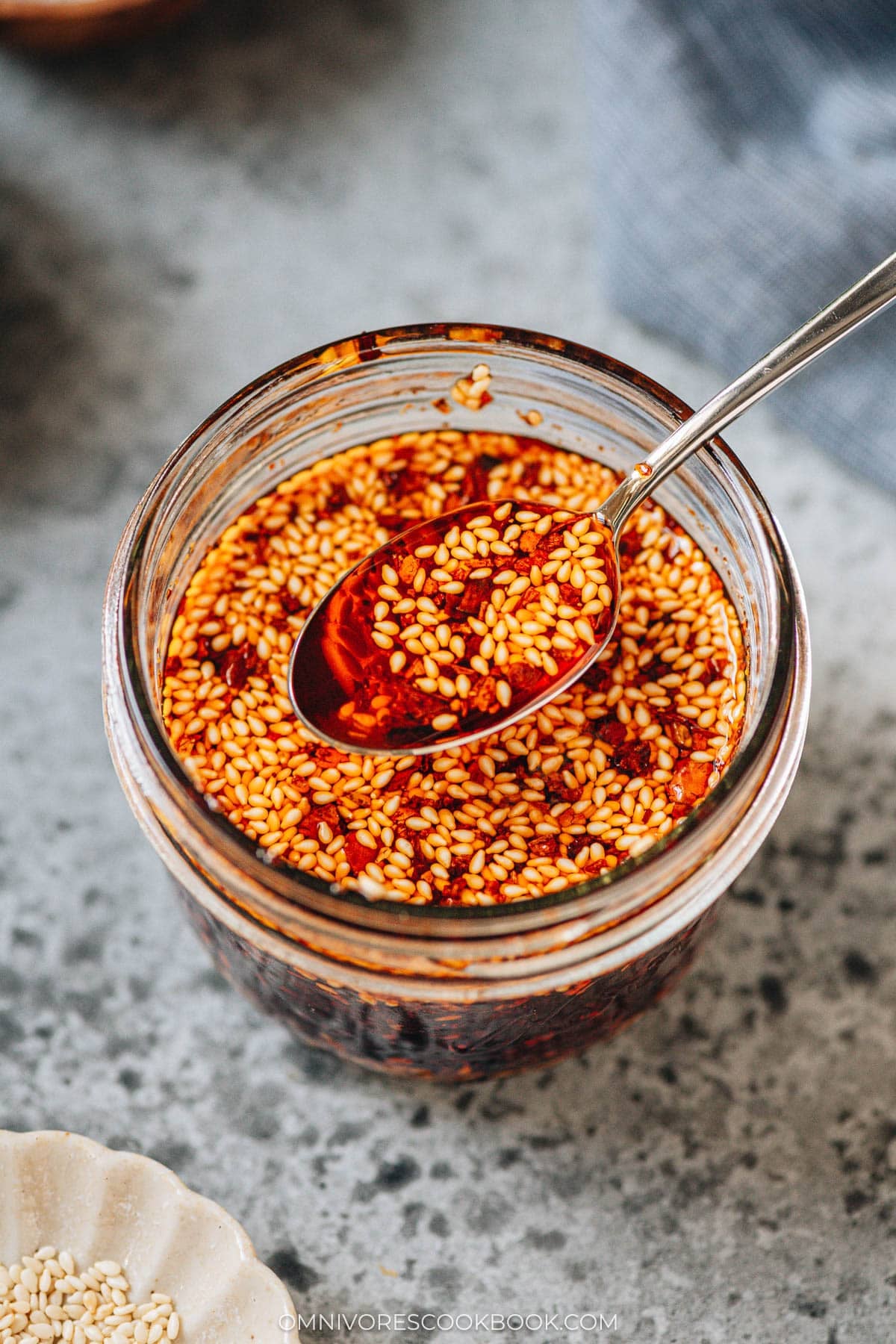
The defining element of any chili oil is the pepper. Authentic Sichuan chili flakes (Xiāng là jiāo miàn), imported from specialized purveyors such as The Mala Market, are widely considered the gold standard. These flakes are derived from premium Sichuan peppers characterized by a vibrant, deep red hue and a relatively low seed-to-flesh ratio. This composition yields a fragrant, moderately spiced oil rather than a punishing, abrasive heat.
For those unable to source Sichuan-specific flakes, Korean chili flakes (Gochugaru) serve as a reliable substitute. While Gochugaru yields a softer red color and a milder flavor profile, it maintains structural integrity during high-heat infusion. Standard generic red pepper flakes or fine chili powders are generally discouraged; powders tend to burn quickly and impart a bitter taste and a dull, yellowish-brown color.
Aromatic Spices
Beyond direct heat, depth of flavor is achieved through a carefully curated selection of whole and ground spices:
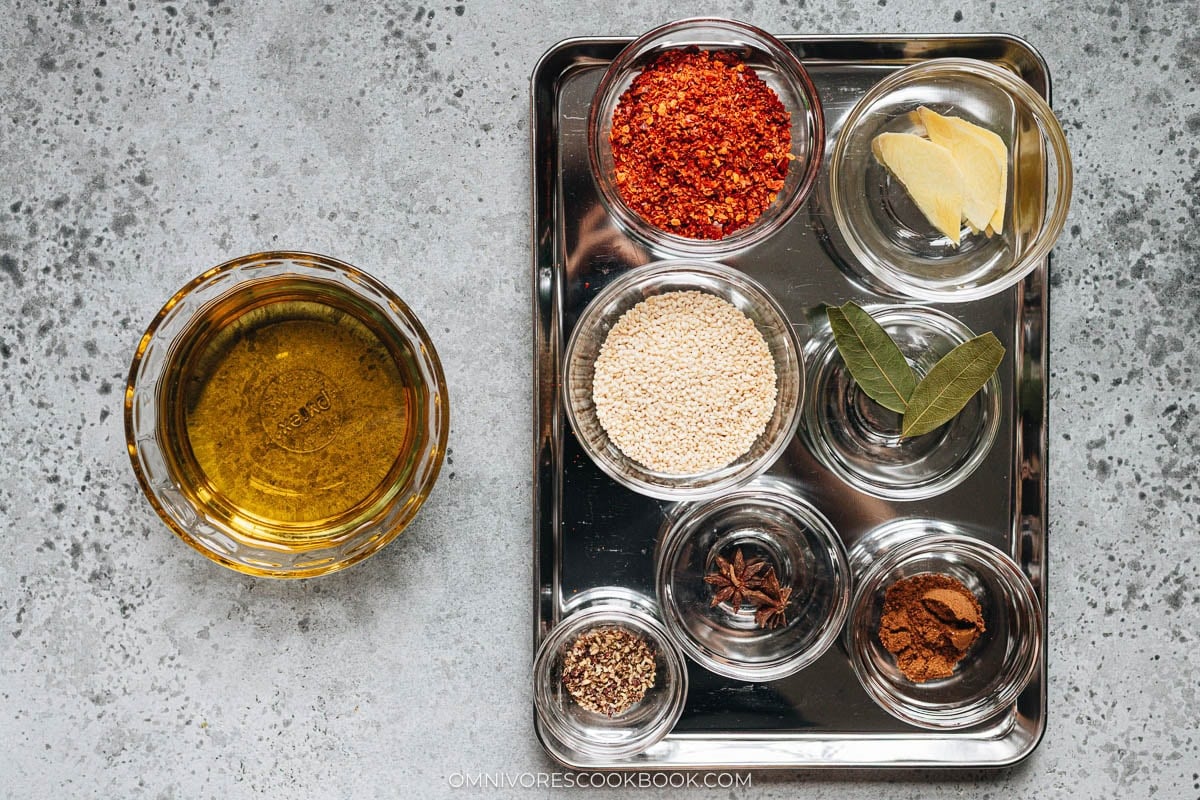
- Sichuan Peppercorns: Ground Sichuan peppercorns introduce a signature citrusy, tongue-tingling sensation (Má) that balances the heat (Là).
- Five-Spice Powder: A minimal quantity adds savory depth through notes of star anise, cloves, Chinese cinnamon, Sichuan pepper, and fennel seeds.
- Whole Star Anise and Bay Leaves: These whole aromatics perfume the oil during the infusion process and are subsequently strained out to prevent overpowering bitterness.
Toasted Sesame Seeds
Sesame seeds provide a nutty counterpoint to the heat of the chilis. When the scalding oil meets the seeds in the mixing bowl, they undergo a secondary toast, releasing rich lipids that enrich the oil’s mouthfeel.
Neutral Base Oil
A neutral cooking oil with a high smoke point—such as grapeseed, canola, or vegetable oil—is mandatory. Oils with strong intrinsic flavors, such as extra virgin olive oil or unrefined sesame oil, will compete with the delicate spice profile rather than carry it.
Ginger
Sliced fresh ginger plays a dual functional role: it imparts a subtle, fresh warmth to the oil and acts as a visual temperature gauge during the heating process.
Step-by-Step Preparation Methodology
The preparation process requires precision regarding oil temperature to prevent scorching.
Step 1: Combining the Dry Ingredients
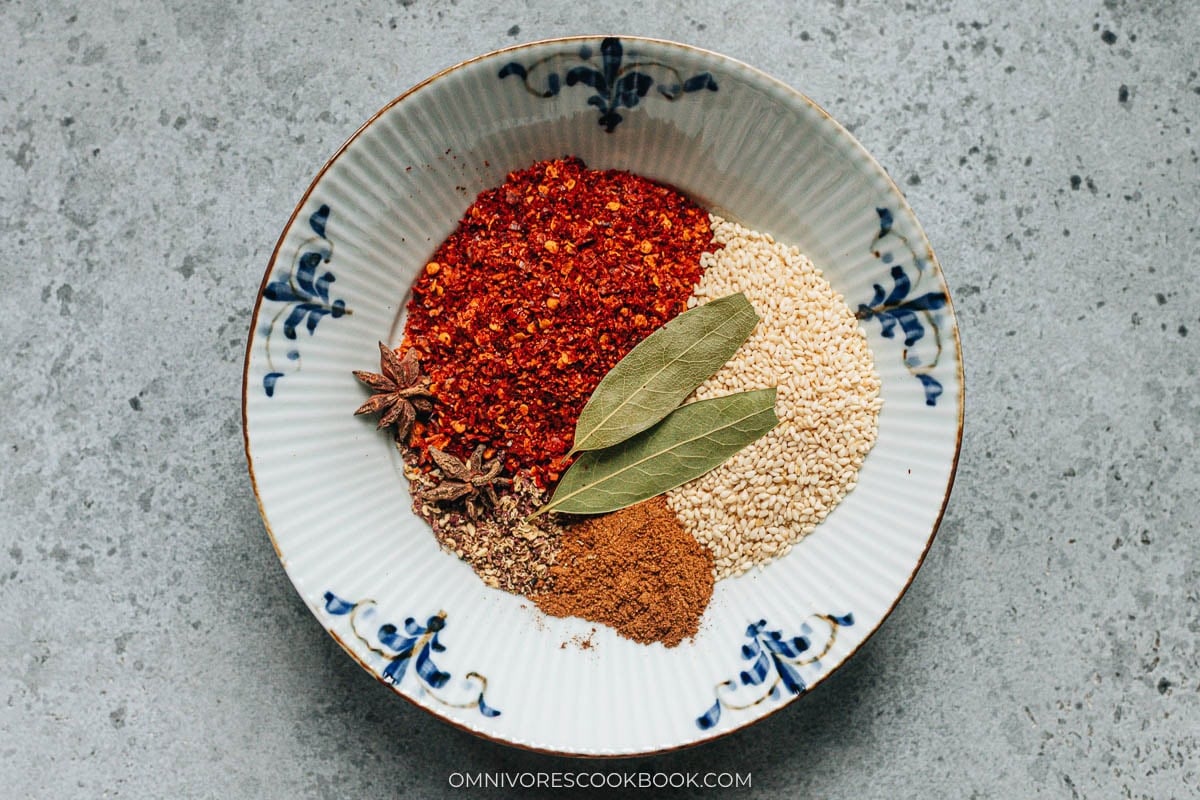
In a heatproof ceramic or heavy-duty glass bowl holding at least two cups, combine the Sichuan chili flakes, ground five-spice powder, toasted sesame seeds, ground Sichuan peppercorn, whole star anise, and bay leaves. Place the bowl on a stable, heat-resistant surface or coaster prior to heating the oil. Ceramic is frequently recommended over standard glass to safely absorb sudden thermal shock.
Step 2: Heating the Oil
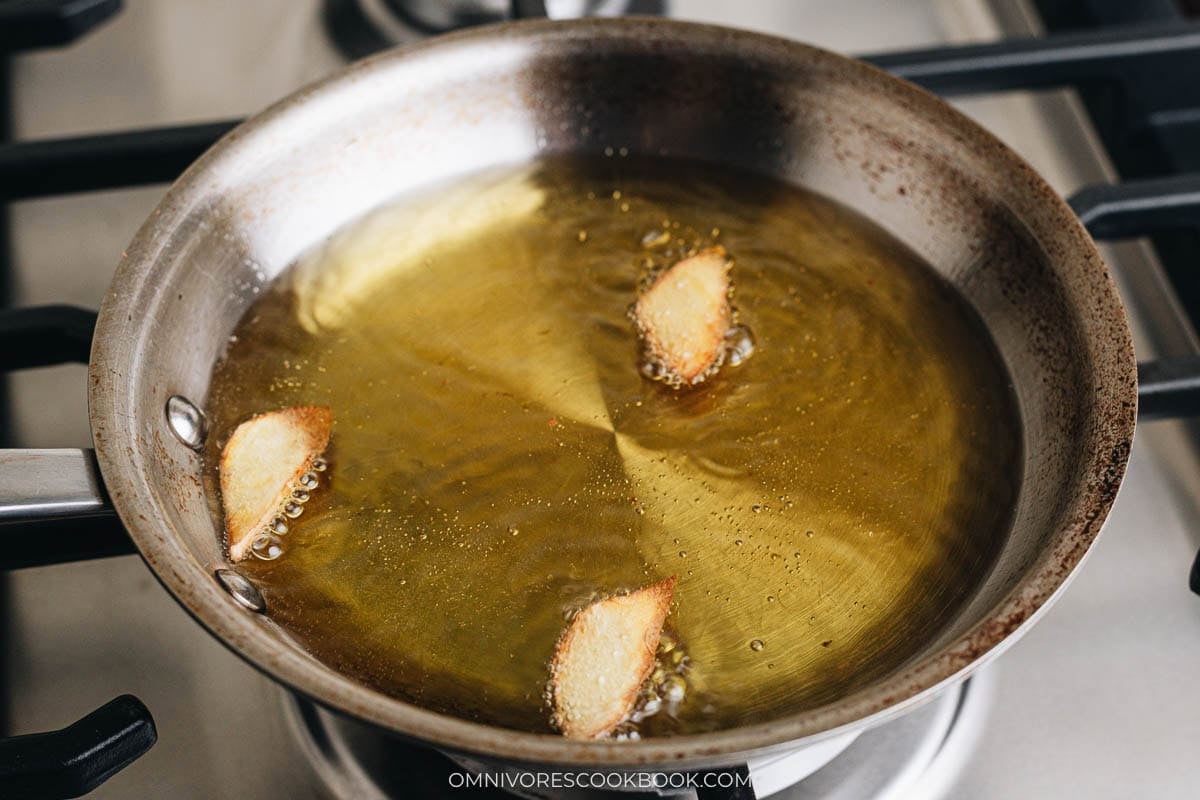
Pour the neutral oil into a clean wok or saucepan, setting the heat to medium-high. Add the thinly sliced ginger directly to the cold oil. Monitor the pan closely as the temperature rises. When the ginger turns golden brown and small, rapid bubbles form and rise consistently around it, the oil has reached approximately 370°F (190°C). At this precise visual cue, remove the pan from the heat source immediately. Care must be taken to ensure the oil does not exceed 400°F (200°C), which will scorch the chili flakes and impart an unfixable bitterness.
Step 3: The Hot Oil Pour
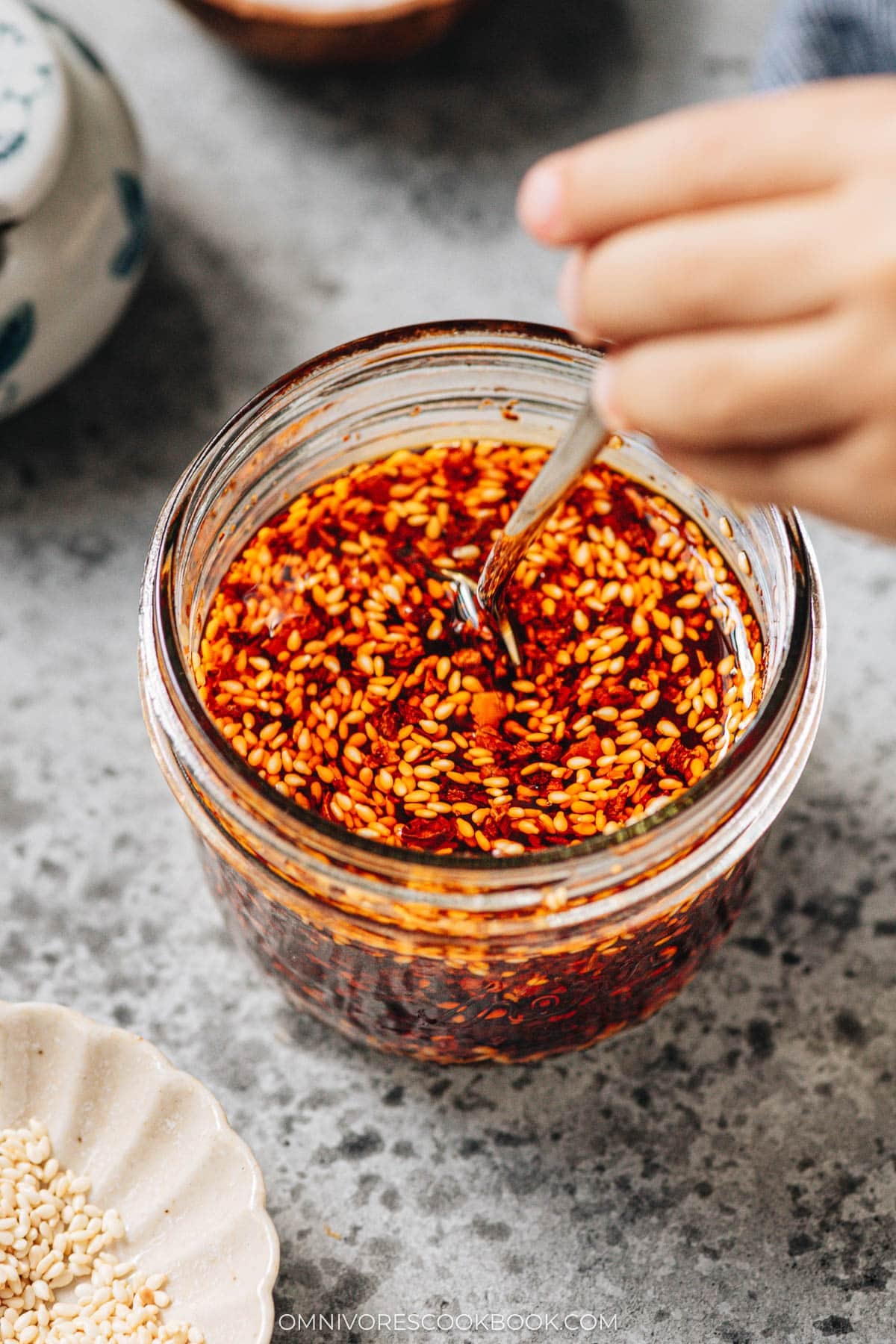
Carefully and steadily pour—or ladle—the hot oil over the spice mixture in the bowl. The mixture will violently bubble and foam as the moisture in the fresh spices flashes off. Stir continuously with a metal spoon during this active phase to ensure even heat distribution and thorough cooking of all spice particles.
Step 4: Refining the Aromatics
Allow the mixture to cool slightly. Once the violent boiling subsides and the oil reaches a manageable temperature, use a utensil to fish out and discard the whole star anise and bay leaves. Leaving them in indefinitely can cause the flavor profile to become overly medicinal or woody.
Step 5: Maturation
While the oil is technically ready for immediate consumption, sealing the container and allowing it to rest at room temperature for 24 hours significantly enhances the flavor. This resting period permits the fat-soluble flavor compounds within the spices to fully infuse into the oil base.
Technical Tips for Culinary Success
- Vessel Safety: Always utilize heatproof containers. Standard kitchen glass lacking thermal tempering can fracture upon contact with 370°F oil.
- The Ginger Indicator: In the absence of a digital infrared or probe thermometer, the behavior of the ginger slice remains a reliable traditional benchmark. Golden-brown edges accompanied by steady bubbling indicate the optimal pour window.
- Pour Control: Using a saucepan with a dedicated pouring spout or a stable ladle minimizes the risk of dangerous oil splashes.
- Sediment Management: Regional preferences dictate whether sediment is strained. Northern culinary traditions favor keeping the toasted flakes suspended in the oil to maximize texture and smoky flavor, whereas refined southern preparations sometimes strain the liquid for a clear, crimson presentation.
Culinary Applications and Storage
Homemade chili oil functions primarily as a finishing condiment rather than a cooking medium. It is regularly drizzled over noodle soups such as Lanzhou beef noodles, tossed into cold cucumber salads, or used as the principal sauce component for Sichuan spicy wontons. Beyond Asian cuisine, it provides depth to vegetarian plates, roasted root vegetables, savory breakfast grains like congee, or morning oatmeal.
When stored in an airtight glass container at room temperature, homemade chili oil maintains optimal quality for approximately two weeks. For extended storage, refrigeration preserves the condiment for up to six months, though chilling may cause the oil to cloud slightly—a normal physical reaction that reverses quickly upon returning to room temperature. Freezing is not recommended.