The culinary intersection of red wine and beef represents one of the most enduring and analytically studied pairings in modern gastronomy. While the general convention—matching leaner cuts with lighter-bodied wines and high-fat cuts with high-tannin varietals—has long served as a baseline, contemporary sommeliers and culinary researchers approach the subject through the lens of chemical interaction. Specifically, proteins and fats in beef interact directly with the tannins, acidity, and alcohol content in wine, modifying the perceived texture and flavor profile on the palate.
Historically, the practice of pairing red wine with red meat evolved from regional European traditions where local wines naturally complemented local livestock diets and agricultural methods. Over the past century, as global trade standardized access to specific cattle breeds and international wine regions, culinary science began categorizing these pairings systematically. Today, the pairing process accounts for cattle genetics, aging methods, butchery practices, thermal preparation techniques, and the molecular structure of individual grape varietals.

Understanding the underlying mechanics of fat and tannin creates a foundation for evaluating specific cuts of beef. Tannins—naturally occurring polyphenols found in grape skins, seeds, and stems—bind to proteins and lipids in the human mouth. When consuming a marbled cut of beef, the rendered animal fat coats the palate, creating a slick texture. A high-tannin red wine scours this lipid coating, resetting the palate with each sip. Conversely, pairing a high-tannin wine with a very lean cut can strip the mouth of moisture, resulting in an unpleasantly astringent and metallic finish. Consequently, tailoring the wine selection to the exact anatomical characteristics of the steak elevates the dining experience from a generalized convention to a precise chemical balance.
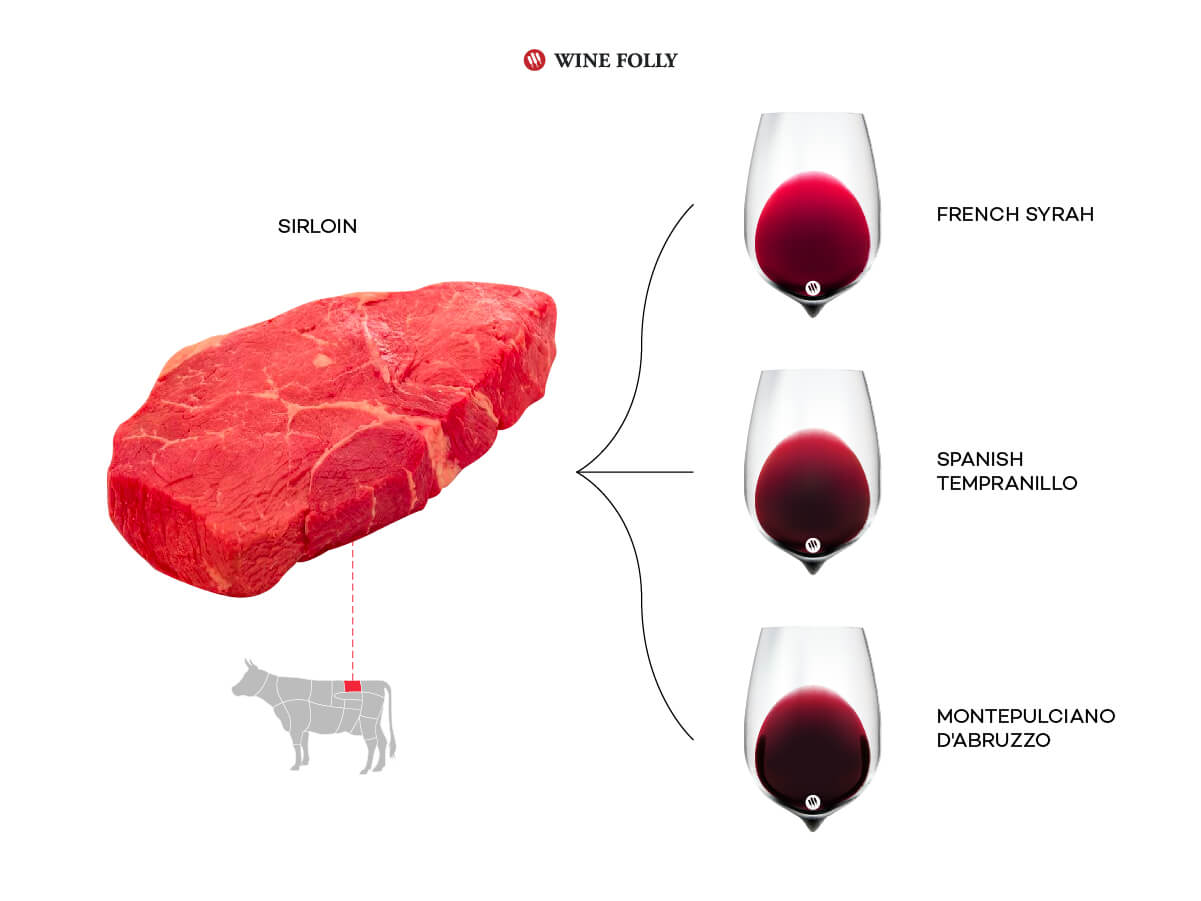
Sirloin cuts, originating from the back of the animal, present a balance of moderate leanness and light fat marbling, often featuring a distinct strip of external fat. Because this muscle works moderately
throughout the steer’s life, the meat is flavorful yet versatile. Culinary professionals note that sirloin adapts well to various cooking methods, including pan-searing, oven-roasting, and grilling. When preparing sirloin, chefs must account for the dual nature of the cut: the lean interior requires careful temperature control to avoid toughness, while the external fat cap benefits from direct flame rendering.
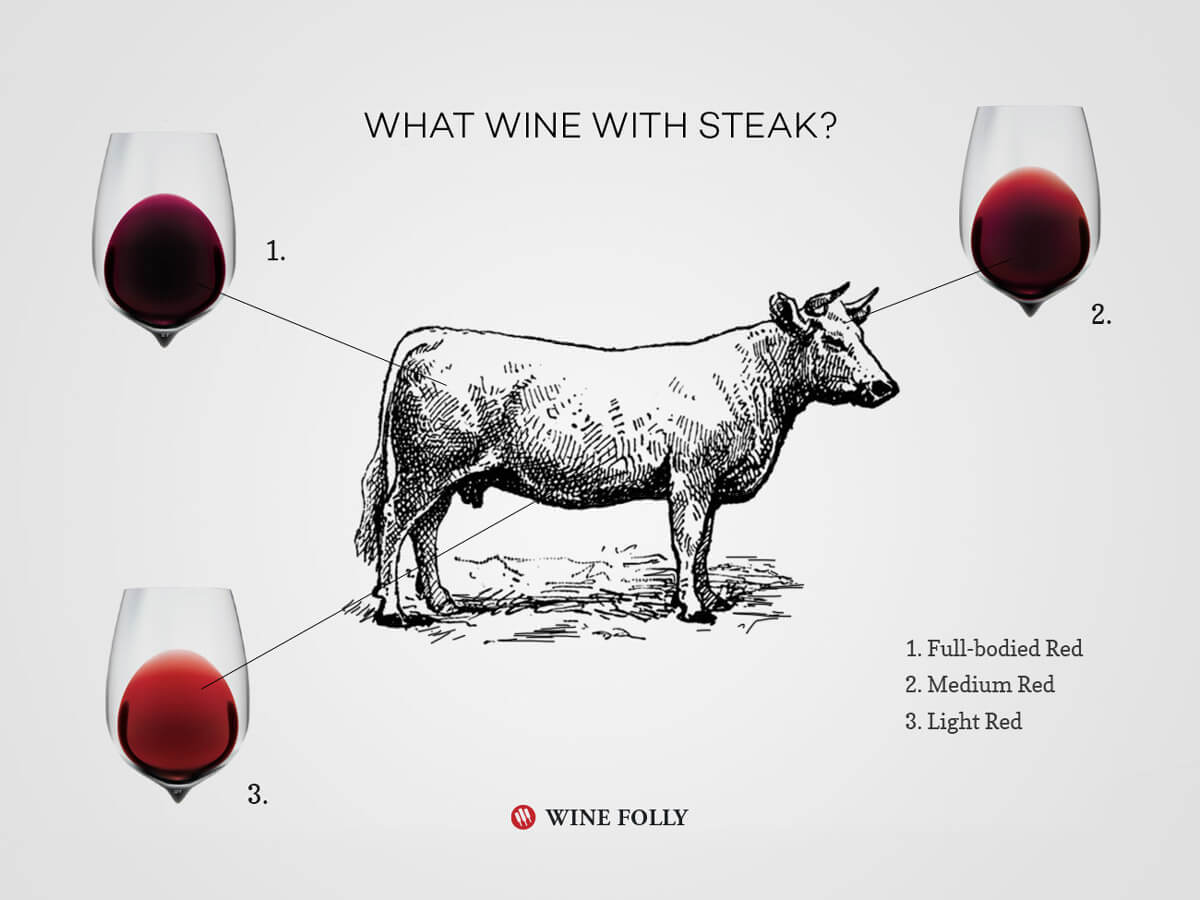
To complement the versatility of sirloin, wine selections must bridge the gap between lean protein and variable seasoning profiles. Sommeliers frequently recommend medium-to-full-bodied reds that possess moderate acidity and approachable tannins. Options such as a classic Cabernet Sauvignon, a structured Merlot, or an earthy Tempranillo provide enough backbone to stand up to grilled char without overwhelming the natural beef flavor. If the sirloin is prepared with heavy herbaceous rubs or pepper-based crusts, a fruit-forward Grenache or Syrah can offer a complementary contrast, balancing the savory elements of the crust with dark berry aromatics.
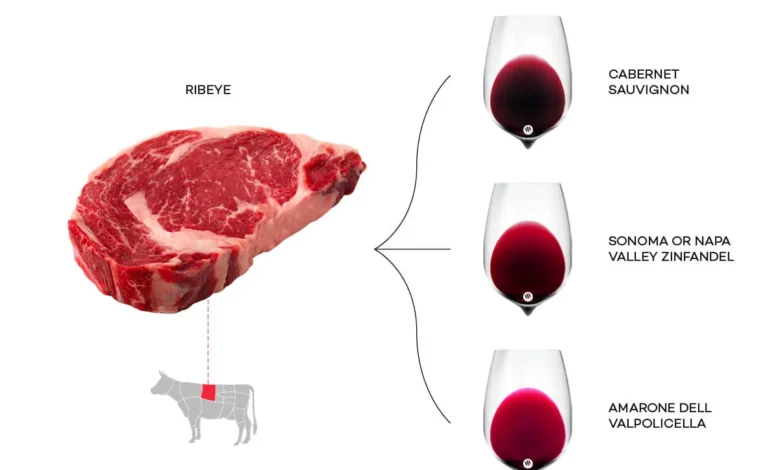
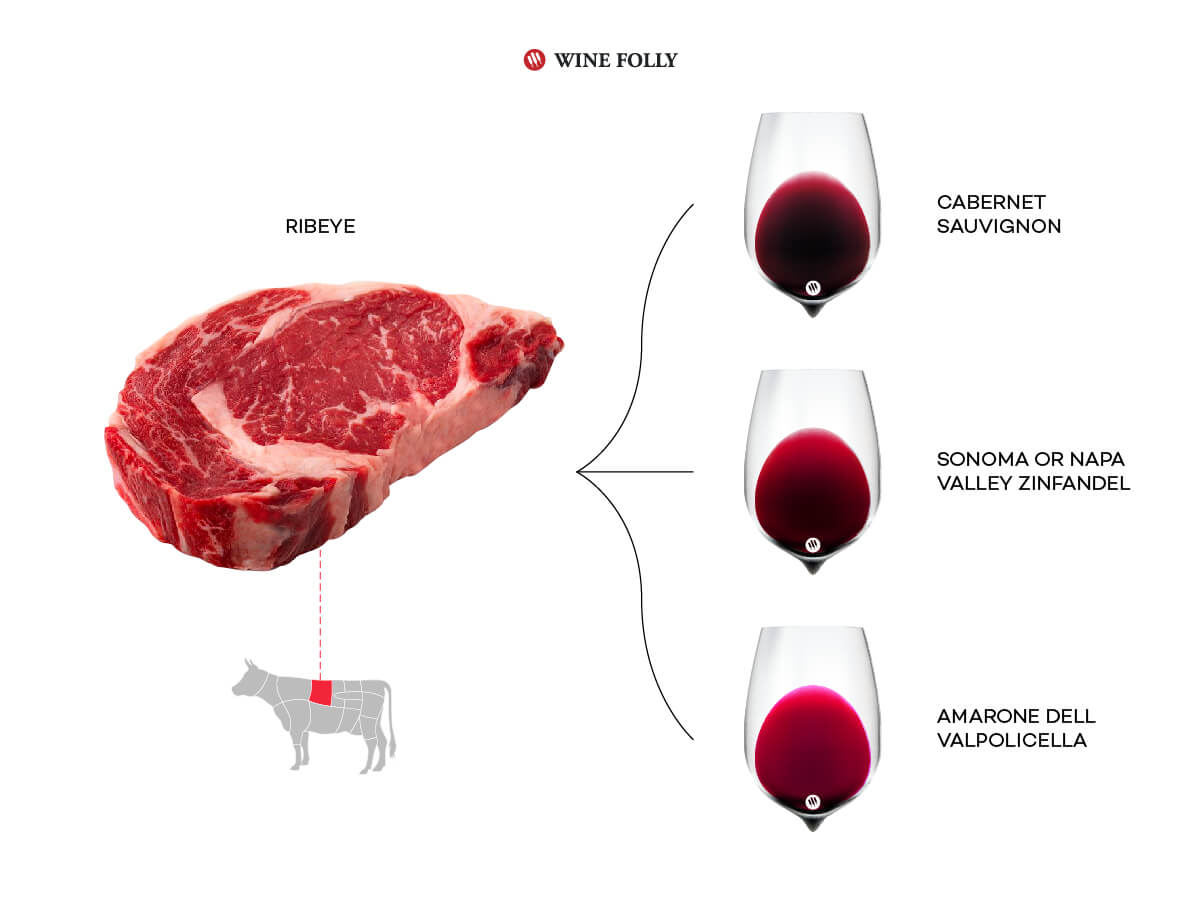
Ribeye and bone-in rib cuts represent the upper tier of fat marbling and natural tenderness within the bovine anatomy. Sourced from the rib section, these muscles do little heavy lifting, allowing intramuscular fat to distribute evenly throughout the grain. This abundance of fat—often referred to as marbling—renders during the cooking process, infusing the meat with a buttery, rich texture and robust flavor profile. The bone-in variant introduces additional complexity; the bone acts as a thermal conductor, slowing the cooking process near the center while allowing the exterior to develop a deep, caramelized crust via the Maillard reaction.
The high lipid content of the ribeye demands specific structural attributes from its accompanying wine. To effectively cut through the rich, buttery mouthfeel, diners require wines with elevated tannins, pronounced acidity, or intense fruit concentration. Bold Cabernet Sauvignons, robust Barolos, and powerful Australian Shiraz are traditional favorites for this pairing. The rigorous tannin structure of a youthful Cabernet or Nebbiolo acts as a textural foil to the melted fat, while the dense fruit profile of a warm-climate Syrah provides a flavor bridge that complements the charred, savory exterior of a grill-cooked ribeye.
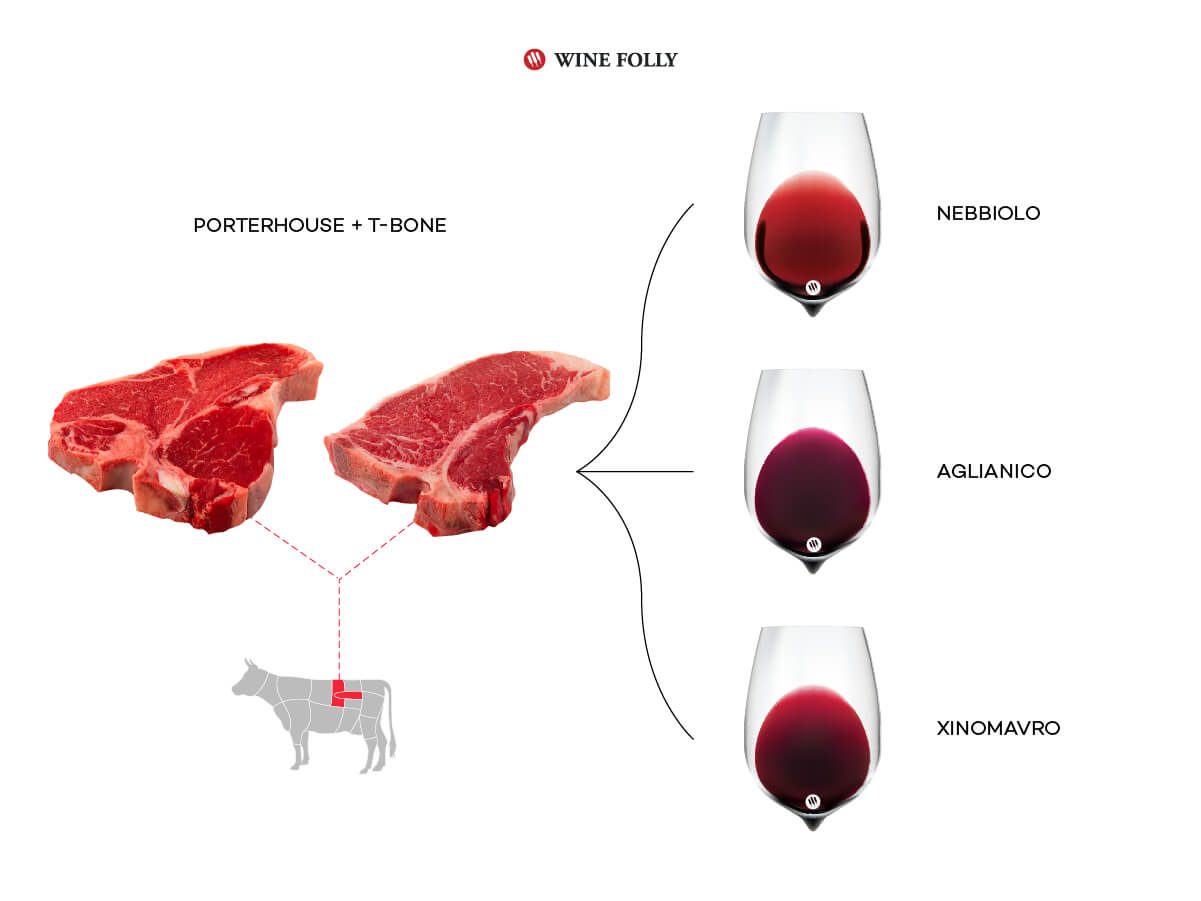
Porterhouse and T-bone steaks offer a unique anatomical proposition by combining two distinct muscles separated by a lumbar vertebra: the strip loin on one side and the tenderloin on the other. This configuration provides diners with contrasting textures on a single plate—the firmer, deeply beefy strip meets the exceptionally tender, mild filet. Because these cuts are typically thick-cut to accommodate the bone, they require precise temperature management, making grilling the preferred method to achieve an even gradient from edge to center.
Selecting a wine for a Porterhouse or T-bone requires balancing the leaner, delicate profile of the tenderloin with the richer, robust character of the strip. Versatile, medium-to-full-bodied red wines with expressive aromatics are well-suited for this duality. Bordeaux blends, high-end Sangiovese, or a well-structured Zinfandel can harmonize the disparate elements of the steak. These wines offer enough acidity to brighten the leaner filet while maintaining sufficient tannin weight to support the flavorful strip loin, ensuring neither side of the plate is overpowered.
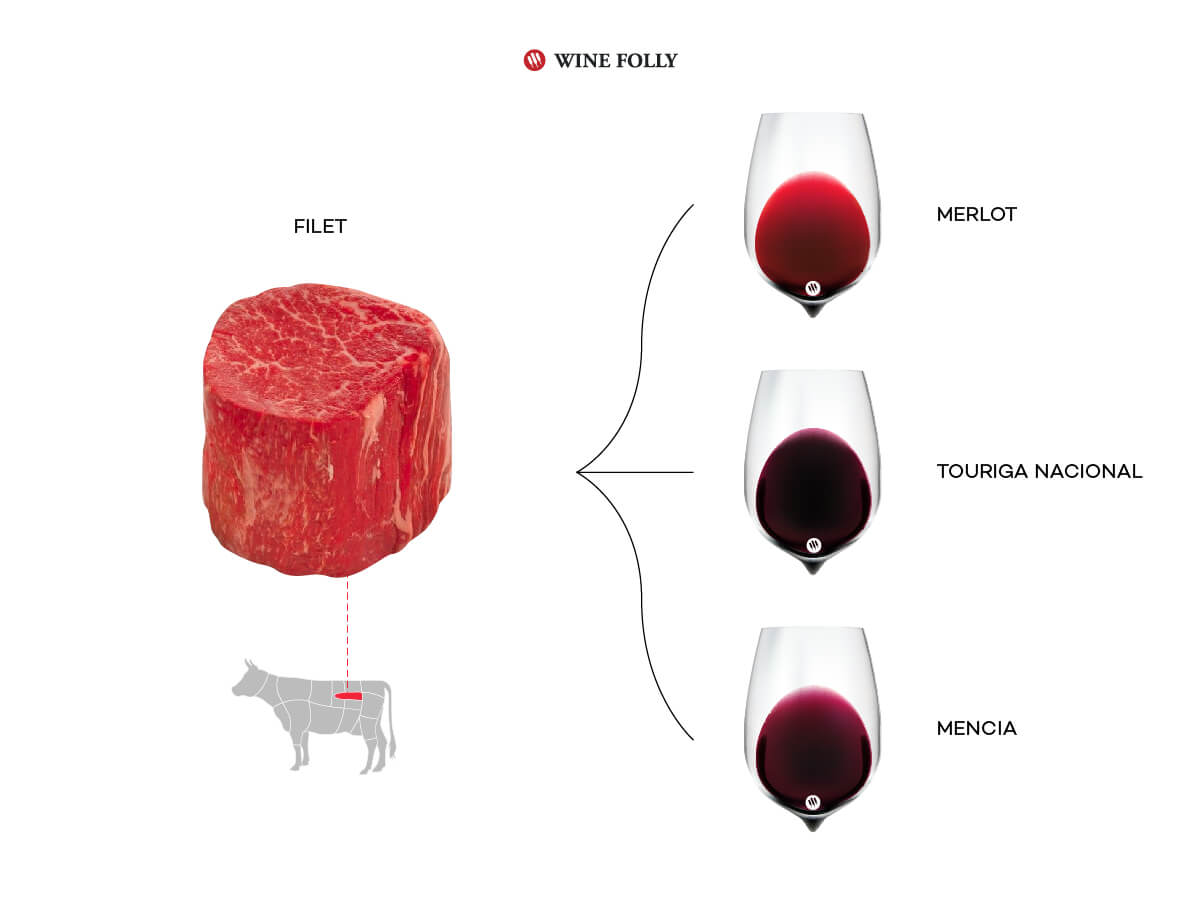
Filet mignon, harvested from the tenderloin muscle beneath the ribs, is widely recognized as the most tender cut of beef. Because this muscle experiences virtually no physical exertion, it contains minimal connective tissue and very little fat marbling. This lack of fat results in a subtle, delicate beef flavor and a texture that melts on the tongue. Culinary tradition dictates that filet mignon is best prepared via pan-searing in cast iron, frequently basted with butter, garlic, and fresh herbs, and is often served alongside rich reduction sauces such as béarnaise or peppercorn.
Because the natural flavor profile of filet mignon is delicate, heavy, high-tannin wines can easily mask the subtle nuances of the meat. Sommeliers advise selecting refined, elegant red wines that remain in structural alignment with the steak’s tenderness. Pinot Noir, elegant Old World Cabernet Franc, or a graceful, aged Chianti Classico provide complementary red fruit notes, earthiness, and balanced acidity without dominating the palate. These selections enhance the buttery richness of the pan-seared crust and any accompanying cream-based sauces, preserving the integrity of the beef.
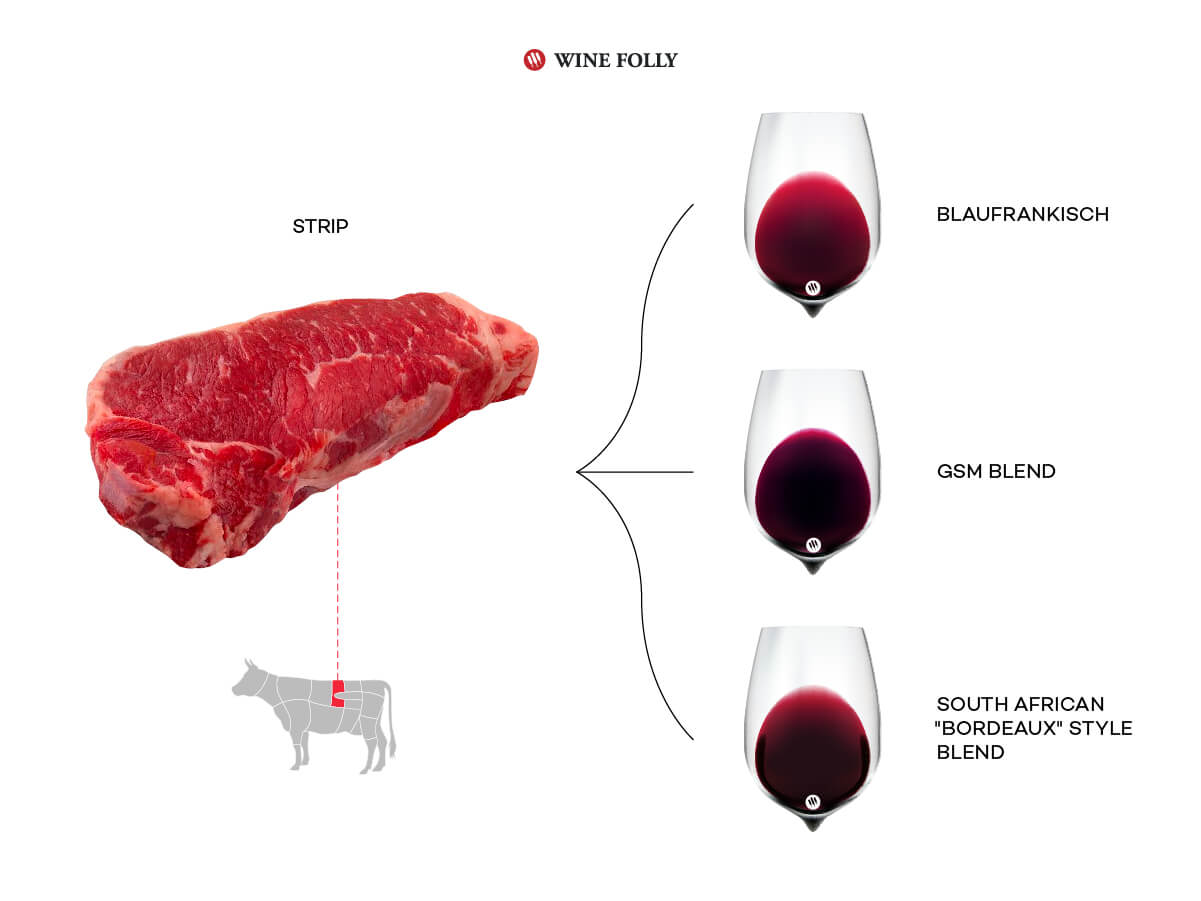
The strip steak—known variously as New York strip, shell steak, or Kansas City strip depending on regional butchery standards and the presence of a bone—comes from the short loin. This muscle yields a coarser grain and features a notable strip of fat along one edge, contributing to a deeply savory, beef-forward flavor profile. The presence of connective tissue requires proper resting periods after cooking to allow the muscle fibers to relax and reabsorb internal moisture. Cast-iron skillet preparation, enhanced with butter-basting, is standard practice for maximizing the crust while maintaining internal juiciness.
Strip steaks require wines that possess both strong fruit characteristics and firm structural components. The distinct grain and fat distribution of the strip call for wines capable of cutting through lipids while matching the assertive beef flavor. Robust Zinfandels, American Cabernet Sauvignons, and structured Malbecs excel in this application. The dark fruit notes and moderate-to-high tannins of these varietals interact favorably with the charred exterior and rich marbling, creating a balanced and cohesive flavor profile.
Rump steak, derived from the rear muscle group of the steer, represents a harder-working anatomical section. This results in a firmer texture and a deep, concentrated beef flavor. Because of its structural firmness, rump steak is frequently subjected to marinating processes or specific slicing techniques against the grain to ensure tenderness upon consumption. However, heavy marinades containing high levels of acid or sugar can complicate wine selection, requiring diners to account for external flavoring agents alongside the inherent characteristics of the meat.
When pairing wine with rump steak, the primary objective is to support the firm texture and savory depth of the muscle. Medium-to-full-bodied red wines with good acidity, such as a sturdy Syrah, a rustic Côtes du Rhône, or a bold Garnacha, provide reliable support. These wines complement the robust flavor of the beef and can adapt to various preparations, including marinades and pan sauces, provided the overall seasoning profile remains balanced and harmonious.
Flank and skirt steaks originate from the abdominal muscles of the steer, characterized by long, visible muscle fibers and a rich, mineral-heavy flavor. While historically associated with culinary efficiency due to their tougher texture, these cuts have gained immense popularity for their savory depth when cooked correctly. Both flank and skirt benefit significantly from dry-heat grilling or high-heat searing, provided they are cooked rapidly to medium-rare and sliced strictly across the grain to shorten the muscle fibers.
The chewy texture and pronounced beef flavor of flank and skirt steaks require wines that can stand up to rustic, robust profiles without being overwhelmed. Full-bodied, fruit-forward wines with supportive acidity—such as Argentine Malbec, Chilean Carménère, or a ripe Nero d’Avola—are exceptional choices. These varietals soften the perception of the firmer muscle fibers through their fruit concentration and smooth tannin structures, transforming a traditionally utilitarian cut into a savory, highly enjoyable dining experience.
Brisket, while structurally distinct from traditional individual steaks, occupies a vital place in the broader landscape of beef preparation. Sourced from the breast or lower chest, the cut consists of heavy pectoral muscles embedded with thick layers of connective tissue and fat. Consequently, brisket is fundamentally unsuited to rapid, high-heat grilling; instead, it requires low and slow thermal processing, typically within a wood-fired smoker over several hours. The choice of smoking fuel—ranging from hickory and oak to fruitwoods like apple or cherry—imparts distinct phenolic compounds that heavily influence the final taste profile.
Wine pairings for brisket must account for the dual dominance of rendered animal fat and wood smoke. Robust, smoky, and spice-driven red wines serve as optimal accompaniments. Bold Zinfandels, Petite Sirah, and full-bodied Syrah or Shiraz complement the caramelized bark and smoky aromatics developed during the smoking process. The rich fruit characteristics of these wines cut through the dense gelatinous texture of slow-cooked brisket, creating a balanced pairing that bridges the gap between barbecue traditions and oenological science.
Ultimately, while scientific principles of fat, protein, and tannin interaction provide a reliable framework for pairing wine and steak, individual palate preference remains the final arbiter of quality. Culinary authorities encourage diners to use established pairings as a baseline for personal experimentation. The vast array of cattle breeds, feeding programs, aging techniques, and global wine styles ensures that the journey of discovering personal culinary preferences is limitless, provided the fundamental balance of texture and flavor is respected.