Walking the Ancient Paths: How Transhumance Offers a Blueprint for Climate-Resilient Agriculture

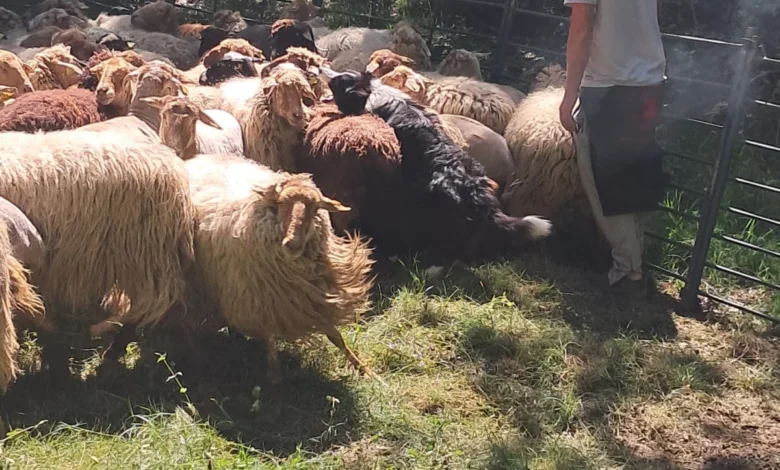
The practice of transhumance—the seasonal movement of livestock between mountain pastures and lowland plains—is undergoing a profound re-evaluation as climate change forces a global reassessment of food security. In Spain, where an extensive network of droving routes known as cañadas has facilitated the migration of animals for centuries, this age-old tradition is being championed not as a relic of the past, but as a critical strategy for fire prevention, biodiversity conservation, and sustainable land management. As drought and record-breaking wildfires increasingly threaten rural landscapes, pastoralists and environmentalists are arguing that the return to foot-based herding may be the most logical response to modern environmental instability.
The Historical Context of Spanish Pastoralism
The roots of Spanish transhumance run deep into the medieval period. In 1273, King Alfonso X, known as "The Wise," granted official recognition to the Honrado Concejo de la Mesta, an association of livestock farmers that wielded significant economic and political influence. This recognition codified the use of thousands of kilometers of established livestock trails. These routes were not merely paths for animals; they acted as ecological corridors that connected the diverse microclimates of the Iberian Peninsula, from the arid south to the lush northern mountain ranges.
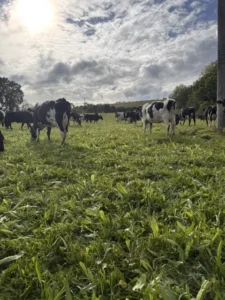
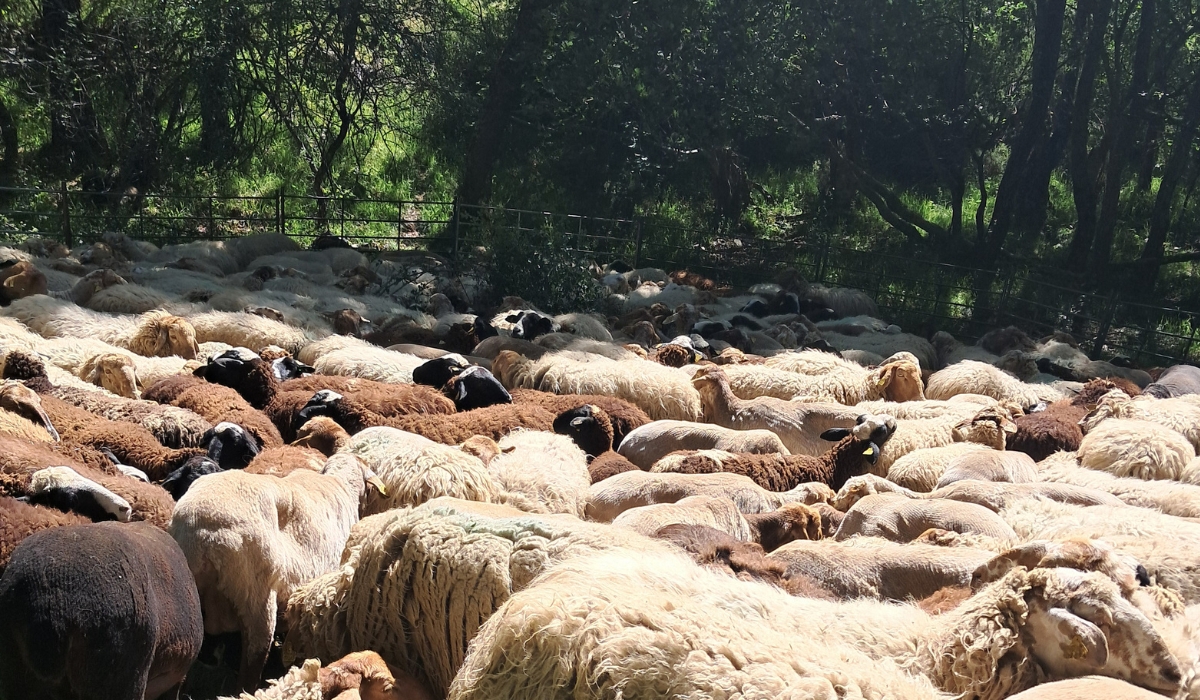
Today, these 125,000 kilometers of public paths are overseen by organizations such as Trashumancia y Naturaleza, which works to preserve them as "ecological highways." The system functions on a binary seasonal cycle: in the autumn, flocks move from the mountain pastures, which face harsh winter conditions, to the warmer lowlands and urban green spaces, such as Madrid’s Casa de Campo. In the spring, the cycle reverses, allowing the mountain pastures to recover while the livestock graze on the fresh growth provided by the changing climate.
The Los Apisquillos Collective: A Case Study in Continuity
Based in the village of Puebla de la Sierra in the Madrid mountains, the Los Apisquillos Collective serves as a modern guardian of these traditions. Founded 26 years ago, the collective manages a flock of approximately 500 animals, focusing on native, rare breeds such as the Rubia de El Molar and the Negra Castellana. These breeds are uniquely adapted to the local terrain, making them more resilient to disease and extreme weather compared to commercial hybrids.
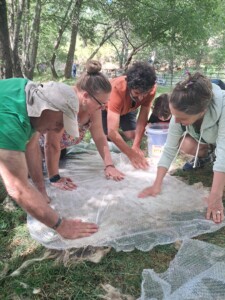
The collective’s annual shearing festival is more than a cultural celebration; it is a vital node in the transfer of indigenous knowledge. During these events, the community gathers to process wool using both traditional techniques and modern innovations, such as hand-cranked carding machines. By integrating the shearing process with educational outreach, the collective ensures that the technical skills required for sustainable wool and dairy production are passed down to a new generation of land stewards.
Transhumance as a Solution to Ecological Volatility
The shift toward industrial, sedentary farming—where livestock are transported via trucks rather than walking the cañadas—has had unintended consequences for the Spanish landscape. According to researchers, the abandonment of the traditional walking routes has led to the "scrubbing up" of these trails. Without the constant grazing and trampling of livestock, biomass accumulates rapidly. In the context of Spain’s current climate, characterized by prolonged droughts and record-high summer temperatures, this unchecked biomass acts as fuel for high-intensity wildfires.
Manuel Bahíllo, secretary for the organization Trashumancia y Naturaleza, notes that transhumance provides a natural mechanism for landscape maintenance. "Transhumance controls the overgrowth of scrubland," Bahíllo explains. "When we remove the livestock from the routes, the landscape becomes a tinderbox. If we maintain the movement of herds, we essentially create natural firebreaks that stop, or at least slow, the advance of forest fires."
The data supports this assertion. Studies on landscape fire behavior indicate that moderate grazing reduces the continuity of fuel loads in both forests and grasslands. By keeping the cañadas open, the state essentially maintains a grid of defensible space that professional firefighting units can utilize during emergency operations.
Economic and Environmental Implications
While critics often point to the speed and efficiency of motorized transport as a reason to abandon traditional herding, advocates argue that this economic calculus ignores the "hidden" costs of climate damage. The long-term degradation of soil health, the loss of biodiversity due to over-managed monocultures, and the massive financial burden of wildfire suppression suggest that the "efficiency" of trucking livestock is a false economy.
Lawrence Sudlow, an environmental consultant and advisor for Trashumancia y Naturaleza, emphasizes that transhumance should be recognized as a cultural right and an essential environmental service. "It is not just about the meat or the milk," Sudlow asserts. "It is about the ecological services these animals provide while they are in motion. We are talking about seed dispersal, soil fertilization, and the maintenance of open habitats that support rare flora and fauna."
The broader impact of this movement is global. From the pastoralists of the Sahel and the Horn of Africa to the high-altitude herders of the Andes and the Himalayas, the principles remain the same: resilience is found in mobility. The Somali pastoralist’s practice of walking 45 kilometers to find water and grass is not merely a survival tactic; it is an optimized system for living within ecological limits.
Challenges to the Survival of the Craft
Despite the ecological benefits, the challenges facing transhumance are significant. Rural depopulation has led to a shrinking labor pool, making it difficult to find the next generation of shepherds willing to endure the physical and mental demands of the trail. Furthermore, the encroachment of infrastructure—including highways, urban development, and industrial fencing—has physically obstructed many of the historic cañadas.
In addition, trade policies that favor imported meat products have placed downward pressure on the prices local producers can charge, making it difficult to maintain the higher labor costs associated with traditional herding. Despite these hurdles, there is a growing movement in Europe to support "high-nature-value" farming, which prioritizes the preservation of landscapes that provide services to the public, such as fire safety and carbon sequestration.
A Future Built on Ancestral Knowledge
The success of the Los Apisquillos Collective in integrating their flock into the management of Madrid’s public spaces offers a template for how urban and rural areas can cooperate. By allowing sheep to graze in public parks during the winter, the city reduces its own maintenance costs, while the flock receives essential nutrition. This synergy is a powerful argument for the integration of traditional pastoralism into modern municipal planning.
As climate change intensifies, the necessity of adopting "place-shaped" food systems becomes increasingly urgent. Agriculture that is tied to local seasons and ecological thresholds is inherently more stable than systems reliant on global supply chains and massive energy inputs. The mantra solvitur ambulando—"it is solved by walking"—serves as a reminder that some of the most effective solutions to modern crises are not found in new technology, but in the restoration of ancient, symbiotic relationships between humans, animals, and the land.
The future of Spanish pastoralism will likely depend on the ability of its proponents to quantify these ecological benefits for policymakers. If transhumance can be framed not just as a cultural tradition but as a vital infrastructure component for climate adaptation, there is significant potential for a resurgence in the practice. As it stands, the shepherds of the Madrid mountains continue their migration, moving their flocks between winter and summer grounds, carrying with them the knowledge that the health of the land is inextricably linked to the movement of the herd.
Related posts: