What began half a decade ago as an informal gathering in the backyard of Singers, a community-focused bar in Bedford-Stuyvesant, has evolved into a high-production tournament. The event pits teams of trans women, colloquially referred to as "dolls," against "twinks," a term used for lithe gay men, in a series of satirical and physical challenges. This year’s move to the Palladium, a venue more accustomed to mainstream musical acts and theatrical performances, highlights the growing demand for queer-led spaces that exist outside the traditional corporate-sponsored Pride framework.
The Evolution of a DIY Phenomenon
The trajectory of Twinks vs. Dolls reflects a broader trend within New York City’s nightlife: the professionalization of "unhinged" or "hyper-online" subcultures. The event first gained national attention through viral social media clips, most notably of its "cigarette race," where participants compete to finish a cigarette in record time. This year, the production moved from a warehouse setting in Industry City to the heart of Manhattan, bringing its specific brand of counter-culture to one of the most commercialized districts in the world.
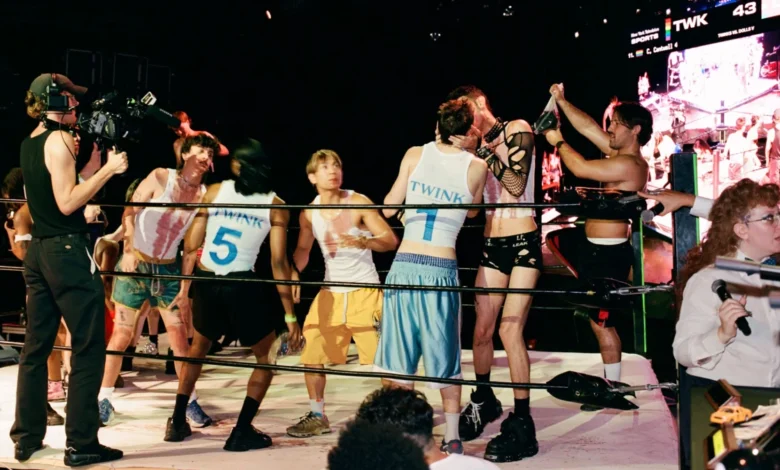
The 2026 iteration featured a boxing ring as the central stage, hosting events that ranged from a competitive "making out" round to an M&M spitting contest. Commentary was provided by hosts who blended political satire with community-specific humor, such as the remark that "unless an M&M, a stone butch won’t melt in your mouth." The climax of the evening involved a wrestling match in a pool of slime, a signature element that has remained a staple since the event’s inception in a Brooklyn backyard.
Writer Tobias Hess has described the event as the "physicalization of the queer digital hyperbrain." This characterization points to the way the competition translates internet memes, niche terminology, and digital aesthetics into a tangible, live-action experience. For many in the LGBTQ+ community, the event serves as a necessary antidote to the perceived "cringey" or "corporate" nature of mainstream Pride celebrations, which are frequently critiqued for their reliance on large-scale corporate sponsorships.
Institutional Growth and Community Tension
The move to a premier Times Square venue was not without controversy. Longtime supporters of the event raised concerns regarding the institutionalization of what was once a strictly DIY affair. The announcement of a $75 ticket price sparked significant online discourse, with critics arguing that such a high entry fee was prohibitive for the very community the event seeks to celebrate.
In response to these concerns, the management at Singers, led by event director Erik Escobar, addressed the community through social media. They provided instructions on how to circumvent Ticketmaster fees by contacting the venue directly, which lowered the entry price to $50—the same as the previous year’s warehouse event. This tension highlights the ongoing struggle for queer organizers: the need to scale events to accommodate growing crowds while maintaining affordability and accessibility.
The judging panel also underwent a high-profile shift. Initially, the inclusion of internet personality Ivy Wolk alongside New York City Council Member Chi Ossé and SNL star Bowen Yang drew criticism for a perceived lack of trans representation on the panel. Following Wolk’s withdrawal due to a prior commitment, she was replaced by activist and whistleblower Chelsea Manning. Escobar noted that the arrangement came together organically, stating, "Everything about this event comes together whenever things align."

Infrastructure and Production Value
The transition to the Palladium allowed for significant upgrades in logistics and production. Unlike previous years, where visibility and overcrowding were frequent complaints, the 2026 event utilized the theater’s professional infrastructure to enhance the viewer experience. Key improvements included:
- Professional Cinematography: Multiple screens throughout the venue provided live feeds and instant replays, ensuring that attendees in the back of the house or the standing-only sections did not miss the nuances of the competition.
- Climate Control: The move to an air-conditioned theater was a marked departure from the humid warehouse environments of previous summers, a change noted by older attendees and regulars.
- Seating Options: For the first time, the event offered assigned seating in addition to a general admission pit, making the spectacle more accessible to a wider demographic of the community.
- Half-time Entertainment: In a nod to the Times Square location, the intermission featured a "smackdown" between performers dressed in bootleg costumes of popular characters like Elmo, Mickey Mouse, and Spiderman.
Despite these upgrades, the organizers made efforts to retain the "trashy" aesthetic that defined the event’s early years. This was achieved through the nature of the games themselves, which prioritized absurdity over traditional athletic prowess. The scoreboard, while present, often felt secondary to the pageantry. At intermission, the "dolls" led the "twinks" 67 to 38, a lead that consistent attendees noted was traditional, as the dolls "always win."
The Socio-Political Context of Queer Sports
Twinks vs. Dolls operates as a parody of traditional sporting events. By adopting the language of athletics—complete with scoreboards, commentators, and "halftime shows"—the event reclaims a space that has historically been exclusionary toward LGBTQ+ individuals. The spectacle allows for "heckling and peeping at a scoreboard" in a way that mirrors mainstream sports culture but replaces the underlying heteronormativity with queer expression and theater.
This year’s event occurred against a backdrop of increasing commercialization in Pride Month. Many attendees expressed a preference for the "Singers ethos," which emphasizes community-led, "sexy," and "unhinged" parties over events sponsored by major defense contractors or multinational banks. One attendee, wearing a shirt that read "No Pain, No Pain," noted that the DIY spirit of Twinks vs. Dolls felt more authentic than the "corporate cringe" of larger Manhattan parades.

However, scaling a DIY event to a venue like the Palladium necessitates certain compromises. Regulatory requirements prevented some of the more extreme elements of previous years; for example, the famous "cigarette race" had to be livestreamed from the sidewalk outside the venue to comply with indoor smoking bans. Similarly, stricter "decency" rules for the photobooth reflected the move from a private Brooklyn space to a regulated Manhattan theater.
Implications for the Future of Queer Nightlife
The success of Twinks vs. Dolls in Times Square suggests a robust market for high-concept, community-driven queer entertainment. It proves that events rooted in specific subcultures can successfully occupy mainstream spaces without losing their core identity, provided the organizers remain responsive to their base.
The event’s growth from a backyard bar to a 2,000-plus capacity theater in five years serves as a case study for the "Brooklyn-to-Manhattan" pipeline of queer culture. As Manhattan’s nightlife continues to face pressures from gentrification and rising costs, the migration of successful Brooklyn-born concepts may become more common.
As the event concludes its first half-decade, the primary challenge for the Singers team will be balancing the "precious component of trash"—the raw, unpredictable energy of DIY performance—with the demands of larger venues and higher production costs. The 2026 event demonstrated that while the setting may have changed from a gravel backyard to a plush velvet theater, the community’s appetite for absurdity, theater, and a "big, dumb, positive queer sports moment" remains undiminished.

The legacy of Twinks vs. Dolls is not found in the final score on the board, but in its ability to transform a corporate landmark like Times Square into a temporary sanctuary for the "alphabet mafia." Whether the event remains at the Palladium or seeks out even larger arenas in the future, it has firmly established itself as a cornerstone of the modern New York City Pride experience.