The culinary landscape of Chinese-style seafood dining has long held a cherished position in global gastronomy, celebrated for its vibrant balance of textures, aromatic profiles, and rich sauces. Among the myriad offerings found in traditional and modern Chinese restaurants, crustacean dishes—particularly those featuring fresh prawns—stand out as perennial favorites. As home cooks increasingly seek to replicate restaurant-quality meals within their own kitchens, mastering the foundational techniques of Chinese culinary arts has become both an accessible and rewarding endeavor. Preparing seafood such as shrimp at home not only allows for greater control over ingredient freshness and sodium levels but also offers a cost-effective alternative to dining out.
Culinary experts note that the secret to achieving authentic Chinese restaurant flavors at home lies in the precise preparation of proteins and the harmonious blending of pantry staples such as oyster sauce, soy sauce, rice vinegar, and aromatics. Prawns, known scientifically as Penaeus merguiensis or similar species commonly referred to as medium-sized white or school prawns, are exceptionally versatile. Their natural sweetness and tender-crisp texture make them an ideal canvas for robust, glossy sauces or crisp, golden-brown frying techniques.
To help home cooks elevate their weekday dining experiences or weekend family gatherings, professional chefs and culinary researchers have standardized three iconic restaurant-style shrimp recipes. These dishes—Shrimp in Oyster Sauce, Sweet and Sour Shrimp, and Crispy Shrimp with Mayonnaise—represent the trifecta of popular Chinese restaurant seafood preparations. Below is a comprehensive guide, including detailed ingredient lists, step-by-step methodologies, historical context, and nutritional insights, designed to bring the sophistication of a high-end Chinese banquet directly to the home dining table.
Historical Context and the Evolution of Chinese Seafood Cuisine
The incorporation of seafood into Chinese cuisine dates back thousands of years, deeply rooted in the coastal regions of Guangdong, Fujian, and Zhejiang. Historically, coastal communities relied heavily on the abundant catch from the South China Sea and the East China Sea, developing preservation and cooking methods that maximized the natural flavors of marine life. Over centuries, migration and cultural exchange disseminated these coastal techniques across the globe, leading to the establishment of diverse regional styles within Chinese cuisine, collectively popularized internationally as Chinese restaurant fare.
In traditional Cantonese cooking, which heavily influences what many global diners recognize as standard Chinese food, freshness is paramount. Live seafood tanks are a staple in traditional establishments, ensuring that the protein is cooked at the peak of its tenderness. When live sourcing is unavailable, culinary adaptation relies on flash-freezing or careful selection of fresh market prawns, ensuring the flesh retains its characteristic "juicy" snap. The use of sweet and savory flavor profiles—exemplified by the pairing of oyster sauce with earthy aromatics, or the bright acidity of sweet and sour reductions—reflects a sophisticated understanding of how contrasting tastes stimulate the palate.
Nutritional Profile and Dietary Implications of Prawns
From a nutritional standpoint, incorporating medium-sized prawns into a balanced diet offers several health benefits. Prawns are an excellent source of high-quality, lean protein while remaining relatively low in calories and saturated fats. A standard 100-gram serving of prawns provides a significant portion of the recommended daily intake of essential micronutrients, including selenium, vitamin B12, iron, and phosphorus. Furthermore, seafood contains omega-3 fatty acids, which are widely recognized for their role in supporting cardiovascular health and reducing systemic inflammation.
However, nutritionists and culinary dietitians emphasize that the overall health impact of restaurant-style seafood dishes depends heavily on preparation methods. Deep-frying, as seen in battered mayonnaise-coated preparations, increases caloric and fat content, making moderation key for individuals managing dietary restrictions. Conversely, stir-fried preparations utilizing aromatic vegetables, minimal oils, and vitamin-rich fruits like pineapple—such as in the sweet and sour variation—offer a more nutrient-dense profile rich in dietary fiber and antioxidants.
Comprehensive Recipe Guide: Three Restaurant-Style Prawn Dishes
Preparation and mise en place are critical components of successful Asian cooking. Before beginning any recipe, ensure all ingredients are measured, washed, chopped, and readily accessible near the cooking station, as stir-frying and high-heat cooking methods proceed rapidly.
- Professional Recipe: Prawns in Savory Oyster Sauce
Oyster sauce is a cornerstone of Cantonese cooking, imparting a deep, umami-rich flavor profile derived from cooked oyster extracts, sugar, and soy sauce. When paired with lightly fried prawns, the sauce clings to the protein, creating a deeply savory dish that pairs exceptionally well with steamed white rice.
Ingredients for Prawns in Oyster Sauce:
- 500 grams of medium-sized banana prawns (or similar fresh prawns), cleaned and deveined
- 1 teaspoon of table salt
- 2 tablespoons of fresh lime juice (for marination)
- 3 tablespoons of vegetable oil (for stir-frying)
- 1/2 of a medium yellow onion, coarsely sliced
- 2 cloves of garlic, finely minced
- 1/2 centimeter of fresh ginger, finely sliced
- 1 fresh red chili pepper, coarsely sliced
- 1 stalk of scallion (green onion), coarsely sliced
- 3 tablespoons of premium oyster sauce
- 2 tablespoons of sweet soy sauce (kecap manis)
- 2 tablespoons of light soy sauce
- 1/2 teaspoon of ground white pepper
- 1 tablespoon of mushroom bouillon powder
- 1/2 teaspoon of salt (adjusted to taste)
Step-by-Step Cooking Methodology:
Begin by preparing the prawns. Remove the heads and carefully slit the back of each prawn along the shell to remove the dark intestinal tract, rinsing thoroughly under cold running water. Pat the prawns dry with paper towels. In a mixing bowl, toss the prawns with the fresh lime juice and one teaspoon of salt, allowing them to marinate for approximately 10 to 15 minutes to eliminate any unwanted fishy odors and firm up the flesh.
Heat a wok or heavy-bottomed skillet over medium-high heat and add enough vegetable oil for shallow frying. Once the oil is shimmering hot, add the marinated prawns. Fry them quickly for roughly two minutes until the shells turn bright orange-red and the flesh becomes opaque and lightly crisp on the edges. Remove the prawns using a slotted spoon and set them aside on a plate lined with paper towels to drain excess oil.
Discard excess frying oil from the wok, leaving behind approximately two tablespoons. Return the wok to medium heat. Add the minced garlic, sliced ginger, red chili, and yellow onion. Sauté the aromatics continuously until the onions become translucent and release a fragrant aroma.
Introduce the oyster sauce, sweet soy sauce, light soy sauce, ground white pepper, and mushroom bouillon powder directly into the aromatic mixture. Stir vigorously to combine the seasonings into a cohesive, bubbling sauce base.
Return the previously fried prawns to the wok, tossing them energetically to ensure every piece is evenly coated in the rich, savory glaze. Add the sliced scallions during the final thirty seconds of cooking to retain their bright green color and fresh crunch. Remove from heat immediately and transfer to a serving platter. Serve hot alongside a steaming bowl of jasmine rice.
- Professional Recipe: Classic Sweet and Sour Prawns
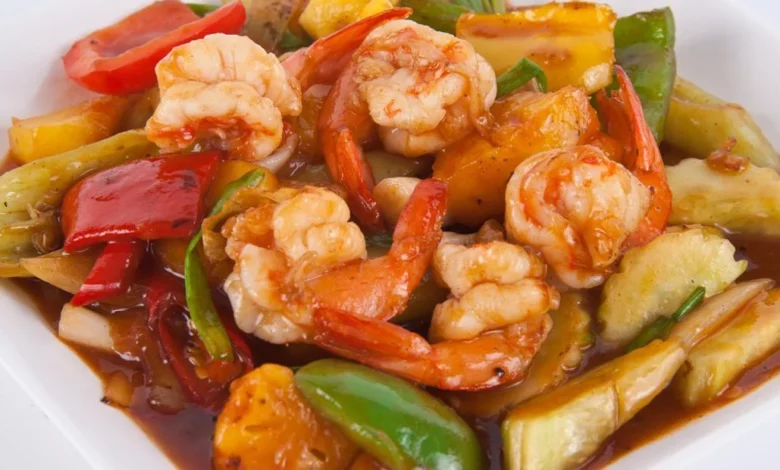
The sweet and sour flavor profile is a global ambassador of Chinese cuisine, known for its vibrant interplay between tangy vinegar, sweet fruit notes, and savory undertones. Incorporating fresh pineapple and crisp vegetables adds textural complexity to the dish.
Ingredients for Sweet and Sour Prawns:
- 500 grams of medium-sized prawns, cleaned (shells can be retained or removed based on personal preference)
- 1 tablespoon of fresh lime juice
- 1 tablespoon of unsalted butter or margarine
- 1 clove of garlic, finely minced
- 1/2 of a medium yellow onion, sliced
- 1 stalk of scallion, cut on a diagonal bias
- 2 curly red chili peppers, cut on a diagonal bias
- 50 grams of fresh pineapple, cut into small bite-sized chunks
- 1 medium tomato, sliced into wedges
- 2 tablespoons of tomato paste or ketchup
- 2 tablespoons of sweet chili sauce
- 1 tablespoon of oyster sauce
- 1/2 tablespoon of mushroom bouillon powder
- 1 teaspoon of culinary cooking vinegar
- 1 teaspoon of granulated white sugar
- 1/2 teaspoon of salt
- 100 milliliters of filtered water
Step-by-Step Cooking Methodology:
Prepare the prawns by cleansing them thoroughly and removing the dorsal vein. Rub the prawns with fresh lime juice and allow them to rest briefly.
In a clean wok or skillet, melt the unsalted butter or margarine over medium heat. Add the minced garlic and sliced yellow onion, stirring constantly until the onions are soft and aromatic.
Add the prepared prawns to the skillet, sautéing them until they turn pink and change color. Toss in the diagonal slices of scallions, red chili peppers, and fresh pineapple chunks. Continue to stir-fry for an additional minute until the pineapple releases its natural juices and the vegetables begin to soften slightly.
Pour in the tomato paste, sweet chili sauce, oyster sauce, mushroom bouillon powder, cooking vinegar, sugar, salt, and the 100 milliliters of water. Stir the mixture thoroughly to create a uniform, glossy sauce that coats the ingredients. Bring the liquid to a gentle simmer, allowing the flavors to meld and thicken slightly.
Finally, gently fold in the fresh tomato wedges. Cook for no longer than one minute to ensure the tomatoes warm through without losing their structural integrity. Turn off the heat and transfer the sweet and sour prawns to a shallow serving bowl. Serve immediately while piping hot.
- Professional Recipe: Crispy Battered Prawns with Mayonnaise
A modern classic popularized in Hong Kong-style seafood restaurants and upscale Chinese banquet halls, this dish features succulent prawns encased in a light, crunchy batter, served alongside a sweet, creamy, and tangy mayonnaise dipping sauce or dressing.
Ingredients for Crispy Mayonnaise Prawns:
- 15 medium-sized prawns, shelled with tail segments left intact
- 2 tablespoons of fresh lime juice
- 1/2 teaspoon of ground white pepper
- 1/2 teaspoon of table salt
- 5 tablespoons of all-purpose flour
- 2 large egg whites, beaten until frothy
- 150 grams of coarse breadcrumbs (panko style)
- Sufficient vegetable oil for deep-frying
- Premium quality mayonnaise (for dipping or light tossing)
Step-by-Step Cooking Methodology:
Begin by shelling the prawns entirely while leaving the tail segment attached for presentation purposes. Using a sharp knife, carefully butterfly the underside of each prawn by making a longitudinal slit, allowing the flesh to open up and spread flat like a fan.
Transfer the buttered prawns to a mixing bowl and season with fresh lime juice, ground white pepper, and table salt. Allow the protein to marinate for ten minutes to absorb the seasonings.
Set up a standard breading station: place the all-purpose flour in a shallow dish, the beaten egg whites in a separate bowl, and the coarse breadcrumbs in a third container.
Take each marinated prawn, dust it lightly and evenly with all-purpose flour (shaking off any excess), dip it completely into the beaten egg whites to coat thoroughly, and finally roll it in the coarse breadcrumbs, pressing gently to ensure an even, adherence crust. Repeat this process for all 15 prawns.
For optimal texture, place the breaded prawns on a tray and refrigerate them in the refrigerator for 15 to 20 minutes. This chilling step helps the breading adhere firmly to the prawn surface, preventing detachment during the frying process.
Heat a generous amount of vegetable oil in a deep frying pan or wok over medium-high heat. Test the oil temperature by dropping a few breadcrumbs into the pan; if they sizzle and rise immediately to the surface, the oil is ready.
Carefully lower the chilled prawns into the hot oil in small batches to avoid overcrowding the pan. Deep-fry the prawns for approximately three to four minutes until the exterior achieves a uniform, golden-brown color and the crust is delightfully crisp. Remove the prawns using a wire skimmer and drain them thoroughly on wire racks or paper towels.
Arrange the crispy fried prawns artfully on a serving dish. Serve hot alongside a small bowl of high-quality mayonnaise for dipping, or lightly drizzle the mayonnaise over the prawns immediately prior to service, mirroring the presentation style of contemporary seafood establishments.
Industry Perspectives and Economic Implications of Home Cooking
The rising popularity of recreating restaurant-style dishes at home reflects broader shifts in consumer behavior. Economic factors, including fluctuating dining-out costs and an increased emphasis on domestic culinary skill development, have driven a surge in digital recipe consumption. Food industry analysts note that digital searches for Asian-inspired home cooking tutorials have experienced steady year-on-year growth.
Culinary educators emphasize that mastering foundational dishes like oyster sauce prawns, sweet and sour seafood, and crispy battered preparations empowers home cooks to experiment with complex flavor profiles without relying on commercial takeout. By sourcing fresh ingredients locally and adhering to precise preparation techniques, individuals can achieve professional-grade results that rival commercial dining establishments, ensuring both nutritional transparency and culinary satisfaction.
Related posts: