Mastering the Culinary Challenge: A Comprehensive Guide to Safely Opening and Preparing Fresh Coconuts

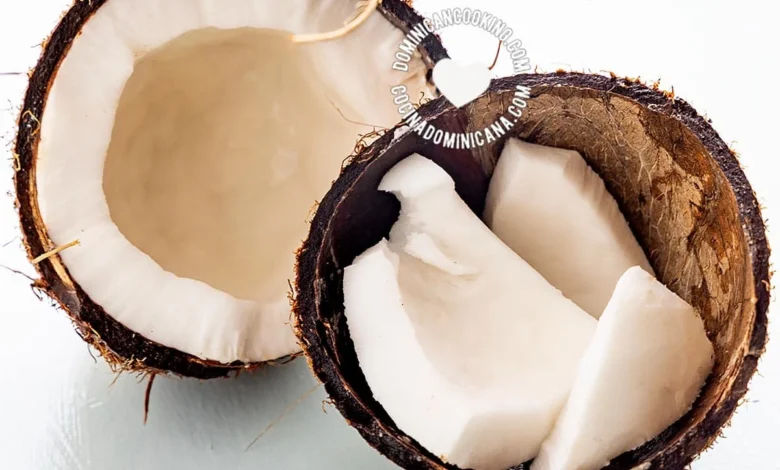
Fresh coconut remains a cornerstone ingredient in tropical and Caribbean gastronomy, prized for its rich, aromatic oils, dense meat, and naturally refreshing water. However, for many home cooks and culinary enthusiasts, the physical barrier of the hard, fibrous outer shell presents a significant obstacle. Breaking into a mature coconut often deters individuals from utilizing the fresh fruit in traditional recipes, leading many to rely on processed, canned, or sweetened alternatives. To bridge this gap between convenience and authentic flavor, culinary experts have refined a systematic, accessible procedure that demystifies the process, transforming a formidable kitchen task into a manageable routine.
Historical Context and Culinary Significance
The coconut palm, scientifically known as Cocos nucifera, has supported coastal human civilizations for millennia, providing sustenance, hydration, and materials. Throughout the Caribbean, Latin America, and Southeast Asia, fresh coconut meat and milk are integral to daily culinary traditions, serving as the base for savory stews, rich curries, traditional desserts, and refreshing beverages.
Despite the globalization of food supply chains, working with whole, mature coconuts has seen a resurgence among home cooks seeking authentic textures and unadulterated flavors. Processed coconut products frequently contain added preservatives, stabilizers, or excessive sugars to extend shelf life, prompting a return to whole-food preparation. According to culinary historians, the methods for processing mature coconuts have changed very little over generations, relying on fundamental mechanical principles: utilizing the weakest structural points of the shell, applying controlled kinetic force, and employing standard household tools such as flathead screwdrivers and hammers.
Step-by-Step Technical Breakdown
Opening a mature coconut requires patience, precision, and adherence to safety protocols to prevent injury from slips, jagged edges, or flying debris. Culinary instructors emphasize a sequential approach divided into drainage, cracking, extraction, and preservation.
1. Perforating the Germination Pores
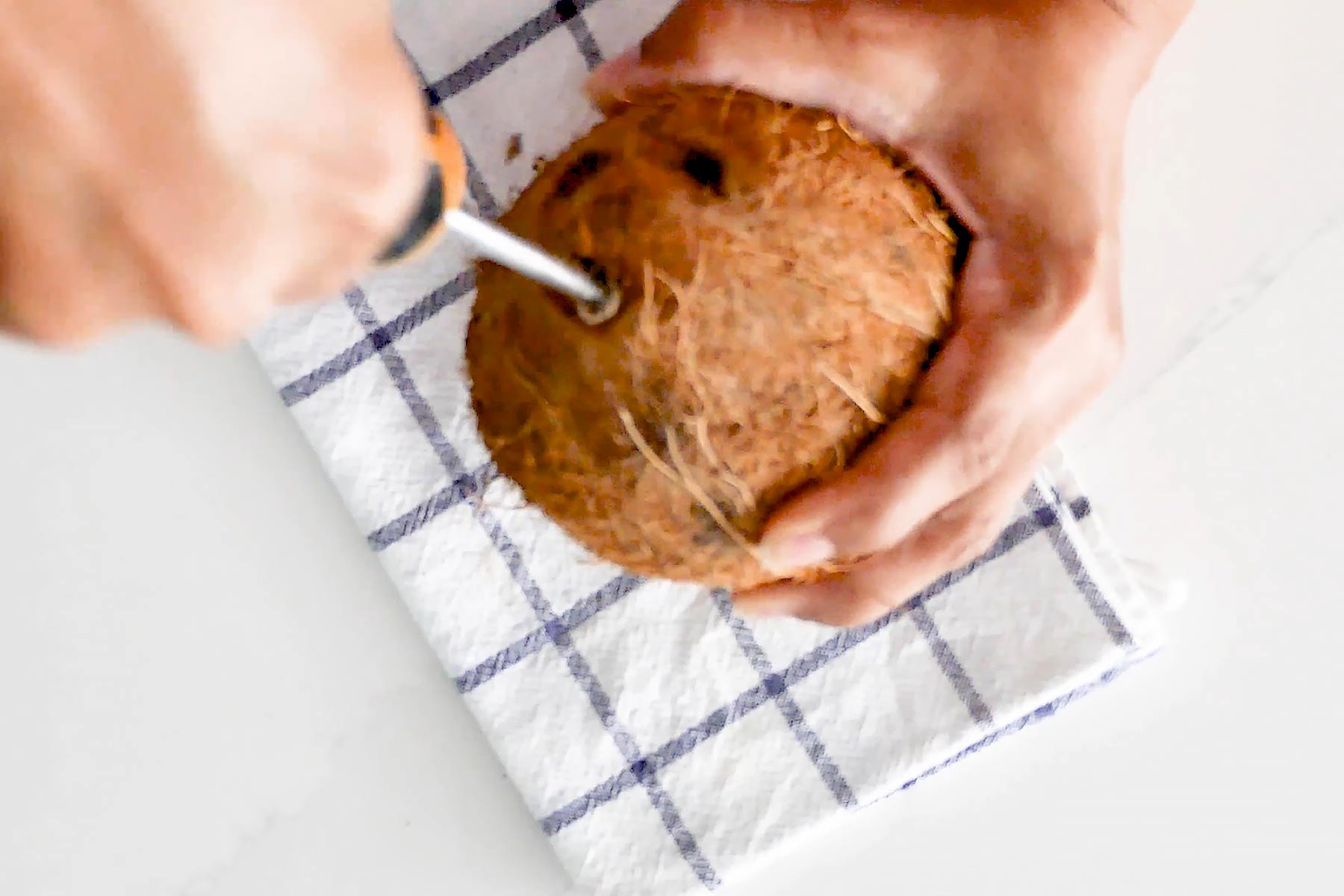
Every mature coconut features three distinct indentation points on one end, commonly referred to as the "eyes." These circular depressions are the thinnest areas of the endocarp (the hard inner shell), with one pore typically softer and easier to puncture than the others.
To drain the liquid cleanly, a cook must locate these eyes and use a clean, sturdy flathead screwdriver to puncture the softest point. By applying steady, controlled pressure and gently twisting the tool, the operator can break through the shell and push aside any obstructing interior flesh, creating a clear aperture approximately the width of a pencil.
2. Draining the Liquid
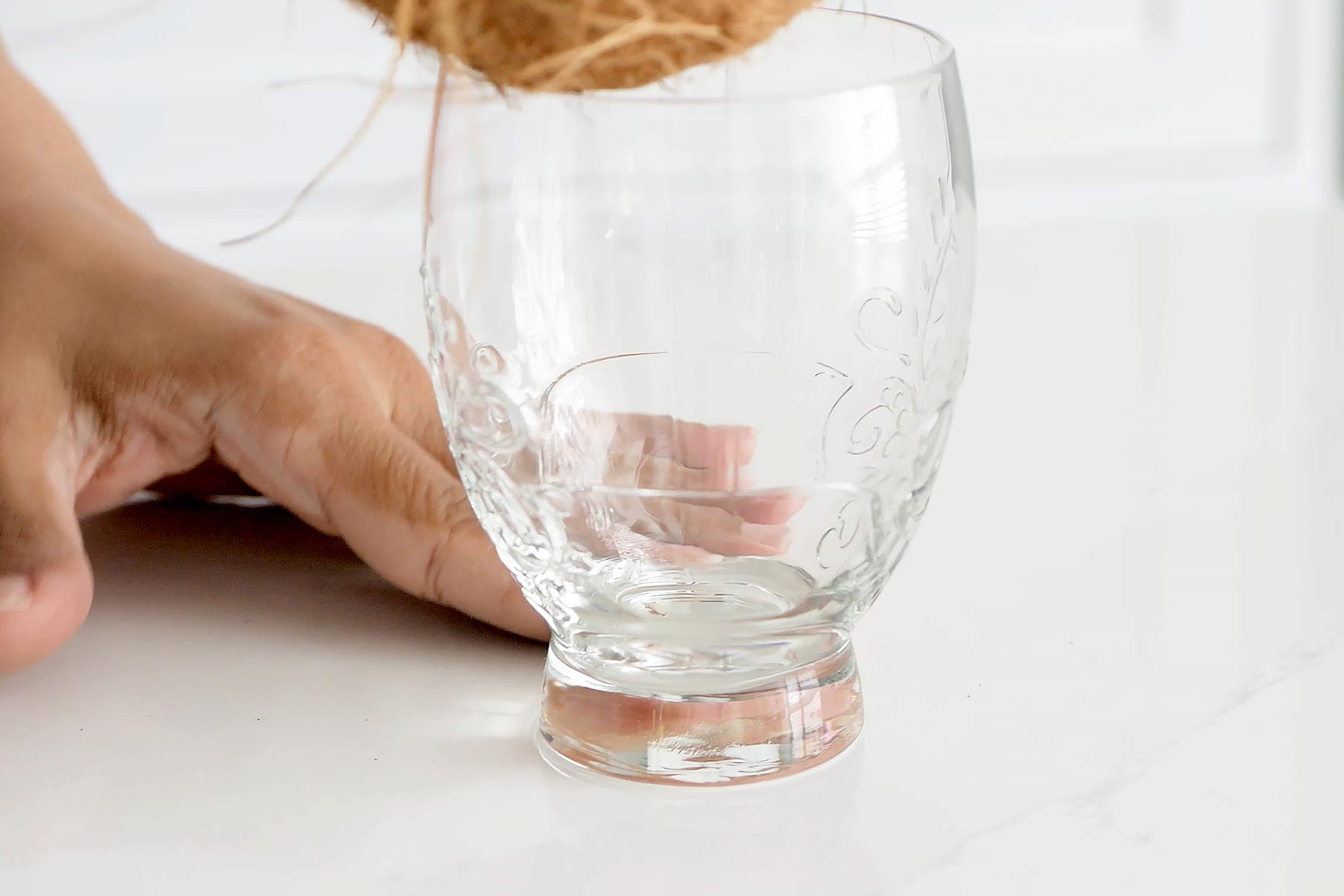
Once the puncture hole is established, the coconut should be inverted and placed securely over a glass or suitable container. Allowing gravity to extract the liquid ensures that the interior water is harvested cleanly, free from shell fragments or woody debris. Cooks may gently shake the coconut to accelerate the drainage process, yielding pure, electrolyte-rich coconut water suitable for drinking or incorporating into culinary recipes.
3. Fracturing the Endocarp
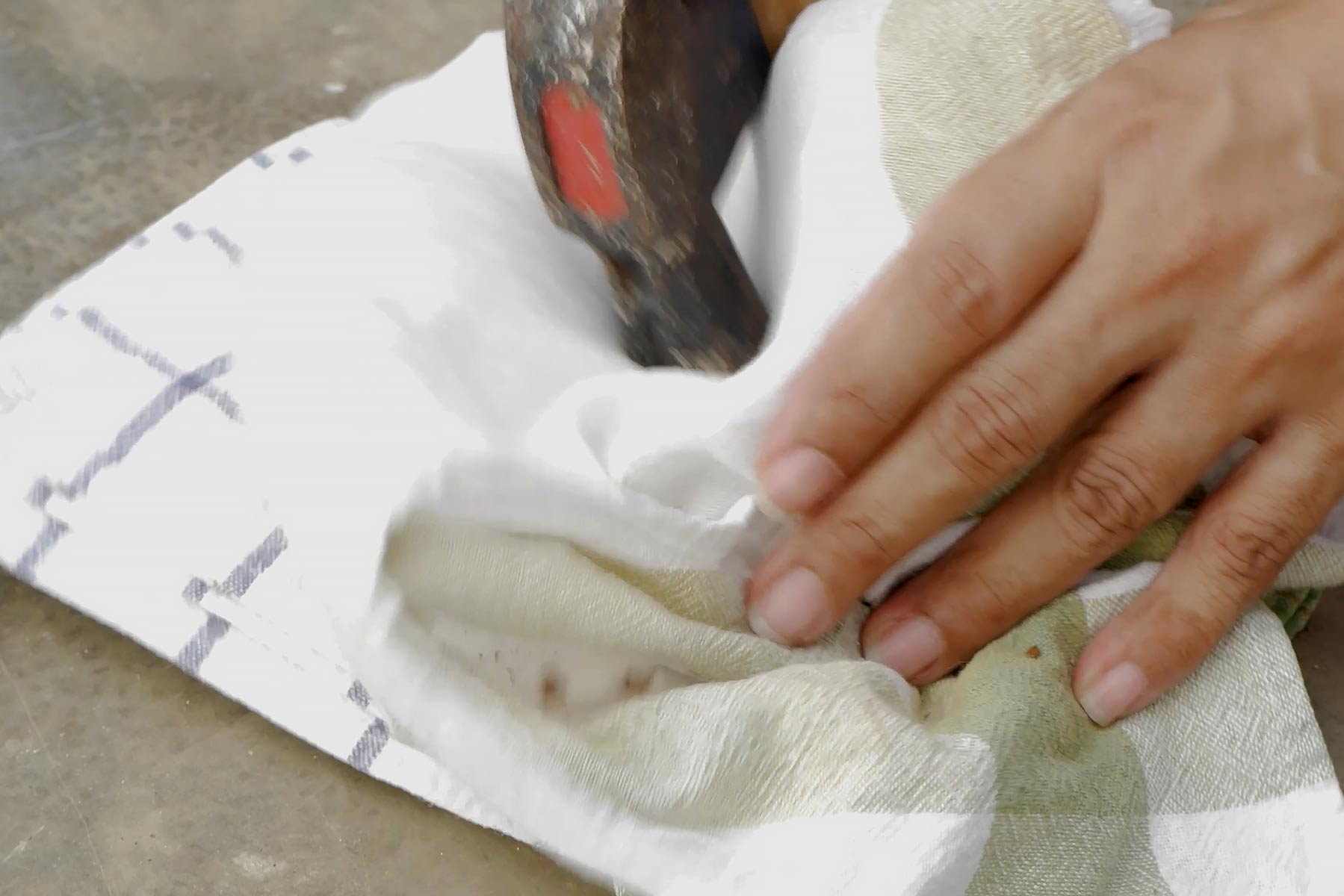
Breaking the rigid shell requires a controlled environment to protect household surfaces. Culinary professionals advise against working on ceramic, stone, or finished wood countertops, which can crack under impact. Instead, the operation should take place over a concrete floor cushioned with several folded textile towels.
The coconut is typically wrapped inside an old cloth towel to contain any flying shards during the impact phase. Using a standard household hammer, the operator strikes the coconut firmly along its equator—the circumferential line perpendicular to the face containing the eyes. By rotating the coconut incrementally and applying consistent, moderate blows along this axis, the shell naturally fractures along its structural weakness lines, splitting into two primary halves. Each half can then be wrapped and struck again near the newly exposed edges to create manageable segments.
4. Extracting and Peeling the Meat
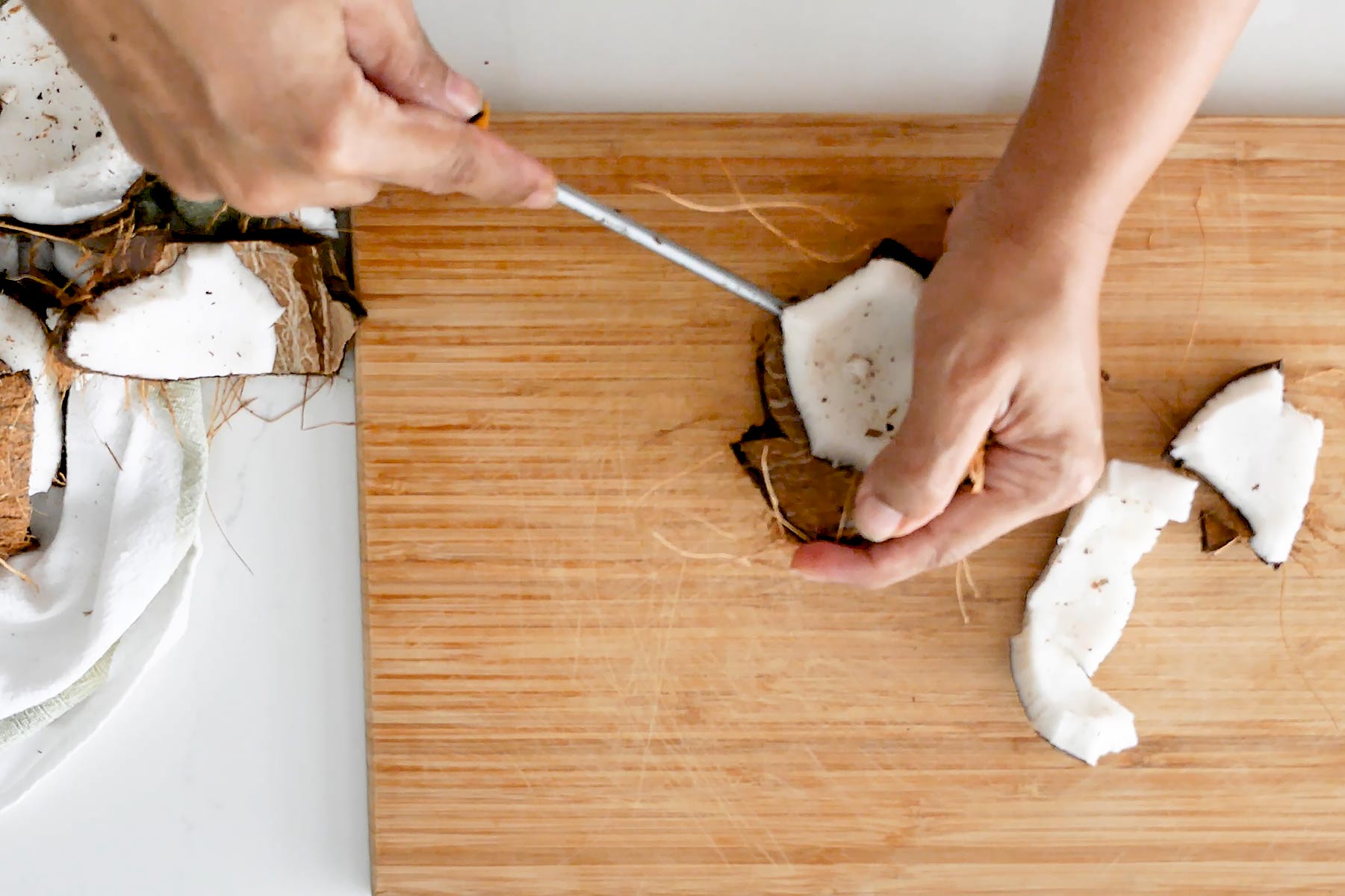
Separating the dense white endosperm from the rigid endocarp demands leverage and caution. A clean flathead screwdriver serves as an effective prying tool when inserted carefully between the shell and the meat. By applying gentle leverage, the cook can separate large sections of the coconut meat intact.
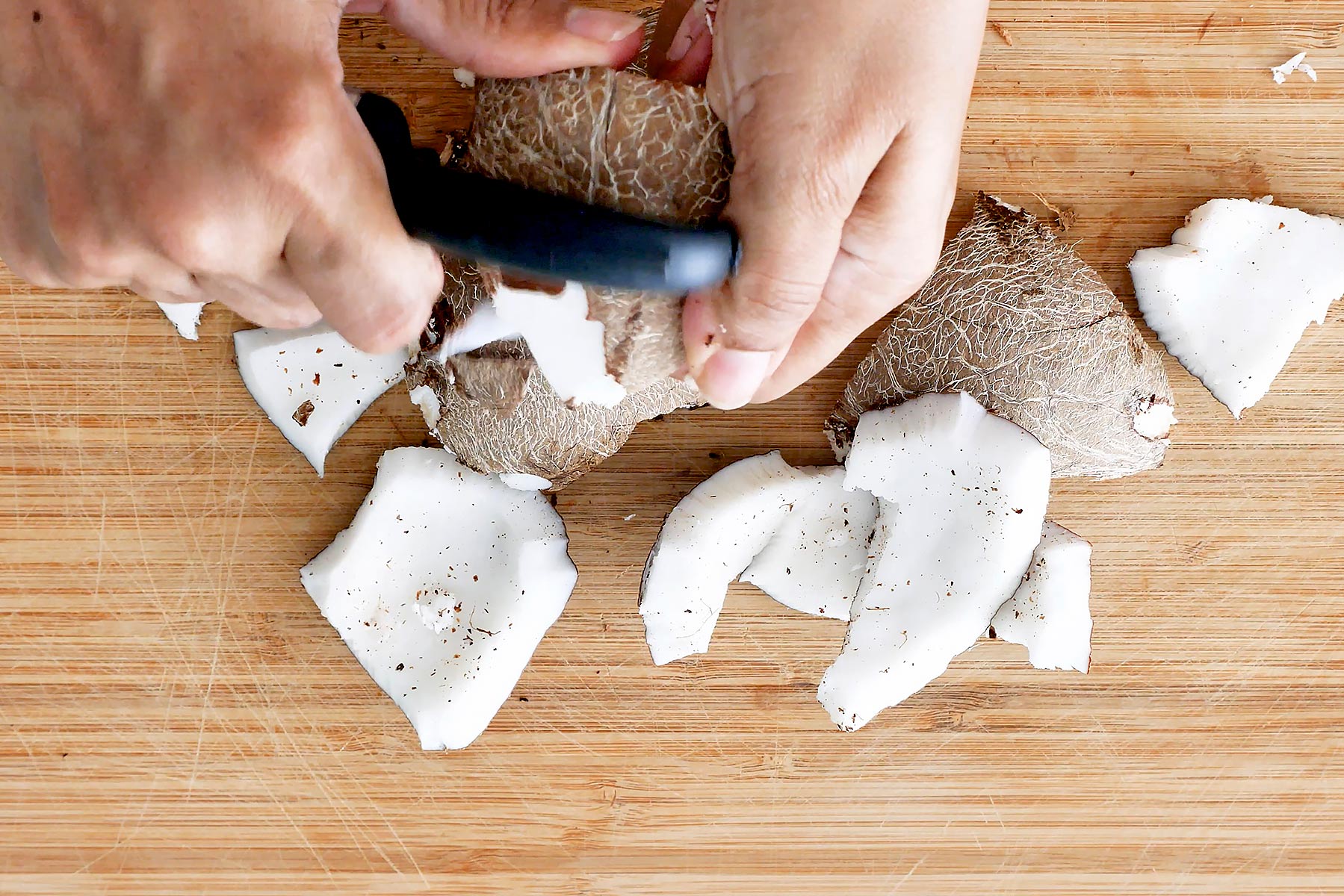
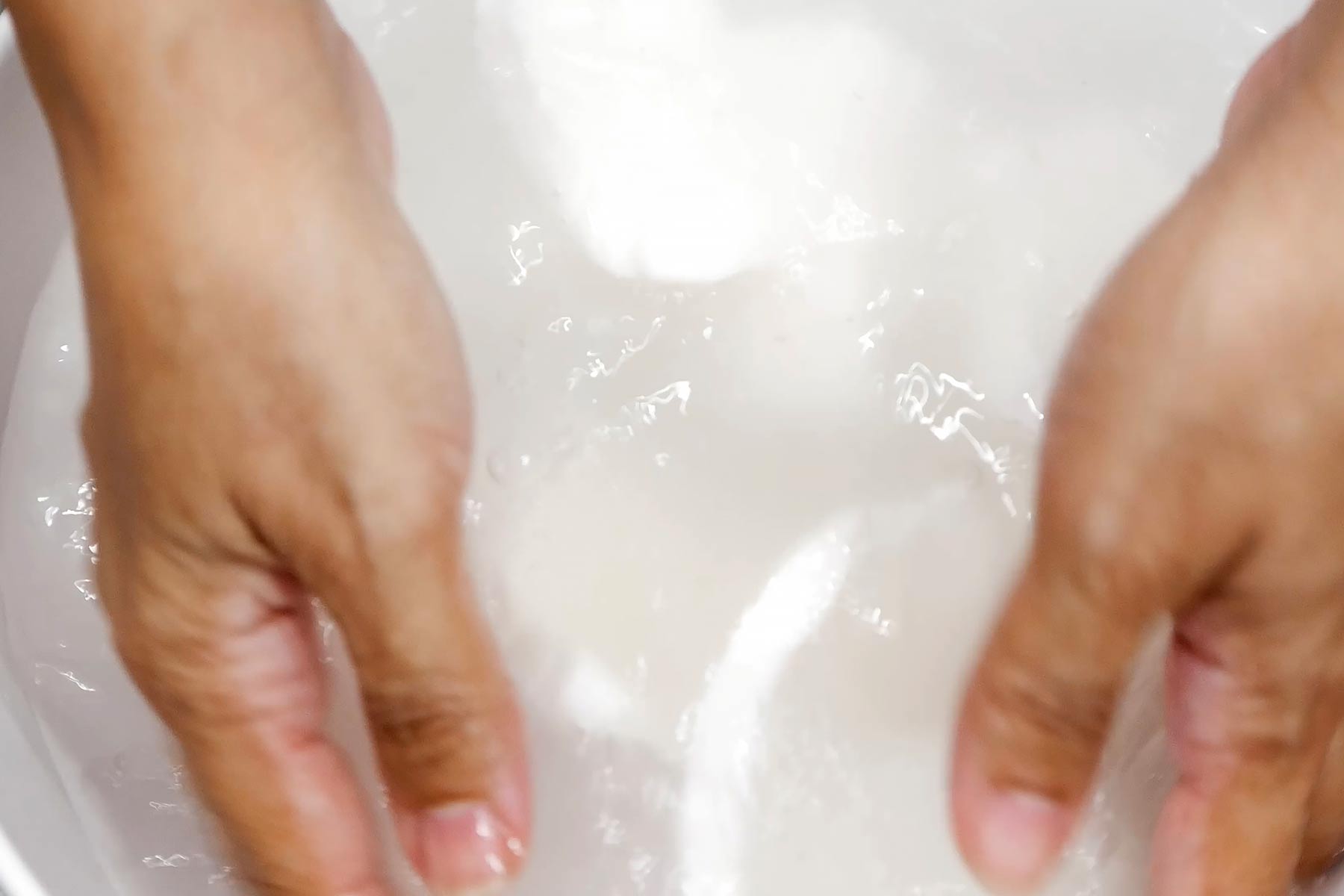
Once freed from the shell, the meat retains a thin, astringent brown skin (testa). While edible, this layer is typically removed using a standard kitchen potato peeler to ensure a pure white, uniform texture required for fine cooking, baking, or milk extraction. Following peeling, the coconut meat must be thoroughly rinsed under cold running water to eliminate any remaining wood particles or microscopic debris.
Preservation and Storage Guidelines
Fresh coconut meat is highly perishable due to its high natural oil and moisture content. If left unmanaged at room temperature, it spoils rapidly.
For short-term utilization, rinsed coconut segments should be air-dried briefly on a clean kitchen towel, then stored in an airtight container in the refrigerator for up to two to three days. For extended preservation, culinary guidelines recommend wrapping the pieces tightly in plastic wrap and placing them in a freezer-safe container. Properly frozen coconut meat retains its structural integrity and flavor profile for up to one month, allowing cooks to maintain a steady supply of fresh ingredients without frequent preparation.
Industry Implications and Consumer Trends
The growing interest in scratch cooking and whole-food diets has elevated the demand for practical kitchen education. Culinary education platforms report a steady increase in digital engagement surrounding fundamental food preparation techniques. As consumers become more conscious of ingredient transparency, knowing how to process raw ingredients like coconuts fosters greater culinary independence and cultural appreciation for traditional dishes.
Food safety experts and culinary instructors continue to stress that while the tools required—screwdrivers, hammers, and towels—are ordinary household items, the potential for hand strain or accidental lacerations from jagged shell edges necessitates heightened mindfulness during the extraction phase. By standardizing these safety and preparation protocols, home cooks can safely integrate fresh coconut into a diverse array of modern and traditional recipes.