Anatomy of a Man-Made Catastrophe: The Deepwater Horizon Oil Spill and the Cost of Corporate Compromise

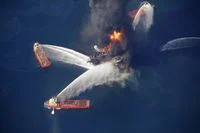
The pursuit of profit in the high-stakes energy sector has occasionally collided with catastrophic human and environmental costs, and few events illustrate this precarious balance as vividly as the Deepwater Horizon disaster. On April 20, 2010, the Gulf of Mexico transformed into an inferno when the Deepwater Horizon offshore drilling rig suffered a catastrophic blowout, resulting in an explosion that claimed the lives of 11 workers and unleashed the worst offshore oil spill in United States history. What initially appeared to be a sudden and tragic technical failure was subsequently exposed by exhaustive government and independent investigations as the culmination of systemic safety compromises, ignored warning signs, and a corporate culture that prioritized time and cost efficiency over fundamental engineering safety.
As part of CNBC Insight’s ongoing retrospective analysis examining how historical precedents shape modern industrial realities, the tragedy of the Macondo well serves as a stark reminder of the devastating consequences when standard operating procedures are sidelined. The disaster not only devastated the delicate marine ecosystem of the Gulf and crippled regional economies, but it also fundamentally transformed global regulatory frameworks, corporate liability standards, and the engineering protocols governing deepwater offshore drilling operations.
Anatomy of an Offshore Giant: The Macondo Prospect
To understand the magnitude of the disaster, one must examine the immense scale and technical complexity of the operation. The Deepwater Horizon was a state-of-the-art, fifth-generation, dynamically positioned semisubmersible offshore drilling rig capable of operating in waters up to 8,000 feet deep and drilling down to 30,000 feet. Owned by Transocean and leased by energy behemoth BP, the rig had been under contract in the Gulf of Mexico and was operating at the Macondo prospect, located approximately 41 miles off the coast of southeastern Louisiana.
Drilling operations at the Macondo well had commenced in February 2010. The geographical and geological challenges were staggering: the well was situated roughly 5,000 feet (1,500 meters) beneath the surface of the water, with the drill string penetrating thousands of additional feet into the complex rock formations beneath the seabed. By mid-April, the well was approaching its final completion phase, a notoriously delicate juncture in offshore drilling known as temporary abandonment, wherein cement barriers are installed to seal the wellbore until production equipment can be attached.
However, the path to completion was fraught with technical difficulties and growing operational delays. By the time of the explosion, the project was weeks behind schedule and millions of dollars over budget. In deepwater drilling, time is measured in exorbitant daily lease rates—often exceeding half a million dollars per day for ultra-deepwater rigs like the Deepwater Horizon—creating immense financial pressure on operational management to accelerate workflows wherever possible.
A Chronology of Warnings Ignored
Hours before the disaster struck on the evening of April 20, 2010, critical indicators flashed red, pointing directly to potential instability within the wellbore. Negative pressure tests—designed to verify the integrity of the cement barrier at the bottom of the well—yielded abnormal and troubling results. Fluid pressures surged unexpectedly, a clear physical sign that hydrocarbons were leaking past the cement seal and entering the wellbore.
Despite these unambiguous warning signs, key decision-makers on board misinterpreted or dismissed the anomalous data, choosing to accept a flawed secondary test interpretation that aligned with their desire to keep the project moving forward. Standard operating procedures dictated that when a negative pressure test fails or yields ambiguous results, operations must halt immediately, and remedial cementing or diagnostic testing must be conducted. Instead, the crew proceeded with displacing heavy drilling mud in the riser with seawater, a step that significantly reduced the hydrostatic pressure holding the formation fluids in check.
The calculated risk transformed into an unstoppable physical catastrophe shortly before 10:00 PM local time. High-pressure methane gas broke free from the bottom of the well, breaching the compromised cement barrier. Traveling up the production casing at tremendous velocity, the gas expanded as it ascended, bypassing multiple mechanical barriers until it reached the rig floor.
The combustible gas mixture found an ignition source—likely electrical equipment on the rig—and detonated with devastating force. A second, catastrophic explosion followed almost immediately, engulfing the drilling vessel in an uncontrollable wall of fire.
Chaos on the Rig and the Human Toll
The immediate aftermath on the rig floor was described by survivors as an apocalyptic nightmare. Stephen Davis, an offshore worker on duty that night, recounted the horrifying moments to The Guardian, noting that the entire structure shook violently. "It felt like walking straight into hell," Davis recalled, describing how thick, toxic black clouds of smoke instantly choked the atmosphere and the shockwave hurled workers across the deck.
The emergency systems designed to prevent such a catastrophe failed catastrophically. The blowout preventer (BOP)—a massive, multi-ton hydraulic valve assembly resting on the seabed meant to seal the well in an emergency—failed to close properly or shear the drill pipe, rendering its failsafe mechanisms useless against the high-pressure surge.
Evacuation procedures were chaotic and hazardous. Due to the intense flames and structural damage, lifeboats were compromised, forcing many crew members to jump directly into the freezing, oil-slicked waters of the Gulf of Mexico or perform perilous rope descents into rescue craft.

Out of a total crew of 126 personnel aboard the Deepwater Horizon that night, 11 workers lost their lives in the explosions and subsequent fire, while 17 others sustained severe, life-altering injuries. Search and rescue operations combed the waters for days, but the missing men were ultimately declared lost, leaving grieving families and a traumatized industry in the wake of the tragedy.
The Ecological Nightmare: Millions of Barrels in the Gulf
While rescue teams fought to save survivors and extinguish the raging fires—which eventually caused the Deepwater Horizon to capsize and sink on April 22—a secondary, unprecedented environmental catastrophe was unfolding beneath the waves. The damaged wellhead, left completely unconstrained on the seafloor 5,000 feet below, began discharging massive volumes of crude oil directly into the marine environment.
Initial estimates provided by official bodies suggested a leak rate of roughly 1,000 barrels of oil per day. However, independent scientists and subsequent data analyses proved those figures to be grossly underestimated. The actual flow rate was later calculated to be upward of 60,000 barrels per day.
For nearly three months, the crude oil gushed unabated into the Gulf of Mexico, defying multiple high-profile corporate attempts to cap the well, including botched "top kill" and "junk shot" procedures. It was not until mid-July 2010, following the installation of a specialized capping stack, that the flow of oil was successfully halted. In September 2010, relief wells finally intercepted the Macondo well, allowing engineers to cement it shut and declare it permanently sealed.
By the time the leak was stopped, an estimated 4.9 million barrels (approximately 210 million gallons) of oil had been released into the marine ecosystem. The spill coated hundreds of miles of coastline across Louisiana, Mississippi, Alabama, Florida, and Texas, devastating fragile marshlands, coral reefs, and nesting grounds for local wildlife. Commercial fisheries and tourism industries along the Gulf Coast were brought to a sudden halt, devastating local economies that relied on the pristine coastal environment for their livelihood.
Investigations, Corporate Blame, and Systemic Failures
In the immediate aftermath of the disaster, corporate stakeholders—particularly BP, Transocean, and Halliburton (the contractor responsible for the well’s cementing)—attempted to deflect blame, characterizing the event as an unforeseeable mechanical failure or a bizarre fluke of engineering.
However, a bipartisan national commission appointed by U.S. President Barack Obama delivered a scathing indictment of the industry in its final 2011 report. The investigation concluded that the Deepwater Horizon disaster was not the result of a single isolated mechanical malfunction, but rather the systemic failure of management and operational culture.
The investigative findings highlighted a series of cost-cutting and time-saving decisions made by corporate leadership that systematically eroded the safety margins of the drilling operation. "The root causes are systemic and, absent significant reform in both industry practices and government policies, might well recur," the presidential commission’s report warned. Key decisions—such as using fewer centralizers on the casing, failing to run comprehensive cement bond logs, and ignoring negative pressure test anomalies—were driven by an institutional desire to minimize operational expenses. As noted in subsequent international reporting, the corporate imperative to shave hours and dollars off a delayed project directly created the preconditions for disaster.
The Financial and Regulatory Aftermath
The legal and financial repercussions for BP and its partners were historic in scale. BP, as the primary lessee and operator of the Macondo prospect, bore the brunt of the liability under the U.S. Oil Pollution Act of 1990.
Over the subsequent decade, BP faced a labyrinth of civil and criminal penalties, environmental cleanup costs, natural resource damage assessments, and private economic settlement payouts. Total financial liabilities surpassed $60 billion, making the Deepwater Horizon disaster one of the most legally and financially punishing corporate penalties in global industrial history. BP was forced to divest billions of dollars in assets worldwide to shore up its balance sheet and meet its mounting obligations.
Beyond the immediate corporate penalties, the disaster triggered a sweeping overhaul of global offshore energy regulations. Governments worldwide, particularly the United States, instituted stringent oversight mechanisms, requiring more rigorous testing of blowout preventers, independent third-party verification of well design and cementing operations, and enhanced emergency response preparedness.
Conclusion: A Permanent Industry Turning Point
Fifteen years after the dark night in the Gulf of Mexico, the legacy of the Deepwater Horizon casts a long shadow over the energy sector. The disaster redefined the concept of operational risk in deepwater exploration, demonstrating that the pursuit of fossil fuels in extreme environments leaves zero margin for error or corporate shortcuts.
The sacrifice of the 11 workers and the ecological devastation of the Gulf stand as permanent monuments to the human cost of negligence. For modern industry leaders, the historical lesson of the Macondo well remains clear: no financial incentive, time constraint, or budgetary pressure can ever justify compromising the foundational safety protocols that stand between industrial enterprise and catastrophe.
Related posts: