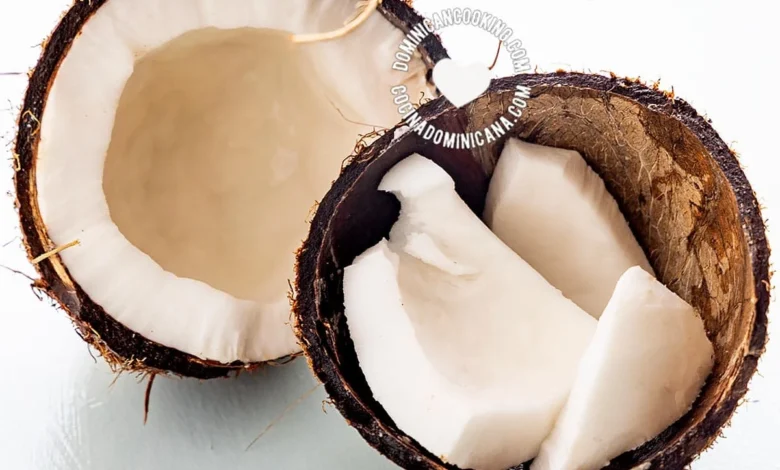
The culinary integration of fresh coconut remains a staple across tropical and subtropical cuisines worldwide, valued for its rich lauric acid content, versatile culinary applications, and nutrient-dense water. Despite its widespread consumption in Caribbean, Southeast Asian, and Latin American gastronomy, the preparation of whole, mature brown coconuts frequently presents a mechanical challenge for domestic and commercial kitchen operators alike. Culinary historians note that while modern supermarkets increasingly stock pre-packaged coconut flakes, canned milks, and pasteurized water, the demand for raw, whole drupes persists among traditional cooks seeking unadulterated flavors. Successfully processing a whole coconut requires an understanding of its botanical structure, specifically the three germination pores, commonly referred to as "eyes," which serve as the primary structural vulnerability of the endocarp.
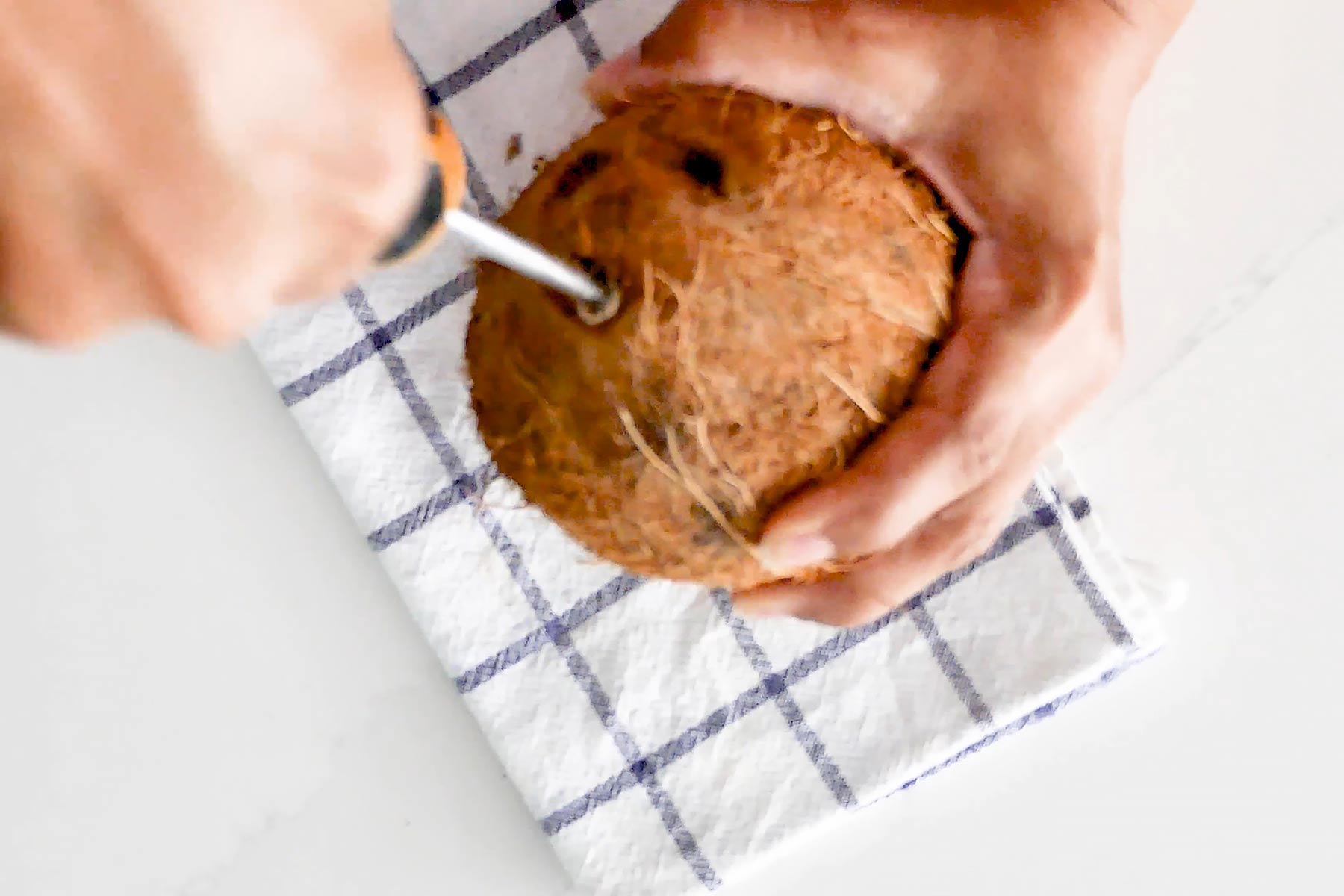
From a chronological perspective, the preparation sequence begins with the identification of these three distinct indentation points situated on the apex of the fruit’s exterior shell. Culinary experts, including food preservation specialists and traditional cooking instructors such as Clara Gonzalez, emphasize that one of these three natural pores is invariably softer than the others, having been formed directly beneath the thinner layers of internal coconut meat. Kitchen operators typically utilize a clean, flat-bladed screwdriver or a stainless-steel metal skewer to puncture this specific soft spot. By exerting controlled, downward pressure, the tool penetrates the inner cavity, allowing the practitioner to widen the aperture by gently scraping away surrounding fragments of flesh. This initial perforation phase is critical, as it relieves internal pressure and facilitates the complete drainage of the nutrient-rich liquid contents before any structural fracturing of the hard outer shell takes place.
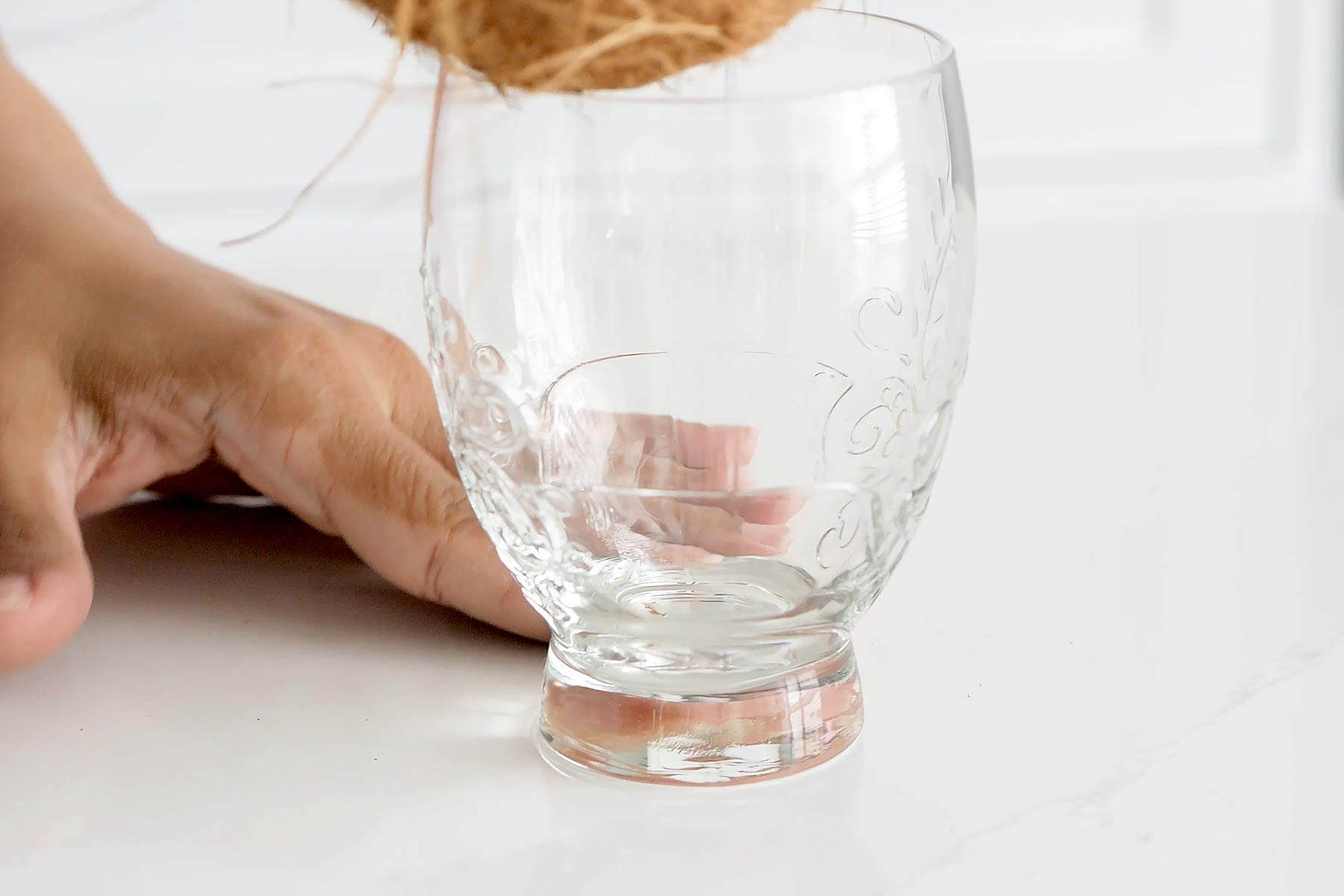
Once the drainage phase is initiated by inverting the pierced coconut over a collection vessel—frequently aided by gentle agitation to accelerate the outflow—the procedure advances to the mechanical fracturing of the lignified endocarp. Culinary safety guidelines dictate specific environmental preparations to prevent damage to domestic infrastructure. Because mature coconuts possess an exceptionally rigid, fibrous shell, direct impacts on delicate residential surfaces such as hardwood flooring or ceramic tiles can result in structural damage to the home. Consequently, culinary protocols mandate the use of heavy-duty shock absorption, typically achieved by layering folded industrial tea towels over reinforced flooring surfaces, such as concrete foundations or stable outdoor paving slabs.
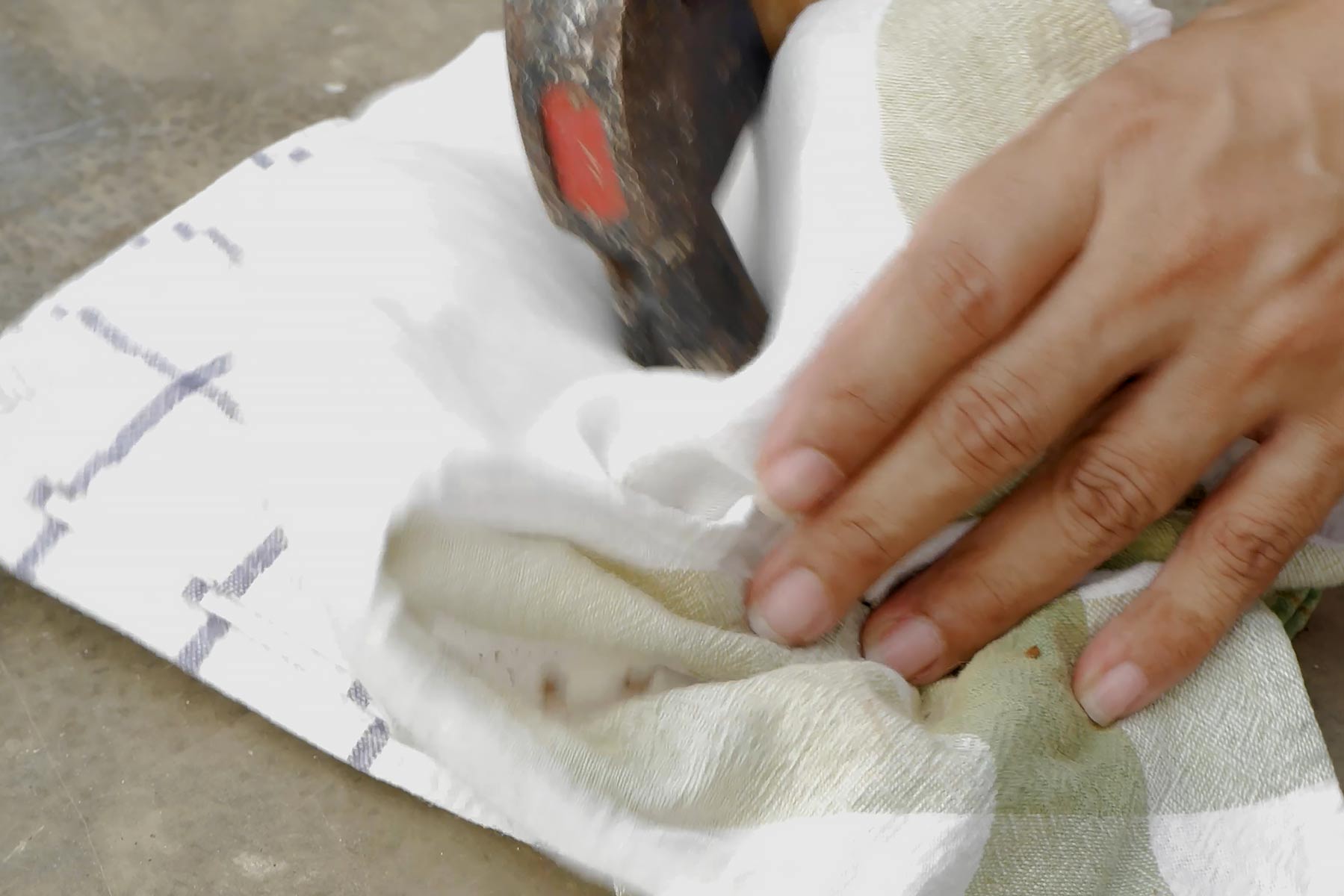
The physical cracking process relies on targeted kinetic energy rather than brute force. The whole coconut is enveloped in an additional protective fabric wrap to contain flying shell fragments and prevent localized splinters. Using a standard household hammer, the operator strikes the exterior along the equatorial axis—the natural circumference perpendicular to the face containing the germination eyes. By systematically rotating the coconut along this same equatorial plane and delivering measured blows, the operator induces a clean fracture, splitting the spherical endocarp into two distinct hemispheres. Subsequent localized strikes near the newly formed edges allow the user to reduce the halves into manageable, smaller segments, preparing the material for the subsequent extraction of the edible white kernel, scientifically classified as the endosperm.
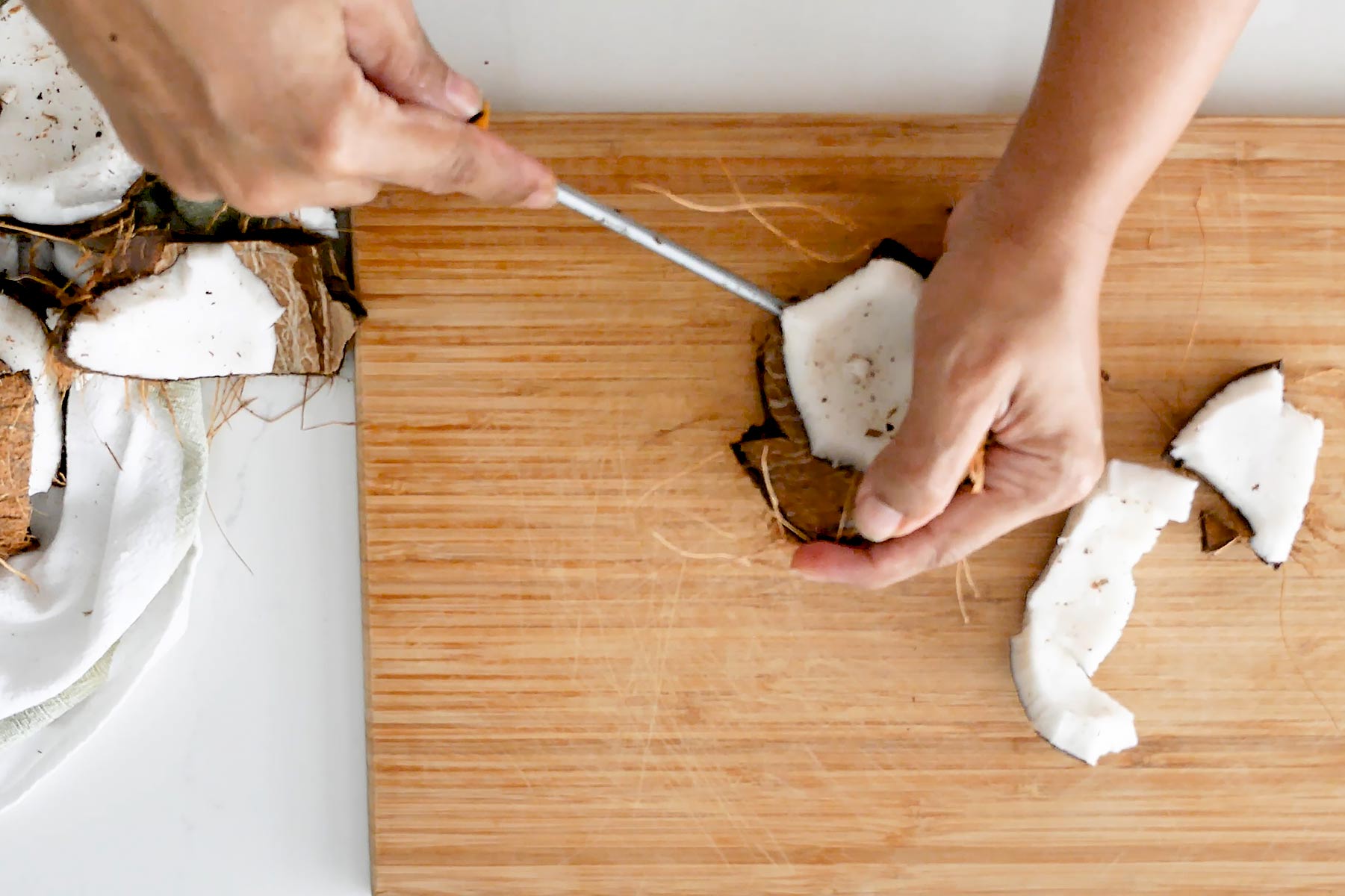
Separating the dense, oil-rich endosperm from the hard, woody exocarp represents the fourth phase of preparation. This step requires precision instrumentation, generally involving the careful insertion of a sturdy flat-head screwdriver or a specialized curved coconut knife into the interfacial plane between the meat and the inner wall of the shell. By applying gradual leverage, the operator pries the white flesh away from the lignified boundary. Culinary safety audits routinely highlight this phase as carrying the highest incidence of minor kitchen injuries, primarily due to the potential for tool slippage against jagged, irregular shell edges. Professional kitchen safety advocates recommend wearing cut-resistant culinary gloves and maintaining a firm, stabilized grip on the work surface during the prying sequence.
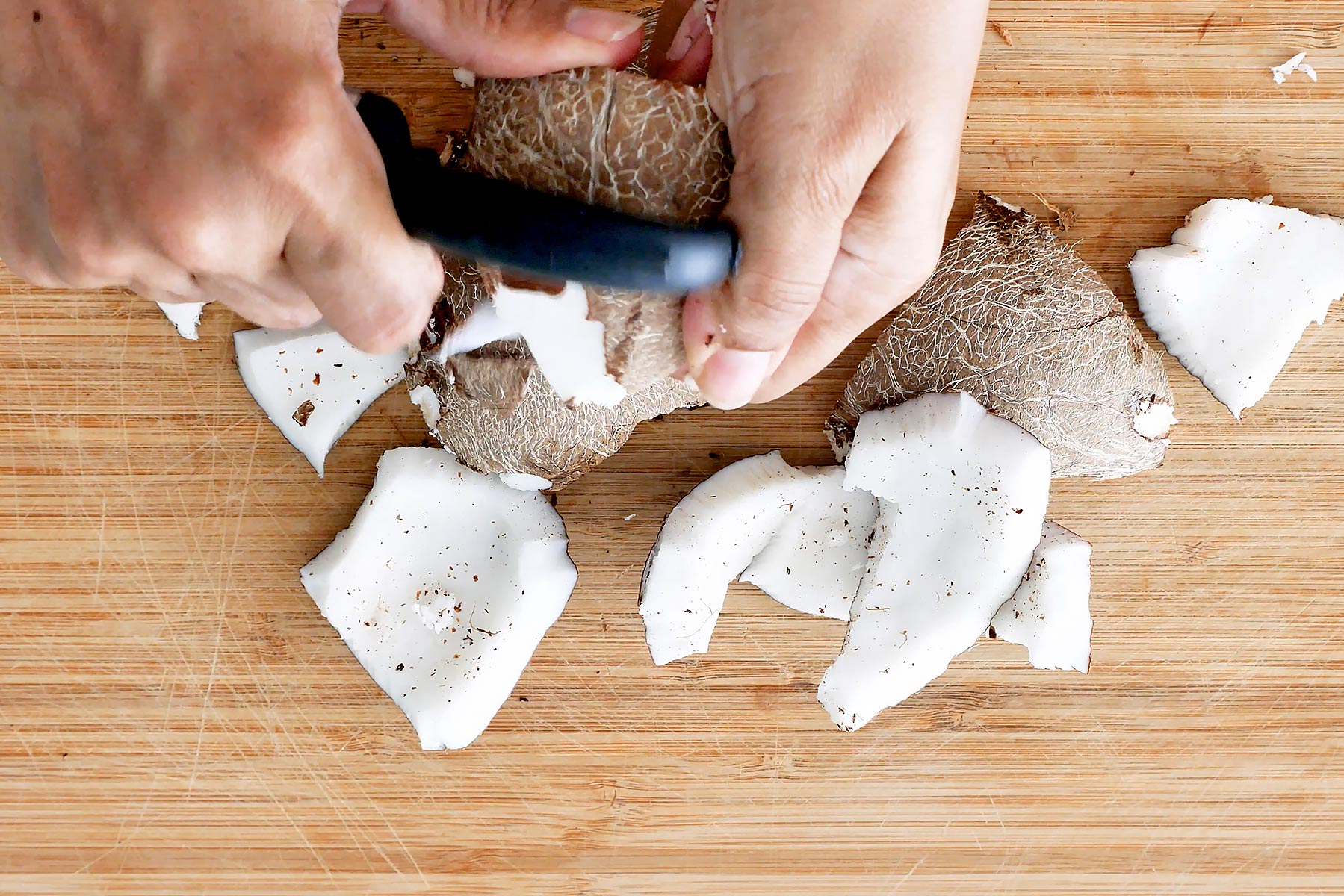
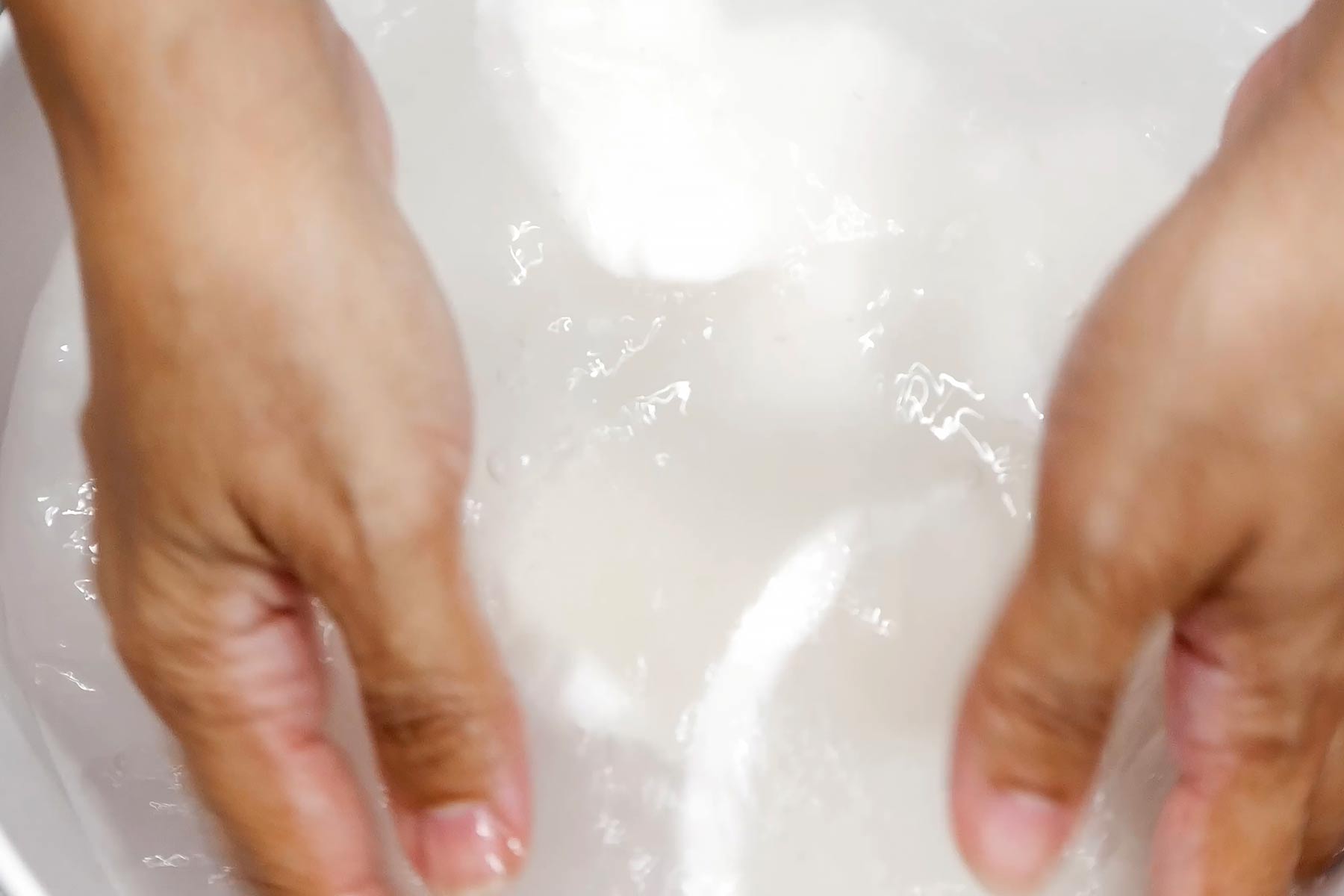
Following the extraction of the raw coconut segments, the processing protocol moves to refinement and sanitation. Mature coconut meat frequently retains a thin, fibrous, and bitter-tasting outer seed coat, known botanically as the testa or testal layer. While edible, this brown rind is routinely removed in professional and traditional kitchens to ensure a smooth texture and a pristine white appearance in finished culinary outputs, such as homemade coconut milk, grated pastry toppings, or savory stews. Culinary technicians utilize a standard kitchen potato peeler to shave away the brown epidermis, discarding the bitter rind. The cleaned pieces of white endosperm are then subjected to a thorough rinsing under cold, potable running water to eliminate microscopic particulate matter, wood dust, and residual shell fragments left over from the cracking process.
The final operational stages involve moisture reduction and preservation management. Fresh coconut meat possesses a high moisture and lipid content, rendering it highly susceptible to microbial proliferation and rapid rancidity if left unmanaged at ambient temperatures. Culinary sanitation standards require the extracted and rinsed pieces to undergo surface drying, typically achieved by arranging the segments in a single layer over clean, lint-free cotton or linen tea towels to facilitate air drying at room temperature. For immediate culinary utilization, the dried pieces may be stored in airtight refrigeration units for a limited duration, generally spanning two to three days. For long-term preservation, food science guidelines recommend vacuum-sealing the coconut meat in heavy-duty polyethylene film or placing the portions inside freezer-safe containers. When stored at optimal sub-zero temperatures, raw coconut meat maintains its structural integrity and lipid composition for up to one month, though sensory evaluations consistently confirm that fresh, immediate preparation yields superior flavor profiles and optimal nutritional retention across all culinary applications.