The global movement toward sustainable agriculture has reached a critical inflection point, marked by a whirlwind month of international summits, educational milestones, and strategic cross-border collaborations. Patrick Holden, CEO and founder of the Sustainable Food Trust (SFT), recently concluded a series of high-level engagements spanning Ireland, Scotland, the United States, and Italy, reflecting a broader, industry-wide push to formalize the transition toward regenerative and organic food systems. These events underscore a growing demand for transparency in supply chains, a sentiment echoed by policymakers, industry leaders, and a new generation of agricultural practitioners.
A New Generation of Stewards: The Ballymaloe Initiative
The month began in Ireland, where Holden addressed students at Ballymaloe’s inaugural six-week Food and Farming course. This program, curated by Darina Allen, serves as a microcosm of a larger demographic shift in agriculture. Attracting a cohort primarily in their 20s and 30s, the course reflects a resurgence in interest among younger populations to engage directly with land management and food production.
The presence of a significant waiting list for such vocational training programs is a notable indicator of changing career priorities. For years, the agricultural sector has faced an aging workforce, with the average age of farmers in many developed nations exceeding 55. The influx of younger, mission-driven participants suggests that the perceived barriers—economic volatility and the physical demands of farming—are being mitigated by a stronger cultural emphasis on climate resilience and food sovereignty.
Defining Regenerative Practices: The Scotland Summit
Following the Irish engagement, the focus shifted to Scotland, where The King’s Foundation, in partnership with the SFT and the Circular Bioeconomy Alliance (CBA), hosted a landmark summit on "Harmony in Food and Farming." The event brought together influential stakeholders, including UK Defra Secretary of State Angela Eagle and author Chris van Tulleken, whose research into ultra-processed foods has significantly impacted consumer behavior and public health policy.
The summit served as a critical platform for discussions regarding the corporate adoption of regenerative farming. While major retailers and food manufacturers are increasingly vocal about their transition to nature-friendly production, the lack of a standardized definition for "regenerative" remains a point of friction. Current market data suggests a "greenwashing" risk: many UK farms self-identify as regenerative while maintaining reliance on synthetic fertilizers and pesticides, including glyphosate.
The industry consensus emerging from the summit was clear: consumer trust is contingent upon transparent labeling. If "regenerative" is to become a credible market label, the agricultural industry must move toward objective, outcome-based verification systems that clearly delineate between conventional, restorative, and truly regenerative practices.
Scaling the Global Farm Metric
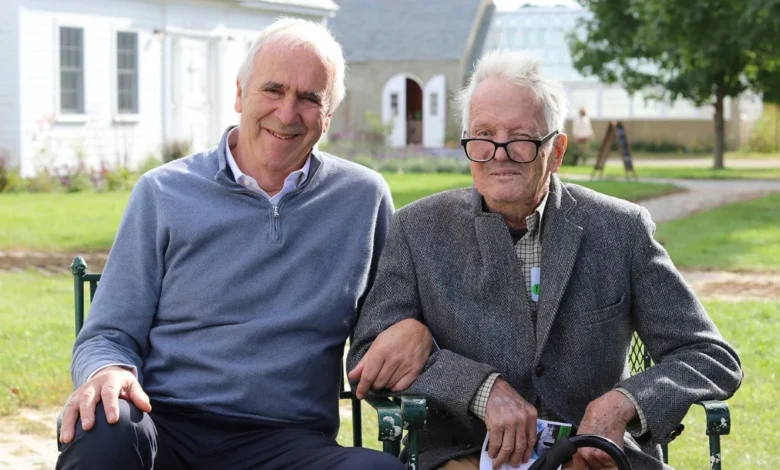
From Scotland, the dialogue moved to the United States for the Real Organic Conference in upstate New York. Alongside veteran organic horticulturalist Eliot Coleman, Holden addressed the ongoing debate regarding the compatibility of regenerative farming and the established organic movement.
The central challenge identified during the conference is the need for a common language of measurement. Without a universal framework, the term "regenerative" risks becoming a hollow marketing buzzword. The SFT’s Global Farm Metric (GFM) was presented as a potential solution to this fragmentation. By measuring outcomes across climate, biodiversity, and human health, the GFM aims to provide a baseline that allows consumers to distinguish between producers making superficial changes and those undertaking systemic ecological shifts.
If the industry can standardize these metrics, it would allow for a level of transparency previously unseen in global food trade, effectively holding corporations accountable to measurable ecological outcomes rather than self-reported sustainability targets.
New York Climate Week and the Beacon Farms Expansion
During New York Climate Week, Holden participated in a convening hosted by the Sustainable Markets Initiative (SMI), where the spotlight fell on the "Beacon Farms" project. This initiative, which currently supports approximately 50 farms in the UK and was recently introduced to the Irish agricultural landscape, serves as a blueprint for scalable, sustainable production.
The collaboration between the SFT and the SMI represents a significant step in institutionalizing sustainable farming. By partnering with organizations that prioritize the re-connection of food production with the land, the project aims to establish a foothold in the US market by the coming year. The expansion reflects a strategic realization: regional sustainable initiatives, while impactful, require the support of global supply chain networks to reach the scale necessary to influence national food security and climate targets.

Terra Madre and the Global Call for Biodiversity
The month concluded in Turin, Italy, at Terra Madre, the world’s largest gathering of the Slow Food movement. The event served as a somber but energizing tribute to the late Carlo Petrini, the movement’s founder. With hundreds of thousands of participants filling the streets of Turin, the event was a physical manifestation of the global agricultural movement’s scale.
The presence of high-level condolences, including a message from King Charles, underscored the geopolitical importance of the sustainable farming movement. Terra Madre demonstrated that sustainable agriculture is no longer a niche interest; it is a central pillar of international discourse regarding biodiversity, peace, and the survival of traditional food cultures in a globalized, industrialized economy.
Analysis: Implications for the Global Food System
The cumulative effect of these engagements points toward three major trends that will define the agricultural sector over the next decade:
- The Crisis of Definition: The term "regenerative agriculture" is currently in a state of flux. As corporations rush to align their brands with environmentalism, the pressure to codify these practices via third-party verification will intensify. Companies that fail to provide transparent, metric-backed data on their supply chains face increasing risk of reputational damage and regulatory scrutiny.
- Institutional Alignment: The shift from grassroots-only advocacy to high-level partnerships—such as those with the Sustainable Markets Initiative and The King’s Foundation—indicates that sustainable agriculture is being integrated into the financial and policy mainstream. This transition is essential for attracting the capital required to transition large-scale operations.
- Human Capital: The demographic surge of young people entering the food production space is the most vital development for long-term sustainability. Policy support for these "new entrants" will be crucial in the coming years, particularly regarding land access and the transition of existing, aging-owned farms.
Looking Ahead
The past month has demonstrated that the transition toward a more resilient global food system is not merely a theoretical exercise, but a tangible, moving target. The convergence of diverse stakeholders—from young farmers in Ireland to policy leaders in New York and traditionalists in Turin—suggests that the industry is nearing a tipping point.
For the Sustainable Food Trust and its partners, the immediate focus remains on the implementation of the Global Farm Metric and the expansion of the Beacon Farms initiative. By providing a clear, evidence-based roadmap for farmers and a transparent, reliable label for consumers, the objective is to move beyond the current haze of agricultural marketing.
As these initiatives scale, the agricultural sector faces a binary future: either it continues to operate under ambiguous, self-defined terms that risk eroding public trust, or it adopts rigorous, outcome-based standards that align the interests of farmers, consumers, and the environment. The events of this past month indicate that the global appetite for the latter is growing, and the logistical infrastructure to support that transition is finally beginning to take shape. Whether this momentum can be sustained through the next fiscal year will depend on the continued collaboration of these diverse stakeholders and their ability to maintain a unified, measurable standard for what it means to truly "farm for the future."